
Evaluating how the 2026 World Cup ball compares to previous official FIFA match balls requires looking beyond tournament marketing to analyze the tangible shifts in panel geometry, surface textures, and material composition. While every four years brings promises of revolutionary flight stability and speed, the actual differences lie in how these design elements interact with the air and the player’s boot. By comparing the structural engineering, aerodynamic features, and material tiers of the 2026 edition against its predecessors, players can make an informed decision on whether this latest iteration offers a genuine performance upgrade or if previous match balls remain a more practical choice for their playing style and budget.
Panel Construction and Structural Evolution
The physical structure of a World Cup match ball dictates its shape retention, water absorption, and aerodynamic predictability. When comparing the 2026 World Cup ball to older models, the first point of inspection should be the panel layout and bonding method. Over the last few tournaments, FIFA match balls have transitioned from traditional multi-panel stitched designs to highly engineered, thermally bonded configurations with fewer, uniquely shaped panels. To evaluate the 2026 model, check the manufacturer’s official specification sheet to identify the exact panel count and the specific thermal bonding technology utilized.
Panel geometry and seam depth are critical factors because they directly influence how air flows over the ball’s surface. Deeper, wider seams can create more drag at lower speeds, whereas shallower, narrower seams often result in a smoother surface that behaves differently mid-flight. A lower panel count generally reduces the total length of the seams, which can enhance spherical stability but may also alter the ball’s flight path if the panel shapes are asymmetrical. When inspecting the ball physically, look closely at the seam junctions; high-quality thermal bonding should show a completely seamless transition with no visible adhesive residue or gaps, ensuring the ball maintains its roundness even after repeated high-impact strikes.
Products mentioned in this guide
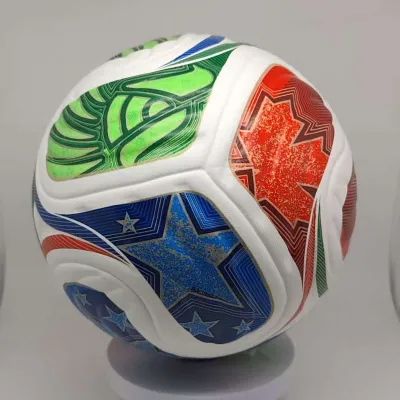
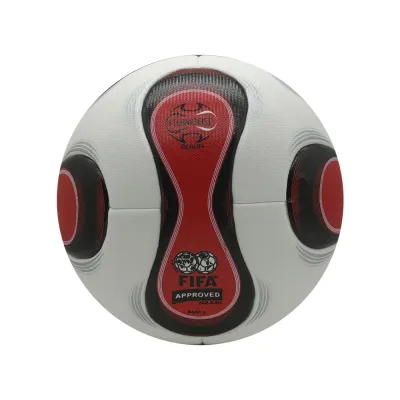
Prices are valid at publication and may change. Please refer to the product page for the latest price.
In contrast, traditional hand-stitched or machine-stitched constructions—often found in older models or lower-tier replicas—rely on physical threads to hold the panels together. While stitched balls offer excellent flexibility and a classic feel, they are inherently more susceptible to water uptake through the stitch holes, which increases the ball’s weight in wet conditions and alters its performance. Thermally bonded panels, standard in modern official match balls, virtually eliminate water absorption, ensuring consistent weight and rebound characteristics regardless of pitch conditions.
Surface Texture and Aerodynamic Behavior
Surface texture plays a decisive role in how a football behaves when spinning through the air or contacting a player’s boot. Recent World Cup balls have featured complex micro-textures—such as debossed dimples, ridges, or fine grain patterns—designed to manage the boundary layer of air surrounding the ball in flight. When examining the 2026 World Cup ball, observe the surface closely under direct light to identify these micro-textures and macro-embossing patterns. These physical features are engineered to disrupt airflow, preventing the unpredictable ‘knuckling’ effect that occurs when a perfectly smooth sphere travels at high speeds.

The practical impact of these surface variations is most noticeable under challenging weather conditions, such as the high humidity or sudden downpours common in tropical climates like Singapore. For goalkeepers, a well-textured surface provides crucial mechanical grip, making it easier to catch or punch a wet ball securely. For strikers and midfielders, these textures increase the friction between the boot and the ball, allowing for more precise application of spin and swerve. If the surface is too smooth, the ball may slip off the boot prematurely, leading to inaccurate passes or shots.
While manufacturers frequently publish wind-tunnel data to support their aerodynamic claims, players should evaluate these assertions through observable flight behavior during real-world play. When testing the ball, pay attention to how it behaves during long-range passes and high-velocity shots. A stable ball should maintain a predictable trajectory without sudden, erratic shifts in direction mid-air. If you notice the ball drifting unpredictably without spin, the aerodynamic design may not align with your playing style, making older, more familiar panel configurations a better fit.
Materials, Bladders, and Sustainability Claims
The internal components and raw materials of a match ball determine its responsiveness, tactile feel, and environmental footprint. At the core of any high-performance football is the bladder, which is typically constructed from either natural latex or synthetic butyl rubber. Latex bladders, favored in professional match balls, offer superior responsiveness, a softer touch, and a more dynamic bounce because the material is highly elastic. However, latex is porous and gradually leaks air, requiring players to inflate the ball before every session. Butyl bladders, common in training and replica models, excel at air retention but tend to feel stiffer and less lively on the foot.
In recent years, sustainability has become a major focus for sports manufacturers, with the 2026 World Cup ball emphasizing eco-friendly production methods. To verify these claims, inspect the official product tags, packaging, and manufacturer specifications for certifications regarding recycled material percentages and the use of water-based inks or bio-based polyurethane. These materials aim to reduce the carbon footprint associated with synthetic leather production without compromising the outer casing’s durability or elasticity.
However, players must understand the realistic limits of these sustainability claims. While the use of recycled plastics and water-based adhesives is a positive step for environmental conservation, it does not mean the ball is biodegradable or immune to wear. The outer polyurethane layer will still degrade over time due to friction, UV exposure, and moisture. Expecting a sustainable match ball to outlast a traditional synthetic model is unrealistic; instead, view these eco-friendly materials as a way to match standard performance metrics while reducing environmental impact during the manufacturing phase.
Match, Training, or Replica: Choosing the Right Tier
Official tournament ball lineups are divided into distinct tiers to accommodate different skill levels, playing environments, and budgets. The premium tier is the Official Match Ball (OMB), which carries the prestigious FIFA Quality Pro certification. This certification guarantees that the ball has passed rigorous laboratory tests for weight, circumference, sphericity, loss of pressure, water absorption, and rebound. While the OMB offers the exact technology, premium polyurethane casing, and latex bladder used by professionals, it also commands a premium price, often exceeding S$200.
For daily practice and amateur league play, the training tier represents a highly durable and cost-effective alternative. Training balls are designed to withstand repetitive drills on abrasive surfaces, often utilizing a slightly thicker synthetic casing and a butyl bladder for superior air retention. While they lack the extreme responsiveness and advanced micro-textures of the match ball, they offer consistent performance at a fraction of the cost. Replica balls, on the other hand, are designed primarily for casual recreational play or as collector’s items. They often feature machine-stitched seams and simpler materials, making them affordable but less suited for competitive match play.
To choose the right tier, apply a straightforward decision framework based on your specific needs. If you are playing in regulated, competitive tournaments where maximum precision and consistent flight are required, investing in the official match ball is justified. For daily team training, individual drills, or frequent sessions on rougher pitches, opt for the training variant to maximize durability and minimize maintenance. If your goal is casual weekend play in the park, or if you simply want a piece of tournament memorabilia to display, the replica tier provides the best balance of visual appeal and affordability.
Verifying Authenticity and Official FIFA Certifications
With the high demand surrounding World Cup merchandise, counterfeit balls are common in the marketplace. Purchasing a counterfeit product not only results in poor performance but also poses safety risks, as sub-standard materials can split or warp during play. To ensure you are purchasing a genuine product, start by locating the official FIFA certification mark printed directly on the ball’s surface. Genuine match balls will feature the ‘FIFA Quality Pro’ logo, while high-quality training variants may carry the ‘FIFA Quality’ or ‘FIFA Basic’ marks, each indicating compliance with specific performance standards.
Next, examine the packaging and the ball itself for security features such as holographic tags, unique serial numbers, or scannable QR codes. Reputable manufacturers integrate these elements to allow buyers to verify the product’s authenticity online. Inspect the print quality of the logos and graphics; on genuine balls, the printing is crisp, perfectly aligned, and embedded smoothly into the outer casing, whereas counterfeits often exhibit blurry edges, misaligned text, or peeling decals.
Establish a strict stop condition before completing your purchase: if any certification marks are missing, look altered, or are printed with low-quality ink, halt the transaction immediately. Do not purchase the ball if the retailer cannot provide original packaging with matching serial numbers, or if the price seems unrealistically low for a premium match ball. Consulting authorized distributors or purchasing directly from official brand stores is the safest way to guarantee authenticity.
Frequently Asked Questions (FAQ)
Is the 2026 World Cup ball suitable for artificial turf?
While you can play with the 2026 World Cup match ball on artificial turf, doing so will accelerate wear and tear. Artificial turf pitches generate higher friction and heat than natural grass, which can scuff the premium polyurethane casing and weaken the thermal bonds of a match-grade ball. Check the manufacturer’s guidelines to see if the ball is rated for artificial surfaces. If you play primarily on turf, observe the outer casing for rapid abrasion; if scuffing occurs quickly, consider switching to a turf-specific training ball designed with a more durable, abrasion-resistant outer layer to prolong the ball’s lifespan.
How does the air retention of the 2026 ball compare to older models?
Air retention depends entirely on the type of bladder used inside the ball rather than the tournament year. If the 2026 match ball utilizes a high-performance latex bladder, it will naturally lose air faster than older training models equipped with butyl bladders, requiring inflation before almost every use. To manage this, identify the bladder material from the product specification sheet and establish a routine of checking the pressure with a reliable gauge before play. If you notice the ball losing significant pressure within a few hours of inflation, inspect the valve area for dirt or damage, as early valve leakage is a common sign that the ball requires repair or replacement.
Community discussion
Share your experience or ask a question. Comments are reviewed before publication.