
A 2m resistance band is primarily beneficial for tall users, wide-stance movements, and exercises requiring maximum extension without overstretching the material. While standard-length bands are sufficient for most isolated muscle contractions and compact routines, understanding the specific mechanical and physical demands of your workouts will help you decide if the extra length is a necessary upgrade for your training setup.
Choosing the wrong band length can lead to restricted movement, poor form, or premature equipment failure. By evaluating your height, your preferred exercises, and your available workout space, you can determine whether a standard band or a 2m alternative will better support your fitness goals.
Understanding the Difference: 2m vs Standard Resistance Bands
To make an informed decision, understand how resistance bands are measured and how their physical dimensions affect your workouts. Standard resistance bands, whether closed-loop flat bands or tube bands with handles, typically measure between 1.0 and 1.2 meters in resting length. In contrast, a 2m resistance band offers a significantly longer starting point, which fundamentally alters how tension is distributed throughout an exercise.
Products mentioned in this guide
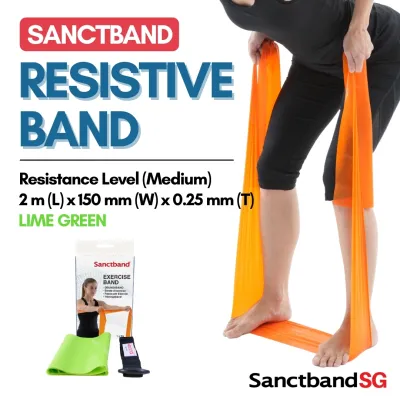
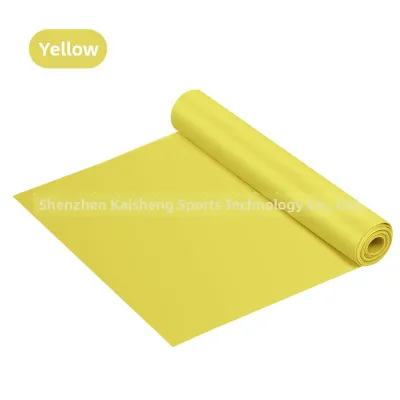
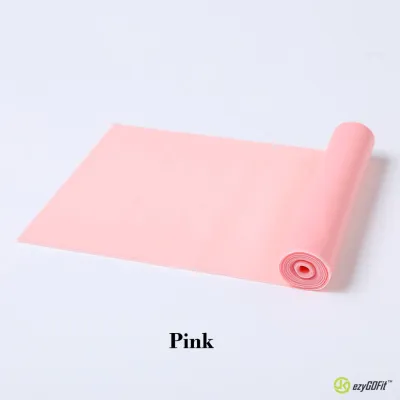
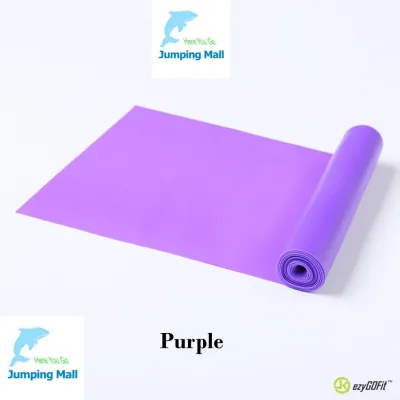
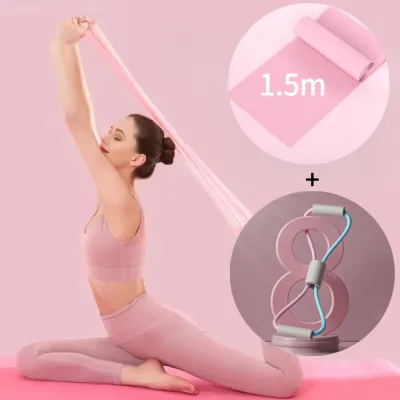
Prices are valid at publication and may change. Please refer to the product page for the latest price.
The resting length of a band directly dictates its resistance curve. When you stretch an elastic band, the tension increases as the material approaches its maximum elongation limit. A standard band reaches its high-tension zone much quicker over a shorter physical distance. A 2m band, having more material to distribute the stretch, offers a more gradual and predictable increase in resistance over a longer path. This gentler curve is highly beneficial for movements requiring consistent tension across a wide range of motion.
Safety is another critical factor. Every elastic band has a maximum safe elongation percentage, typically specified by the manufacturer. Stretching a band beyond this recommended limit—often three to four times its resting length—compromises the structural integrity of the latex or thermoplastic elastomer (TPE), increasing the risk of sudden snapping. A longer band provides a much larger safety margin for high-extension exercises.
Finally, consider the spatial requirements of your training environment. Using a 2m band safely requires a larger clear area than a standard band. When fully extended, a 2m band can easily span four meters or more. If you train in a confined home setup, you must ensure you have enough unobstructed space to perform these wide-ranging movements without hitting walls or furniture.
Exercises That Genuinely Require a 2m Band
Certain exercises are difficult or dangerous to perform with a standard-length band because they demand a range of motion that exceeds the band’s safe stretch limit. Full-body mobility routines and deep stretching are prime examples. For instance, performing a lying hamstring stretch where you loop the band over your foot and hold the ends with your hands requires significant length. A standard band will often force your upper body off the floor, whereas a 2m band allows you to keep your back flat on the mat while maintaining optimal tension.

Overhead movements also heavily favor the extra length. During an overhead triceps extension or a standing shoulder press, the band must stretch from under your feet all the way to your fully extended hands. For anyone of average height or taller, this vertical distance is simply too great for a standard 1.2m band to handle safely. The standard band will either feel excessively heavy at the top of the movement or stretch to a point where the material begins to degrade rapidly.
Wide-stance lower body exercises present a similar challenge. When performing sumo squats, lateral band walks, or standing lunges, a significant portion of the band’s length is used up just to span the distance between your feet before you even begin the movement. A standard band is pre-stretched to its limit at the starting position, leaving almost no room for the actual exercise. A 2m band accommodates a wide stance comfortably, ensuring that the resistance remains smooth and manageable throughout the entire movement.
Additionally, exercises that utilize distant, fixed anchor points require the extra length of a 2m band. If you are anchoring your band to a heavy power rack, a sturdy door, or an outdoor post for horizontal chest presses or standing rows, a standard band forces you to stand very close to the anchor. This close proximity limits your range of motion and can cause the band to rub uncomfortably against your arms. A longer band allows you to step further away from the anchor, establishing a cleaner line of pull.
How Body Type and Height Influence Band Length Choice
Your physical proportions are just as important as the exercises you perform when choosing a band length. Height and wingspan are the most obvious factors. If you are taller than 1.8 meters, your natural range of motion during vertical presses, pull-downs, and rows will easily overstretch standard equipment. A longer wingspan means that horizontal movements like chest flyes or rear-delt pull-aparts will also require a wider starting grip, making a 2m band a much more comfortable and biomechanically sound choice.
Shoulder width and chest depth also play a role in horizontal pressing and pulling movements. Individuals with broader shoulders require a wider grip to maintain proper joint alignment during chest presses. If you use a standard band for these exercises, you may find yourself forced to grip the band too close to the anchor point, which creates an awkward angle of resistance and can place excessive stress on your rotator cuffs. A 2m band allows for a wider, more natural hand placement that aligns perfectly with your shoulder joints.
Leg length and stance width are equally influential. Taller individuals with longer limbs require more band material to perform basic lower-body movements. If you notice that your knees are being pulled inward during a squat, or if you have to compromise your spinal alignment to keep a standard band anchored under your feet, the band is too short for your frame.
There are several clear physical signs that your current band is too short for your body type. If you experience a sudden, dramatic spike in resistance—often described as hitting a physical “wall”—before you reach the end of your movement, the band is reaching its maximum stretch capacity. Other warning signs include the band slipping out from under your feet, the handles pulling uncomfortably against your wrists, or the material showing fine white stress lines near the anchor points.
Adapting Standard Bands for Extended Range of Motion
If you currently own standard-length bands and are not ready to upgrade, there are a few practical ways to adapt your equipment, though they come with specific safety trade-offs. One common technique is chaining two standard loop bands together using a girth hitch. To do this, thread one band halfway through the other, then pull one end through its own loop to create a secure knot.
Before using a chained setup, you must perform a thorough safety check. Inspect the connection point for any signs of friction, wear, or slipping. Because the knot creates a concentrated point of stress where the two bands rub against each other, this area is highly susceptible to tearing. Never use this method with old, dry, or brittle bands, and avoid using high-tension bands that place extreme force on the connection point.
Another way to adapt shorter bands is by modifying your body positioning. For overhead presses, you can transition from a standing position to a kneeling or seated position. This simple adjustment significantly reduces the vertical distance the band needs to stretch, allowing you to perform the movement safely with a standard band. Similarly, narrowing your stance during squats or lunges can reduce the initial tension on the band.
However, you must know when to stop adapting and make the upgrade to a dedicated 2m band. If you find that your modified form feels unnatural, limits your muscle engagement, or causes joint discomfort, the adaptation is no longer serving your training goals. Upgrading to a single, continuous 2m band eliminates these weak points and ensures consistent, reliable tension.
How to Decide If You Need a 2m Resistance Band
To finalize your decision, evaluate your primary training goals. If your routine is centered around dynamic mobility, full-body stretching, athletic speed training, or rehabilitation exercises that require a smooth, long range of motion, a 2m resistance band is a highly valuable addition to your gym bag. Conversely, if your workouts consist primarily of isolated hypertrophy work, such as bicep curls, tricep press-downs, or compact glute exercises, standard-length bands are perfectly adequate and easier to manage.
Consider your current equipment limitations and any frustration points you experience during your workouts. If you frequently feel restricted by your standard bands, or if you constantly have to modify your exercises to avoid overstretching the material, upgrading to a longer band will immediately improve the quality of your training.
Finally, weigh the practical constraints of your workout environment. While a 2m band offers superior versatility for tall users and wide-stance movements, it does require more physical space to use safely and can be slightly more cumbersome to pack for travel. If portability and quick setups in tight spaces are your top priorities, standard bands remain the more convenient option.
| User Profile | Recommended Band Length | Primary Reason |
|---|---|---|
| Height over 1.8m or wide wingspan | 2m Band | Prevents overstretching and supports natural joint alignment. |
| Height under 1.8m performing isolated lifts | Standard Band | Easier to manage, provides immediate tension without folding. |
| Focus on full-body mobility & deep stretching | 2m Band | Allows complete range of motion without forcing premature tension. |
| Small, confined home workout spaces | Standard Band | Requires less physical clearance to use safely. |
Frequently Asked Questions (FAQ)
Can I use a 2m resistance band for standard short-range exercises?
Yes, you can use a 2m band for short-range exercises, but it requires some adjustment. To get sufficient tension during movements like bicep curls or chest presses, you will need to fold the band in half or wrap the excess material around your hands or feet. While this is a functional workaround, it can make the grip bulky and uncomfortable. Additionally, folding the band doubles the thickness, which significantly increases the resistance and alters the tension curve, making it harder to control.
Do 2m resistance bands provide less resistance than shorter bands of the same thickness?
At the same absolute stretch distance, a 2m band will feel lighter than a standard band of the same thickness. This is because resistance is determined by the percentage of elongation relative to the band’s resting length, not just the physical distance stretched. For example, stretching a standard 1m band by 50 cm represents a 50% stretch, whereas stretching a 2m band by 50 cm is only a 25% stretch. To achieve the same tension, you must stretch the longer band further, or select a higher resistance rating from the manufacturer’s specifications.
Community discussion
Share your experience or ask a question. Comments are reviewed before publication.