
Selecting your first electric golf cart requires balancing your daily transportation needs, local terrain, and battery technology. Rather than focusing solely on aesthetics, a successful purchase depends on matching the vehicle’s voltage and battery chemistry to your typical route, verifying local estate or road regulations, and conducting a thorough physical inspection. By systematically evaluating these factors, you can secure a reliable vehicle that fits your lifestyle, whether you are navigating a local golf course, cruising a private residential estate, or managing light utility tasks.
Step 1: Define Your Primary Use and Terrain
Before browsing models, clarify where and how you intend to drive the vehicle. A cart designated solely for fairways requires different specifications than one used for daily commuting within a gated community or navigating rugged, unpaved paths. Golf courses often have strict turf-protection rules, meaning you will need standard turf tires that distribute weight evenly without tearing the grass. Conversely, private estates or mixed-use developments may require street-ready tires with deeper tread patterns to handle asphalt, concrete, and occasional wet surfaces safely.
Passenger capacity is another foundational decision that dictates the overall chassis size and weight distribution. Standard two-seater configurations are highly maneuverable and ideal for traditional golf rounds, leaving ample space for rear-mounted golf bag holders. If you plan to transport family members, guests, or cargo, four-seater and six-seater models offer multi-row seating. Many four-seater models feature a flip-flop rear seat kit, which allows you to convert the rear passenger bench into a flat cargo deck for groceries, luggage, or maintenance gear. Ensure the vehicle’s rated load capacity matches your intended passenger and cargo weight to prevent premature wear on the motor and suspension.
Products mentioned in this guide
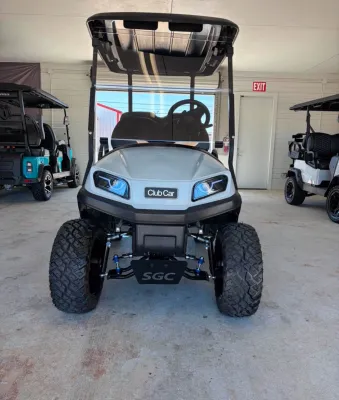
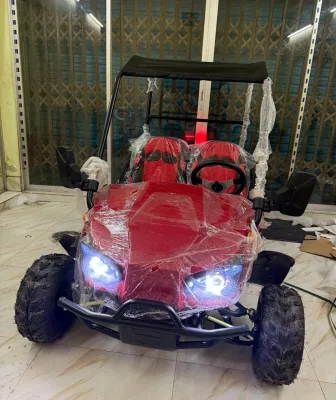
Prices are valid at publication and may change. Please refer to the product page for the latest price.
Local weather conditions and terrain profiles should directly influence your choice of tires and suspension. In tropical climates like Singapore, frequent heavy downpours require tires with excellent water-channeling grooves to prevent hydroplaning on paved estate paths. Hilly terrains or uneven off-road trails demand a heavy-duty suspension system, such as independent front suspension with coil-over shocks, to maintain stability and passenger comfort. Standard leaf-spring suspensions are generally sufficient for flat, well-maintained golf courses but can deliver a harsh ride on uneven ground.
Step 2: Evaluate Battery Types and Motor Specifications
The battery pack is the heart of an electric golf cart, directly influencing its range, maintenance requirements, and overall weight. Traditional flooded lead-acid batteries remain a common entry-level option due to their lower upfront cost. However, they require regular maintenance, including checking and replenishing distilled water levels in each cell, cleaning terminal corrosion, and ensuring proper ventilation during charging. They are also significantly heavier, which increases the overall load on the vehicle’s motor and suspension.

Lithium-ion batteries represent a modern alternative that eliminates routine water maintenance and offers a much lighter footprint. This weight reduction improves acceleration, reduces wear on steering components, and prevents deep turf compaction. When comparing battery types, review the manufacturer-stated lifecycle warranties rather than relying on generalized lifespan claims. Lithium-ion systems typically carry longer warranty periods and support opportunity charging—plugging in the cart for short intervals without damaging the battery’s health—whereas lead-acid batteries prefer complete charge cycles to avoid premature degradation.
The electrical system’s voltage determines the cart’s power delivery and efficiency under load. Standard 36-volt systems are well-suited for flat, level golf courses and light cruising with minimal passenger loads. For hilly terrains, steep driveways, or multi-passenger configurations, a 48-volt system is highly recommended. The higher voltage provides superior torque and acceleration, allowing the cart to maintain speed when climbing inclines or carrying a full load of passengers and equipment.
Before finalizing a purchase, check the motor’s continuous torque and peak horsepower ratings against the steepest inclines you expect to encounter. A motor with insufficient torque will struggle on hills, leading to excessive heat buildup, increased battery drain, and potential electrical component failure. If your daily routes involve steep slopes or heavy hauling, prioritize brushless AC motors, which generally offer higher efficiency and better thermal management than traditional brushed DC motors. Additionally, verify if the cart features a regenerative braking system, which helps slow the vehicle on descents while recovering energy to slightly extend your battery range.
Step 3: Select Essential Features and Street-Legal Readiness
Comfort and weather protection are critical for enjoying your electric golf cart year-round. In hot, humid, or rainy environments, a high-quality canopy is essential to shield passengers from intense sun and sudden downpours. Look for extended canopies that cover all passenger rows, especially on four- or six-seater models. Windshields are another vital accessory; impact-resistant, fold-down acrylic or polycarbonate windshields allow you to block wind and rain when closed, or enjoy a cooling breeze when folded down. For tropical climates prone to heavy monsoons, consider adding a three-sided or four-sided roll-down weather enclosure to keep the cabin dry during sudden storms.
Seating materials should be selected for durability and ease of cleaning. Marine-grade vinyl is the industry standard, offering resistance to moisture, UV rays, and mildew. If the cart will be parked outdoors or exposed to intense sunlight, consider lighter-colored upholstery to minimize heat absorption. Additionally, verify that the seat cushions feature high-density foam that retains its shape and support over extended periods of use.
If you plan to operate the cart on designated public roads, low-speed zones, or within public residential areas, you must ensure the vehicle meets local street-legal requirements. These regulations vary significantly by jurisdiction but commonly mandate specific safety equipment. Essential items include high- and low-beam headlights, taillights, brake lights, turn signals, a horn, side and rearview mirrors, and three-point seatbelts. Always check with your local transport authority or estate management office to confirm the exact registration and equipment standards required for legal operation.
When planning future upgrades, verify the manufacturer’s guidelines regarding aftermarket accessories. Adding high-draw electrical components, such as custom sound systems, LED light bars, or cabin fans, can strain the standard electrical system. To protect your investment, ensure that any accessories are installed using a dedicated voltage reducer to step down the main battery pack’s voltage safely, and confirm that these modifications do not void the manufacturer’s electrical warranty.
Step 4: Inspect Build Quality and Conduct a Test Drive
A physical inspection is crucial to verify the structural integrity and assembly quality of any electric golf cart. Begin by examining the chassis; look for a robust, corrosion-resistant frame, such as boxed aluminum or powder-coated steel, which is particularly important in coastal or high-humidity regions. Inspect the body panels for uniform gaps and secure mounting. Check the wiring harnesses under the seat and cowl to ensure they are neatly routed, insulated, and protected from moisture and road debris. If you are inspecting a cart equipped with lead-acid batteries, locate the date codes stamped on the battery terminals or labels to verify their actual age, as older batteries will have reduced capacity.
A comprehensive test drive is the most effective way to evaluate a cart’s real-world performance. Begin the test drive on a flat surface to assess the smoothness of the acceleration and the responsiveness of the braking system. The cart should accelerate without jerking, and the brakes should bring the vehicle to a straight, controlled stop without pulling to one side or squealing. Next, test the steering play; the steering wheel should feel firm and responsive, with minimal free play or drifting.
During the test drive, actively listen for any unusual noises that could indicate underlying mechanical or electrical issues. A high-pitched whine from the motor, grinding noises from the rear differential, or persistent rattles from the suspension components are warning signs that require professional evaluation. Drive the cart over minor bumps or uneven terrain to observe how the suspension dampens shocks and whether the chassis maintains its structural rigidity.
Finally, review the transaction details and post-purchase support with the dealer. Request a copy of the dealer’s pre-delivery inspection checklist to ensure all systems have been fully tested and calibrated. Carefully read the warranty terms, noting what is covered under the bumper-to-bumper warranty versus the powertrain and battery warranties. Confirm the availability of a local service network or mobile technicians who can perform routine maintenance and repairs at your location, ensuring long-term peace of mind.
Frequently Asked Questions (FAQ)
How do I maintain the battery to maximize its lifespan?
Proper battery maintenance depends entirely on the chemistry of your system. For flooded lead-acid batteries, you must regularly check the electrolyte levels and top them up with distilled water after a full charge cycle, while keeping the terminals clean and free of corrosion. Lithium-ion batteries require virtually no water maintenance, but they benefit from avoiding extreme temperatures and being stored at a partial charge if left unused for long periods. Regardless of the battery type, always use the manufacturer-approved charger and avoid letting the battery discharge completely, as deep discharges can permanently reduce overall capacity.
Can I upgrade my cart's speed or towing capacity later?
While it is mechanically possible to upgrade an electric golf cart’s speed or towing capacity, these modifications require careful planning and professional execution. Increasing speed typically involves upgrading the motor controller or installing a high-speed motor, which places additional stress on the battery pack and wiring. You must also upgrade the braking system to ensure the vehicle can stop safely at higher speeds. Be aware that unauthorized modifications can void your manufacturer’s warranty, compromise safety, and violate local street-legal regulations. Always consult a qualified technician or your authorized dealer before altering any electrical or structural components.
Community discussion
Share your experience or ask a question. Comments are reviewed before publication.