
Starting your journey with a Pilates chair is an excellent way to build functional strength, balance, and deep core stability. As a complete beginner, the key to success lies in mastering control, understanding the equipment’s mechanics, and prioritizing precise alignment over intense resistance. Rather than rushing into complex movements, your initial sessions should focus on establishing a strong mind-body connection and learning how your body interacts with the chair’s unique spring-loaded pedal system. By focusing on form and gradual progression, you can build a safe, sustainable, and highly effective practice.
Setting Up Your Align Pilates Chair for Safe Use
Before performing any exercises, it is essential to conduct a thorough pre-use inspection of your equipment to ensure a secure workout environment. Begin by checking the structural integrity of the chair, ensuring the base sits completely flat on the floor without wobbling. Inspect the pedals, handles, and alignment pins, verifying that all locking mechanisms are fully engaged and secure. If your model features a split-pedal system, ensure the joining pole is locked or unlocked according to your specific exercise plan.
The physical space around your chair also plays a critical role in your safety. Position the chair on a flat, non-slip surface, such as a high-grip exercise mat, to prevent any sliding during movement. Clear a generous perimeter around the equipment, ensuring you have ample space for full arm and leg extensions in all directions without hitting walls or furniture. This is particularly important in compact living spaces, such as typical apartments in Singapore, where maximizing clear floor space prevents accidental bumps.
Products mentioned in this guide
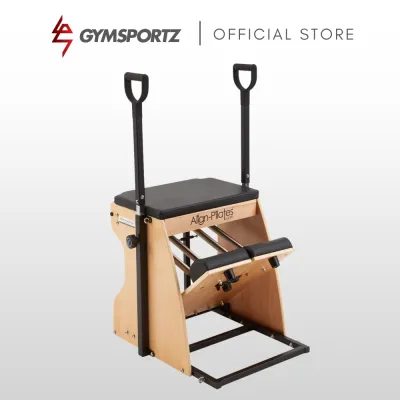
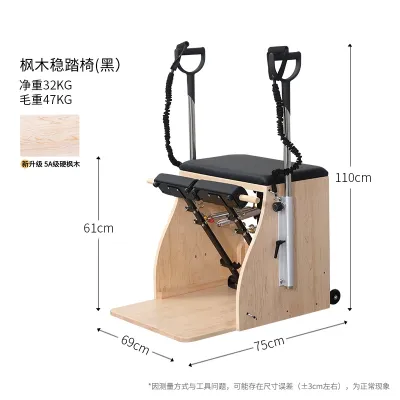
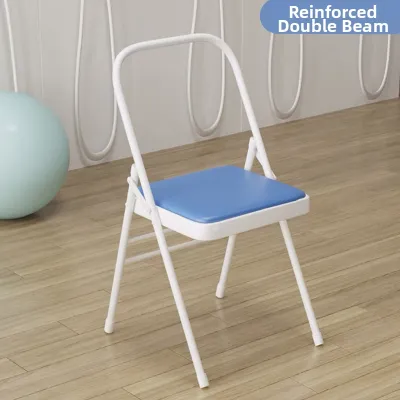
Prices are valid at publication and may change. Please refer to the product page for the latest price.
Finally, always consult the official Align product manual before adjusting any components. The manual provides critical specifications regarding the maximum weight capacity, recommended maintenance schedules, and the exact spring resistance configurations for your specific model. Never guess the spring tension or attempt to modify the attachment points without verifying the manufacturer’s instructions, as incorrect setup can lead to sudden pedal releases or equipment damage.
Core Principles of Form and Alignment on the Chair
To exercise safely and effectively on a Pilates chair, you must master the foundational principles of body alignment. The first and most critical element is locating and maintaining a neutral spine. In a neutral position, the natural curves of your cervical, thoracic, and lumbar spine are preserved, which helps distribute forces evenly across your joints. Whether you are seated on the chair or standing beside it, avoiding excessive arching or rounding of the lower back is essential for protecting your spine from strain.

Stabilizing this neutral posture requires coordinated core engagement paired with lateral thoracic breathing. Unlike shallow chest breathing or belly breathing, lateral breathing involves expanding your ribcage outward to the sides and back as you inhale, while keeping your deep abdominal muscles gently drawn inward. This continuous core activation acts as a supportive corset, stabilizing your pelvis and torso while your limbs work against the resistance of the chair’s springs.
Additionally, pay close attention to joint stacking and tracking during every movement. When pressing the pedal with your feet or hands, your joints should remain aligned along their natural paths of motion. For leg exercises, keep your knees tracking directly over your second and third toes, avoiding any inward collapsing or outward bowing. Be mindful not to hyperextend your knees or elbows at the end of a movement; keeping a micro-bend in the joints ensures that your muscles, rather than your ligaments, are bearing the load.
Foundational Exercises to Start Your Practice
For your very first sessions, select low-risk, basic movements designed to build muscle memory and familiarize your body with the pedal’s resistance.
Begin with Seated Footwork, which is excellent for learning basic pedal control. Sit upright on the center of the chair with your sit-bones firmly planted, your spine neutral, and the balls of your feet resting on the pedal. With light spring resistance, slowly press the pedal downward by extending your hips and knees, then control the return phase as the pedal rises. Focus on keeping your torso completely still and upright, ensuring your core remains engaged to prevent your lower back from swaying.
Next, practice Standing Heel Raises to develop ankle mobility and lower-leg stability. Stand facing the chair, placing the ball of one foot on the pedal while your other foot remains securely planted on the flat floor. You can place your hands on the chair’s handles or a nearby wall for balance support. Slowly press the pedal down by lowering your heel, then lift your heel to raise the pedal, focusing on a smooth, controlled tempo. Always verify the pedal’s stability and your balance before applying weight, and do not stand fully on the pedal or the chair’s seat without professional supervision.
To engage your upper body, perform Seated Arm Presses. Sit facing the chair or on the floor in front of it, depending on your model’s height and your comfort level. Place your hands on the pedal and gently press downward, focusing on initiating the movement from your mid-back and core rather than just your arms. This exercise helps establish the connection between upper limb movement and core stabilization, teaching you to keep your shoulders relaxed and away from your ears.
As a beginner, always start with the lightest spring resistance setting recommended by the manufacturer. Only increase the resistance or adjust the spring tension when you can execute the movements with perfect form and complete control through the entire range of motion. Remember that in Pilates, lighter resistance can sometimes make an exercise more challenging by requiring greater core stability to control the pedal’s return.
Recognizing Limits: When to Stop or Modify
As you progress, learning to listen to your body’s signals is vital for preventing injury and ensuring a positive training experience. It is important to differentiate between normal muscle fatigue—a warm, burning sensation in the targeted muscles—and sharp, sudden, or joint-specific pain. If you experience any sharp pain, pinching, or discomfort in your joints, spine, or neck, stop the exercise immediately and step away from the chair.
You should also halt an exercise if you find yourself losing postural control. If your torso begins to wobble, your lower back arches excessively, or you cannot control the pedal’s return phase smoothly, the resistance may be too heavy or your muscles may be fatigued. Continuing an exercise with compromised form increases the risk of strain and teaches your body poor movement habits.
Furthermore, physical safety boundaries must be respected. If you have pre-existing injuries, chronic joint or back conditions, or are pregnant, do not attempt to use the Pilates chair without first obtaining medical clearance from a healthcare provider. In these situations, it is highly recommended to work directly with a certified Pilates instructor who can provide personalized modifications, adjust spring tensions safely, and supervise your form to ensure your routine is entirely appropriate for your physical needs.
Structuring Your First Beginner Routine
A well-structured routine ensures that your body is properly prepared for the unique demands of the Pilates chair. Always begin your session with a thorough warm-up off the chair. Spend five to ten minutes performing gentle joint mobilization, such as shoulder rolls, pelvic tilts, and cat-cow stretches on a mat, alongside light core activation exercises like the bird-dog. This prepares your nervous system, increases blood flow to your muscles, and helps you find your neutral spine before you introduce spring resistance.
For the main portion of your workout, focus on quality over quantity. Select three to four foundational exercises, performing a low number of repetitions—typically six to eight controlled repetitions per movement. Allow yourself adequate rest between sets to reset your posture, catch your breath, and mentally prepare for the next exercise. This deliberate pace prevents fatigue-induced form breakdown and helps reinforce correct movement patterns.
Conclude your practice with a dedicated cool-down to aid recovery and maintain flexibility. Focus on gentle stretching for the muscle groups actively targeted during your session, such as the calves, hamstrings, hip flexors, and chest. Hold each stretch statically for twenty to thirty seconds while taking deep, relaxing breaths, helping your body transition back to a resting state and reducing post-exercise muscle tightness.
Frequently Asked Questions (FAQ)
How often should a beginner use the Pilates chair?
For those new to the equipment, starting with one to two short sessions per week is highly recommended. This frequency gives your muscles, joints, and nervous system sufficient time to adapt to the new movement patterns and resistance. Prioritize recovery and rest over daily practice, especially if you experience delayed onset muscle soreness, and gradually increase your frequency only as your strength and stamina improve.
Can I use the Align Pilates chair if I have joint or back issues?
The Pilates chair is a versatile training tool, but it is not a medical device and should not be used as a replacement for physical therapy. If you have joint or back issues, you must obtain medical clearance from a healthcare professional before starting. Additionally, working directly with a certified Pilates instructor is highly recommended, as they can customize the exercises, adjust spring tensions, and ensure your alignment is safe for your specific condition.
Is the Align Pilates chair the same as a Wunda chair?
The Wunda chair is a classic piece of Pilates equipment originally designed by Joseph Pilates, characterized by its compact, box-like design and spring-loaded pedal. Align is a modern brand that manufactures high-quality Pilates equipment, including their own versions of the Pilates chair. While they share the same core functional principles and movement patterns, modern chairs often feature updated adjustment mechanisms, split pedals, and handle attachments; always refer to your specific model’s manual for its exact features and operational guidelines.
Community discussion
Share your experience or ask a question. Comments are reviewed before publication.