
Using a Pilates hoop—traditionally known as a magic circle—correctly as a beginner requires shifting your focus from brute force to precise, controlled resistance. This lightweight, flexible ring is designed to help you find your deep stabilizing muscles, improve your alignment, and add gentle resistance to mat exercises. Instead of trying to bend the hoop as much as possible, your goal is to use its spring-like feedback to engage your core, shoulders, and hips with mindful control.
For those starting their home fitness journey, the hoop acts as an excellent biofeedback tool. It immediately highlights imbalances in your posture or muscle engagement; if you squeeze unevenly, the hoop will wobble or tilt. By mastering a few foundational exercises and focusing on proper breathing, you can safely build a strong, balanced routine that enhances your overall stability and body awareness.
Preparing Your Space and Inspecting Your Pilates Hoop
Before you begin any exercise session, it is essential to verify that your equipment is safe to use. A standard Pilates hoop consists of a flexible composite or steel ring covered in a protective rubberized coating, featuring two opposing padded handles. These pads are typically curved on both the inside and outside to accommodate different hand and leg placements.
Products mentioned in this guide
![[SG] Upgraded Weighted Hoop Hula Hoop 1.5kg/2kg for Adults Soft Spring Fitness Hoop Exercise Hoop for Weight Loss](https://img.lazcdn.com/g/p/fdeafd2bfb28176e7c6a725216e09dcd.jpg_400x400q80.jpg_.webp)
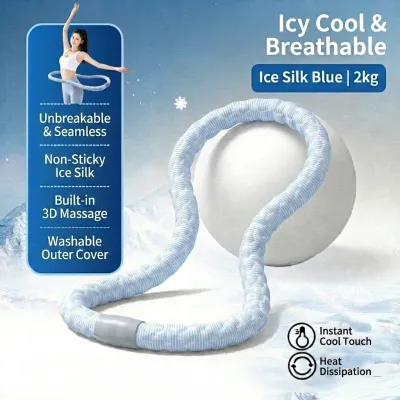
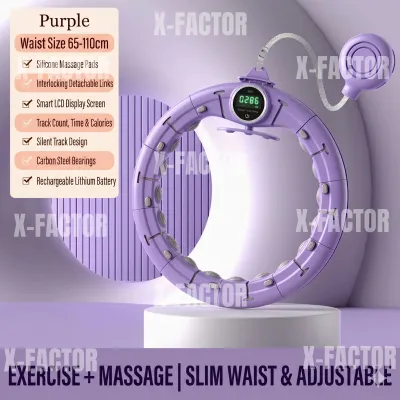

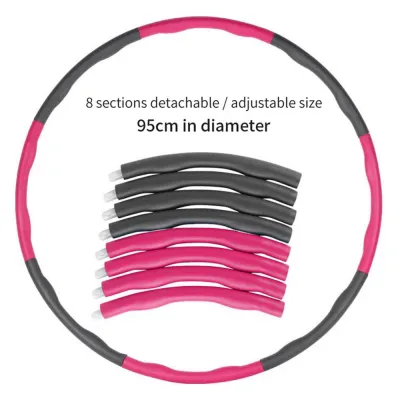
Prices are valid at publication and may change. Please refer to the product page for the latest price.
Take a moment to inspect your hoop thoroughly before every workout. Look closely for any visible hairline cracks in the ring structure, tears in the outer protective material, or loose padding on the handles. Because the hoop stores potential energy when compressed, any structural compromise could cause the ring to snap or slip suddenly during an exercise, leading to impact injuries. If you notice any signs of wear, replace the hoop immediately.
Next, prepare your physical environment to ensure a safe and uninterrupted practice. In a typical apartment setting, clear a flat, non-slip surface, preferably using a high-quality yoga or fitness mat to cushion your spine and joints. Ensure you have ample clearance in all directions—at least a two-meter radius—so you can fully extend your arms and legs without risk of striking furniture, walls, or other household objects.
Essential Form Cues and Breathing for Safe Resistance Training
To get the most out of your Pilates hoop and protect your joints, you must establish a strong foundation of core engagement and alignment. Before applying any pressure to the hoop, find a neutral spine position where your lower back maintains its natural, slight curve without pressing flat into the floor or arching excessively. Engage your deep abdominal muscles by gently drawing your belly button toward your spine, creating a corset-like sensation around your midsection.

Breathing is the driving force behind every Pilates movement and must be coordinated precisely with the resistance. As a general rule, always exhale through your mouth during the exertion phase of the exercise, which is when you are actively squeezing or pressing against the hoop. This exhalation naturally helps deep core muscles contract, providing maximum stability when the resistance is highest. Inhale deeply through your nose as you slowly release the tension, allowing your lungs to expand fully.
The speed of your movement dictates both the safety and effectiveness of the exercise. Focus on slow, deliberate actions, paying close attention to the eccentric phase, which is the controlled release of the hoop back to its circular shape. Allowing the hoop to snap back quickly can strain your muscles, tendons, or joints. By resisting the spring of the hoop as it opens, you double the efficiency of your workout while keeping your movements entirely safe.
Foundational Pilates Hoop Exercises to Build Your Routine
Starting a new routine with a Pilates hoop does not require complex choreography or high repetitions. Instead, your focus should remain entirely on the quality of each movement, ensuring your stabilizing muscles are fully active throughout the exercise. Moving smoothly from one position to the next allows your body to adapt to the unique resistance of the ring.
As a beginner, aim to perform each exercise slowly, taking brief moments to rest and reset your posture between different positions. This deliberate pace helps you monitor your form and prevents fatigue from causing compensatory movements. The following foundational exercises are designed to target your entire body, starting from your deep core and moving to your upper and lower limbs.
Inner Thigh and Core Squeeze
The inner thigh squeeze is one of the most classic Pilates hoop exercises, specifically targeting the adductor muscles and the pelvic floor. To set up, lie flat on your back on your mat with your knees bent and your feet flat on the floor, hip-width apart. Keep your arms relaxed by your sides, palms facing down, and ensure your neck and shoulders remain completely relaxed.
Carefully place the hoop between your thighs, positioning the padded handles just above your knees. Avoid placing the pads directly on your knee joints, as this can cause uncomfortable lateral pressure on the joint structure. Alternatively, for a more advanced variation once you are comfortable, you can place the hoop just above your ankle bones while keeping your legs extended, though the above-knee placement is highly recommended for beginners.
To execute the movement, take a deep breath in to prepare, then exhale slowly as you gently squeeze your thighs inward against the pads. Focus on a smooth, even contraction, imagining your inner thighs drawing toward your midline. Keep your pelvis perfectly stable and your lower back in its neutral position; do not tilt your hips or press your lower back flat into the mat as you squeeze. Inhale as you slowly control the release of the hoop, stopping just before it loses tension entirely.
Chest Press and Upper Back Engagement
The chest press exercise utilizes the hoop to improve upper body posture, targeting the pectoral muscles, shoulders, and upper back. You can perform this exercise while standing tall with your feet hip-width apart, or sitting upright on a stable chair or cross-legged on your mat. Hold the hoop directly in front of your chest, placing the palms of your hands flat against the outer padded handles with your fingers extended long.
Keep your elbows slightly bent and flared out to the sides, and consciously slide your shoulder blades down your back, away from your ears. To engage your chest, exhale as you gently press your hands inward, compressing the hoop. Focus on initiating the movement from your chest and the front of your shoulders, rather than gripping with your hands or tensing your neck.
To target your upper back and the back of your shoulders, you can transition to an outward press if your hoop features comfortable inner handles. Place your hands inside the ring, resting the backs of your wrists or palms against the inner pads. Exhale as you gently press outward, feeling your shoulder blades broaden across your back. Throughout both variations, keep your ribcage closed and your core engaged to prevent your lower back from arching.
Glute Bridge with Outward Hoop Resistance
Combining the classic glute bridge with outward hoop resistance is an excellent way to target your gluteus medius, outer hips, and deep core stabilizers. To begin, lie on your back with your knees bent and feet flat on the floor, hip-width apart. Place your legs inside the center of the hoop, positioning the outer sides of your thighs—just above your knees—against the inner padded handles.
Before lifting your hips, press your outer thighs gently outward against the hoop to create light tension, which immediately activates your outer glutes. Keep your arms resting flat on the mat beside you to help stabilize your upper body. Take a deep breath in, engaging your core to prepare for the lift.
Exhale as you press through your heels and lift your hips toward the ceiling, maintaining that outward pressure against the hoop. Lift until your body forms a straight line from your shoulders to your knees, avoiding the temptation to over-arch your lower back at the top of the movement. Keep your knees aligned with your hips and ankles, preventing them from splaying too far outward or collapsing inward. Inhale as you slowly lower your hips back down to the mat, maintaining constant, gentle tension on the hoop.
Common Beginner Mistakes and How to Avoid Them
One of the most frequent mistakes beginners make is squeezing the hoop with maximum force or using rapid, jerky movements. The Pilates hoop is not a strength-testing device; squeezing it too hard can cause your muscles to seize, ruin your alignment, and potentially damage the hoop itself. Always prioritize a moderate, controlled squeeze where you can maintain perfect posture and feel the targeted muscle group working.
Another common error is holding your breath during the most challenging part of the exercise. This habit increases intra-abdominal pressure and can cause unnecessary tension in your neck and shoulders. If you find yourself holding your breath, reduce the resistance you are applying to the hoop and focus on matching your breath to the movement: exhale to squeeze, inhale to release.
Watch out for compensatory movements, which occur when your body tries to make an exercise easier by recruiting unintended muscles. For example, during upper body exercises, beginners often shrug their shoulders toward their ears or strain their necks forward. During lower body exercises, there is a tendency to use momentum or tilt the pelvis to force a deeper squeeze. If you feel tension in your neck, shoulders, or lower back, stop the exercise, reset your posture, and perform the movement with less compression.
Structuring a Safe Home Practice and Knowing When to Stop
When integrating the Pilates hoop into your home routine, consistency and proper form are far more valuable than high volume. Start by performing 8 to 10 controlled repetitions of each exercise, completing just one or two sets per session. As your strength and endurance improve, you can gradually increase the number of repetitions or add a third set, always ensuring your form remains flawless.
It is vital to listen to your body and recognize the difference between muscle fatigue and pain. You should feel a mild, warm sensation in the targeted muscles, but you should never experience sharp pain, joint discomfort, clicking, or pinching. If you feel any of these warning signs, or if you experience dizziness or a loss of physical control, cease the exercise immediately and rest.
Before beginning any new exercise program, especially one involving resistance equipment at home, consult a healthcare provider or a certified Pilates instructor. This is particularly important if you have pre-existing joint issues, back pain, recent injuries, or other medical conditions. A professional can help tailor these movements to your specific physical needs, ensuring your practice remains safe, effective, and enjoyable.
Community discussion
Share your experience or ask a question. Comments are reviewed before publication.