
The ideal level of cushioning in a yoga mat is not a one-size-fits-all specification; it depends entirely on your specific yoga style, joint sensitivity, and where you practice. An Adidas mat (often referred to as an adidas mat in retail spaces) generally targets versatile, multi-purpose fitness and dynamic studio practices. These mats typically feature moderate thickness and synthetic blends designed to balance joint protection with a stable, non-slip foundation for active movements.
In contrast, specialized premium yoga brands often focus on heavy, high-density natural materials like harvested rubber or polyurethane. These materials are engineered specifically for deep joint support during slow, static postures.
If you require a lightweight, highly durable, and versatile mat for dynamic flows, pilates, or general home workouts, an Adidas mat serves as an excellent, easily transportable option. However, if your practice consists primarily of long, restorative holds where your knees, elbows, and spine require maximum pressure relief against a hard floor, you may want to look toward high-density, specialized premium mats.
Products mentioned in this guide
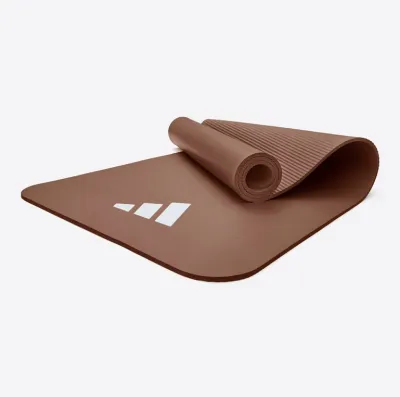
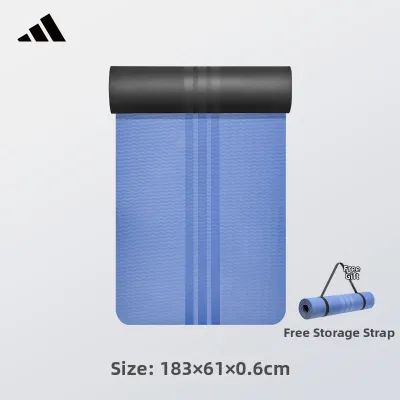


Prices are valid at publication and may change. Please refer to the product page for the latest price.
Thickness vs. Density: Why Millimeters Don't Tell the Whole Story
When shopping for a yoga mat, it is easy to assume that a higher millimeter rating automatically translates to better comfort. However, physical thickness is only one part of the equation. To understand how a mat will actually feel under your joints, you must distinguish between physical thickness and material density.
Thickness refers strictly to the vertical distance between the subfloor and your body, usually measured in millimeters ranging from ultra-thin travel mats of 1.5 mm to extra-thick fitness mats of 8 mm or more. Density, on the other hand, describes how closely packed the material fibers or cells are, which determines the mat’s resistance to compression under weight.
If you choose a mat that is thick but has low density, you run a high risk of “bottoming out.” This phenomenon occurs when your body weight compresses the foam completely down to the hard floor beneath. For example, a cheap 8 mm lightweight foam mat might feel incredibly plush when you press it with your hand, but when you place your full weight onto a single knee during a low lunge, the foam collapses entirely. This leaves your joint resting directly against the hard ground, offering virtually zero protection while simultaneously creating an unstable, squishy surface that compromises your balance during standing poses.
Conversely, a thinner but high-density mat, such as a 4 mm natural rubber or dense polyurethane mat, offers superior support. Even though it sits closer to the floor, the dense material resists complete compression, absorbing the impact and distributing your weight evenly. This structural integrity keeps your joints cushioned while maintaining a firm, predictable foundation for balancing poses like Tree Pose or Warrior III.
To evaluate true cushioning, you must look beyond the millimeter measurement on the packaging and closely examine the material composition. The most common materials include:
- Thermoplastic Elastomer (TPE): A lightweight, closed-cell synthetic material that offers moderate density, excellent elasticity, and solid moisture resistance.
- Polyvinyl Chloride (PVC): A highly durable traditional synthetic material that can range from low-density budget foam to extremely high-density, professional-grade studio mats.
- Natural Rubber: An organic material known for its exceptional high-density support, heavy weight, and natural grip.
- Polyurethane (PU): Often paired with a rubber base, this material provides an incredibly smooth, high-density surface with exceptional dry and wet grip.
The Adidas Yoga Mat Profile: What to Expect
Adidas yoga mats are designed with a clear philosophy: versatility and multi-functional performance. Rather than catering exclusively to niche, slow-paced yoga disciplines, these mats are engineered to bridge the gap between traditional yoga, high-intensity Pilates, and general floor-based fitness routines. This makes them highly appealing if you maintain a varied workout regimen.

Most Adidas mats utilize synthetic materials, with a strong emphasis on Thermoplastic Elastomer (TPE) or specialized lightweight PVC blends. This choice of material yields several distinct characteristics:
- Moderate Cushioning: Typically ranging from 4 mm to 6 mm in thickness, these mats provide a balanced level of padding that protects your joints during floor work without isolating you too much from the ground.
- Lightweight Portability: Unlike heavy natural rubber mats that can easily weigh over three kilograms, synthetic Adidas mats are remarkably lightweight. This makes them easy to roll up, secure with a strap, and carry during daily commutes.
- Easy Maintenance: The closed-cell structure of these synthetic materials prevents sweat and moisture from soaking deep into the core of the mat. This is particularly beneficial in humid climates, as it makes the surface easy to wipe clean and highly resistant to lingering odors.
Before purchasing, it is essential to verify the exact product label. Look closely at the specifications for the precise material blend, surface texture, and thickness. Adidas offers several variations within their fitness and yoga lineups. Some mats feature a textured, non-slip surface pattern designed specifically for traction, while others are slightly firmer to accommodate rapid lateral movements and bodyweight exercises.
Ultimately, the typical Adidas mat prioritizes a firm, stable base over extreme, pillowy plushness. This design ensures that when you transition quickly between dynamic movements, the mat does not stretch, bunch up, or cause your ankles to wobble, making it a reliable partner for active, fast-paced practices.
Adidas vs. Competitors: Comparing Cushioning and Stability
To understand where Adidas stands in the wider market, it is helpful to compare synthetic-blend mats against other major categories. By grouping competitors by material composition and market segment, we can evaluate how they perform across key dimensions such as density, stability, weight, and joint support.
Adidas (Synthetic Blends/TPE/PVC) These mats occupy a versatile middle ground. They offer moderate density, providing sufficient cushioning for general use while remaining firm enough to prevent bottoming out. Their lightweight nature makes them highly portable, and their synthetic construction ensures long-term durability against regular wear. They are ideal for practitioners who value a single, low-maintenance mat for a variety of exercise styles.
Premium Natural Rubber and Polyurethane Brands Premium brands focus on high-density materials like natural tree rubber and polyurethane. These mats are heavier, often weighing over 2.5 kilograms, but this weight translates to exceptional stability on the studio floor. The high-density structure offers deep joint support, ensuring that even a thinner 3 mm or 4 mm mat protects your knees and wrists during long holds. The trade-offs are higher cost and heavier carrying weight.
Budget Foam and Low-Density PVC Brands Budget-focused mats are often made from low-density PVC or basic polyethylene foam. These mats are frequently marketed with high thickness measurements (e.g., 10 mm or more) at low prices. While soft to the touch, they suffer from rapid compression. When balancing on these mats, they compress completely, offering poor stability and causing joint misalignment.
| Material Category | Typical Thickness | Material Density & Firmness | Best For (Practice Style) | Portability & Weight |
|---|---|---|---|---|
| Adidas (Synthetic Blends / TPE) | 4 mm to 6 mm | Moderate density; firm, stable rebound | Dynamic flows, Pilates, and general floor fitness | Highly portable; lightweight and easy to carry |
| Premium Brands (Natural Rubber / PU) | 3 mm to 5 mm | High density; firm, solid joint protection | Ashtanga, Iyengar, and slow restorative practices | Low portability; heavy and best suited for home or dedicated studio use |
| Budget Brands (Low-Density Foam / PVC) | 6 mm to 15 mm | Low density; soft but bottoms out easily | Gentle stretching or basic floor exercises | Moderate portability; light but bulky to roll up |
By analyzing this table, you can see that if your priority is a balance between moderate, reliable cushioning and easy portability, synthetic options like those from Adidas offer a practical compromise that avoids the instability of budget foam without the heavy weight of premium rubber.
How to Match Mat Thickness to Your Specific Yoga Style
Selecting the perfect mat thickness is about matching the physical properties of the mat to the mechanical demands of your preferred yoga style. Choosing the wrong thickness can actively hinder your progress or lead to unnecessary joint strain.
Dynamic and Fast-Paced Practices For Vinyasa, Ashtanga, Power Yoga, or hot yoga, your primary requirements are stability, grip, and a strong connection to the floor. For these styles, a thinner and firmer mat—typically between 3 mm and 5 mm—is highly recommended.
- When holding complex standing balances or executing rapid transitions, any lateral shifting or squishiness can cause your ankles to roll or throw off your center of gravity.
- A firm, moderate-thickness mat ensures your hands and feet can press firmly into a stable surface, providing the necessary feedback from the floor to keep your body aligned.
Slow, Restorative, and Alignment-Focused Practices For styles such as Yin, Hatha, or Restorative Yoga, you will spend extended periods holding static poses, often with your joints bearing your weight directly against the floor. Here, a thicker, high-density mat between 5 mm and 8 mm is essential.
- During a five-minute hold in a deep lunge, insufficient cushioning can quickly turn from mild discomfort into joint pain.
- A thicker mat with high density absorbs this sustained pressure, allowing your muscles to relax fully into the posture without your bones pressing painfully against the ground.
Mixed Practice and General Fitness If you regularly alternate between yoga, Pilates, and bodyweight strength training, a moderate-thickness synthetic mat (around 4 mm to 6 mm) serves as the ideal middle ground.
- These mats provide enough cushion to protect your spine during rolling exercises in Pilates, yet remain firm enough to support active lunges, planks, and mountain climbers without stretching out of shape.
To help simplify your decision, consider this straightforward framework:
- Choose an Adidas or similar synthetic TPE mat if: You want a lightweight, versatile, and moderately cushioned mat that easily transitions between dynamic yoga flows, home fitness workouts, and studio classes without weighing you down.
- Choose a premium high-density natural rubber mat if: Your practice is deeply rooted in traditional yoga, you prioritize maximum joint protection during long holds, and you do not mind carrying a heavier mat to achieve superior grip and stability.
- Choose a specialized extra-thick fitness mat if: You focus primarily on gentle stretching, restorative floor work, or physical therapy exercises where joint comfort is your absolute priority and standing balance poses are rarely practiced.
Smart Shopping: Verifying Specs and Value in Singapore
When shopping for a yoga mat in Singapore, making an informed decision requires looking past marketing buzzwords and verifying technical specifications. With a wide variety of options available across local retail stores and online marketplaces, taking a systematic approach ensures you get the best value for your money.
First, always cross-reference the official specifications provided by the manufacturer. Online listings on third-party marketplace platforms can sometimes feature inaccurate titles, occasionally labeling a standard fitness mat as a “premium professional yoga mat” or misstating the exact millimeter thickness. To avoid disappointment, verify the model name on the official brand website to confirm its precise dimensions and material composition.
Second, pay close attention to verified user feedback, paying specific attention to how the mat performs over time. When reading reviews, search for telling keywords that reveal the true density of the cushioning:
- Look for terms like "bottoming out" or "knee pain" to see if the mat compresses too easily under pressure.
- Search for "stretched" or "lost shape" to evaluate if the material holds up during active lateral movements.
- Check for mentions of "slipping" or "humidity", which are incredibly important in Singapore’s warm, humid climate. A mat that performs well in a dry, air-conditioned room might become slick and unsafe if you practice in a non-air-conditioned space or sweat heavily.
Third, evaluate the cost relative to the expected lifespan of the material. In Singapore, high-quality synthetic TPE mats typically range from S$40 to S$90, while premium natural rubber or polyurethane mats can cost anywhere from S$100 to over S$180. While a budget foam mat priced under S$20 might seem tempting, its rapid degradation and poor support often mean you will need to replace it within a few months, making a moderately priced, durable synthetic mat like an Adidas model a much more cost-effective choice in the long run.
Finally, take advantage of local shopping options. If you are highly sensitive to joint pain or unsure about what density feels right, visit a physical sporting goods store or an official brand outlet in Singapore. Physically pressing your thumb into the mat or feeling its weight in person can give you an immediate understanding of its density and texture. Additionally, always check the return and exchange policies of the retailer before purchasing, ensuring you have recourse if the mat does not meet your expectations when laid out on your home floor.
Frequently Asked Questions (FAQ)
Does a thicker yoga mat always mean better joint support?
No, a thicker yoga mat does not automatically guarantee better joint support. Support is determined by a combination of thickness and material density. A very thick mat (such as 10 mm or 12 mm) made from low-density, cheap foam will compress completely under your body weight, leaving your joints resting directly against the hard floor. Furthermore, this excessive, soft cushioning can create an unstable surface, forcing your ankles, knees, and wrists to work harder to maintain balance, which can lead to joint strain. For genuine joint protection, a moderately thick (4 mm to 6 mm) mat made from high-density materials like TPE or natural rubber is far more effective, as it resists complete compression and keeps your joints properly aligned.
How do I clean a thick, cushioned yoga mat without damaging the material?
To clean a thick, cushioned yoga mat safely, you should always start by checking the manufacturer’s specific care label, as different synthetic and natural materials require different cleaning methods. For general maintenance of synthetic mats like TPE or PVC, wipe the surface down after each practice using a soft, damp cloth mixed with a few drops of mild dish soap and warm water. Avoid soaking or submerging the mat in water, as thick materials can trap moisture inside, leading to mold growth and material breakdown. Never use harsh chemical cleaners, bleach, or abrasive scrubbing pads. Once cleaned, hang the mat to air dry completely in a well-ventilated indoor space away from direct sunlight, as UV rays can degrade synthetic materials and cause them to crumble over time.
Community discussion
Share your experience or ask a question. Comments are reviewed before publication.