
Adding a leg weight to your fitness routine is a highly effective way to increase resistance, but choosing between adjustable and fixed designs determines how comfortably and consistently you will train. Ankle weights leverage the principle of distal loading, where resistance is placed far from the pivot joint (the hip or knee). This positioning creates a longer lever arm, making even a light load feel significantly heavier and forcing your muscles to work harder to stabilize and move.
Adjustable ankle weights are the better investment for beginners, multi-user households, and those focusing on progressive overload in controlled environments. They allow you to scale resistance as your strength develops, making them a highly versatile choice for long-term progression.
Fixed ankle weights are superior for high-movement activities like walking, aerobics, or Pilates, where a secure, non-shifting fit and streamlined comfort are the top priorities. Their low-profile design minimizes movement against the skin, reducing the risk of chafing.
Products mentioned in this guide
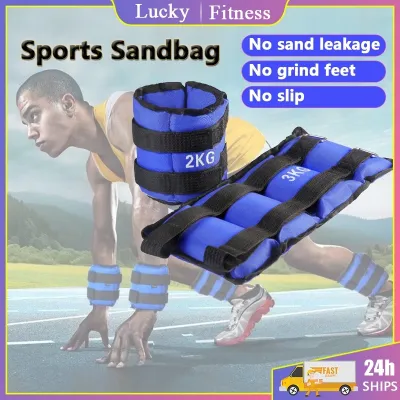
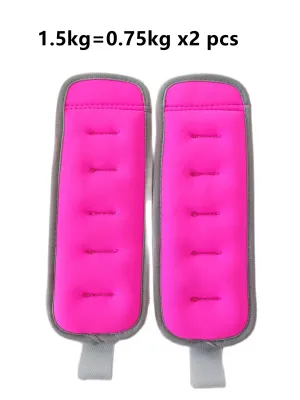
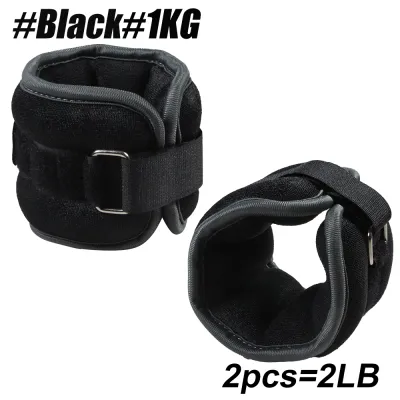
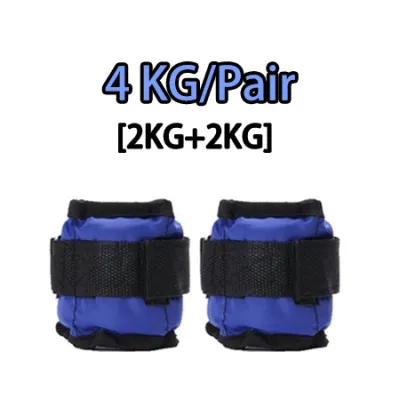

![[SG Stock]Leg weight sandbag wrist weight sandbag strength training sandbag dance training sandbag sports sandbag](https://img.lazcdn.com/g/p/2f5d03c05c91a6321d4467990af47778.jpg_webp_400x400q80.jpg_.webp)
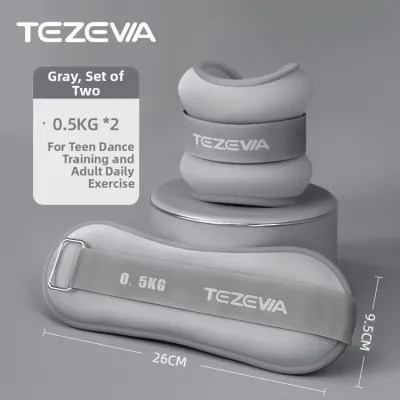
Prices are valid at publication and may change. Please refer to the product page for the latest price.
Ultimately, the best choice depends entirely on your primary exercise routine, your current fitness level, and whether you need to change the load frequently. Understanding the structural and functional differences between these two types will help you make an informed purchase that aligns with your fitness goals.
Design and Mechanics: How They Differ
To understand which option suits your training, it is essential to look at how these two types of weights are engineered. Adjustable leg weights feature a series of individual pockets sewn along the exterior of the strap. These pockets hold removable weight inserts, which are typically small sandbags, iron sand packets, or solid metal cylinders. The pockets are secured with zippers, snaps, or heavy-duty Velcro flaps, allowing you to add or subtract weight at will. Because of this multi-pocket design, adjustable weights are physically bulkier and stiffer, often extending further outward from the ankle.
Fixed leg weights, by contrast, are constructed with a single, non-adjustable load. The filling material—usually iron sand, steel shot, or a solid silicone-encased metal core—is permanently sealed inside the strap. The weight is distributed uniformly across the entire length of the band, which is typically stitched into segmented compartments to prevent the filling from shifting to one end. This construction results in a much slimmer, more contoured profile that wraps smoothly around the lower leg.
The closure systems also differ significantly between the two styles. Adjustable models almost always rely on thick, wide nylon straps threaded through a metal or plastic D-ring to secure the bulky frame. Fixed models, especially modern silicone or neoprene variants, often use sleeker, elasticated hook-and-loop bands or watch-band style buckles. This distinction directly impacts how easily the weights fit under or over workout pants, and how much they restrict natural ankle mobility during deep flexion. In Singapore’s tropical climate, material breathability and sweat absorption are critical factors to consider during selection.
Versatility and Progressive Overload with a Leg Weight
When evaluating long-term value, versatility and the principle of progressive overload are primary considerations. Progressive overload requires gradually increasing the resistance over time to force muscle adaptation and growth. An adjustable leg weight is specifically designed to facilitate this training method. For example, you can start a lower-body rehabilitation program using just 0.5 kg of resistance. As your tendons and muscles adapt over several weeks, you can slide additional metal or sand inserts into the pockets to increase the weight to 1 kg, 1.5 kg, or more, without needing to buy a new set of equipment.

This adjustability also makes these weights highly practical for multi-user households. A beginner can use a light setting for lateral leg raises, while a more advanced family member can load the same strap to its maximum capacity for high-resistance glute bridges. This shared utility maximizes the return on your investment, as one adjustable set can effectively replace three or four pairs of fixed weights.
Fixed weights, on the other hand, are limited to a single, static resistance level. If you purchase a 1.5 kg fixed pair, that is the only resistance you will ever have. Once your muscles adapt and the exercises become too easy, you must purchase a heavier pair to continue progressing. This static nature can quickly lead to a cluttered home gym filled with multiple pairs of different weights, increasing your total expenditure over time.
However, fixed weights offer unmatched convenience. They are entirely “grab-and-go” tools that require zero preparation. With adjustable weights, you must spend time before each workout selecting, balancing, and securing the individual inserts. If you fail to distribute the inserts evenly across the pockets, the resulting unbalanced load can alter your joint mechanics, leading to uneven strain on your ankles and knees during exercise.
Comfort, Fit, and Exercise Suitability
The comfort of a leg weight during movement is directly tied to how well it conforms to your anatomy and how little it moves during exercise. A weight that shifts, bounces, or slides can quickly turn an effective workout into a painful experience.
High-Movement and Cardio (Walking, Aerobics, Dance)
For high-movement cardio sessions, fixed weights are almost always the superior choice. Their slim, contoured profile allows them to hug the ankle tightly, distributing the load evenly around the joint. This uniform distribution minimizes the centrifugal force generated during fast movements, preventing the weight from sliding up and down your shin or rotating around your leg.
When you walk, jog, or perform aerobic dance, your limbs move through rapid, repetitive arcs. If you wear bulky adjustable weights, the protruding pockets create a higher profile that can catch on your opposite leg or clothing. Furthermore, if the individual inserts shift inside their pockets, they create an unbalanced momentum that can alter your natural gait, putting unnecessary stress on your lateral collateral ligaments and shin muscles.
The constant shifting of an improperly fitted adjustable weight also creates friction. In Singapore’s hot, humid climate, sweat acts as an accelerant for skin irritation. The combination of moisture, heat, and a bouncing strap can cause severe chafing and friction burns around the Achilles tendon and ankle bones. Fixed weights, particularly those lined with soft neoprene or made of smooth, non-porous silicone, stay securely in place and significantly reduce this risk.
Controlled Movements (Pilates, Yoga, Floor Strength Training)
For slow, controlled movements, both adjustable and fixed weights perform exceptionally well, but adjustable models offer a distinct tactical advantage. Floor-based exercises—such as donkey kicks, fire hydrants, lying leg lifts, and Pilates core work—do not involve high-impact forces or rapid limb acceleration. Consequently, the bulkiness of an adjustable strap is rarely an obstacle.
In these controlled settings, the ability to fine-tune your resistance is highly beneficial. Different muscle groups have vastly different strength capacities; your glutes can handle a much heavier load than your hip abductors or hamstrings. With an adjustable set, you can use a heavier setting for low-rep glute bridges and quickly slide out a few inserts to create a lighter setting for high-rep lateral leg raises.
This level of customization ensures that you can maintain proper form throughout your entire routine. In Pilates and yoga, form is paramount. Using a weight that is even slightly too heavy can cause your pelvis to tilt or your lower back to arch, shifting the workload away from the target muscles and placing your spine at risk. Adjustable weights allow you to find the exact threshold where your muscles are challenged without compromising your alignment.
Durability and Maintenance Requirements
The lifespan of your fitness gear depends on its construction quality and how well it withstands sweat and cleaning. Before initiating any cleaning or maintenance, always check your specific product’s label and the manufacturer’s care instructions, as materials vary widely.
Adjustable weights have several inherent failure points due to their complex construction. The constant insertion and removal of weights put strain on the seams of the individual pockets. Over time, these seams can fray or tear, especially if the inserts have sharp metal edges or are tightly packed. Additionally, the zippers, snaps, or Velcro flaps that secure the pockets are prone to wear. If the Velcro loses its grip or a zipper splits, the inserts can slide out during a workout, rendering the entire strap unusable.
Fixed weights are structurally much simpler, featuring fewer seams and no moving parts or closure flaps. This simplicity generally translates to a longer lifespan, as there are no pocket seams to blow out or zippers to break. However, they are not indestructible. If the outer fabric of a sand-filled fixed weight tears due to scraping against the floor, the internal iron sand will leak out. Because the filling is sealed inside, repairing a torn fixed weight is incredibly difficult, and the entire unit usually must be replaced.
Maintenance routines differ drastically between the two types. In Singapore’s humid climate, sweat accumulation can quickly lead to bacterial growth, mold, and unpleasant odors. Adjustable weights require you to remove every single weight insert before washing the fabric sleeve—a tedious process that many users neglect. If you wash the sleeve with the inserts inside, you risk ruining the filling (especially if it consists of iron sand, which can rust, or fabric-covered sandbags that absorb water and clump). Fixed weights are typically easier to maintain; silicone models can be wiped down instantly with a damp cloth and sanitized, while neoprene fixed weights can be hand-washed and hung to dry in a well-ventilated space away from direct sunlight.
Price and Long-Term Value
Evaluating the cost of ankle weights requires looking beyond the initial retail price to calculate the long-term value per dollar spent. Generally, adjustable ankle weight sets carry a higher upfront cost than a single pair of fixed weights. A high-quality adjustable set from a reputable brand in Singapore typically ranges from S$30 to S$60, depending on the maximum weight capacity and the materials used. In contrast, a single pair of fixed weights usually costs between S$15 and S$35.
While the higher upfront price of adjustable weights might seem less appealing, they often represent much better long-term value. If you buy fixed weights, you are purchasing a single resistance level. To progress from 1 kg to 2 kg and eventually 3 kg, you would need to buy three separate pairs of fixed weights, bringing your total expenditure well above the cost of a single adjustable set.
When shopping in the Singapore market, it is crucial to inspect the quality of the materials rather than simply choosing the cheapest option. Ultra-cheap adjustable weights often utilize low-grade nylon and weak stitching that degrades rapidly under the stress of heavy inserts. If the pockets tear or the Velcro strap loses its adhesion within a few months, your initial savings are completely lost. Look for reinforced double-stitching around pocket edges, wide and thick steel D-rings, and high-density hook-and-loop fasteners that maintain their grip even when exposed to moisture and repeated use.
How to Choose the Right Leg Weight for Your Routine
To make the final decision, evaluate your current fitness level, your primary workout venue, and your physical health. Equipment cannot replace proper training, conditioning, or professional biomechanical judgment.
Choose Adjustable Weights if:
- You are committed to progressive resistance training and want to gradually increase your strength over several months.
- The weights will be shared among multiple family members with varying strength levels.
- Your routine consists primarily of slow, controlled floor exercises, Pilates, or physical therapy movements.
- You want a single, space-saving product that replaces multiple pairs of traditional weights.
Choose Fixed Weights if:
- Your workouts involve high-movement activities like walking, aerobics, cardio drumming, or dynamic dance.
- You prioritize a streamlined, low-profile fit that easily slides under clothing and does not bounce.
- You already know your ideal training weight and prefer the simplicity of a grab-and-go tool.
- You want a low-maintenance option (such as silicone) that can be quickly wiped clean after a sweaty session.
Verify first if: Before adding any leg weight to your routine, perform a thorough self-check. If you have existing joint issues, knee instability, or lower back pain, adding weight to your lower limbs can exacerbate these conditions by altering your joint alignment and increasing shear force. Always consult a physiotherapist or a qualified fitness professional before incorporating ankle weights into your training. If you experience any joint pain, sharp discomfort, or unusual muscle strain during use, stop immediately and seek professional advice.
Frequently Asked Questions (FAQ)
Can I wear ankle weights all day to burn more calories?
Wearing ankle weights during your normal daily activities is not recommended by fitness and medical professionals. While it may technically increase your caloric expenditure slightly, the constant, unnatural load places continuous stress on your ankle, knee, and hip joints. Because your body must adapt its natural gait to swing the extra weight forward, prolonged daily wear can lead to muscle imbalances, tendonitis, and joint strain. To protect your joints, use ankle weights strictly during structured, dedicated workout sessions where you can focus on maintaining proper form.
Are ankle weights safe for running?
Running with ankle weights is highly discouraged due to the extreme impact forces involved. When you run, your feet strike the ground with a force equal to several times your body weight. Adding resistance to the very end of your leg increases the centrifugal force and torque on your knees and hips, significantly elevating the risk of stress fractures, shin splints, and joint injury. If your goal is to add resistance to your cardiovascular training or running, a weighted vest is a much safer alternative. A weighted vest keeps the load centered on your body’s core, preserving your natural biomechanics while still challenging your cardiovascular system.
Community discussion
Share your experience or ask a question. Comments are reviewed before publication.