
Choosing between adjustable and fixed ankle weights depends on your training goals, how many exercises you perform, and your tolerance for gear bulkiness.
Adjustable weights are best for progressive overload, allowing you to add or subtract weight as you build strength over time. They are also ideal for shared households where multiple people use the same fitness gear.
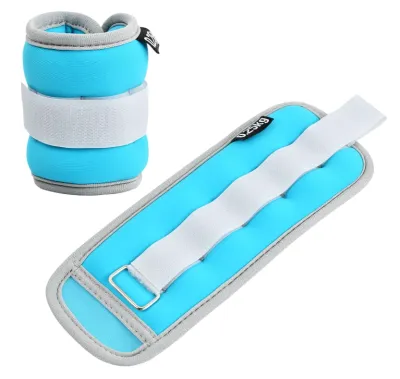
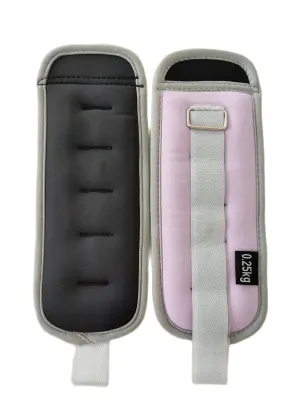
Fixed weights offer a streamlined, secure fit that contours closely to your lower leg. They are perfect for fast-paced, high-repetition workouts like Pilates, barre, or targeted physical therapy where shifting gear can disrupt your movement form.
Products mentioned in this guide
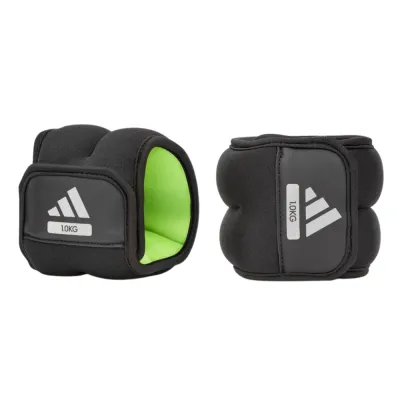
![🇸🇬 [In Stock]Womens Pilates wrist and ankle weights wearable arm and leg weights (1 lb each) for yoga dance Pilates cardio and walking](https://img.lazcdn.com/g/p/9e694d05bf87bf697057b0fbf4ed73e3.jpg_400x400q80.jpg_.webp)
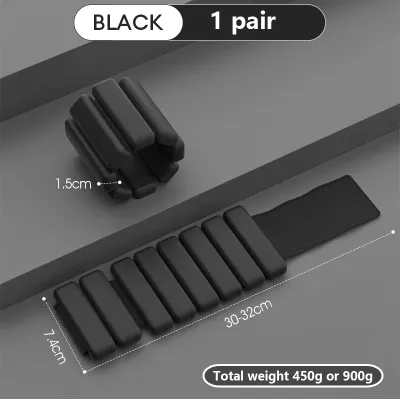
![[SG In Stock] Silicone Adjustable Wrist Ankle Weight Bands | Leg Arm Weights Straps for Yoga Running Fitness Exercise](https://img.lazcdn.com/g/p/18a84f58aad9185eaa509fdb4f315a14.jpg_400x400q80.jpg_.webp)
Prices are valid at publication and may change. Please refer to the product page for the latest price.
This guide will compare the structural designs, comfort levels, long-term durability, and biomechanical safety of both types to help you invest in the right gear for your home fitness routine.
Core Design Differences: How Adjustable and Fixed Weights Work
Fixed ankle weights are manufactured with a set, unchangeable weight. The filling—often iron sand, steel shot, or dense silicone—is permanently sealed inside a fabric or synthetic sleeve. They typically range from 0.5 kg to 3 kg per ankle. Because the weight is evenly distributed along the entire band, they wrap smoothly around the lower leg, fastening with a single hook-and-loop strap.
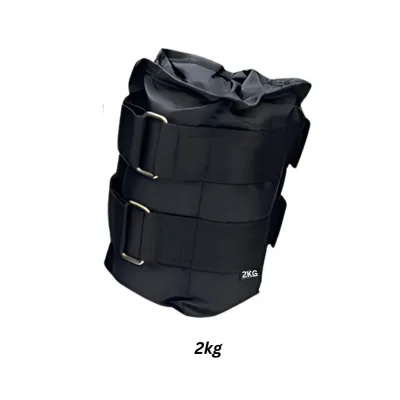
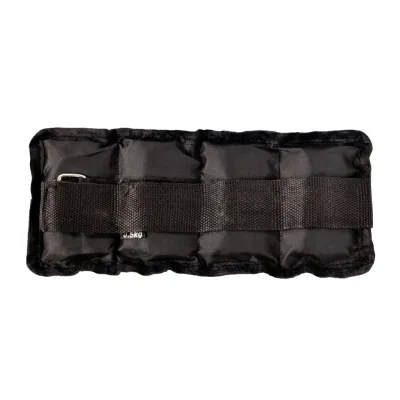
Adjustable ankle weights are designed with a series of individual pockets sewn along the exterior of the strap. These pockets hold removable weight inserts, which can be small sandbags, iron bars, or metal cylinders. By adding or removing these inserts, you can adjust the total resistance of a single ankle weight, often from 1 kg up to 5 kg or more.
The fundamental design trade-off comes down to simplicity versus flexibility. Fixed weights prioritize a low profile and minimal movement during active workouts. Adjustable weights prioritize load flexibility and cost-efficiency over time, as one pair replaces multiple individual sets.
Key Comparison Factors for Your Workout Routine
Versatility and Progressive Overload
Progressive overload is the foundation of strength building. To continue making fitness progress, your muscles must be subjected to gradually increasing levels of resistance. Adjustable ankle weights excel here because you can start with a light load for lateral leg raises and gradually slide additional metal bars or sand packets into the sleeves as your glutes and hips adapt.

This flexibility also makes them excellent for home gym spaces where partners or family members share the same equipment. Instead of cluttering your living room with multiple sets of weights, a single adjustable pair can accommodate different strength levels and exercise requirements.
Fixed ankle weights require a separate purchase for every weight increment. If you start with a 1 kg pair and find it too light after a month, you must buy a 2 kg pair to continue progressing. This can become expensive, with high-quality fixed pairs starting around S$15 and climbing higher for heavier options.
However, fixed weights are highly efficient if you have already reached a strength plateau and know your ideal working weight, or if you only require a light, consistent resistance for specific routines. In low-impact sculpt or barre classes, a standard 1 kg or 1.5 kg fixed weight is often all that is needed to increase muscular endurance without requiring further progression.
Comfort, Fit, and Chafing Risks
The physical design of your ankle weights directly affects your workout comfort, especially during high-repetition leg movements. Fixed weights are generally much thinner and more flexible. High-quality silicone or neoprene fixed weights contour naturally to the shape of your ankle joint.
Because there are no bulky pockets or rigid inserts, the weight remains evenly distributed around your leg. This uniform balance minimizes shifting, sliding, or banging against your ankle bone during active exercises.
Adjustable weights, by contrast, are inherently bulkier. When packed to their maximum capacity, the protruding pockets can feel cumbersome. If you remove some inserts to lower the weight, the remaining inserts can slide around inside half-empty pockets during dynamic movements like donkey kicks or side-lying leg lifts.
This shifting creates uneven momentum and can cause the heavy inserts to press painfully against your shin or ankle bone. Furthermore, the extra zippers, buckles, and heavy-duty Velcro straps required to secure adjustable weights increase the number of rough edges that can rub against your skin, raising the risk of painful chafing and skin irritation.
Durability and Maintenance
In warm and humid tropical climates, workout gear is subjected to heavy perspiration and frequent washing. Fixed ankle weights, especially those made from food-grade silicone or water-resistant neoprene, are exceptionally durable and easy to maintain.
Silicone models can be wiped down with a damp cloth or washed with mild soap and water after a sweaty session, drying almost instantly. With no zippers to jam, pockets to tear, or Velcro to fray, high-quality fixed weights can last for years without losing their structural integrity.
Adjustable ankle weights feature multiple moving parts and fabric layers, making them far more vulnerable to wear and tear. The constant sliding in and out of metal bars or sand inserts eventually stretches the pockets and degrades the stitching.
Velcro closures on adjustable models can collect lint, hair, and fabric fibers over time, reducing their gripping strength and causing the weights to slip during use. Additionally, if the inner sandbags or shot packets rupture due to friction or dropping, the filling can leak out, rendering the weight useless.
Cleaning adjustable weights is also more tedious. You must remove all the individual inserts before hand-washing the outer sleeve and waiting for the thick, multi-layered fabric to dry completely, which can take a long time in humid conditions.
Joint Safety and Usage Boundaries: Protecting Your Knees and Hips
Before strapped-on resistance is added to your routine, it is essential to understand how ankle weights affect body mechanics. Because these weights are secured at the very bottom of your leg—the distal end—they create a long lever arm. This positioning significantly amplifies the torque and rotational force exerted on your knee and hip joints.
Even a seemingly light weight of 1.5 kg can place substantial mechanical stress on the ligaments, tendons, and cartilage of your lower limbs when the leg is extended. Equipment cannot replace proper joint conditioning, strength training, and movement mechanics.
To minimize joint strain, ankle weights should be reserved for slow, controlled, low-impact, and isolated exercises where the target joint is stabilized. Excellent examples include floor-based glute kickbacks, side-lying leg raises, straight leg raises, and standing hamstring curls. In these movements, the core and hips are typically supported, allowing you to isolate specific muscle groups without subjecting your joints to sudden, uncontrolled impact forces.
Ankle weights should never be worn during high-impact, repetitive cardio activities such as running, jogging, brisk walking, or plyometric jumping. When you run or walk with weights strapped to your ankles, the added mass forces your hamstrings, quadriceps, and hip flexors to work against unnatural pulling forces during the swing phase of your stride. This alters your natural gait, increases the impact force on your heels, knees, and lower back, and can lead to repetitive strain injuries like shin splints, patellar tendonitis, or hip bursitis.
Always check the manufacturer’s weight limits, care labels, and safety guidelines before starting any new routine. If you experience sharp joint pain, pulling sensations in your lower back, or find that you cannot maintain proper form, stop using the weights immediately. Consult a qualified physiotherapist or sports doctor to assess your joint stability and biomechanics before resuming weighted training.
Final Decision Framework: Which Type Fits Your Routine?
To make your final purchasing decision, evaluate your current fitness level, primary exercise style, and long-term goals against this structured framework.
Choose Adjustable if:
- You are a beginner or intermediate lifter who plans to gradually increase resistance over time to build muscle.
- You want a single, space-saving set of weights that can be shared among different family members with varying strength levels in your home.
- Your workout routine includes a wide variety of exercises that require different loads, such as lighter weights for upper-body movements and heavier weights for lower-body lifts.
Choose Fixed if:
- You already know your optimal training weight and do not plan to increase the resistance anytime soon.
- Your primary workouts consist of high-repetition, low-impact disciplines like Pilates, barre, or yoga sculpt, where a snug, low-profile, and chafe-free fit is essential.
- You prioritize low-maintenance gear that is easy to wipe clean, sanitize, and store without worrying about losing small parts or dealing with broken zippers.
Verify first if:
- You have any pre-existing knee, hip, ankle, or lower back injuries. If so, consult a qualified healthcare professional or physical therapist before purchasing to ensure that adding distal resistance will not aggravate your condition.
Regardless of the style you choose, always prioritize proper muscle engagement and controlled form over the absolute amount of weight added. A lighter, perfectly controlled movement will always yield better fitness results and lower injury risks than swinging a heavy weight with poor mechanics.
Frequently Asked Questions (FAQ)
Can I wear ankle weights all day to burn more calories?
Wearing ankle weights throughout the day is not recommended by fitness and medical professionals. Walking around with extra weight strapped to your lower limbs for extended periods alters your natural gait, putting continuous, unnecessary stress on your ankle, knee, and hip joints. This constant strain can lead to muscle imbalances, joint fatigue, and connective tissue irritation. For safe and effective results, limit ankle weight usage to targeted, controlled exercise sessions lasting under an hour, and focus on natural movement during your daily activities.
Are silicone ankle weights better than sand-filled ones?
Silicone ankle weights generally offer superior comfort, hygiene, and durability compared to traditional sand-filled models. Because silicone is non-porous, it does not absorb sweat, making it highly resistant to odor and incredibly easy to sanitize with a quick wipe. The molded silicone also wraps smoothly around the ankle without shifting, whereas sand-filled weights can bunch up, leak sand if punctured, and absorb moisture over time. However, sand-filled weights are often more budget-friendly, making them a viable entry-level option if you plan to wear them over leggings or socks.
How heavy should my first pair of ankle weights be?
For beginners, it is highly recommended to start with a very light load, typically between 0.5 kg and 1 kg per ankle. This conservative starting weight allows your joints, tendons, and stabilizing muscles to adapt to the new mechanical forces without compromising your alignment or form. Always check the manufacturer’s guidelines for recommended progression steps. Remember that the goal of ankle weights is to add subtle resistance to isolate muscles, not to mimic heavy gym machines; maintaining absolute control over the movement is far more critical than lifting a heavy load.
Community discussion
Share your experience or ask a question. Comments are reviewed before publication.