
When building a home gym in a compact HDB apartment, choosing the right dumbbell set requires balancing space efficiency, workout versatility, and long-term value. This guide compares adjustable and fixed dumbbells across the dimensions that matter most for small living spaces, helping you decide which type best supports your fitness goals without overcrowding your home.
For most HDB dwellers, the decision comes down to a fundamental trade-off between physical space and mechanical simplicity. Adjustable dumbbells pack an entire rack’s worth of weight options into a single, compact pair, making them an excellent choice for tight corners. On the other hand, fixed dumbbells offer unmatched durability and immediate readiness, though they demand a much larger physical footprint as your strength progresses. Understanding how these two equipment types perform in a typical apartment setting is key to making a smart, lasting investment in your fitness.
Space Efficiency and Storage in Compact HDB Flats
In a standard HDB flat, floor space is a premium commodity. A comprehensive set of fixed dumbbells—ranging from light warm-up weights to heavy lifting options—typically requires a multi-tier storage rack. A sturdy A-frame or horizontal rack can easily occupy up to one square meter of floor space and stand over a meter tall. This footprint can quickly overwhelm a spare bedroom, study, or living room corner, leaving little room for other activities or furniture.
Products mentioned in this guide
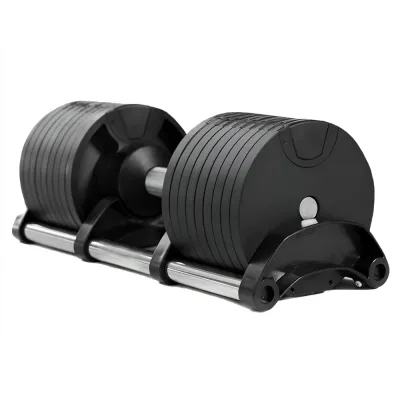
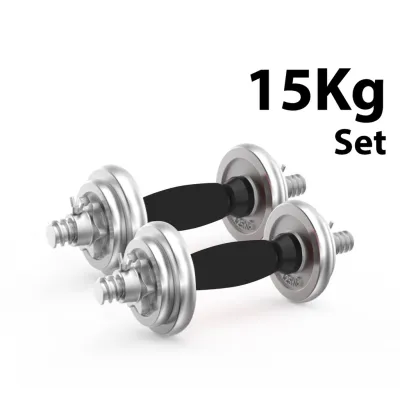
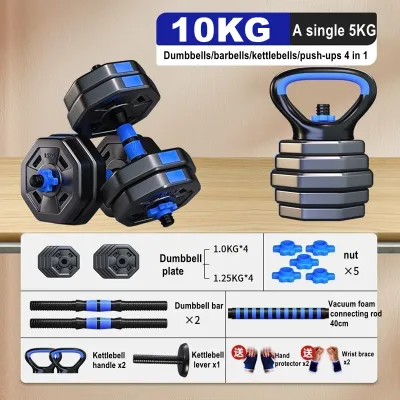
![[BULKY] Dumbbell Set Adjustable Exercise Weight Plates Dumbbell Barbell Convertible Gym Set](https://img.lazcdn.com/g/p/084fbf90618f02a1a89eb8fb30f8a31e.jpg_400x400q80.jpg_.webp)
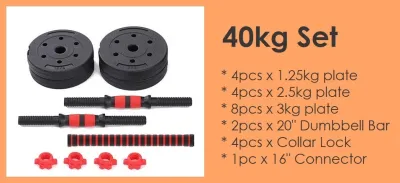
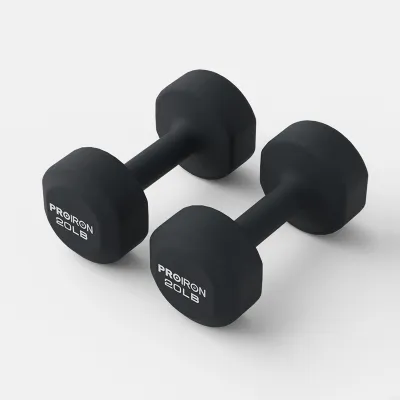
Prices are valid at publication and may change. Please refer to the product page for the latest price.
In contrast, an adjustable dumbbell set consolidates multiple weight increments into a single pair of handles and a matching set of storage trays. The physical footprint of an adjustable set is remarkably small, often requiring no more space than two shoeboxes placed side by side. This compact design allows you to store your weights neatly in a closet, in a corner of your living room, or even under a bed frame, provided you have sufficient clearance.
Before purchasing any equipment, it is essential to measure your intended storage and workout areas. If you plan to store your dumbbells under a bed or sofa, measure the vertical clearance height. Many adjustable models require at least 25cm to 30cm of vertical space to slide in and out of their trays comfortably. Additionally, consider the weight of the storage unit itself; a concentrated heavy load in one small spot requires a stable, level floor surface.
The trade-offs of keeping fixed dumbbells without a rack are also worth noting. While you might save money by skipping the rack, stacking loose fixed dumbbells on top of each other is a safety hazard. They can easily roll, causing injury or denting your flooring. Scattered weights also create tripping hazards in narrow HDB walkways. An adjustable set naturally solves this problem by keeping all unused plates securely locked within their centralized base trays when not in use.
Versatility and Workout Progression
Progressive overload is the cornerstone of strength training, requiring you to gradually increase the resistance as your muscles adapt. An adjustable dumbbell set excels at supporting this progression by offering a wide range of weight options within a single system. Many models allow you to adjust the weight in small, precise increments, such as 1kg or 2.5kg steps. This granular control is highly beneficial for isolating smaller muscle groups, like the lateral deltoids or triceps, where large weight jumps can stall progress or lead to poor form.

To achieve the same level of versatility with fixed dumbbells, you would need to purchase a vast collection of individual pairs. For example, matching the progression of a single 24kg adjustable set would require buying separate pairs of 2kg, 4kg, 6kg, 8kg, 10kg, 12.5kg, 15kg, 17.5kg, 20kg, 22.5kg, and 24kg dumbbells. Acquiring this many individual pairs is not only space-prohibitive for most HDB flats but also logistically challenging to manage.
However, the mechanism of adjustable dumbbells introduces a slight delay when changing weights. If your training routine heavily features supersets, drop sets, or fast-paced circuit training, the time spent turning dials or adjusting pins can disrupt your workout flow. Fixed dumbbells offer immediate transitions; you can drop one pair and instantly pick up another without pausing to align plates or turn selector dials.
Another important consideration is partner training. If you share your home workouts with a family member or partner, adjustable dumbbells can create a bottleneck. If both of you need to use the same weight setting at the same time for different exercises, one person will have to wait. A collection of fixed dumbbells allows multiple users to train simultaneously with different weight pairs, making partner workouts much more seamless and efficient.
Durability, Maintenance, and Safety Checks
The mechanical complexity of adjustable dumbbells means they require regular inspection and careful handling. These systems rely on internal gears, selector pins, or rotating dials to lock the weight plates onto the handle. Before starting any exercise, especially those where the dumbbells are held overhead, you must perform a quick safety check. Ensure that the plates are fully seated in their slots and that the locking mechanism is completely engaged. A loose plate can slip out mid-lift, posing a serious safety risk to you and your home.
Fixed dumbbells, particularly those made of solid cast iron or encased in heavy-duty rubber, are structurally simple and virtually indestructible. They have no moving parts, meaning there are no gears to jam, pins to bend, or plastic dials to crack. They require almost no maintenance beyond a simple wipe-down to remove sweat and dust. Adjustable models, however, must be kept clean and dry, as dust or moisture can interfere with the selector mechanisms over time.
Living in a multi-story HDB flat also means you must be mindful of your neighbors downstairs. The impact and vibration of placing heavy weights on the floor can easily travel through the concrete structure of the building. To prevent noise complaints and protect your flooring, invest in high-density rubber gym mats. A mat thickness of at least 15mm to 20mm is recommended to absorb impact and dampen sound.
The material coating of your dumbbells also plays a significant role in floor protection. Bare cast-iron weights can easily scratch, chip, or scuff vinyl, laminate, or ceramic tiles if set down too hard. Fixed dumbbells with a thick rubber or urethane casing help cushion the impact and reduce clanging noises. For adjustable sets, look for models that feature durable plastic-coated plates or rubberized bases to minimize noise when changing weights or resting them on the floor.
Value and Long-Term Cost Evaluation
When evaluating the financial aspect of your home gym, it is helpful to look beyond the initial price tag and calculate the long-term value. One effective method is to compare the cost per kilogram of the total weight capacity provided by each option. While a high-quality adjustable dumbbell set requires a significant upfront investment, it often proves more cost-effective than buying an equivalent range of individual fixed pairs over time.
Expanding a fixed dumbbell collection involves a series of recurring costs. As your strength increases, you will need to purchase heavier pairs. In Singapore, buying individual pairs of quality rubber hex dumbbells can range from S$30 for lighter weights to well over S$150 for heavier pairs. Over a few years of consistent training, the cumulative cost of purchasing new fixed pairs, along with a suitable storage rack, can easily surpass the initial price of a comprehensive adjustable set.
However, the upfront cost of adjustable dumbbells must be weighed against their mechanical lifespan. Because they contain moving parts, they are more susceptible to wear and tear than solid metal weights. When purchasing an adjustable set, always check the manufacturer’s warranty terms. Pay close attention to whether the warranty covers the internal locking mechanisms and selector dials, as these are the most critical components for safe operation.
If you are on a tight budget or only plan to use a few specific weight settings for targeted exercises, a small selection of fixed dumbbells may be the more practical choice. This approach avoids the high initial layout of an adjustable system while still providing the exact resistance you need for your current routine.
Decision Framework: Choosing the Right Dumbbell Set
To make your final decision, evaluate your specific living space, training style, and long-term fitness goals. Each dumbbell type serves different needs, and choosing the right one depends on which factors you prioritize for your HDB home gym.
You should choose an adjustable dumbbell set if:
- Your workout area or storage space is highly restricted, such as in a 2-room or 3-room HDB flat.
- You plan to perform a wide variety of exercises that require frequent weight adjustments.
- You want a clear path for long-term progressive overload without cluttering your home with multiple weight racks.
You should choose a fixed dumbbell set if:
- You prefer straightforward, highly durable equipment that can withstand accidental drops or rough handling.
- You frequently train with a partner and need to use different weights at the same time.
- Your workouts consist of fast-paced circuits, supersets, or explosive movements where quick transitions are essential.
Before finalizing your purchase, verify the physical dimensions of your chosen model. Some adjustable dumbbells maintain their full length regardless of the weight selected, which can feel bulky or restrict your range of motion during exercises like goblet squats or bicep curls. If possible, test the grip comfort, handle diameter, and overall balance to ensure the equipment fits your hand size and lifting style comfortably.
Frequently Asked Questions (FAQ)
Can I drop adjustable dumbbells on the floor during a workout?
No, you should never drop adjustable dumbbells on the floor. Unlike solid fixed dumbbells, adjustable models contain delicate internal gears, dials, and selector pins that can easily crack, bend, or misalign under the force of an impact. Dropping them can permanently damage the locking mechanism, making the weights unsafe to use. Always control the descent of your lifts and place the dumbbells down gently on a protective mat.
How do I prevent noise and floor damage in an HDB flat?
To minimize noise and protect your HDB flooring, place high-density rubber gym mats (at least 15mm thick) over your workout area. Opt for dumbbells with rubber or urethane coatings rather than bare cast iron, as these materials dampen sound and prevent scuff marks on vinyl or tiles. Additionally, focus on maintaining a controlled, slow lowering phase during your exercises to avoid slamming the weights down.
Community discussion
Share your experience or ask a question. Comments are reviewed before publication.