
Selecting the right dumbbell set is one of the most critical decisions you will make when designing a home gym. The choice between an adjustable dumbbell set and a fixed dumbbell set ultimately depends on your available floor space, training style, and budget constraints. If you are working with a compact living space, such as a typical high-rise apartment, and perform standard strength training, an adjustable dumbbell set offers excellent space efficiency by replacing multiple individual pairs with a single, dial- or pin-based system. Conversely, if you have a dedicated garage gym, prioritize rapid weight transitions for high-intensity circuits, or frequently drop weights, a fixed dumbbell set with a dedicated rack provides exceptional durability and tactile stability. By understanding the trade-offs in footprint, cost, and performance, you can select the equipment that best supports your long-term fitness journey.
Space and Storage: Which Setup Fits Your Room?
A complete set of fixed dumbbells (for example, ranging from 5 kg to 25 kg in 2.5 kg increments) requires a multi-tier rack that can easily span over a meter in width and require significant depth clearance. This setup demands a permanent, dedicated footprint in your home. In contrast, a single pair of adjustable dumbbells sits in compact docking trays, occupying only a tiny corner of a room. For those living in space-constrained environments like apartments or shared flats, the space-saving nature of adjustable weights is often the deciding factor. They can be tucked away under a sturdy bed frame or placed in a closet when not in use, keeping your living area clutter-free.
However, storing weights on the floor requires careful handling; lifting heavy weights directly from ground level can place unnecessary strain on your lower back if proper lifting mechanics are not maintained. If you opt for a fixed rack, you must also consider the concentrated weight load on your flooring. A full rack of cast iron or rubber hex weights can easily exceed 200 kg, concentrating significant force on a small surface area. Before setting up a heavy rack, verify the structural integrity of your subfloor and consider using high-density rubber tiles to distribute the load and protect your home from scratches or cracks.
Products mentioned in this guide
![[BULKY] Dumbbell Set Adjustable Exercise Weight Plates Dumbbell Barbell Convertible Gym Set](https://img.lazcdn.com/g/p/084fbf90618f02a1a89eb8fb30f8a31e.jpg_400x400q80.jpg_.webp)
![[BULKY] Dumbbell Set Adjustable Exercise Weight Plates Dumbbells Barbell Convertible Gym Set](https://img.lazcdn.com/g/p/6f7685dbd91ddf9aedf45f14d9b7cdb8.jpg_400x400q80.jpg_.webp)
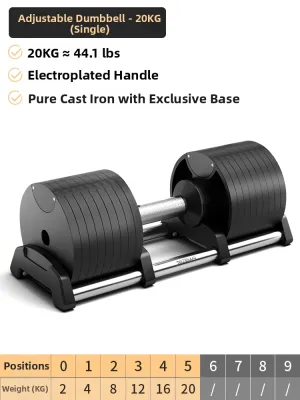
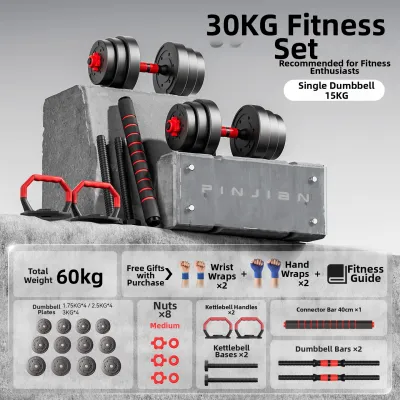
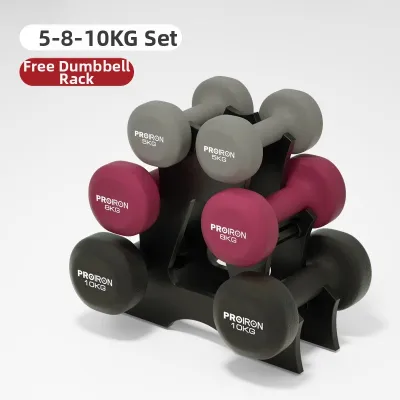

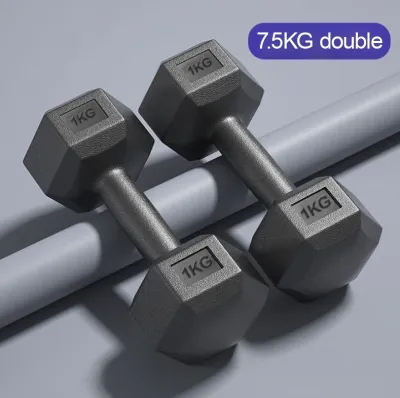
Prices are valid at publication and may change. Please refer to the product page for the latest price.
To ensure your training space is safe and functional, use the following verification checklist before purchasing:
- Floor Load Verification: Check the structural load limits of your flooring, especially when stacking a heavy rack of fixed weights in one concentrated area.
- Clearance Zone: Ensure at least one meter of open space around your workout station to prevent hitting walls or furniture during lateral raises or lunges.
- Accessibility Height: Verify if your storage setup allows you to lift the starting weight with a neutral spine; lifting heavy weights directly from a low floor position increases injury risks.
- Subfloor Protection: Assess the need for high-density rubber matting to distribute weight and protect underlying tiles or vinyl flooring from impact.
Budget and Cost Efficiency: Upfront vs Long-Term Value
When evaluating the financial aspect of your home gym, it is essential to look at both the immediate upfront cost and the long-term value of your investment. A complete set of fixed dumbbells with a dedicated rack represents a substantial initial financial commitment, often costing hundreds or even thousands of S$ depending on the weight range and materials. Adjustable pairs have a higher entry price than a single pair of fixed dumbbells, but they represent a much lower total cost than buying ten separate fixed pairs to match the same weight increments.

For beginners or intermediate lifters who expect to progress quickly, the cost of adding heavier weights later is a vital consideration. With a fixed system, expanding your set means purchasing entirely new pairs of dumbbells, which incurs ongoing shipping fees and unit costs, alongside the potential need to upgrade to a larger rack. Some adjustable systems allow you to purchase expansion kits that add extra weight plates to your existing handles, offering a more cost-effective progression path.
However, you must also factor in durability and potential replacement costs. Fixed dumbbells made of solid cast iron or rubber-coated steel have no moving parts, meaning they can last a lifetime with virtually zero maintenance. Adjustable dumbbells rely on intricate mechanical dials, pins, or interlocking plates. If a selector mechanism jams or a plastic component cracks, the entire unit may become unusable, potentially requiring a full replacement if the damage falls outside the manufacturer’s warranty coverage.
Workout Goals and Performance: Speed, Durability, and Feel
Your training style and fitness goals should heavily influence which dumbbell type you choose. For training styles like supersets, drop sets, or fast-paced circuit training, transition speed is critical. Fixed dumbbells allow you to drop one pair and immediately grab another from the rack, keeping your heart rate elevated and maintaining muscle tension. Adjustable dumbbells require you to return the handle to the cradle, select the new weight, and verify the lock is fully engaged before lifting again. This process can take anywhere from five to fifteen seconds, which can disrupt your momentum during intense intervals.
The physical dimensions and balance of the weights also affect your exercise execution. Fixed dumbbells scale in size with the weight; lighter weights are physically smaller and easier to maneuver. Many adjustable dumbbells maintain their maximum physical length regardless of the selected weight because the core shaft or frame remains constant. This can make exercises like overhead presses, chest presses, or bicep curls feel bulky or awkward, especially for individuals with smaller frames or shorter arms. Grip thickness and knurling also vary; verify the handle diameter matches your hand size for a secure grip.
Finally, durability limits and safety are paramount. Dropping weights is a common habit in strength training, but it poses severe risks to adjustable mechanisms. Dropping an adjustable dumbbell can misalign the locking pins or crack the selector dials, rendering the weight selection unsafe. Fixed rubber or urethane hex dumbbells are designed to absorb impact, though dropping them on unprotected residential floors can still cause structural damage. Always prioritize controlled descents and use high-density gym mats.
Decision Framework: Choose Adjustable, Fixed, or Neither
To finalize your decision, evaluate your training environment and goals against these structured guidelines.
Choose Adjustable if…
- You train in a multi-purpose room or small apartment where space is at a premium.
- Your workouts follow a traditional progressive overload structure with moderate rest periods between sets.
- You want a wide range of weight options without a massive upfront financial investment.
Choose Fixed if…
- You have a dedicated home gym space or garage with reinforced flooring.
- Your training routine heavily features rapid drop sets, supersets, or explosive movements where weights might be dropped.
- You prefer the classic, balanced feel of traditional gym equipment and want a setup that lasts a lifetime without mechanical wear.
Verify first if…
- The weight increments (e.g., 2 kg vs. 4 kg jumps) align with your current strength levels and progression goals.
- The handle ergonomics, knurling texture, and grip diameter feel comfortable for your hand size.
- The manufacturer's warranty explicitly covers mechanical parts and outlines the policy on accidental drops.
| Feature | Adjustable Dumbbells | Fixed Dumbbells |
|---|---|---|
| Space Required | Minimal (single pair footprint) | High (requires multi-tier rack) |
| Upfront Cost | Moderate to high for a single pair | Very high for a complete set |
| Long-Term Value | High, but limited by mechanical wear | Exceptional (virtually indestructible) |
| Transition Speed | Slower (requires manual adjustment) | Instant (grab-and-go) |
| Drop Resistance | Low (mechanisms can break) | High (especially rubber/urethane) |
| Balance & Feel | Can feel bulky or long | Balanced and traditional |
Frequently Asked Questions (FAQ)
Can I mix adjustable and fixed dumbbells in the same home gym?
Yes, a hybrid setup is highly practical. You can use an adjustable set for isolation exercises (like lateral raises or tricep extensions) where you need lighter, highly precise weight increments. For heavy compound movements (like dumbbell bench presses or goblet squats) where you might push to failure and need to drop the weights safely, you can invest in a few select pairs of heavy fixed dumbbells. This hybrid approach optimizes both your budget and floor space while maintaining safety during high-intensity lifts.
Do adjustable dumbbells break easily if dropped?
Yes, adjustable dumbbells are susceptible to damage from drops. The internal components—such as selector dials, sliding pins, and plastic alignment trays—are engineered to precise tolerances. Dropping them from even a short height can bend the metal plates, crack the housing, or jam the locking mechanism, making it impossible or unsafe to select weights. Always check the manufacturer’s warranty, as almost all brands exclude drop damage from their coverage. To protect your equipment, perform exercises over high-density rubber mats and practice controlled lowering of the weights.
Community discussion
Share your experience or ask a question. Comments are reviewed before publication.