
Selecting the right strength-training equipment for a compact Singapore home requires balancing your fitness goals with the realities of limited square footage. If you are living in a typical Housing & Development Board (HDB) flat or a modern condominium, floor space is at a premium, making large gym setups impractical. For most apartment dwellers, adjustable dumbbells offer a highly efficient way to build a versatile home gym because a single pair replaces an entire rack of weights. However, if your training style demands rapid weight transitions or high-impact movements, a select set of fixed dumbbells might still be the more practical choice. Deciding between the two comes down to analyzing your storage limits, your budget, and how you prefer to move during your workouts.
Space and Storage Requirements
In a compact apartment, every square meter of floor space must be utilized efficiently. A full set of fixed dumbbells, ranging from light warm-up weights to heavy working sets, typically requires a multi-tier storage rack. This setup can easily occupy a permanent footprint of over one square meter, which can severely crowd a living room, study, or bedroom. For those without a dedicated home gym room, accommodating a large metal rack is often a logistical dealbreaker.
In contrast, a single pair of adjustable dumbbells consolidated into their storage cradles occupies a fraction of that space. They can sit neatly in a corner, on a small shelf, or inside a wardrobe when not in use. Some models are compact enough to slide under a standard bed frame, keeping your living area largely free of clutter between exercise sessions. This makes them highly attractive for multi-functional spaces where a workout area must quickly transition back into a living room or home office.
Products mentioned in this guide
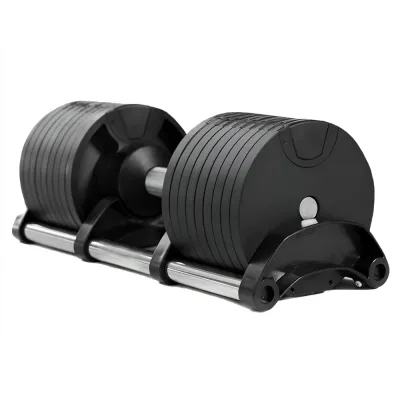
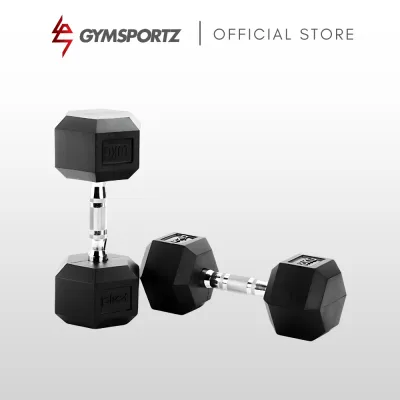
Prices are valid at publication and may change. Please refer to the product page for the latest price.
However, storing adjustable dumbbells requires careful planning before you make a purchase. You must measure your intended storage area and compare it against the exact dimensions of the dumbbell cradles, which are often wider and longer than the weights themselves. Additionally, because a pair of heavy adjustable dumbbells concentrates a significant amount of weight in one small spot, you should ensure your storage surface, such as a shelf or cabinet bottom, can safely support the concentrated load. If you plan to use a compact stand, verify its footprint to ensure it does not block walkways or doors in your apartment.
Cost and Budget Considerations
When setting up a home gym in Singapore, budget planning involves looking at both immediate upfront costs and long-term value. A high-quality pair of adjustable dumbbells represents a significant initial financial investment. While the upfront price tag can seem daunting, this single purchase covers a wide range of weight options, effectively replacing ten or more individual pairs of dumbbells.

To evaluate the true financial value of each option, you can calculate the cost per kilogram of usable weight. For fixed dumbbells, you pay a set price per pair; as you grow stronger and require heavier weights, you must continually purchase new, heavier pairs at increasing costs. Over time, buying multiple individual pairs of fixed dumbbells, along with a sturdy rack to store them, often exceeds the total cost of a single adjustable set that covers the same weight range.
However, the mechanical complexity of adjustable dumbbells introduces other long-term cost considerations. Because these systems rely on dials, pins, or twisting handles to lock plates into place, they have moving parts that can wear out over time. Before purchasing, it is essential to check the manufacturer’s warranty terms specifically regarding the selector mechanisms and locking plates. If a mechanism fails outside of the warranty period, finding replacement parts can be difficult or expensive, whereas fixed dumbbells have no moving parts and virtually never require mechanical repair.
Workout Experience and Practicality
The physical feel and usability of your equipment directly impact the quality of your home workouts. Fixed dumbbells offer an intuitive and seamless training experience. Swapping weights is as simple as putting one pair down and picking up another, which is well-suited for high-intensity interval training (HIIT), supersets, or drop sets where rest times must be kept to a minimum. They also feature a consistent, balanced shape where the physical size of the dumbbell scales naturally with the weight, allowing for comfortable movement close to your body.
Adjustable dumbbells, on the other hand, require a brief pause between sets to change the weight selection. Depending on the design, you may need to turn a dial, slide a pin, or twist the handle to engage the desired plates. While modern designs have made these transitions relatively quick, they still interrupt the flow of fast-paced workouts. Furthermore, because the overall frame of an adjustable dumbbell remains the same length even when set to its lightest weight, they can feel bulky or awkward during exercises like bicep curls or overhead presses where a shorter dumbbell would allow a freer range of motion.
To ensure your chosen equipment supports your long-term fitness journey, you must verify the maximum weight capacity and the specific increment steps of the dumbbells. Some adjustable models change in small increments, such as 1 kg or 2 kg steps, which is excellent for progressive overload in upper-body exercises. Others may have larger jumps that make progressing to the next weight level more challenging. Always check that the weight range aligns with your current strength levels and offers enough room for future progression.
Decision Framework: Which Dumbbell Should You Choose?
To make the right choice for your Singapore home, you must weigh your physical space constraints against your training style and budget.
Choose adjustable dumbbells if:
- Your workout space is limited to a small corner of a bedroom or living room, and you cannot accommodate a multi-tier weight rack.
- You require a wide range of weight options to perform a variety of exercises, from light lateral raises to heavy squats.
- You want a clean, minimalist home environment where fitness equipment can be easily hidden away in a closet or under a bed after use.
Choose fixed dumbbells if:
- You prefer fast-paced workouts, supersets, or circuit training where changing weights must happen in seconds.
- You have a dedicated workout area where a small rack of three to four essential weight pairs can remain permanently set up.
- You want highly durable, low-maintenance equipment that can withstand occasional rough handling without risk of mechanical failure.
Before making your final decision, use this verification checklist:
- Measure your designated workout and storage areas to confirm the equipment will fit comfortably without blocking pathways.
- Check the manufacturer's product specifications for the exact dimensions of the dumbbell cradles or racks.
- Confirm the return and exchange policies of the retailer, especially regarding heavy items that may incur high return shipping fees.
- Verify that the weight increments and maximum capacity match your current fitness level and long-term progression goals.
Frequently Asked Questions (FAQ)
Can I drop adjustable dumbbells on the floor like fixed ones?
No, you should avoid dropping adjustable dumbbells on the floor. Unlike solid cast iron or rubber-encased fixed dumbbells, adjustable models contain intricate internal locking mechanisms, plastic gears, or selector pins that keep the weight plates secure. The high impact of dropping them can crack these components, bend the selector shafts, or misalign the locking system, making the dumbbells unsafe to use. To protect your equipment and your apartment flooring, always place adjustable dumbbells back into their cradles gently, and perform your exercises over a thick, high-density rubber gym mat to absorb minor impacts.
Are adjustable dumbbells safe to use for fast-paced circuit training?
Adjustable dumbbells can be used for circuit training, but they require extra caution. During fast-paced workouts, the temptation to rush through weight changes increases the risk of not fully engaging the locking mechanism. If the plates are not securely locked in place, they can slip out during overhead or dynamic movements, posing a safety hazard. If your routine relies heavily on rapid transitions, explosive movements, or exercises where you must quickly drop the weights, using a few select pairs of fixed dumbbells or kettlebells is generally a safer and more practical approach.
Community discussion
Share your experience or ask a question. Comments are reviewed before publication.