
Selecting the right dumbbell setup for your home gym depends on your available floor space, training style, and long-term fitness goals. For those operating within compact living areas, adjustable dumbbells offer an incredibly space-efficient solution by consolidating an entire rack of weights into a single pair. Conversely, if your training involves high-impact movements, rapid drop sets, or heavy lifting where dropping weights is common, traditional fixed dumbbells provide unmatched durability and immediate accessibility. Balancing these trade-offs requires evaluating how each type aligns with your daily workout flow and your home’s physical constraints.
Understanding the Core Mechanics and Footprint
To make an informed decision, you must first understand how these two equipment types differ in their physical construction and operation. Adjustable dumbbells utilize a centralized handle paired with a selection mechanism—such as dials, pins, or twisting handles—to engage or disengage nested weight plates. This design allows you to change the load of a single handle dynamically, mimicking the utility of multiple individual weights. The passive footprint is remarkably small, typically requiring only the space of two large dumbbells resting in their custom storage trays. However, during active use, the physical length of the handle often remains constant regardless of the selected weight, which can alter the balance and range of motion during certain exercises.
Fixed dumbbells, on the other hand, are solid, single-piece implements. They are typically constructed from solid cast iron, steel, or a metal core encased in protective rubber, urethane, or neoprene coatings. Because there are no moving parts, their physical size scales proportionally with their weight; a lighter dumbbell is physically smaller and easier to maneuver than a heavier one. While they offer a highly consistent balance and a traditional feel, storing a comprehensive set requires a dedicated multi-tier rack. This rack creates a permanent, substantial footprint in your training area, making fixed dumbbells best suited for dedicated home gyms or garage setups where space is not at a premium.
Products mentioned in this guide
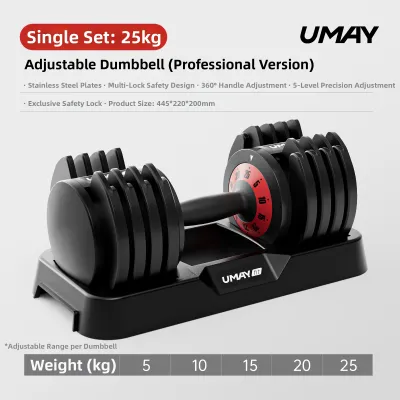
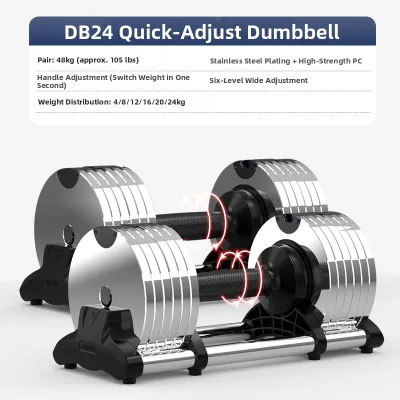
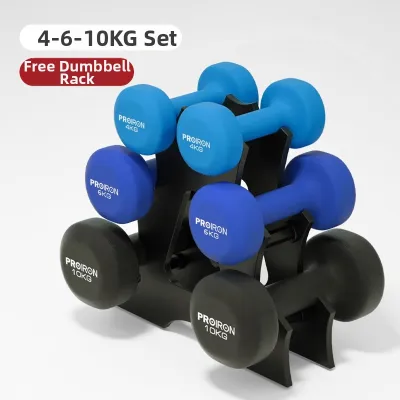
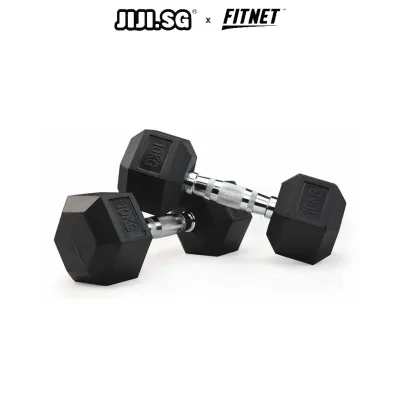
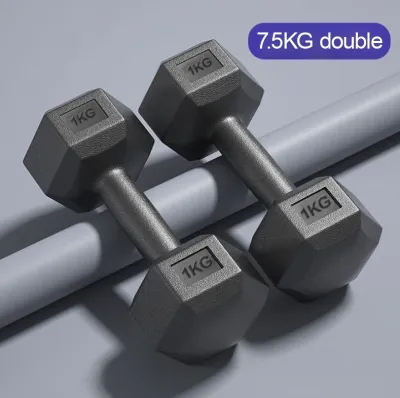
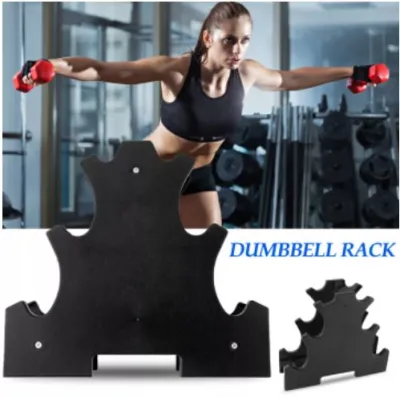
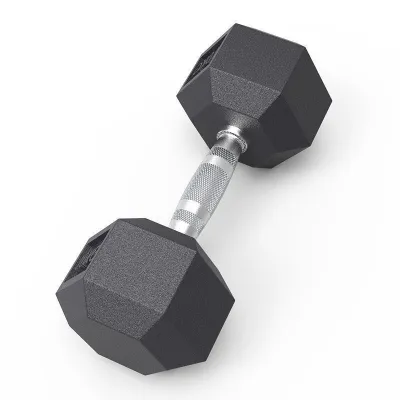
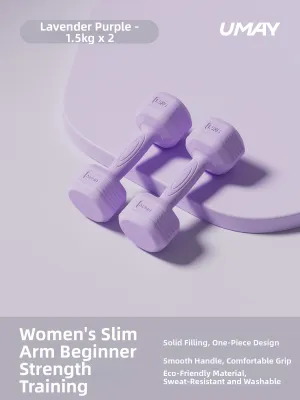
Prices are valid at publication and may change. Please refer to the product page for the latest price.
Evaluating Space Efficiency and Storage Needs
For many home fitness enthusiasts, especially those living in space-constrained urban environments like high-rise apartments, floor space is the ultimate deciding factor. A full set of fixed dumbbells ranging from 2 kg to 20 kg in 2 kg increments requires ten separate pairs of weights. Storing this collection safely requires a horizontal or vertical A-frame rack that can easily consume over a square meter of floor space, not including the clearance needed to stand in front of the rack and lift the weights safely.

In contrast, an adjustable dumbbell set replaces this entire rack with a single pair of handles and two compact docking trays. The active storage footprint is reduced to a fraction of a square meter, allowing you to easily tuck the weights into a closet, under a sturdy bed frame, or in the corner of a living room when your workout is complete.
When planning your layout, it is crucial to measure your active workout zone rather than just the storage area. You must factor in a safe movement clearance of at least 1.5 to 2 meters in all directions to perform dynamic exercises like lateral raises, lunges, or overhead presses without striking furniture or walls. If your workout space must serve a dual purpose—such as a home office or living room—the discrete storage capability of adjustable models is highly advantageous. For dedicated workout rooms, a fixed rack provides a highly organized, professional aesthetic that keeps your training floor clear of clutter.
Comparing Upfront Costs and Long-Term Value
The financial commitment of building a home strength setup involves balancing immediate upfront costs against long-term training progression. Purchasing a high-quality pair of adjustable dumbbells represents a significant initial investment, often costing several hundred S$. However, when you calculate the cost per kilogram, this single purchase is highly economical because it replaces up to fifteen individual pairs of weights. It provides a complete progression path from light isolation movements to heavy compound lifts without requiring additional purchases.
Fixed dumbbells present a different financial trajectory. Buying a single pair of fixed weights is relatively inexpensive, making them highly accessible for beginners who only need one or two specific loads. However, as your strength increases and you require a wider variety of weights to target different muscle groups, the cumulative cost of buying individual pairs rises sharply. You must also factor in the added cost of a sturdy storage rack to keep the heavier weights organized and off the floor.
Long-term maintenance and replacement costs should also influence your budget. Fixed dumbbells are virtually indestructible under normal conditions, meaning a quality set can last a lifetime with minimal care. Adjustable dumbbells, with their intricate internal gears and selector pins, are more vulnerable to mechanical wear. If a selector dial jams or a plastic component cracks, the entire unit may become unusable, potentially requiring a costly replacement or professional repair. When evaluating options on online marketplaces, compare the warranty terms and the availability of replacement parts to protect your investment.
Matching Weight Ranges to Your Training Goals
Your specific training style and fitness goals dictate how much weight you need and how finely you must adjust those loads. Progressive overload—the gradual increase of stress placed upon the body during exercise—requires precise control over weight increments. Many adjustable dumbbells feature increment steps of 1 kg to 2.5 kg, allowing you to micro-load your lifts. This fine-tuning is particularly beneficial for upper-body isolation movements, such as bicep curls or lateral raises, where a sudden 2 kg jump can be too challenging.
However, the mechanical nature of adjustable weights can impact the flow of specific workout styles. If your routine relies heavily on rapid drop sets, supersets, or high-intensity interval training, the time required to dock the handle, turn a dial, and verify the lock can disrupt your training momentum. Fixed dumbbells excel in these scenarios; you can simply drop one pair and immediately grab another from the rack with zero transition time.
Furthermore, you must verify the maximum weight limits of any adjustable system before purchasing. While some models offer expansion kits that allow you to add extra plates as you grow stronger, others have a hard ceiling that cannot be upgraded. If your training goals focus on heavy powerbuilding or compound movements like heavy dumbbell rows and chest presses, ensure the maximum capacity of your chosen system aligns with your long-term strength potential.
Assessing Durability, Maintenance, and Safety
Safety and durability are paramount when handling heavy objects in a home environment. Fixed dumbbells are highly resilient. Models encased in high-quality rubber or urethane protect your floors from scratches, reduce noise during impact, and resist rust even in humid climates. Maintenance is minimal, requiring only a periodic wipe-down with a damp cloth to remove sweat and dust.
Adjustable dumbbells require a much higher level of care and strict handling boundaries. Because they rely on precise alignment to lock the plates to the handle, any structural deformation can compromise the safety of the mechanism. You must establish a strict rule never to drop adjustable dumbbells on the floor, as the impact can shatter plastic dials, bend selector pins, or misalign the locking plates. A dropped adjustable dumbbell can fail mid-lift, risking serious injury if a plate slips out overhead.
Before every workout session, perform a quick routine safety check on your adjustable weights. Verify that the selector dials click firmly into place, the locking pins are fully engaged, and there is no visible debris inside the plate slots or docking tray. If you notice any sticking, loose parts, or unusual play in the mechanism, stop using the equipment immediately and consult the manufacturer’s manual. To protect both your equipment and your home’s flooring, always perform your exercises over a high-density rubber gym mat.
Final Decision Framework: Which Type Fits Your Setup?
To finalize your choice, evaluate your home gym setup against these clear, condition-based guidelines:
Choose adjustable dumbbells if:
- You have limited floor space and need to store your workout gear in a closet, under a bed, or in a multi-purpose room.
- Your training routine focuses on controlled, steady-paced lifting, isolation exercises, and progressive overload requiring small weight increments.
- You want a cost-effective way to access a wide range of weight options without buying a massive collection of individual dumbbells.
Choose fixed dumbbells if:
- You have a dedicated home gym space, garage, or spare room where a permanent multi-tier rack can reside.
- Your workouts involve explosive movements, rapid drop sets, or high-impact training where dropping the weights is necessary or likely.
- You prefer a traditional, balanced feel with zero setup or adjustment time between exercises.
Verify first if:
- You are sharing the equipment with multiple users of vastly different strength levels, as this may require a wider weight range or faster adjustment mechanisms.
- You are considering a hybrid approach, which can offer the best of both worlds by combining a few key fixed weights with a versatile adjustable set.
Frequently Asked Questions (FAQ)
Can I mix adjustable and fixed dumbbells in the same home gym?
Yes, creating a hybrid setup is an excellent way to optimize both space and training efficiency. You can purchase a few pairs of fixed dumbbells in the weights you use most frequently for high-impact or heavy compound movements, such as chest presses or rows. For accessory work, isolation exercises, or movements requiring precise micro-loading, you can rely on a single pair of adjustable dumbbells. This hybrid strategy keeps your equipment footprint manageable while providing the durability and speed of fixed weights where they matter most.
Are adjustable dumbbells safe for heavy lifting and dropping?
Adjustable dumbbells are highly safe for heavy lifting, provided the locking mechanisms are fully engaged and you operate within the manufacturer’s specified weight limits. However, they are absolutely not designed to be dropped. The delicate internal gears, selector pins, and alignment tracks can easily fracture or warp under impact. To ensure safety, always lower adjustable weights to the floor in a controlled manner, and use high-density rubber flooring or thick gym mats to absorb minor impacts during placement.
Community discussion
Share your experience or ask a question. Comments are reviewed before publication.