
For fitness enthusiasts living in Singapore, setting up a home gym in a Housing & Development Board (HDB) flat presents a unique set of challenges. With space at a premium, selecting the ideal dumbbell for men training in these spaces requires a careful balance of fitness goals, structural safety, and spatial limits.
For the vast majority of men working out in HDB flats, adjustable dumbbells are the superior choice. The primary driver behind this decision is space efficiency; a single pair of selectorized adjustable dumbbells can replace up to fifteen individual pairs of traditional weights, consolidating an entire rack into a tiny footprint. This allows you to perform a wide variety of exercises without turning your living room or bedroom into a cluttered commercial gym.
However, fixed dumbbells remain a highly viable alternative under specific conditions. If you have a dedicated spare room, prioritize high-intensity drop sets where you must swap weights instantly, or cannot break the habit of dropping weights at the end of a heavy set, a curated set of fixed dumbbells is the safer, more durable option. Choosing between them requires analyzing how each type fits into your floor plan, training style, durability needs, and long-term budget.
Products mentioned in this guide
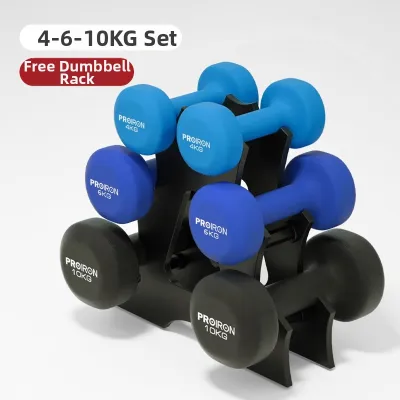
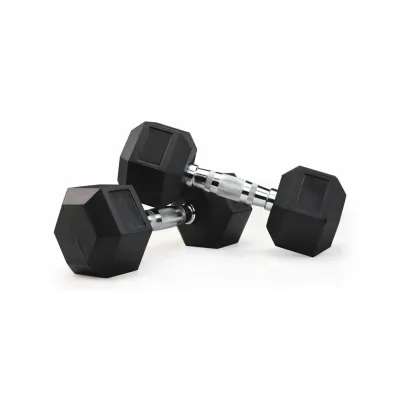
![[BULKY]Hex Dumbbell Rubber Coated Chrome Dumbbell / Home Gym / Indoor Gym/Fitness/Weights (Not Sold in pair)](https://img.lazcdn.com/g/p/9cecb653fdef1b69b19d212d76b0c30a.jpg_400x400q80.jpg_.webp)
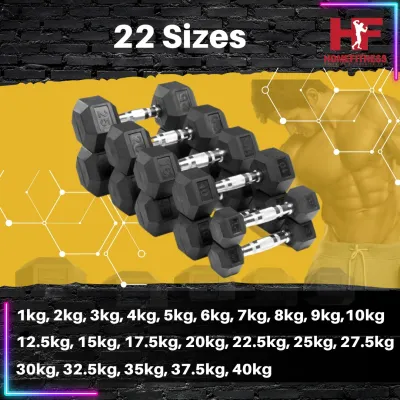
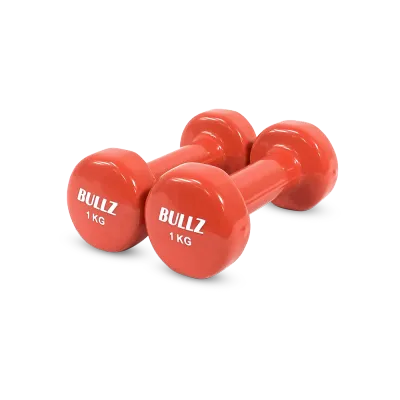
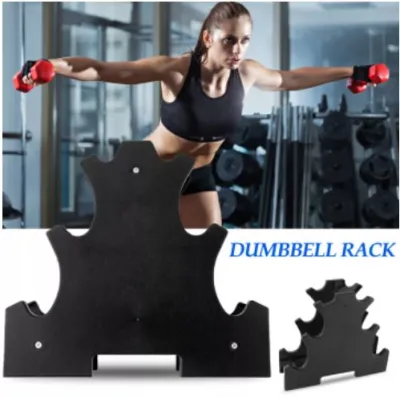
Prices are valid at publication and may change. Please refer to the product page for the latest price.
Space and Storage: Navigating Compact HDB Floor Plans
Modern HDB flats, particularly newly built Build-To-Order (BTO) units, are highly optimized living spaces where every square meter must be utilized intentionally. A typical bedroom or living room often serves multiple purposes, meaning your workout equipment must either blend seamlessly into the decor or be easily stowed away when guests arrive.
Adjustable dumbbells excel in these tight layouts because of their minimal physical footprint. A single pair, complete with its storage trays, typically occupies less than 0.5 square meters of floor space. This compact design allows you to tuck the weights away under a bed frame, place them discreetly beneath a TV console, or store them in a utility closet when they are not in use. To ensure the selector mechanisms function safely and smoothly, you must keep the base trays on a completely flat, level surface, which prevents the plates from shifting or misaligning.
Fixed dumbbells present a vastly different spatial challenge because their physical volume scales with your strength. To progress in your training, you will eventually need to accumulate multiple pairs of weights. Storing five, six, or more pairs of fixed dumbbells without creating a major tripping hazard requires a dedicated vertical or horizontal dumbbell rack. A rack of this size becomes a permanent visual fixture in your home, which can quickly make a multi-purpose living area feel cramped and cluttered.
Leaving loose fixed dumbbells scattered across the floor is not just an aesthetic issue; it is a safety hazard in compact apartments. In tight spaces, a stray dumbbell can easily lead to stubbed toes, trips, or falls, especially in households with young children or elderly family members.
Furthermore, you must consider the structural implications of floor weight distribution in high-rise residential blocks. HDB floors are engineered to support a standard residential live load of 1.5 kilonewtons per square meter, which is roughly equivalent to 150 kilograms of distributed weight per square meter. While a single pair of adjustable dumbbells poses no structural risk, a massive commercial-grade rack loaded with heavy fixed dumbbells concentrates a substantial amount of dead weight over a very small surface area. If you live in an older resale flat with aged floor screed, placing a heavy rack of fixed weights directly in the center of a room is highly discouraged; instead, position your weight racks flush against load-bearing walls or structural columns to ensure proper load distribution.
Weight Range and Progression: Choosing the Best Dumbbell for Men
To stimulate muscle growth and strength gains, your training program must incorporate the principle of progressive overload. This process requires you to gradually increase the resistance over time, challenging your muscles as they adapt to previous workloads. Selecting the right dumbbell for men who want to make continuous progress depends heavily on how easily the equipment accommodates these weight adjustments.

Adjustable dumbbells are specifically designed to support progressive overload within a single, self-contained system. A premium adjustable set can span a wide weight range, such as 2kg to 24kg or even up to 40kg per dumbbell. The weight increments are typically spaced in tight, manageable steps of 2kg or 2.5kg. This granular control is incredibly valuable when transitioning between different types of movements; you can easily select a light weight for lateral raises or rear delt flyes, and then quickly dial up the resistance for heavy compound movements like Romanian deadlifts, goblet squats, or chest presses.
Fixed dumbbells offer a different set of advantages, primarily centered around speed and simplicity. If your training style relies heavily on supersets, giant sets, or drop sets—where you immediately transition to a lighter weight to push a muscle past temporary failure—fixed dumbbells are unmatched. You can simply place one pair on the floor and immediately pick up a lighter pair from your rack without pausing to turn dials, pull pins, or realign plates. This seamless transition keeps your heart rate elevated and maintains constant tension on the target muscle groups.
However, the primary limitation of fixed dumbbells is that your physical progression is directly capped by the specific pairs you own. When you outgrow your current heaviest set, you are forced to purchase an entirely new pair of dumbbells. This constant need to buy heavier weights can stall your training momentum, as you may delay purchases due to cost or a lack of storage space in your flat.
To make the right choice, map your current strength levels against your long-term fitness goals and planned exercise repertoire. If your routine requires more than three distinct weight loads to target different muscle groups effectively, an adjustable dumbbell system is the most logical and practical path. If your workouts are highly specialized and only require a couple of specific weight loads, a small, curated set of fixed dumbbells can easily suffice.
Durability, Feel, and the "No-Drop" Rule
The tactile feedback, structural integrity, and daily usability of your equipment will directly shape your workout experience. Understanding how each dumbbell type handles the physical rigors of a workout is essential for protecting your investment and your home.
Fixed dumbbells are widely recognized for their near-indestructible construction. Typically manufactured from solid cast iron and coated in heavy-duty rubber or premium urethane, these weights contain zero moving parts. This solid-state design gives you the freedom to train to absolute failure. If your grip gives out at the end of a grueling set of overhead presses, you can safely drop the weights onto a properly protected floor without any fear of damaging the dumbbells themselves.
Adjustable dumbbells, on the other hand, are highly complex mechanical systems. They rely on internal steel gears, selector pins, plastic dials, and interlocking plates to function. Because of these intricate moving parts, adjustable dumbbells are subject to a strict “no-drop” rule. Dropping an adjustable dumbbell from even a short distance can easily shatter the plastic dials, bend the internal alignment pins, or crack the selector trays. If the internal locking mechanism is compromised, the dumbbell becomes incredibly dangerous to use, as the heavy plates could slip out of the housing mid-lift and fall directly onto your face, chest, or feet.
This mechanical vulnerability requires a fundamental shift in your lifting habits. You must commit to lowering the weights under complete control and placing them gently back into their trays or onto the floor after every set. While this controlled eccentric phase is highly beneficial for muscle hypertrophy, it can be mentally taxing when you are pushing your physical limits near muscular failure.
Additionally, the physical dimensions and grip ergonomics of the two styles differ significantly. Fixed dumbbells scale in size with their weight; a 5kg fixed dumbbell is physically much smaller and shorter than a 25kg fixed dumbbell. This compact, proportional sizing makes fixed weights highly maneuverable, allowing for a natural range of motion during exercises close to your body, such as bicep curls or shoulder presses.
In contrast, many adjustable dumbbells maintain a constant, maximum length regardless of the weight you select. The central spindle or guide rails remain fully extended even when you are only lifting the minimum weight of 2kg. This bulky, elongated profile can feel awkward and can cause the ends of the dumbbells to collide during bilateral movements like close-grip dumbbell presses or alternating curls. Before buying, verify the physical dimensions of the adjustable dumbbells to ensure they do not interfere with your body frame or range of motion.
Another environmental factor unique to Singapore is our high relative humidity, which regularly exceeds 80%. This moisture-rich air can cause exposed cast iron to rust rapidly. Cheap, uncoated iron fixed dumbbells will require frequent maintenance and wire-brushing to keep rust at bay. High-quality rubber-hex fixed dumbbells or plastic-encased adjustable plates are far more resistant to Singapore’s humid climate, making them much easier to maintain over years of home use.
Cost and Value: Evaluating Your Home Gym Budget
Investing in home gym equipment requires a clear understanding of both immediate upfront costs and long-term financial value. You must evaluate how your investment will serve your fitness progression over the next 12 to 24 months.
Adjustable dumbbells require a substantial upfront financial investment. A high-quality, durable pair of adjustable dumbbells can range from S$250 to over S$800, depending on the brand, weight capacity, and selector mechanism. While this initial price tag can cause immediate sticker shock, it represents a highly consolidated, one-time purchase that covers an entire spectrum of weight requirements.
Fixed dumbbells offer a deceptively low entry barrier. A single pair of 10kg rubber hex dumbbells might only cost you S$40 to S$60. This low starting cost makes fixed weights highly attractive if you are on a tight budget, testing the waters of home workouts, or only need a single weight size for specific rehabilitation or isolation exercises.
However, the total cost of fixed dumbbells scales linearly as you get stronger. If you start with a pair of 10kg dumbbells and eventually need to purchase pairs of 12.5kg, 15kg, 17.5kg, 20kg, 22.5kg, and 25kg weights to support your progression, your cumulative expenditure will quickly surpass the cost of a single premium adjustable set. Additionally, you must factor in the hidden costs of fixed dumbbells, such as purchasing a sturdy multi-tier storage rack (which can add S$100 to S$250 to your bill) and paying higher delivery fees for multiple heavy shipments to your HDB flat.
To determine which option offers the best value for your specific situation, use a simple cost-per-kilogram calculation based on your projected strength progression. Estimate the total amount of weight you will need to perform a comprehensive, full-body routine over the next two years. If you require a wide variety of resistance levels to target different muscle groups, the adjustable dumbbell system provides a significantly lower cost-per-kilogram and represents the smarter long-term financial investment.
Final Verdict: Your Dumbbell Decision Framework
To make your final decision, evaluate your living space, training preferences, and budget against this practical decision framework.
Choose Adjustable if:
- You live in a standard or compact HDB flat where floor space is highly limited and you want to keep your home free of visual clutter.
- Your training program targets the entire body, requiring frequent, precise weight adjustments across a broad spectrum of exercises.
- You are highly disciplined and can commit to always placing your weights down in a gentle, controlled manner after every single set.
Choose Fixed if:
- You have a dedicated spare bedroom, study, or enclosed balcony where a permanent dumbbell rack will not disrupt your daily household activities.
- Your workout style focuses heavily on rapid drop sets, supersets, or explosive movements where pausing to adjust dials or pins would ruin your training flow.
- You prefer the solid, traditional feel of cast iron or rubber and want the freedom to train to absolute failure without worrying about damaging delicate internal gears.
- You only require two or three specific weight loads to complement an existing workout routine, such as running or bodyweight training.
Consider a Hybrid Approach if:
- You want to optimize both your budget and your training safety. For example, you can purchase a single pair of heavy fixed dumbbells (or a heavy kettlebell) specifically for high-impact, high-load lower-body movements like Romanian deadlifts and goblet squats. You can then pair them with a moderately priced adjustable dumbbell set for your upper-body isolation movements like lateral raises, bicep curls, and shoulder presses. This hybrid strategy protects your delicate adjustable mechanisms from high-impact damage while keeping your overall storage footprint incredibly manageable.
Frequently Asked Questions (FAQ)
Can I drop adjustable dumbbells on my HDB floor?
You should never drop adjustable dumbbells on an HDB floor. The sudden impact can easily shatter the plastic dials, dislodge internal locking pins, and permanently misalign the selector plates, rendering the equipment useless and highly unsafe. Furthermore, dropping heavy weights can crack your HDB floor tiles, damage the underlying concrete screed, and transmit severe impact noise directly to your neighbors living downstairs. Always place a high-density rubber gym mat (at least 15mm to 20mm thick) in your workout area and focus on lowering your weights under complete control.
Do adjustable dumbbells rattle or feel loose during exercises?
Some degree of minor play or rattling is common in adjustable dumbbells due to the physical tolerances required for the plates to slide in and out of the selector system. The amount of rattle varies depending on the locking mechanism, such as dial-turn, handle-twist, or pin-selector designs. To ensure your safety, always perform a quick visual check before starting every set to verify that the plates are fully engaged and the dial is locked securely into position. Never lift the dumbbell if the mechanism feels loose or if the plates are not completely seated in their designated slots.
Community discussion
Share your experience or ask a question. Comments are reviewed before publication.