
Choosing the right dumbbells for your home workouts is a pivotal decision that shapes your entire fitness routine. The ideal choice depends on your available space, budget, and training style. Adjustable dumbbells offer a compact, cost-effective solution for progressive overload in smaller homes, while fixed dumbbells provide superior durability, ergonomic consistency, and speed for high-intensity routines in dedicated gym spaces. By evaluating how each type aligns with your living environment and exercise habits, you can build a highly functional home gym that supports your long-term strength goals.
Core Differences Between Adjustable and Fixed Dumbbells
To make an informed decision, you must first understand the fundamental structural and functional distinctions between these two equipment categories. Adjustable dumbbells consolidate multiple weight increments into a single pair of handles. They utilize various mechanical systems to change the load, such as rotating dials, selector pins, or traditional spinlock collars. These mechanisms allow you to engage or disengage specific weight plates nested in a central cradle, changing the total mass of the dumbbell in seconds.
In contrast, fixed dumbbells feature a solid, single-piece construction where the weight plates are permanently welded, bolted, or pressed onto a central handle. Typically manufactured from cast iron or encased in protective coatings like rubber or urethane, they have no moving parts. This solid design offers a highly stable and predictable lifting experience, but it requires you to purchase a separate pair for every single weight increment you need.
Products mentioned in this guide
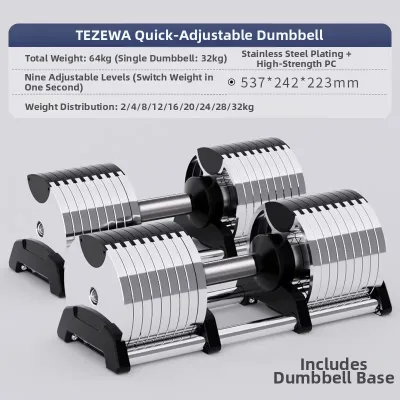
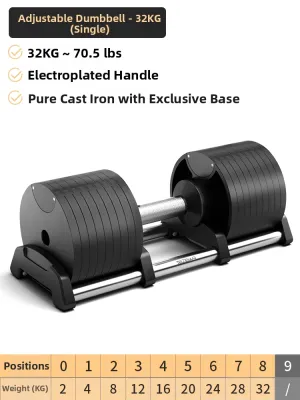
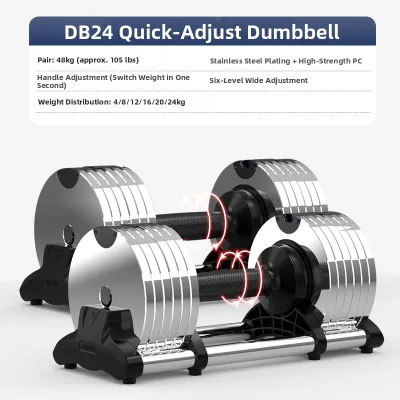
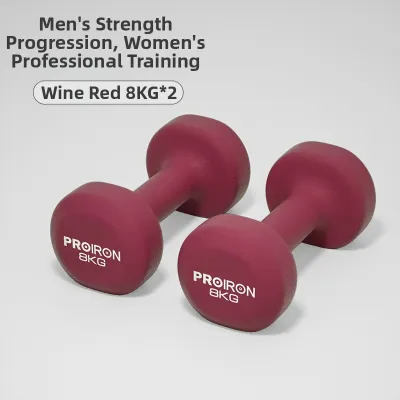
![[BULKY]Hex Dumbbell Rubber Coated Chrome Dumbbell / Home Gym / Indoor Gym/Fitness/Weights (Not Sold in pair)](https://img.lazcdn.com/g/p/9cecb653fdef1b69b19d212d76b0c30a.jpg_400x400q80.jpg_.webp)
Prices are valid at publication and may change. Please refer to the product page for the latest price.
The weight increments and capacity limits also differ significantly between the two styles. Adjustable systems often start at a baseline weight of around 2 kg to 4 kg and can scale up to 24 kg or even 40 kg per dumbbell, adjusting in increments of 1 kg to 2.5 kg. Fixed dumbbells are sold in standard pairs, typically starting at 1 kg or 2 kg and increasing in 2 kg or 2.5 kg increments. While adjustable models offer incredible versatility within a single footprint, their mechanical complexity introduces wear-and-tear risks. Fixed dumbbells require virtually zero maintenance and can withstand decades of heavy use without mechanical failure.
Space and Storage: Which Fits Your Home Better?
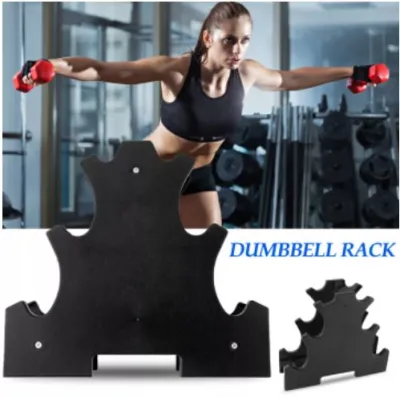
Physical footprint is often the deciding factor for home fitness enthusiasts, particularly those living in urban environments. In compact Singapore apartments, such as HDB flats or condominiums, floor space is at a premium. A full set of fixed dumbbells spanning from 5 kg to 25 kg in 2.5 kg increments requires nine separate pairs of weights. Storing these requires a multi-tier horizontal rack that can easily consume over a meter of wall space and protrude significantly into your living area.

Adjustable dumbbells solve this spatial challenge by condensing an entire rack of weights into the footprint of a single pair. When not in use, the dumbbells sit neatly in their compact storage cradles, which typically measure no more than 45 centimeters in length and 25 centimeters in width. This minimal footprint allows you to store them under a bed, inside a wardrobe, or in a small corner of your living room, keeping your living space completely uncluttered.
However, you must also consider the operational clearance required during your workouts. Adjustable dumbbells require a flat, stable surface for their docking stations, as you must return the handles to the cradle to change weights. If you train in a tight space, you need enough room to stand over the cradles and lift the weights vertically without hitting nearby furniture. Fixed dumbbells offer more flexibility during the workout itself, as you can place them directly on the floor wherever you stand, without needing to return them to a specific base station.
Budget and Long-Term Value
Evaluating the financial investment of a home gym requires looking at both the immediate upfront cost and the long-term value as your strength progresses. Purchasing a single pair of high-quality adjustable dumbbells represents a significant one-time expense, often ranging from S$300 to S$800 depending on the mechanism and maximum weight capacity. While this initial outlay can seem high, it is highly cost-effective when compared to the cumulative cost of buying equivalent individual pairs of fixed dumbbells.
To build a comparable range of fixed dumbbells from 2.5 kg to 25 kg, you would need to purchase ten separate pairs. At average retail prices, even basic rubber-coated hex dumbbells can quickly add up to well over S$1,000, not including the cost of a sturdy multi-tier storage rack to keep them off the floor. From a cost-per-kilogram perspective, adjustable dumbbells offer far superior value for lifters who plan to consistently apply progressive overload and require a wide range of resistance options.
However, there are specific scenarios where investing in select fixed pairs makes excellent financial sense. If your training routine primarily revolves around high-repetition isolation movements, bodyweight-supported exercises, or aerobic conditioning, you may only need two or three specific weight increments. In this case, buying a few pairs of fixed dumbbells—such as a 5 kg pair for lateral raises and a 10 kg pair for shoulder presses—is far cheaper than buying a full adjustable set. This targeted approach allows you to allocate your budget to other essential home gym equipment, like a quality adjustable bench or resistance bands.
Training Routine and Workout Experience
Your specific workout style and exercise selection should heavily influence your choice of dumbbell. If your training program relies on rapid transitions, such as drop sets, supersets, or fast-paced metabolic conditioning circuits, fixed dumbbells are highly advantageous. With fixed weights, you can instantly drop one pair and grab another from the rack without pausing your workout. Adjustable dumbbells, even those with rapid-dial mechanisms, require you to stop, align the plates, dock the handle, select the new weight, and lift, which can disrupt the flow and intensity of high-paced training.
Ergonomics and balance also differ noticeably between the two designs. Fixed dumbbells, especially high-quality rubber hex or round urethane models, offer consistent handle lengths and optimal weight distribution. The physical size of the dumbbell scales naturally with the weight; a 5 kg fixed dumbbell is physically smaller and easier to maneuver than a 20 kg one. Adjustable dumbbells, however, often maintain a constant physical length regardless of the selected weight, as the central shaft or frame remains the same size. This can make lighter exercises, like bicep curls or lateral raises, feel bulky or awkward due to the wide frame clearing your body.
Safety and durability during dynamic movements are also critical considerations. Fixed dumbbells are incredibly robust and can tolerate being placed down quickly or occasionally dropped on protective rubber flooring. Adjustable dumbbells contain intricate internal locking pins, gears, and plastic components that can crack or misalign if subjected to sudden impacts. If your routine includes explosive movements like dumbbell cleans, snatches, or exercises where you must drop the weights at failure, fixed dumbbells are the only safe option. Dropping an adjustable dumbbell can permanently damage the locking mechanism, rendering the entire set unusable and creating a safety hazard if a plate slips during a lift.
Quick Comparison Checklist
To help you visualize the practical trade-offs, this comparison matrix outlines how each dumbbell type performs across key operational categories.
| Feature | Adjustable Dumbbells | Fixed Dumbbells |
|---|---|---|
| Space Efficiency | Excellent (requires only a single base footprint) | Poor (requires a dedicated multi-tier rack) |
| Upfront Cost | Moderate to High (single purchase for full range) | Low for single pairs; Very High for a full set |
| Workout Speed | Moderate (requires docking and adjusting dials) | Instant (simply grab the next pair from the rack) |
| Durability | Moderate (sensitive to drops and mechanical wear) | Exceptional (solid construction, highly impact-resistant) |
| Ergonomics | Can feel bulky at lighter weight settings | Consistent, natural balance across all sizes |
| Maintenance | Requires periodic cleaning and mechanism checks | Virtually maintenance-free |
Before purchasing any set, perform these physical verification checks:
- Handle Diameter: Measure your grip comfort; adjustable handles are often thicker or made of textured plastic, while fixed handles typically feature knurled steel.
- Base Dimensions: Ensure your designated storage area has flat, level flooring to support the docking cradles or the weight rack.
- Floor Protection: Verify if your home flooring requires protective rubber matting to prevent scratches from cast iron or heavy plastic bases.
How to Make Your Final Decision
To confidently select the right equipment for your home gym, evaluate your personal profile against these conditional scenarios.
Choose adjustable dumbbells if:
- You live in a compact apartment or shared space where a dedicated weight rack is not feasible.
- Your primary training goal is progressive strength training, requiring frequent, small increments in weight over time.
- You want a complete weight range up to 24 kg or 40 kg but want to keep your initial investment under S$800.
- You prefer a tidy, minimalist workout environment that can be packed away in minutes.
Choose fixed dumbbells if:
- You have a dedicated garage, spare room, or large balcony space that can permanently accommodate a multi-tier dumbbell rack.
- Your workouts frequently feature drop sets, supersets, or high-intensity functional fitness routines that demand instant weight changes.
- You regularly perform explosive lifts or train to absolute failure, where dropping the weights onto the floor is sometimes necessary.
- You prefer the traditional, balanced feel of knurled steel handles and solid, commercial-grade gym equipment.
Verify first before buying:
- Floor Load Limits: If you plan to buy a heavy set of fixed dumbbells (e.g., 200 kg total weight including the rack), verify that your home flooring and subfloor can safely support concentrated loads.
- Warranty Terms: Read the manufacturer's warranty carefully for adjustable models, checking if it covers mechanical failure of the selector dials and if dropping the weights voids the coverage.
- Mechanism Smoothness: If possible, test the selector mechanism in person to ensure the plates align smoothly without sticking or jamming during transitions.
Frequently Asked Questions (FAQ)
Can I mix adjustable and fixed dumbbells in the same home gym?
Yes, combining both types is an exceptionally practical and cost-effective strategy for many home lifters. You can use a single pair of adjustable dumbbells as your primary tool for heavy, progressive compound movements like chest presses, rows, and squats. Alongside this set, you can purchase one or two pairs of light, fixed dumbbells (such as 4 kg or 6 kg) for high-rep isolation work, warm-ups, or core exercises. This hybrid setup gives you the speed and ergonomics of fixed weights where you need them most, while preserving floor space and saving money on heavier loads.
Are adjustable dumbbells safe for heavy lifting?
Adjustable dumbbells are highly safe for heavy lifting, provided you follow strict operational guidelines and perform regular safety checks. Before starting any set, you must visually and physically verify that the locking mechanism is fully engaged and that the selected weight plates are securely locked into the handle. Never use adjustable dumbbells if the dial or selector pin feels loose, sticky, or fails to click into place. Additionally, you must strictly adhere to the manufacturer’s handling guidelines, which means never dropping the weights, throwing them, or banging them together at the top of a movement, as sudden impacts can compromise the internal locking safety features.
Community discussion
Share your experience or ask a question. Comments are reviewed before publication.