
Choosing between adjustable and fixed dumbbells is a pivotal decision when setting up a home gym or refining your strength routine. Both equipment types are highly effective tools for building muscle, increasing bone density, and improving overall physical fitness. However, they cater to entirely different training styles, spatial constraints, and financial considerations. Selecting the wrong type can lead to disrupted workouts, wasted living space, or premature equipment failure.
To make an informed choice, you must look beyond the surface appeal of each option and analyze how their structural designs align with your specific fitness objectives. Whether you are focused on high-intensity interval training, steady progressive overload, or rehabilitation, the way a dumbbell handles, adjusts, and stores will directly impact your consistency and safety. By evaluating the mechanical differences, training workflows, and practical home logistics, you can select the ideal weight system to support your long-term fitness journey.
Core Differences in Design and Training Experience
The primary distinction between adjustable and fixed dumbbells lies in their engineering and physical construction. Fixed dumbbells are single-weight units, typically constructed from solid cast iron, steel, or a metal core encased in protective rubber or urethane. They feature no moving parts, meaning the weight you pick up is permanently secured to the handle. This solid-state design provides exceptional structural integrity, allowing the weights to withstand heavy impacts and repeated use without any risk of component failure.
Products mentioned in this guide
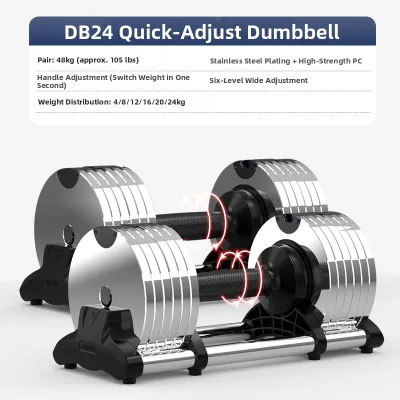
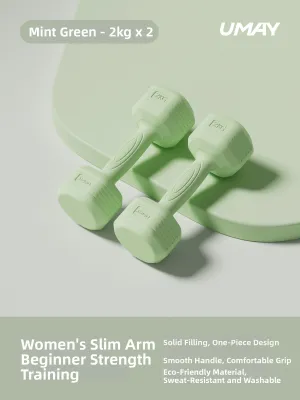
Prices are valid at publication and may change. Please refer to the product page for the latest price.
Adjustable dumbbells utilize a mechanical system to consolidate multiple weight increments into a single pair of handles. These systems generally fall into three categories: dial-adjust, selector pin, or plate-loaded spinlock designs. Dial and pin systems allow you to change weights rapidly by resting the handle in a custom cradle, turning a dial or moving a pin to the desired setting, and lifting the handle out. Plate-loaded models require you to manually slide individual weight plates onto a threaded sleeve and secure them with a collar, offering a more traditional but slower adjustment process.
These structural differences directly influence grip ergonomics and the physical footprint of the dumbbell during an exercise. Fixed dumbbells scale in size relative to their weight; a light dumbbell is physically small and compact, while a heavy dumbbell is larger and bulkier. This scaling allows for natural movement patterns and maximum range of motion across different exercises. Adjustable dumbbells, however, often maintain a fixed, maximum length regardless of the weight selected because the central selector shaft or frame must accommodate the entire weight stack. This constant length can make certain movements, like overhead presses or close-grip bicep curls, feel awkward as the long ends of the dumbbells may collide with your body or each other.
Furthermore, handle design and grip comfort vary significantly between the two types. Fixed dumbbells often feature contoured handles with knurling that scales in thickness and aggressiveness as the weight increases, providing an optimized grip for different lift intensities. Adjustable dumbbells typically feature a uniform handle diameter and texture across all weight settings, which may feel slightly too thick for lighter exercises or too thin for heavy lifts. Additionally, the presence of internal locking mechanisms in adjustable models requires regular inspection to ensure no dust, sweat, or debris interferes with the safety locks.
Matching Dumbbell Types to Specific Fitness Goals
Your specific training methodology should dictate which dumbbell type is most suitable for your routine. If your primary objective is hypertrophy or strength building, progressive overload is essential. This training principle requires you to gradually increase the resistance over time to continually challenge your muscles. Adjustable dumbbells are highly advantageous for this approach because they pack a wide range of weight increments into a single pair, allowing you to make small, controlled jumps as your strength improves. However, you must verify the maximum weight limit of any adjustable set you consider, as some models top out at weights that advanced lifters might quickly surpass for compound movements like chest presses or rows.

For those who prioritize high-intensity interval training (HIIT), circuit training, or drop sets, workout efficiency and transition speed are paramount. In these fast-paced training styles, resting between exercises must be kept to a minimum to maintain an elevated heart rate or maximize metabolic fatigue. Fixed dumbbells are the superior choice for these workflows. When performing a drop set, you can instantly drop a heavy pair of fixed dumbbells and immediately grab a lighter pair from a rack without interrupting your momentum. Even the fastest dial-based adjustable dumbbells require you to pause, align the plates perfectly back into the storage tray, turn the dial, and lift the new weight out, which can disrupt the flow of a high-intensity circuit.
If your fitness goals center around general wellness, mobility, or physical rehabilitation, your equipment needs will lean toward lighter weights and precise balance. Rehabilitation exercises often require very small, incremental adjustments to avoid overloading healing tendons or joints. Fixed dumbbells are widely available in highly precise, ultra-light increments, such as 1 kg, 2 kg, or 3 kg, which are perfectly balanced and easy to manipulate at unusual angles. Some adjustable dumbbells have a relatively high minimum starting weight, often beginning at 2.5 kg or 5 kg, which may be too heavy or cumbersome for delicate rotator cuff exercises or physical therapy protocols.
Space, Budget, and Practical Considerations for Home Gyms
For most home gym enthusiasts, practical constraints like floor space, budget, and safety are just as important as training goals. In compact living environments, such as apartments in Singapore, dedicated space is a luxury. A complete set of fixed dumbbells ranging from 2 kg to 25 kg requires a multi-tier storage rack that occupies a substantial amount of floor space and cannot be easily moved. Conversely, a single pair of adjustable dumbbells replaces an entire rack of weights while occupying only the space of their storage trays. This compact footprint allows you to store them easily in a closet, under a bed, or in the corner of a room when not in use.
Financial considerations also play a major role in the decision-making process. While a high-quality pair of adjustable dumbbells represents a significant upfront investment—often ranging from S$300 to S$800—it is generally far more cost-effective than purchasing an equivalent range of individual fixed dumbbell pairs. Buying fixed dumbbells pair-by-pair might seem affordable initially, but as your strength progresses and you require heavier weights, the cumulative cost of purchasing new pairs, along with a dedicated rack to store them, can quickly exceed the price of a single premium adjustable set.
Safety and durability are critical factors when training at home, particularly regarding the risk of dropping weights. Dropping weights can damage your flooring, create excessive noise, and ruin your equipment. Fixed dumbbells, especially those coated in high-quality rubber or urethane, are designed to absorb impact and are highly resilient if accidentally dropped onto a protective gym mat. Adjustable dumbbells, however, contain intricate internal gears, plastic dials, and selector pins that are highly susceptible to damage from impacts. Dropping an adjustable dumbbell can easily crack the housing, bend the selector pins, or misalign the plates, rendering the entire unit unsafe or completely unusable.
Decision Framework: Choose Based on Your Profile
To finalize your decision, evaluate your training environment and habits against the following conditional profiles to determine which dumbbell type aligns with your needs.
You should choose fixed dumbbells if you have a dedicated workout space or garage gym with ample room for a multi-tier rack, prioritize absolute durability and the ability to drop weights safely, perform fast-paced circuit training or drop sets that require instant weight transitions, and prefer the traditional, balanced feel of solid-state gym equipment.
You should choose adjustable dumbbells if you train in a multi-purpose living space where saving floor space is a priority, want to acquire a comprehensive range of weight options on a consolidated budget, and focus on structured, controlled strength training where a brief pause to adjust weights between sets does not disrupt your workout flow.
Before making any purchase, always verify the specific features of your chosen model. Check that the maximum weight capacity aligns with your long-term strength goals, and ensure the increment steps are small enough to support gradual progression on upper-body lifts. Additionally, review the manufacturer’s warranty terms to understand what mechanical components are covered in the event of a system jam or failure.
Frequently Asked Questions (FAQ)
Can I build significant muscle mass using only adjustable dumbbells?
Yes, you can build substantial muscle mass using only adjustable dumbbells, provided you consistently apply the principle of progressive overload. Muscle hypertrophy is triggered by mechanical tension and metabolic stress, both of which can be achieved by lifting challenging weights close to muscular failure. As long as your adjustable dumbbell set offers a weight range that allows you to increase resistance as your muscles adapt, it will be highly effective for building mass. However, as your strength increases, you may eventually find that compound lower-body exercises like squats or deadlifts require more weight than standard adjustable sets can provide. At that stage, you may need to supplement your routine with heavy fixed dumbbells or transition to a barbell and plate setup.
Are adjustable dumbbells safe to drop during heavy lifts?
No, adjustable dumbbells are not safe to drop and should always be lowered to the floor with control. Unlike solid steel or rubber-coated fixed dumbbells, adjustable models rely on complex internal locking mechanisms, selector pins, and alignment trays to keep the weight plates secure. The high-impact force of dropping these dumbbells can easily bend the internal pins, shatter plastic dials, or warp the alignment of the plates. This damage not only ruins the equipment but also poses a severe safety risk, as compromised locking mechanisms could cause plates to slip off during subsequent overhead exercises. To ensure your safety and protect your investment, always perform controlled lifts and place the dumbbells gently back into their storage cradles after completing a set.
Community discussion
Share your experience or ask a question. Comments are reviewed before publication.