
Quick Answer: Which Grip Trainer Fits Your Space and Goals?
Choosing the right grip trainer is essential for building hand strength without cluttering your living space. For most people living in space-conscious apartments or HDB flats, an adjustable grip trainer is the superior choice. A single adjustable device consolidates an entire progression of resistance levels into one compact tool, eliminating the need to buy, store, and organize multiple individual grippers as your strength improves.
Fixed-resistance trainers remain the preferred option for specialized grip athletes, rock climbers, or powerlifters who demand absolute tactile consistency, high-grade knurled metal handles, and unvarying resistance curves. While fixed models offer unmatched structural durability and a highly predictable squeeze, they require you to purchase a new unit every time you outgrow your current resistance level.
The primary trade-off comes down to versatility versus mechanical simplicity. An adjustable model maximizes your training variety and keeps your home clutter-free, whereas a fixed model provides a rugged, long-lasting tool designed for specific, high-intensity strength benchmarks.
Products mentioned in this guide
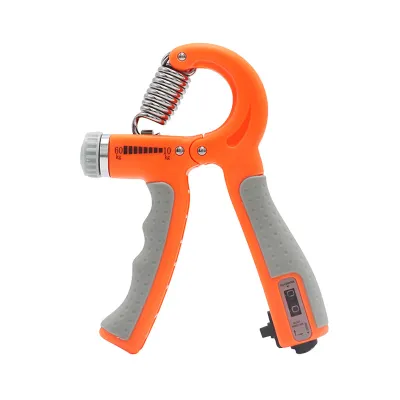
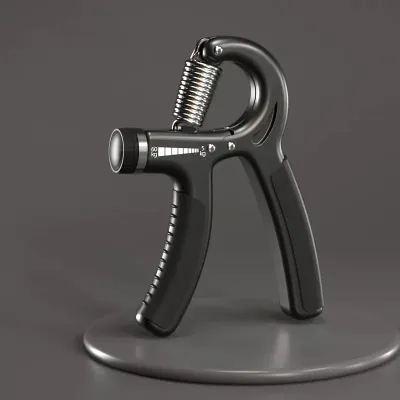
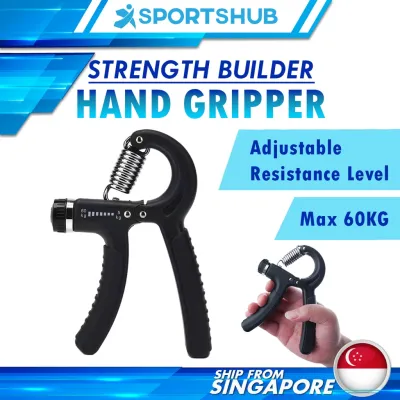
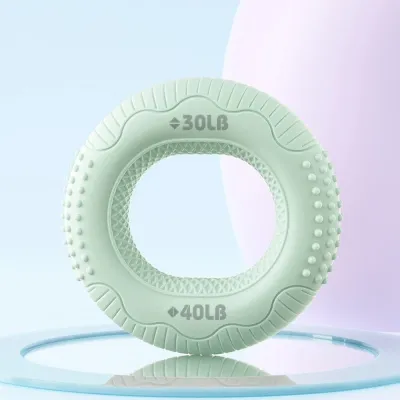
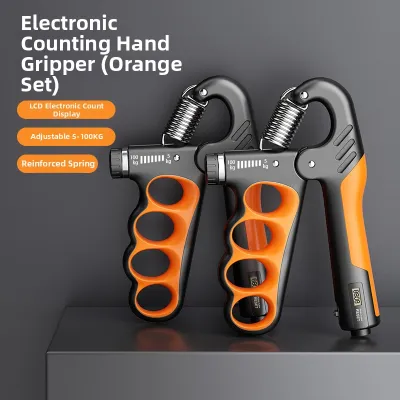
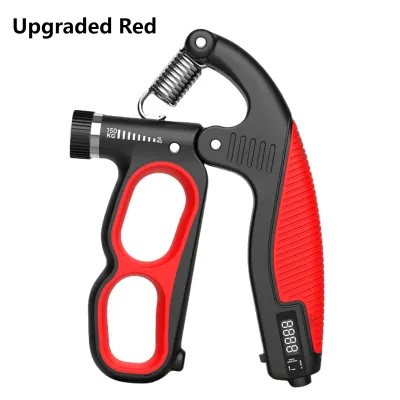
![[SG SELLER]Hand Gripper Silicone Finger Expander Exercise Hand Grip Wrist Strength Trainer Finger Exerciser Resistance Bands Fitness](https://img.lazcdn.com/g/p/eaa1bc7be613fde035da86123e6c0a4e.jpg_400x400q80.jpg_.webp)
Prices are valid at publication and may change. Please refer to the product page for the latest price.
Key Differences at a Glance
To help you quickly evaluate which style aligns with your home setup and fitness goals, the table below outlines the core differences between these two common training tools.

| Feature | Adjustable Grip Trainers | Fixed-Resistance Grip Trainers |
|---|---|---|
| Space Required | Minimal; one device fits easily in a small drawer or desk organizer. | High; requires dedicated storage space for a growing collection of units. |
| Resistance Progression | Continuous; incremental adjustments via a dial, screw, or spring position. | Step-based; requires purchasing a completely new unit to increase resistance. |
| Mechanical Complexity | Moderate to high; features moving dials, sliding springs, or tension pins. | Extremely low; typically a single torsion spring joined to two solid handles. |
| Durability | Variable; moving parts and plastic components can wear out over time. | Exceptionally high; solid metal construction offers lifetime durability. |
| Ideal User Profile | General fitness enthusiasts, desk workers, and those with limited storage space. | Competitive athletes, climbers, and lifters targeting absolute maximum strength. |
Space Efficiency and Storage of a Grip Trainer in Compact Flats
Living in a compact urban home, such as a Singapore HDB flat, means that every square meter of floor and storage space must be utilized intentionally. Large, bulky exercise equipment often ends up taking over common areas or getting shoved into deep storage, never to be used again. When building a minimalist home gym, selecting compact, multi-functional tools is key to maintaining an organized, stress-free living environment.
An adjustable grip trainer is incredibly space-efficient because it replaces an entire rack of individual weights. Instead of keeping five or six different grippers on hand to cover your warm-up, working sets, and progressive challenges, you only need to store a single device. This single unit fits effortlessly into a shallow desk drawer, a bedside table, or a small basket in your living room, keeping your fitness routine close at hand without contributing to visual clutter.
In contrast, choosing fixed-resistance trainers inevitably leads to the “ladder” problem. As your hand and forearm strength improves, your current gripper will eventually become too light to stimulate further muscle growth or strength gains. To continue progressing, you must purchase the next level up, and then the next. Over time, you accumulate a physical ladder of metal grippers that must be stored, organized, and kept clean.
While a single fixed-resistance gripper is admittedly small and lightweight, a collection of four to six units takes up significant space. They require dedicated storage bins, drawer dividers, or wall hooks to prevent them from rolling around and getting misplaced. For those who value a tidy, minimalist home where every item has a designated place, managing a growing collection of single-purpose metal tools can quickly become an unnecessary hassle.
It is worth noting that some high-end adjustable trainers are slightly bulkier than a single fixed gripper due to the inclusion of tension dials, sliding tracks, or dual-spring systems. However, when comparing the physical volume of one slightly wider adjustable device against the cumulative volume of a complete set of fixed grippers, the adjustable option remains the undisputed winner for space-saving efficiency.
Training Versatility and Progressive Overload
To build strength effectively, your muscles must be subjected to progressive overload—the gradual increase of stress placed upon the body during exercise. In grip training, this means consistently increasing the resistance over time. How each style of trainer facilitates this progression directly impacts how smoothly you can build strength and recover from your workouts.
Adjustable trainers excel at facilitating progressive overload because they allow for micro-loading. By turning a dial or shifting a spring position, you can make minute adjustments to the resistance level. This granular control is incredibly valuable for the small, delicate muscles and tendons of the hands and forearms, where making a massive jump in weight can easily stall your progress or lead to strain.
Fixed-resistance trainers, on the other hand, require you to make substantial jumps between levels. Moving from one fixed gripper to the next often represents a 10kg to 20kg increase in resistance. For many users, this gap is simply too wide to bridge immediately, resulting in a frustrating plateau where the lighter gripper is too easy, but the heavier one cannot be closed even once.
Beyond progression, training versatility is a major factor to consider. A proper hand workout involves more than just squeezing at maximum effort; it requires warm-ups, high-volume endurance sets, and targeted active recovery. An adjustable grip trainer allows you to seamlessly transition from a light, high-rep warm-up to a heavy working set, and finally to a low-resistance cool-down, all using the exact same device.
If you rely solely on fixed-resistance models, executing a complete, well-rounded workout routine requires you to own at least three different units: a light one for warming up, a medium one for working sets, and a heavy one for maximum-effort attempts. Without this variety, you risk jumping straight into heavy squeezes with cold muscles, which significantly increases the risk of injury.
However, fixed-resistance trainers possess a distinct advantage when it comes to tactile feedback and consistency. Because they lack moving dials, sliding pins, or adjustable hinges, the path of motion and the tension curve remain completely uniform throughout the entire squeeze. This predictable, solid feedback is highly prized by advanced lifters and grip sport competitors who need to test their absolute limits under standardized conditions.
Durability, Maintenance, and Long-Term Value
Investing in home fitness equipment requires a careful look at how well the tools will withstand regular use over several years. This is especially true in warm, humid climates like Singapore’s, where ambient moisture can accelerate the wear and tear of metal and plastic components alike.
Fixed-resistance grippers are renowned for their near-indestructible design. Typically constructed from a single high-tensile steel torsion spring mounted onto solid aluminum or steel handles, these devices have no moving parts, screws, or plastic housings that can break, strip, or wear out. With basic care, a quality fixed gripper can easily last a lifetime, making it a highly reliable one-time purchase.
Adjustable grip trainers are inherently more complex. They rely on internal springs, adjustment screws, tension dials, and sometimes plastic frames to alter the resistance. While premium adjustable models are built to high standards, budget-friendly versions often utilize lower-grade plastics that can crack under heavy tension, or adjustment dials that may slip or strip after a few years of consistent use.
To maximize the lifespan of an adjustable trainer, you must perform occasional maintenance. This includes checking the alignment of the spring, ensuring the adjustment screws remain tight, and wiping down the device to prevent sweat from corroding the internal mechanism. For fixed metal grippers, maintenance is usually limited to wiping down the knurled handles and occasionally applying a light drop of oil to the torsion spring to prevent rust.
When evaluating long-term value, you must look at the overall cost of your fitness journey rather than just the initial price tag. A premium, highly durable adjustable grip trainer may carry a higher upfront cost than a single fixed-resistance gripper. However, when you calculate the cost of buying four, five, or six individual fixed grippers to match the resistance range of a single adjustable unit, the adjustable option represents a far more economical investment.
Before making a purchase, it is highly recommended to check the manufacturer’s warranty terms and read user feedback regarding the long-term reliability of the adjustment mechanism. Opting for a reputable brand that uses reinforced steel springs and aluminum housings will ensure your adjustable trainer remains functional for years to come.
How to Choose the Right Grip Trainer for Your Routine
Selecting the perfect tool depends heavily on your current fitness level, your long-term training goals, and the physical constraints of your living space. By evaluating your personal profile against the characteristics of each trainer, you can make a practical decision that enhances your home workouts.
Choose an Adjustable Grip Trainer if:
- You live in a compact home: You want to keep your living space neat and tidy, avoiding the clutter of multiple single-purpose fitness gadgets.
- You value smooth progression: You prefer making small, incremental adjustments to your training resistance to avoid plateaus and protect your joints.
- You want a versatile routine: You need a single, portable device that can easily handle warm-ups, high-rep endurance training, and heavy strength sets.
- You are mindful of your budget: You want to cover a wide spectrum of resistance levels without having to purchase multiple separate pieces of equipment.
Choose a Fixed-Resistance Grip Trainer if:
- You are training for a specific sport: You are a rock climber, powerlifter, or grip competitor who requires the exact tactile feel of knurled metal handles and standard resistance ratings.
- You demand maximum durability: You want a simple, robust tool with zero moving parts that is virtually impossible to break.
- You prefer a consistent feel: You dislike the slight mechanical play or changing handle angles that can sometimes occur with adjustable mechanisms.
Verify First Before Buying:
Before committing to any grip trainer, it is crucial to verify that the device fits your hand size. Adjustable trainers often have wider handle spreads or bulkier profiles to accommodate their internal mechanisms, which can make them uncomfortable or difficult to use for individuals with smaller hands.
Conversely, some budget fixed grippers have narrow handles that do not allow for a full range of motion if you have larger hands. Always check the manufacturer’s specifications for handle diameter, grip width, and maximum spread to ensure a safe, comfortable, and effective workout.
Safe Usage and Injury Prevention Tips
Because the hands, wrists, and forearms are packed with delicate tendons, ligaments, and small muscle groups, they are highly susceptible to overuse injuries if not trained with care. Proper technique and structured recovery are essential to achieving steady strength gains while keeping your hands pain-free.
First, always perform a thorough warm-up before attempting any heavy squeezes. Spend a few minutes performing gentle hand stretches, wrist circles, and low-resistance squeezes on your trainer. This increases blood flow to the fingers and forearms, lubricating the joints and preparing the connective tissues for the intense mechanical stress of heavy resistance work.
Second, avoid the temptation to train your grip every single day. Forearm muscles and finger tendons recover much slower than larger muscle groups like your chest or legs. To prevent chronic conditions such as tendonitis or carpal tunnel strain, limit your intense grip workouts to two or three sessions per week, ensuring you have at least 48 hours of rest between workouts.
Third, maintain muscular balance in your hands by pairing your closing exercises with finger extension work. Squeezing a grip trainer only works the flexor muscles on the underside of your forearm. To prevent imbalances that can lead to elbow pain, use elastic extension bands to actively open your fingers against resistance, keeping the joints and opposing muscle groups healthy.
Finally, remember that grip trainers are supplementary tools designed to support your overall physical fitness. They are highly effective for building targeted hand and forearm strength, but they should not replace a comprehensive strength training program or proper lifting form during compound movements like deadlifts, pull-ups, and rows.
Frequently Asked Questions (FAQ)
Can grip trainers build forearm muscle or just strength?
Grip trainers can contribute to forearm muscle growth (hypertrophy) if they are used with sufficient resistance and volume to challenge your muscles to near-failure. However, because these devices primarily utilize a limited range of motion focused on hand closure, they are most effective when paired with full-range exercises like wrist curls, reverse curls, and hammer curls to maximize overall forearm size.
How often should I train my grip at home?
For most people, training your grip two to three times per week is ideal. Beginners should start with short, ten-minute sessions using a moderate resistance that allows for 10 to 15 controlled repetitions. Always pay close attention to your body; if you experience persistent joint stiffness, elbow pain, or finger soreness, increase your rest days and temporarily lower the trainer’s resistance.
Community discussion
Share your experience or ask a question. Comments are reviewed before publication.