
Selecting the right ankle guard depends on your specific activity, the level of structural stability your joint requires, and how the guard fits inside your footwear. Because no single design suits every scenario, choosing the correct type involves balancing mechanical restriction with freedom of movement.
Here is a quick decision framework to guide your choice:
- Choose a Sleeve if you require mild compression, enhanced joint awareness (proprioception), and maximum comfort during low-impact activities, recovery phases, or daily wear.
- Choose a Lace-Up if you need maximum rigid stability and mechanical restriction to protect against severe lateral rolls during high-impact sports that involve sudden stops, jumps, and rapid cutting movements.
- Choose a Strap if you want adjustable, targeted ligament support that you can easily tighten or loosen on the go, offering a middle ground between compression and rigid structure.
While these supports can help manage minor instability or provide peace of mind during physical activity, they are supportive tools rather than cures. An ankle guard does not replace proper physical rehabilitation, strength conditioning, or professional medical advice. If you are recovering from a moderate-to-severe injury, always consult a healthcare professional before returning to play.
Products mentioned in this guide
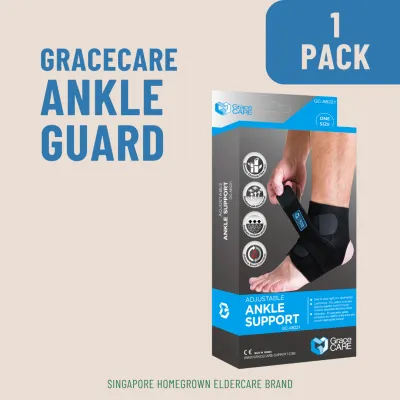
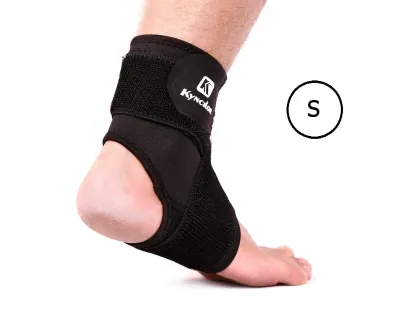
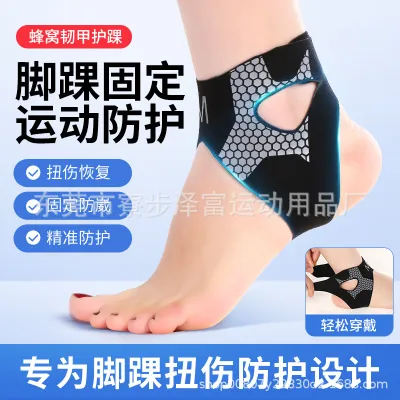
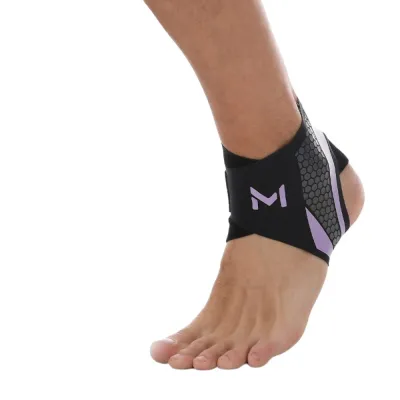
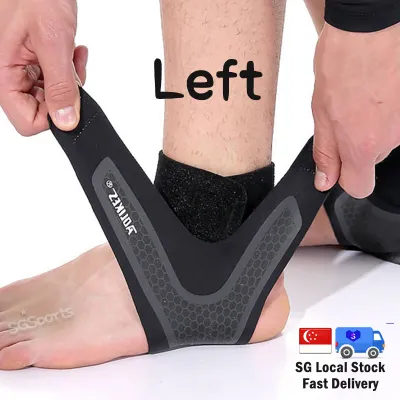
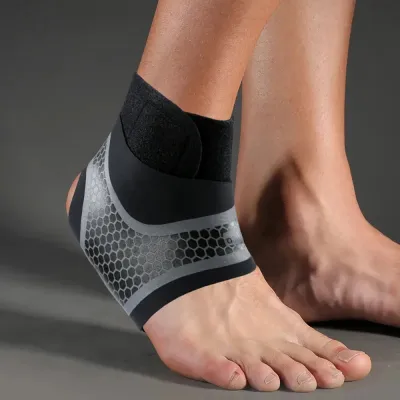
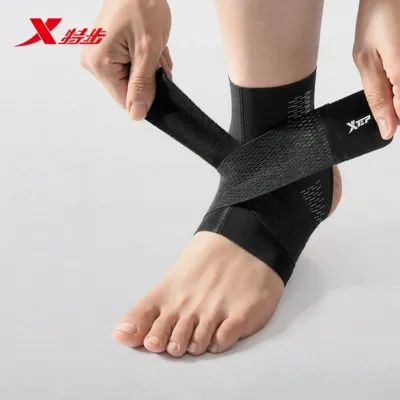
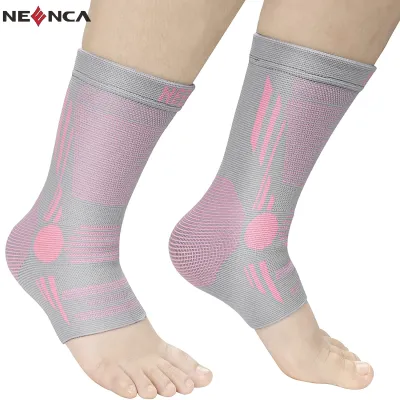
Prices are valid at publication and may change. Please refer to the product page for the latest price.
Understanding the Three Main Ankle Guard Designs
To make an informed decision, you must first understand how each of the three primary ankle guard designs is constructed and how they interact with your foot and ankle anatomy. Each design uses different materials and mechanical principles to provide support.
Sleeve Ankle Guards
Sleeve ankle guards are slip-on supports typically made from elasticated fabrics, neoprene, or advanced flat-knit materials. They are designed to fit snugly over the foot and ankle, mimicking the feel of a thick, compressive sock.
Because they lack rigid plastic or metal stays, sleeves do not physically block the ankle from rolling. Instead, they work primarily through compression and heat retention. The compression stimulates sensory receptors in your skin, enhancing your brain’s awareness of the joint’s position—a process known as proprioception. This sensory feedback helps you naturally correct your footing before an injury occurs.
However, because they rely entirely on fabric tension, sleeves offer minimal mechanical resistance against extreme ankle inversion (rolling outward) or eversion (rolling inward). They are best suited for individuals seeking mild support, warmth, and swelling management rather than rigid structural protection.
Lace-Up Ankle Guards
Lace-Up ankle guards feature a corset-like structure made from heavy-duty materials such as ballistic nylon or vinyl. They are secured using traditional eyelets and non-stretch laces that run up the front of the ankle.
This design is engineered to mimic professional athletic taping. By tightening the laces, you draw the rigid side panels close to the ankle joint, locking the heel in place and creating a highly supportive wall around the foot. This mechanical restriction is highly effective at preventing the extreme ranges of motion that cause sprains.
While lace-up guards provide exceptional stability, they have a bulkier profile than sleeves. They require more time to put on and adjust, and their rigid structure can significantly alter how your shoe fits, sometimes requiring you to loosen your shoelaces or wear a slightly wider shoe to accommodate the extra material.
Strap Ankle Guards
Strap ankle guards are hybrid designs that combine a flexible base—often a sleeve or a semi-rigid stirrup—with elastic or non-elastic Velcro straps. These straps are typically wrapped around the ankle in a figure-eight or figure-six configuration.
This configuration allows you to apply targeted tension directly over the key lateral ligaments, such as the anterior talofibular ligament, which is the most commonly injured ligament in ankle sprains. The straps act as external ligaments, tightening under tension to resist lateral rolling while allowing for normal forward and backward flexing of the foot.
Strap guards offer a highly adjustable balance between the low profile of a sleeve and the rigid support of a lace-up. They are faster to secure than lace-ups and allow you to customize the tension on the fly, making them a highly versatile option for athletes who need reliable support without excessive bulk.
Key Comparison Dimensions and Summary Table
When choosing between these three designs, you must evaluate how their physical characteristics align with your daily use, comfort preferences, and performance requirements.

Support Level and Stability
The primary difference among these designs lies in how they restrict unwanted joint movement. Lace-up guards provide the highest level of mechanical restriction, physically blocking the ankle from rolling even under high lateral forces. Strap guards offer moderate-to-high support, depending on the thickness of the straps and how tightly you tension them. Sleeves provide low-to-moderate support, relying on compression and sensory feedback rather than physical barriers.
When shopping, do not rely solely on the design type to determine stability. Many manufacturers rate their products on a scale from Level 1 (basic compression) to Level 3 (maximum stability). Always check the manufacturer’s product labels and specifications for these stated support levels, as a reinforced strap guard may offer comparable stability to a basic lace-up model.
Breathability, Comfort, and Fit Inside Shoes
In warm, humid climates like Singapore’s, heat and sweat buildup inside athletic shoes can lead to skin irritation, blisters, and unpleasant odors. Sleeves made of lightweight, moisture-wicking knit fabrics offer the best breathability and easily fit inside tight footwear like soccer cleats, running shoes, or court shoes used for badminton and squash.
Lace-up guards, with their thick nylon panels and multiple layers of laces, create a bulky profile that can stretch out leather cleats or make court shoes feel uncomfortably tight. Strap guards fall in the middle; while the straps add bulk, many designs use breathable mesh bases to help manage heat. To prevent blisters, check product labels for flat-lock seams and moisture-wicking materials, and ensure you have sufficient shoe clearance before heading to the court.
Ease of Use and Adjustability on the Go
Your willingness to wear a guard consistently often depends on how easy it is to use. Sleeves are the most convenient, requiring you to simply slip them on like a sock. However, they cannot be adjusted once they are on; if the compression feels too tight or too loose, your only option is to change to a different size.
Lace-up guards provide highly customizable tension across the entire foot, but adjusting them mid-game requires completely untying and re-tying the laces, which is time-consuming. Strap guards offer the best on-the-go adjustability. If you experience swelling during a long run or a basketball game, you can quickly peel back the Velcro straps, adjust the tension, and re-secure them in seconds without removing your shoe.
Summary Comparison Table
The following table summarizes how each design performs across these key dimensions. Use this matrix as a starting point, and always verify specific product specifications and sizing charts before making a purchase.
| Guard Type | Primary Support Mechanism | Best Use Case | Shoe Compatibility | Adjustability |
|---|---|---|---|---|
| Sleeve | Compression & Proprioception | Low-impact activities, recovery, daily wear | Excellent (fits in almost all shoes) | Low (non-adjustable tension) |
| Lace-Up | Rigid Mechanical Restriction | High-impact sports, severe instability | Poor to Moderate (requires roomy footwear) | High (customizable via lacing) |
| Strap | Targeted Tension Straps | Lateral movement sports, moderate support | Moderate (fits most athletic shoes) | Excellent (quick Velcro adjustments) |
Matching the Guard to Your Sport and Activity Level
To get the most out of your ankle guard, you must match its design to the specific movement patterns and physical demands of your chosen activity.
Low-Impact and Recovery Activities
For activities like running, gym workouts, cycling, or daily walking, movements are primarily linear and repetitive, occurring in the sagittal plane (forward and backward). In these scenarios, your ankle is rarely subjected to sudden, unpredictable lateral forces.
Using a rigid lace-up guard for these activities is often counterproductive. Excessive rigidity can restrict your natural heel-to-toe gait cycle, forcing your body to compensate and potentially causing strain in your knees or hips. A compression sleeve is typically preferred here, as it provides joint warmth and proprioceptive feedback to help you maintain proper form without altering your natural biomechanics. It also fits seamlessly into standard running shoes or gym trainers without causing pressure points.
High-Impact and Lateral Movement Sports
Sports like basketball, volleyball, tennis, and badminton require rapid deceleration, jumping, and sudden lateral cutting movements. These actions place immense stress on the lateral ligaments of the ankle, making the risk of an inversion sprain highly elevated, especially when landing on an opponent’s foot or navigating uneven terrain during trail running.
For these high-impact sports, a lace-up guard or a heavy-duty strap guard is highly recommended. The rigid structure physically limits the lateral roll, protecting the ligaments under high-stress conditions. However, players must remember that protective equipment cannot replace proper physical conditioning, agility training, and spatial awareness. Relying solely on a brace without maintaining ankle strength can increase the risk of injury elsewhere in the kinetic chain.
Post-Injury Rehabilitation and Heavy Lifting
If you are recovering from a recent ankle sprain, your healing ligaments are vulnerable to re-injury during the return-to-play phase. During this transition, a rigid lace-up or strap guard is often recommended to provide a safe environment for the joint as you rebuild strength. Always follow a physiotherapist’s or doctor’s specific bracing protocol during rehabilitation, as they can advise you on when to transition to lighter support.
For heavy lifting, such as squats or deadlifts, powerlifters often prefer stiff sleeves or strap guards. While lifting is a linear movement, the high axial load requires maximum joint stability. A stiff sleeve or strap provides joint warmth, keeps the joint tracking correctly, and offers proprioceptive feedback that helps the lifter feel more secure under heavy weights.
How to Verify Fit and Safety Before You Play
An improperly fitted ankle guard can cause discomfort, restrict circulation, or fail to provide the promised support. Before engaging in full-effort physical activity, perform these checks to ensure your guard is fitted correctly and safely.
First, verify the fit by checking for circulation restriction. Ensure your toes do not feel cold, numb, or tingly, and that your skin color remains normal. If your toes turn pale or blue, the guard is too tight and must be loosened or resized immediately. Ensure your heel sits snugly in the heel pocket of the guard and that the guard sits correctly inside your shoe without bunching. Walk around to ensure the edges, seams, or eyelets do not pinch or dig into your skin, particularly around the Achilles tendon and the top of the foot.
Next, follow this pre-activity checklist:
- Test with your gear: Put on the exact socks and shoes you plan to wear during your activity to ensure they fit comfortably together.
- Perform controlled movements: Execute light jogging, lateral shuffling, and gentle jumping in a controlled environment before full-effort play.
- Check for irritation: After 15 minutes of wear, check your skin for redness or irritation to identify potential friction points.
If pain persists, swelling increases, or the guard causes numbness, stop use immediately and consult a healthcare professional. Never use an ankle guard to mask acute pain or to continue playing through an active injury, as this can lead to severe, long-term joint damage.
Frequently Asked Questions (FAQ)
Can I wear an ankle guard all day for prevention?
Wearing rigid guards all day without a medical indication can lead to skin irritation, restricted circulation, or a psychological reliance on the brace. It can also limit natural joint mobility, causing stiffness. If you want all-day support for mild swelling or fatigue, a lightweight compression sleeve is a safer, more comfortable option. For prolonged rigid bracing, always consult a healthcare professional to establish a safe protocol.
Do ankle guards weaken your ankle muscles over time?
Prolonged, exclusive reliance on rigid braces during all daily activities without concurrent rehabilitation can weaken the surrounding muscles and tendons. However, using them selectively during high-risk sports is generally considered safe. To prevent weakness, pair your brace use with a targeted strengthening and balance program, such as calf raises and single-leg balance exercises. Consult a physiotherapist for a balanced plan.
Should I wear ankle guards on both ankles if only one is injured?
Some athletes wear guards on both ankles for peace of mind or prophylactic protection in high-risk sports like basketball or volleyball. However, if you do not have a history of instability on the uninjured side, bracing it unnecessarily can alter your natural biomechanics, gait, and running efficiency. It is generally best to brace only the injured or unstable ankle unless a sports medicine professional recommends bilateral bracing based on your specific sport, footwear, and individual risk factors.
Community discussion
Share your experience or ask a question. Comments are reviewed before publication.