
Mounting your smartphone on your bicycle handlebars offers seamless access to navigation, fitness tracking, and ride metrics. However, when relying on a MagSafe bicycle mount, the primary concern is whether magnetic attraction alone can withstand the constant vibrations of the road and sudden, jarring bumps. While pure magnetic mounts are highly convenient and sufficient for smooth, paved pathways, they carry inherent risks when subjected to sudden vertical impacts or high-frequency vibrations. To ensure your device remains secure, you must understand the physical limits of magnetic retention, evaluate your specific riding environment, and consider hybrid mounting systems that combine magnets with mechanical locks.
Understanding MagSafe Mount Mechanics on Bicycles
To evaluate the security of a MagSafe bicycle mount, it is essential to understand how magnetic attraction interacts with the dynamic forces of cycling. MagSafe technology relies on a ring of rare-earth magnets embedded in the back of your phone or case, which aligns with a matching magnetic array on the mount. This connection creates a strong perpendicular holding force, meaning it resists being pulled straight off. However, magnets are significantly weaker against shear forces—the lateral, sliding movements that occur when your bicycle vibrates or hits a bump at an angle.
When you ride, your phone is subjected to a combination of gravity, forward momentum, and vertical acceleration. The total weight of your smartphone, combined with the weight of its protective case, acts as a lever against the magnetic connection. If the upward acceleration from a bump exceeds the magnetic holding force, the phone will momentarily lose contact. Once that contact is broken, even slightly, the magnetic attraction drops exponentially, causing the phone to slide off the mount entirely.
Products mentioned in this guide
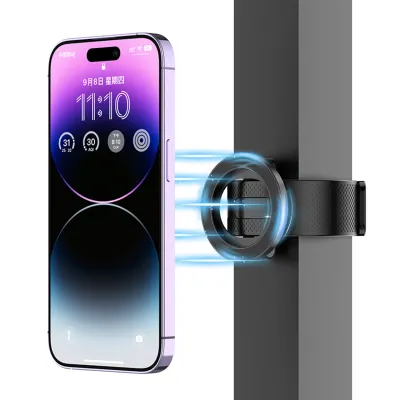
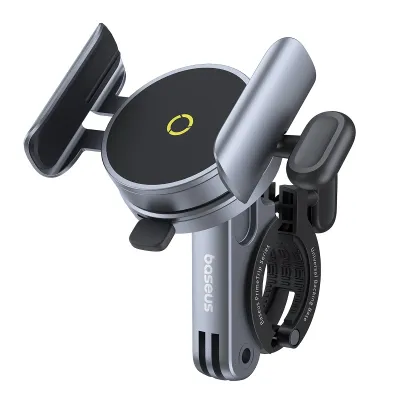
Prices are valid at publication and may change. Please refer to the product page for the latest price.
This vulnerability highlights the structural difference between pure magnetic mounts and hybrid designs. Pure magnetic mounts rely solely on the magnetic array to hold the phone in place, offering maximum convenience but minimal resistance to severe shocks. In contrast, hybrid mounts use the magnetic array for quick alignment but incorporate physical retention mechanisms—such as mechanical claws, corner brackets, or silicone bands—to lock the device securely. For active cycling, these hybrid systems provide the necessary mechanical backup to prevent detachment when magnetic limits are exceeded.
Key Risk Factors for Phone Drops During Cycling
The reliability of a MagSafe bicycle mount depends heavily on where and how you ride. On smooth, well-maintained surfaces like Singapore’s Park Connector Network (PCN), a high-quality magnetic mount generally provides sufficient hold. The lack of major obstacles means the phone experiences low-amplitude, predictable vibrations that the magnetic ring can easily manage. However, transitioning to rougher terrains changes the equation entirely. Off-road trails, gravel paths, and uneven pavements introduce continuous, high-amplitude shaking that can rapidly fatigue the magnetic connection.

Sudden, sharp impacts pose the greatest threat to pure magnetic mounts. Hitting a deep pothole, riding over a raised speed bump at speed, dropping off a curb, or executing an emergency stop can generate instantaneous g-forces that far exceed the holding capacity of standard magnets. These sudden vertical shocks force the phone upward, overcoming the magnetic pull and sending the device airborne before you can react.
Your choice of phone case also plays a critical role in mount security. A dedicated case with a built-in, high-strength magnetic ring is essential. Standard cases without magnets—even thin ones—drastically reduce the magnetic force by increasing the distance between the mount and the phone’s internal magnets. Similarly, relying on stick-on magnetic plates or stickers on the outside of a standard case is risky, as the adhesive can fail under the heat and humidity of outdoor riding, or the plate may not align perfectly with the mount’s magnetic array.
Finally, the physical dimensions and weight of your smartphone affect its stability. Larger, heavier phone models have a higher mass and a different center of gravity. When mounted, these larger devices exert greater rotational torque on the magnetic connection during bumps. If you use a heavy phone, the leverage created by its size makes it much easier for a sudden bump to break the magnetic seal compared to a smaller, lighter device.
How to Verify and Improve Mount Security
Before setting off on any ride, performing a series of physical checks can prevent a costly drop. Start by executing a manual pull, twist, and shake test. Once the phone is snapped onto the mount, gently try to twist it and pull it forward to feel the resistance. If the phone slides easily or feels loose, the magnetic alignment may be off, or the case may be too thick. A secure connection should require a deliberate, firm force to detach.
Next, inspect the mount base itself. The clamp securing the mount to your handlebars or stem must be tightened to the manufacturer’s specifications. If the mount base is loose, it can rotate forward or backward when you hit a bump, changing the angle of the phone and increasing the likelihood of it sliding off. Ensure any rubber spacers or shims included with the mount are properly installed to absorb vibrations and prevent the clamp from slipping on smooth metal handlebars.
If you want the convenience of MagSafe but require absolute security, look for hybrid mounts that feature physical locking mechanisms. Many modern cycling mounts use MagSafe to align the phone instantly, then engage a mechanical lock that grips the edges or corners of the device. Alternatively, using a simple silicone safety strap or a tether looped around your handlebars provides an inexpensive, highly effective fail-safe. If the magnetic connection fails, the tether will catch the phone before it hits the ground.
Routine maintenance is also vital for long-term security. Outdoor riding exposes your equipment to dust, sweat, rain, and road grit. Over time, debris can accumulate on the face of the mount or the back of your phone case, creating a physical barrier that weakens the magnetic pull. Regularly wipe down both surfaces with a damp cloth. Additionally, check the mounting hardware periodically to ensure that bolts have not vibrated loose over time.
When to Avoid Pure Magnetic Mounts
While pure magnetic mounts excel in convenience and are perfect for casual commuting on smooth paths, there are clear scenarios where they should be avoided entirely. High-risk cycling disciplines, such as mountain biking, gravel riding, or downhill racing, subject the bicycle to continuous, violent impacts. In these environments, relying solely on magnets is highly discouraged. The extreme terrain demands a fully mechanical, locking mount to guarantee your phone remains attached.
You should also avoid pure magnetic setups if you use exceptionally heavy, large-format smartphones, especially when combined with bulky, rugged cases. The added weight and thickness reduce the effectiveness of the magnetic connection, making the phone highly susceptible to detaching during sudden movements.
Consider the environment in which you are riding. If a dropped phone poses a severe safety hazard—such as when riding in heavy urban traffic, crossing busy intersections, or navigating narrow paths next to deep storm drains—the risk of a pure magnetic mount is simply too high. A falling phone can distract you, cause you to swerve into traffic, or create a hazard for other cyclists and pedestrians. In these situations, always use a hybrid mount with a mechanical lock or a secure safety tether. Equipment should never replace sound judgment; if the terrain looks too rough for your mounting setup, stop and stow your phone securely in a zip pocket or bag.
Frequently Asked Questions (FAQ)
Do I need a dedicated MagSafe case for cycling?
Yes, using a dedicated case with a built-in magnetic ring is highly recommended for cycling. Standard cases, even thin plastic or silicone ones, create a physical gap that weakens the magnetic attraction exponentially. While some riders use external magnetic stickers, these are often prone to adhesive failure when exposed to outdoor heat, humidity, and sweat. A high-quality, certified case designed specifically for magnetic mounting ensures optimal alignment and maximum holding force, which is critical for resisting road vibrations. Always check the case manufacturer’s specifications to verify it is rated for active outdoor use.
Can bicycle vibrations damage my phone's camera on a magnetic mount?
Yes, high-frequency vibrations transmitted through bicycle handlebars can potentially damage the delicate optical image stabilization (OIS) and closed-loop autofocus systems in modern smartphone cameras. These systems rely on tiny gyroscopes and magnetic actuators that can wear out or fail when subjected to continuous, high-amplitude shaking. To mitigate this risk, check your smartphone manufacturer’s official warnings regarding vibration exposure. If you ride frequently, consider using a mount equipped with a specialized vibration-dampening module, or choose a hybrid mount designed to absorb road shocks before they reach your device.
Community discussion
Share your experience or ask a question. Comments are reviewed before publication.