
Rock stepper machines offer an excellent cardiovascular workout in a compact frame, but their suitability for Housing & Development Board (HDB) flats depends heavily on how you manage their noise. While the mechanical hum of a stepper is usually quiet enough to allow for watching television or holding a conversation, the unique lateral rocking motion introduces specific vibrational forces. These low-frequency vibrations can easily travel through concrete floor slabs and disturb your neighbors downstairs if the machine is not properly insulated.
Where Does Rock Stepper Machine Noise Actually Come From?
To keep your workouts quiet, you must first understand the mechanical origins of stepper noise. The primary source of sound on a standard mini stepper is the resistance mechanism. In hydraulic models, fluid moving through the cylinders creates a distinct hissing or swooshing sound with every step, and friction against the rubber seals can cause high-pitched squeaks over time.
Another major source of noise is pedal impact. When you press a pedal all the way down, it may strike the metal frame, producing a sharp, metallic clack. Frame joint stress also plays a significant role; as you shift your weight, the bolts and joints experience structural load, which can cause creaking if any components are slightly loose.
Products mentioned in this guide
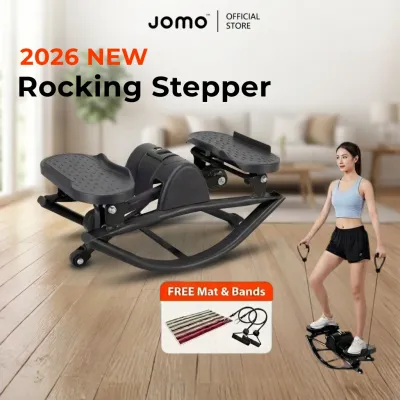
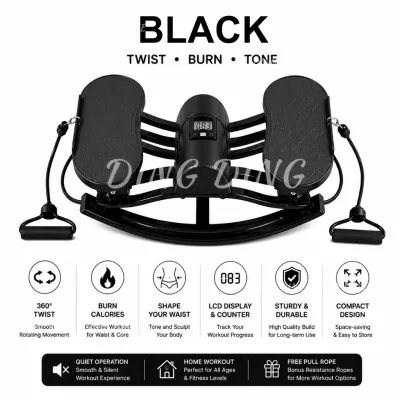
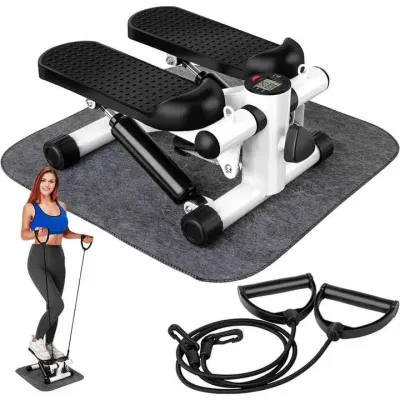
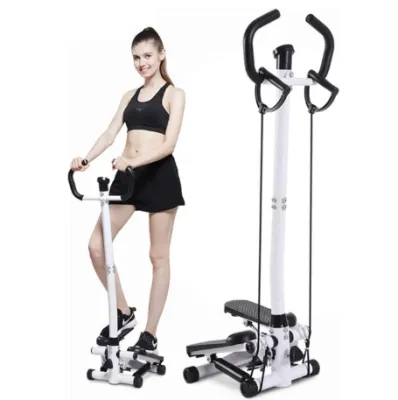
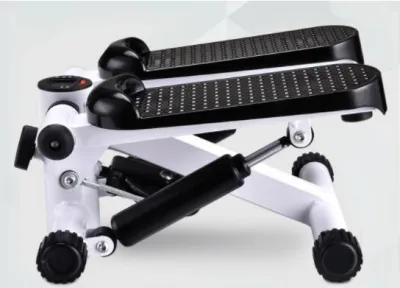
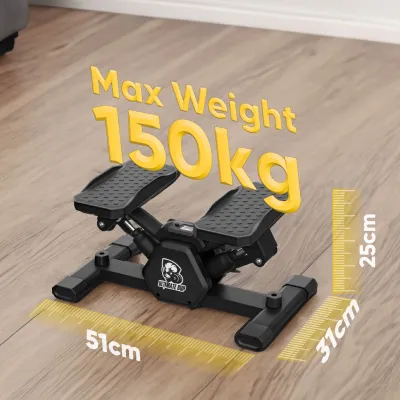
Prices are valid at publication and may change. Please refer to the product page for the latest price.
Unlike standard vertical steppers, a rock stepper machine moves both up-and-down and side-to-side. This twisting or rocking motion places continuous lateral stress on the pivot points. Over time, this multi-directional strain can cause the joints to loosen faster, leading to rattling or clicking sounds that are not present in traditional, single-plane steppers.
It is crucial to distinguish between normal operational sounds and signs of mechanical wear. A soft, consistent hum or a gentle fluid hiss is normal for a functioning machine. Conversely, sharp grinding, loud squeaking, or sudden clanking indicates that parts are loose, misaligned, or desperately in need of lubrication.
HDB Floor Slabs and Neighbors: Understanding Impact vs. Airborne Noise
Living in a high-density HDB estate requires a keen awareness of how sound travels through shared structures. Acoustic energy is divided into two categories: airborne noise and structure-borne (or impact) noise. Airborne noise travels through the air and is easily blocked by standard concrete walls and closed doors. The quiet hum of a stepper’s resistance system falls into this category and rarely bothers neighbors.

Structure-borne noise, however, is a much greater challenge in HDB blocks. When your feet press down on the stepper pedals, the physical force creates low-frequency vibrations that travel directly into the concrete floor slab. Concrete is an excellent conductor of structural vibration. Even if the machine sounds perfectly quiet to you, your downstairs neighbor might hear a dull, repetitive thudding sound echoing through their ceiling.
Because HDB flats are built with shared structural columns and floor slabs, these low-frequency thuds can feel amplified in the quiet of a neighbor’s home. Managing this impact noise is the key to maintaining neighborly harmony. Understanding the general etiquette of high-rise living means recognizing that low-frequency vibrations can be highly disruptive, particularly during early mornings or late evenings when ambient city noise fades.
Hydraulic vs. Magnetic Steppers: Which Mechanism is Quieter?
When choosing a rock stepper machine, the resistance mechanism is the single most important factor determining its noise output. The market is dominated by two main designs: hydraulic cylinders and magnetic flywheels.
Hydraulic Steppers Hydraulic steppers are incredibly popular due to their compact size and lower price point. However, they rely on physical friction and fluid dynamics to create resistance. As you exercise, the hydraulic fluid inside the cylinders heats up, which can change the viscosity and lead to hissing, clicking, or squeaking sounds. The seals and moving pistons also require regular physical contact, which naturally generates more mechanical noise over time.
Magnetic Resistance Steppers Magnetic resistance steppers utilize a magnetic flywheel or eddy current system to create tension. Because the magnets never physically touch the flywheel, there is virtually no friction-based noise. This non-contact design results in a remarkably smooth, near-silent operation that does not degrade in quietness as the machine heats up.
Comparing the Trade-Offs Magnetic models are significantly quieter and require almost no mechanical maintenance, making them ideal for noise-sensitive HDB environments. However, they are typically bulkier, heavier, and carry a higher price tag than their hydraulic counterparts. If space and budget are your primary constraints, a compact hydraulic stepper may be necessary, but you will need to take extra steps to manage its noise.
When shopping, always evaluate product descriptions critically. Many manufacturers use vague marketing terms like “whisper-quiet” on hydraulic models. To find a truly quiet machine, look specifically for “magnetic resistance” or “non-contact magnetic flywheel” in the technical specifications rather than relying on promotional adjectives.
How to Soundproof and Maintain Your Stepper for Apartment Living
Even if you own a louder hydraulic stepper, you can drastically reduce the noise transmitted to your neighbors by implementing proper setup and maintenance strategies.
- Vibration Absorption: Your first line of defense is a high-density anti-vibration mat. Placing a thick, heavy-duty rubber mat or high-density EVA foam tiles directly under the stepper will absorb the impact forces before they can enter the concrete floor slab. Avoid thin yoga mats, as they lack the density required to dampen low-frequency structural vibrations.
- Routine Maintenance: Regular upkeep is essential to prevent squeaks and rattles. Before performing any maintenance or applying lubricants, always check your stepper's product label and the manufacturer's care instructions. If the instructions conflict, or if you are unsure which lubricant is compatible with your machine's materials, stop immediately and consult the manufacturer or a qualified professional to avoid damaging the components or voiding your warranty. Regularly check and tighten all frame bolts, as the lateral rocking motion will naturally loosen them over time.
- Placement Strategy: Where you place your stepper matters. Position the machine away from shared party walls and structural columns, which can act as acoustic amplifiers. If possible, avoid exercising directly above a neighbor's bedroom or study. Setting up your workout space over a carpeted area or in a living room with soft furnishings will help absorb both airborne and impact sounds.
- Footwear and Technique: Your stepping style directly affects noise levels. Avoid "bottoming out"—the habit of letting the pedals slam hard against the frame at the end of each stroke. Instead, focus on controlled, fluid movements where you reverse direction just before the pedal hits the base. Wearing cushioned indoor athletic shoes or thick, padded socks can also help dampen the force of your footfalls.
What to Look for When Buying a Quiet Stepper for Your HDB
If you are in the market for a new rock stepper machine, use this practical checklist to ensure your purchase is suitable for HDB living:
- Prioritize Magnetic Resistance: Whenever space and budget allow, choose a magnetic resistance stepper over a hydraulic one to guarantee a lower baseline of mechanical noise.
- Examine Frame Stability: Look for a machine with a heavy, wide, and stable base frame. A heavier machine (often weighing 10 kg or more) is less likely to shift, wobble, or rattle against the floor during vigorous lateral rocking motions.
- Check the Bearings: Opt for models that feature sealed ball bearings at the main pivot joints rather than simple plastic bushings. Sealed bearings operate much more quietly and resist wear far better over long-term use.
- Analyze Customer Reviews: When browsing online marketplaces, ignore generic star ratings and search the user reviews specifically for keywords like "quiet," "apartment," "neighbor," or "noise." Real-world feedback from apartment dwellers is often the most reliable indicator of how a machine performs in a high-density setting. Be highly skeptical of any manufacturer claiming "100% silent" operation, as all mechanical fitness equipment generates some level of sound.
Frequently Asked Questions (FAQ)
Is it safe to use a stepper machine late at night in an HDB?
While it is physically safe to use a stepper at night, doing so carries a high risk of disturbing your neighbors. During late-night hours, ambient city noise drops significantly, making low-frequency vibrational thuds highly noticeable to the household directly below you. If you must exercise late at night, ensure you are using a high-density anti-vibration mat, step slowly to prevent the pedals from bottoming out, and avoid rapid, high-impact movements. If your machine begins to squeak or click, immediately stop your workout and address the maintenance needs during daytime hours to preserve neighborly harmony.
Community discussion
Share your experience or ask a question. Comments are reviewed before publication.