
Selecting the right back straightener requires looking beyond generic marketing claims and focusing on the specific engineering of the brace. To find a support that effectively aids your posture without causing discomfort or muscle dependency, you must evaluate three core specifications: the rigidity of the structural support, the breathability of the fabric, and the mechanics of the strap system. Matching these technical details to your daily routine and body measurements ensures you select a tool that safely supports your physical goals.
Decoding Rigidity and Structural Support Levels
The structural design of a back straightener determines how much physical restriction it places on your movement. Braces generally fall into two categories: flexible fabric tensioners and rigid stay supports. Flexible tensioners rely entirely on elastic bands to pull the shoulders back gently, serving as a tactile reminder to self-correct your posture. Rigid supports, on the other hand, incorporate plastic or metal splints (stays) along the spine to physically block slouching.
When reviewing product specifications, look for the manufacturer’s designated support level, which is typically classified as mild, moderate, or firm. Mild support braces are highly flexible, allowing a full range of motion, and are designed for active use or light posture awareness. Moderate support options often feature removable or semi-flexible plastic stays that offer a balance between structural alignment and comfortable movement. Firm support braces utilize rigid, non-bending metal or heavy-duty plastic splints that strictly limit spinal flexion.
Products mentioned in this guide
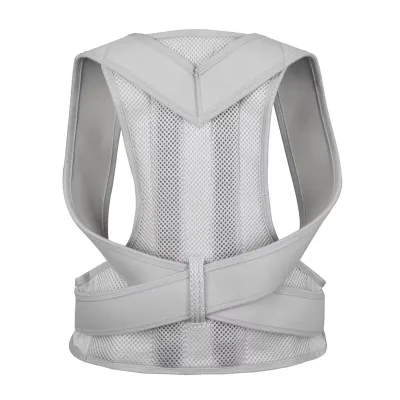
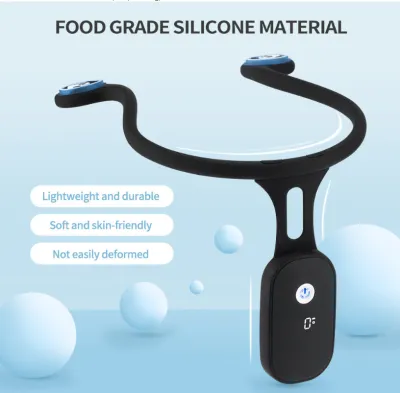
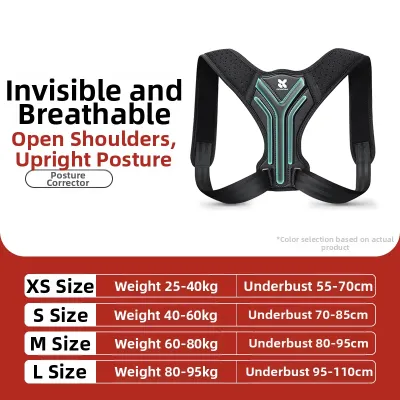
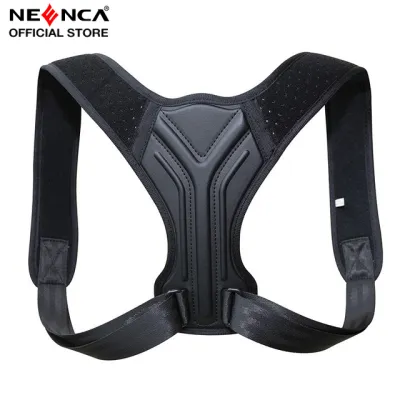
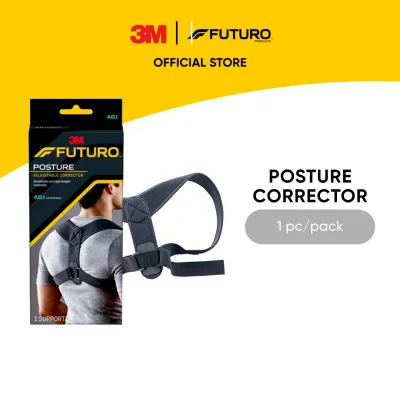
![[✅LOCAL] Support Back Posture Corrector Fracture Shoulder Correction Brace Belt Strap](https://img.lazcdn.com/g/p/8183664efb7accba7616e1f8ed6c27f5.png_400x400q80.png_.webp)
Prices are valid at publication and may change. Please refer to the product page for the latest price.
Choosing between these levels depends on your specific physical needs and mobility requirements. Maximum restriction is typically reserved for recovery scenarios under professional guidance, where limiting spinal movement is necessary to prevent strain. For daily posture training, flexible tension is generally sufficient because it encourages your muscles to do the work of holding your body upright, rather than allowing them to become inactive and dependent on a rigid external frame.
Evaluating Fabric Materials and Breathability Specs
The materials used in a back straightener directly impact how long you can comfortably wear it, especially in warm or humid climates. Common options include neoprene, nylon, and spandex blends. Neoprene is highly durable and provides excellent structural resilience, but it tends to retain body heat, which can lead to sweating and skin irritation during extended wear. Nylon and spandex blends offer superior moisture management and elasticity, making them lighter and more breathable for daily use.

To prevent skin irritation and chafing, inspect the construction details of the seams and edges. High-quality braces feature flatlock stitching and soft edge binding, which minimize friction against the skin or clothing. Look for designs with perforated panels or mesh inserts, as these features significantly enhance airflow and help dissipate heat.
When comparing products, you can safely ignore proprietary material names or highly specific fabric weight metrics. These marketing terms rarely translate to noticeable differences in posture correction. Instead, focus on verifiable material compositions, such as the percentage of nylon or spandex, and look for physical indicators of breathability like visible ventilation holes or mesh construction.
Analyzing Strap Mechanics and Sizing Dimensions
The strap configuration of a back straightener dictates how tension is distributed across your shoulders and upper back. The three primary designs are cross-back, figure-eight, and single-pull strap systems. Cross-back straps form an “X” on the upper back, distributing pressure evenly across the shoulders and thoracic spine. Figure-eight designs loop individually around each shoulder, providing targeted rearward pull that is highly effective for correcting rounded shoulders. Single-pull systems use a central strap to adjust tension globally, offering quick adjustments but less customized pressure distribution.
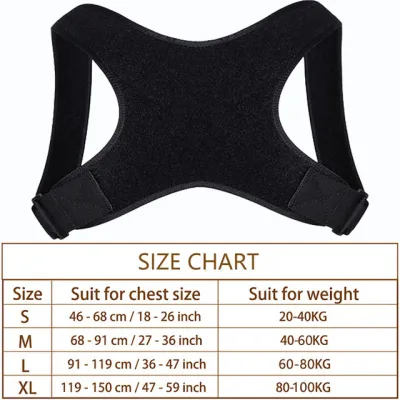
To ensure a secure and safe fit, you must look at the correct sizing metrics. Many buyers make the mistake of choosing a brace based on their standard t-shirt size, which often leads to an ill-fitting product that either pinches the underarms or fails to provide tension. Instead, look for the manufacturer’s specified chest circumference range. This measurement, taken just under the armpits, is the primary metric that determines whether the brace will align correctly with your skeletal structure.
Before purchasing, take a precise measurement of your chest using a flexible measuring tape. Compare this figure directly against the brand’s official sizing chart. If your measurement falls between two sizes, check the product instructions; many manufacturers recommend sizing down for a firmer fit or sizing up if you prefer a more comfortable, adjustable tension range.
Matching Key Specs to Your Daily Usage Scenarios
Your daily environment and physical activity levels should dictate the final specifications of the back straightener you choose. For a sedentary office environment, a low-profile, highly breathable fabric tensioner is ideal, as it fits discreetly under professional attire and remains comfortable during long periods of sitting. If you plan to wear the support during light physical tasks, prioritize flexible materials with moisture-wicking properties to handle sweat.
While a back straightener is a helpful tool, it is crucial to recognize when to stop using an over-the-counter brace. If you experience persistent pain, numbness, tingling in your arms, or skin discoloration, remove the brace immediately. These symptoms indicate improper fit or excessive nerve compression, and you should consult a healthcare professional before resuming use.
Before finalizing your purchase, verify the critical specification checkpoints on the product label. Ensure the chest measurement matches your physical dimensions, confirm the material blend is breathable and hypoallergenic, and check that the strap adjustment mechanism is easily reachable without assistance.
Frequently Asked Questions (FAQ)
Can I wear a back straightener while exercising?
You should generally avoid wearing rigid back straighteners during dynamic exercise, as they restrict the natural movement of your spine and can lead to muscle imbalances. Flexible sports supports designed specifically for athletic use may be worn if the manufacturer explicitly states they are suitable for active movement. Always check the product’s intended use guidelines and stop using the brace immediately if you experience restricted breathing or limited mobility during your workout.
How long should I wear a posture corrector each day?
Most manufacturers recommend starting with short sessions of 15 to 30 minutes per day to allow your muscles to adapt gradually. Over time, you can slowly increase this duration as guided by the product instructions, but you should avoid wearing a brace continuously for several hours unless prescribed by a professional. If you experience observable physical signals such as numbness, tingling, sharp pain, or skin chafing, remove the brace immediately to prevent circulation issues or muscle strain.
Community discussion
Share your experience or ask a question. Comments are reviewed before publication.