
Selecting the correct balance ball size depends primarily on your height, as the diameter determines whether you can maintain proper alignment and posture. Using a ball that is too large or too small can compromise your exercise form, strain your joints, and increase the risk of injury. Whether you are setting up a home gym in a Singapore apartment, upgrading your office workstation, or performing targeted physical therapy, finding the right fit is the first step toward safe and effective use.
Choosing the right diameter ensures that your body remains in a biomechanically neutral position during workouts. This guide breaks down standard height-to-diameter measurements, outlines practical fitting tests, and highlights critical safety features to look for before making your purchase.
Standard Height-to-Diameter Chart
To find your baseline size, you must match your overall height to the standard diameters manufactured by fitness brands. These sizes are universally measured in centimeters, representing the ball’s maximum inflation diameter.
Products mentioned in this guide
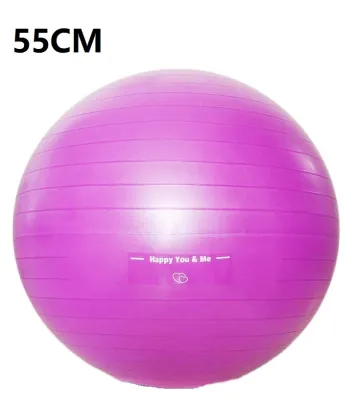
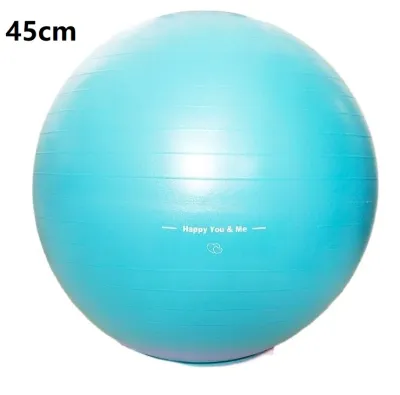
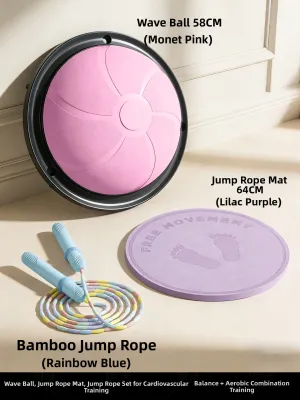
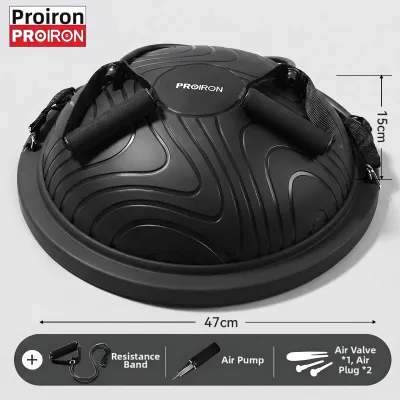
![3H Fitness [46CM/58CM] Upgrade Bosu Yoga Balance Ball Fitness Gym Workout Half Yoga Ball Exercises Balance Trainer Ball](https://img.lazcdn.com/g/p/aeaa9601b120e1f9f9cd61096fe6c306.jpg_400x400q80.jpg_.webp)
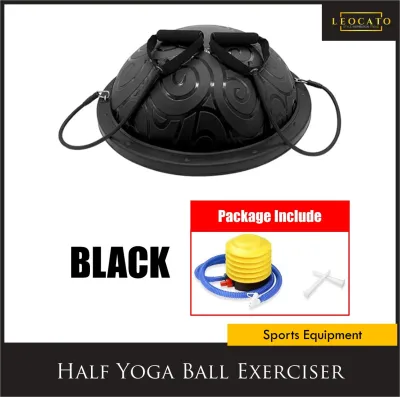
Prices are valid at publication and may change. Please refer to the product page for the latest price.
The following reference table maps standard balance ball sizes to user height ranges in both metric and imperial measurements:
| User Height (Centimeters) | User Height (Feet/Inches) | Recommended Ball Diameter |
|---|---|---|
| Under 152 cm | Under 5'0" | 45 cm |
| 152 cm to 165 cm | 5'0" to 5'5" | 55 cm |
| 165 cm to 183 cm | 5'5" to 6'0" | 65 cm |
| 183 cm to 198 cm | 6'0" to 6'6" | 75 cm |
| 198 cm and taller | 6'6" and taller | 85 cm |
While this chart serves as an essential starting point, individual body proportions can influence your final choice. For instance, if you have exceptionally long legs relative to your torso, you may find that a ball recommended for your height range leaves your knees bent too sharply. Conversely, individuals with shorter legs and a longer torso may feel more stable on a slightly smaller ball. Treat the chart as a baseline guide rather than an absolute rule, and always prioritize how your joints align when sitting on the ball.
How to Verify the Correct Fit in Practice
Before committing to a specific size or starting a rigorous workout routine, you must physically verify the fit. Proper alignment is critical to ensure that your core muscles engage correctly and your joints are not subjected to unnecessary shear stress.

To perform a physical check, sit upright on the center of the fully inflated ball and observe your posture against these key criteria:
- The 90-Degree Rule: Your feet should rest flat on the floor, positioned roughly shoulder-width apart. In this position, your hips and knees should form a clean 90-degree angle, with your thighs perfectly parallel to the ground.
- Spine Alignment: Your spine should remain in a neutral position without rounding your lower back or over-arching your lumbar spine. Your shoulders should align directly over your hips.
- Core Engagement: You should feel a light, natural engagement of your deep core muscles to maintain balance, without needing to tense your neck or shoulders.
Inflation levels significantly impact both the effective height and the stability of the ball. Before inflating, always check the manufacturer’s instruction manual and safety guidelines for the specific model. Over-inflating a ball beyond its rated diameter makes the surface excessively hard, reduces the contact area with the floor, and increases the risk of the ball rolling out from under you. Under-inflating makes the ball soft and squishy, which increases stability but causes you to sink too low, placing excessive strain on your lower back and knees.
If you cannot achieve a 90-degree knee angle at the manufacturer’s recommended inflation pressure, you require a different ball size rather than an under- or over-inflated one.
Adjusting Size for Specific Use Cases
Your primary activity dictates whether you should stick strictly to the standard height chart or make slight adjustments. A ball used primarily as active seating requires a different setup than one used for high-intensity core training.
Replacing an Office Chair
Using a balance ball as an office chair has become a popular way to promote active sitting and reduce sedentary fatigue. However, standard office desks in Singapore typically stand at a fixed height of 70 to 75 cm, which can create ergonomic challenges if your ball is too small.
If you select a ball strictly based on your height, you might find yourself sitting too low relative to your desk. This forces you to reach upward to type, leading to repetitive strain in your wrists, shoulders, and upper back. To counter this, you may need to select a ball that is one size larger than your standard fitness recommendation (for example, choosing a 65 cm ball instead of a 55 cm ball) to elevate your hips to a comfortable working height.
However, safety and comfort must remain your primary focus. If sizing up causes your feet to dangle or forces your knees into an awkward angle, do not compromise your lower body ergonomics. Instead, keep the anatomically correct ball size and pair it with an adjustable ball base or a desk riser to bring your workspace into alignment.
Core Training and Rehabilitation
For fitness training, stretching, and physical therapy, maintaining precise joint angles is paramount. Deviating from the standard height chart during rehabilitation can alter leverage, reduce the effectiveness of the movement, and place vulnerable joints at risk.
When performing foundational movements such as seated marches, wall squats, or pelvic tilts, stick strictly to the 90-degree rule. This ensures that your muscles fire in the correct sequence and your joints remain protected. If you are recovering from an injury, consult your physical therapist to verify the exact ball size and inflation level suitable for your recovery program.
Advanced fitness enthusiasts sometimes use a slightly smaller ball for specific stability exercises, such as planks, roll-outs, or pike-ups. A smaller ball lowers your center of gravity and can increase the range of motion for certain core movements. However, equipment cannot replace proper training or physical judgment. You should only experiment with alternative sizes after you have fully mastered the exercises on a standard, correctly sized ball.
Beyond Size: Safety and Material Specs to Check
Once you have determined the correct diameter for your height and use case, you must evaluate the structural specifications of the ball. High-quality materials prevent sudden failures and ensure the equipment can withstand the demands of your routine.
- Anti-Burst Construction: Always verify that the ball is explicitly labeled as "anti-burst" or "burst-resistant." This safety feature ensures that if the ball is punctured by a sharp object, it will deflate slowly and safely rather than popping explosively like a balloon, preventing sudden falls and potential injuries.
- Weight Capacity: Check the manufacturer's specifications for both static and dynamic weight limits. Remember to calculate your total load, which includes your body weight plus any external weights, such as dumbbells, kettlebells, or resistance bands, used during your exercises.
- Surface Texture: Look for a ball with a slip-resistant matte finish or raised tactile ridges. This texture provides essential grip against smooth tiled, vinyl, or laminate flooring common in Singapore homes, preventing the ball from sliding out during sweaty workouts.
Frequently Asked Questions (FAQ)
What if my height falls exactly between two sizes?
If your height is right on the boundary between two sizes (for example, exactly 165 cm), it is generally best to choose the larger size. A larger ball can be slightly under-inflated within the manufacturer’s safe limits to lower its height without losing its structural integrity. Conversely, trying to stretch a smaller ball past its maximum rated diameter to make it taller is highly dangerous, as over-inflation thins the material and increases the risk of a sudden burst.
Can I buy a larger ball and under-inflate it to fit my height?
You should avoid buying a significantly larger ball with the intention of under-inflating it to fit your height. While minor adjustments are acceptable, a severely under-inflated ball becomes overly soft, flat, and unstable. This reduces the weight capacity of the ball, makes it difficult to maintain proper posture, and increases the risk of the ball bottoming out or rolling away unexpectedly during use. Always purchase the correct size designed for your height range.
Community discussion
Share your experience or ask a question. Comments are reviewed before publication.