
Quick Answer: Key Specs to Check Before Buying
To choose the right balance board for kids, parents must align the board’s mechanics with their child’s current motor skills. The core decision matrix revolves around movement complexity: single-axis rocker boards for beginners and toddlers, and multi-axis wobble boards for older children with established stability.
Crucial safety specifications include verifying both the minimum and maximum weight limits on the manufacturer’s label to ensure proper board responsiveness. Additionally, evaluating the surface grip—ranging from soft foam to textured tape—ensures secure footing whether the child plays barefoot or in socks.
Remember that a larger or more complex board is not a superior choice. The ideal specifications are dictated entirely by your child’s age, natural stance width, and the physical space available in your home.
Products mentioned in this guide
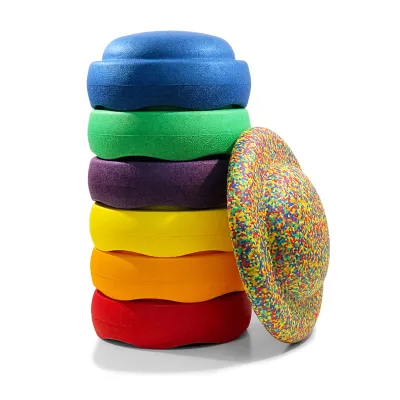
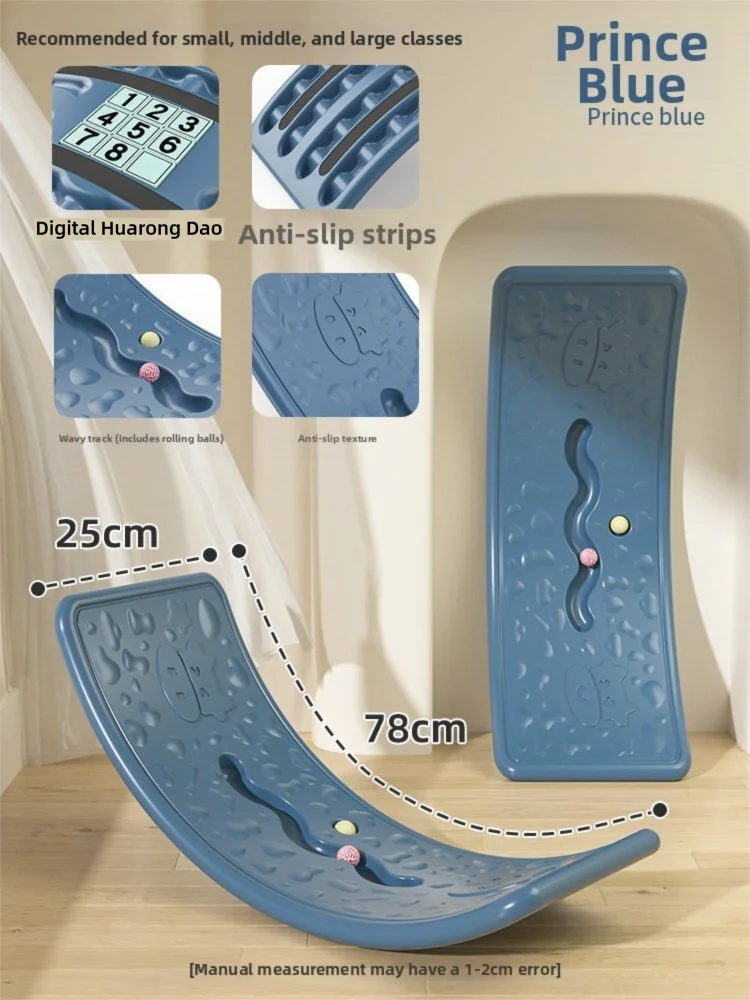
![[SG] Wooden Balance Board for Kids Wobble Balance Board Kids Yoga Board Body Training natural Wood Curvy Board Kids](https://img.lazcdn.com/g/p/214791cf0f8d878392f0ca315502429a.jpg_400x400q80.jpg_.webp)
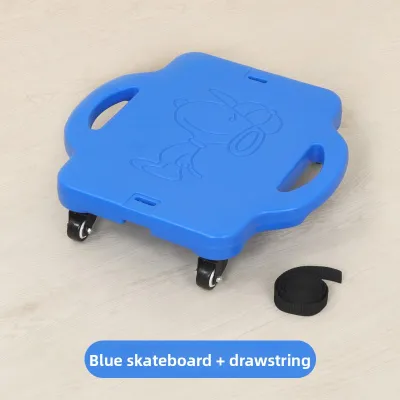

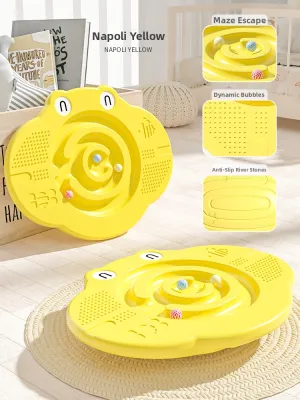
Prices are valid at publication and may change. Please refer to the product page for the latest price.
Choosing the Right Movement Type: Rocker vs. Wobble Boards
Understanding how a balance board moves is the first step in selecting a safe and engaging toy. The mechanical design directly influences the level of difficulty and the muscle groups targeted during play.

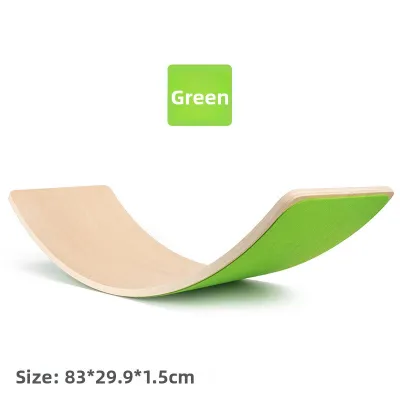
Rocker boards operate on a single-axis system, allowing movement only in a side-to-side or front-to-back direction. This predictable motion is highly recommended for toddlers and beginners who are just starting to develop basic lateral balance, ankle strength, and core awareness. Because the board’s curved bottom remains in continuous contact with the floor, it offers a stable, low-risk introduction to balance training.
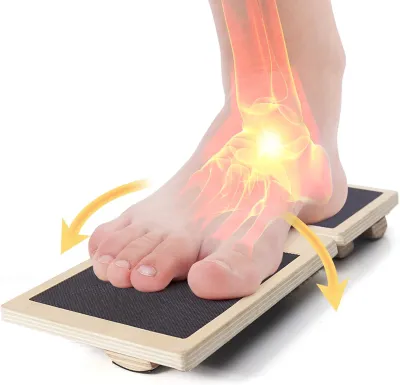
Wobble boards feature a central fulcrum or a semi-spherical base that enables multi-axis, 360-degree movement. This design allows the board to tilt, pivot, and rotate in any direction, demanding constant micro-adjustments from the user. Wobble boards are best suited for older, school-aged children or those with prior physical training who require a greater challenge to build dynamic stability and coordination.
Roller-based systems represent the most advanced category, consisting of a flat deck that rests on a separate, unattached cylindrical roller. These systems require a high degree of skill, rapid reflexes, and a significantly larger, clear space to operate safely. Because of the high slip-and-fall risk, roller boards are generally reserved for teenagers or youth athletes undergoing specific sports conditioning, rather than casual play.
For a safe progression, start your child on a low-profile rocker board. Only transition to a multi-axis wobble board once they can comfortably maintain a static, centered hold on the rocker board for extended periods without tipping.
Sizing and Weight Limits: Ensuring a Safe and Responsive Fit
A balance board must physically fit your child to be both safe and functional. Selecting a board based solely on age recommendations can lead to a mismatched fit that hinders skill development.
To find the correct board length and width, observe your child’s natural standing posture. Have them stand comfortably with their feet shoulder-width apart, and measure the distance between the outer edges of their feet. The deck of the balance board should comfortably accommodate this stance with a few centimeters of extra space on either side, allowing for a natural, stable posture without forcing their legs too far apart or keeping them too narrow.
Weight capacity is a critical safety and performance specification that parents often overlook. Always check the manufacturer’s label for both the maximum weight limit and the recommended minimum weight. A board engineered to support a heavy adult or older teenager is constructed with stiffer materials that will not flex or respond to the light weight of a younger child, neutralizing the sensory feedback necessary for balance training.
The thickness of the board and the height of its fulcrum directly determine the child’s center of gravity during use. A lower-profile board keeps the child closer to the ground, which significantly reduces the impact and risk of injury from an accidental fall. For younger children, look for a shallow curve or a low fulcrum height to ensure the learning curve remains safe and manageable.
Surface Grip and Edge Design: Balancing Traction with Safety
The physical finish of a balance board determines how safely a child can interact with it, especially during active, energetic play. Traction and edge construction are key details that prevent preventable slips and scrapes.
Surface grip options generally fall into three categories: bare wood, grip tape, and foam pads. Natural, bare wood boards offer a classic aesthetic and a smooth feel, but they require the child to play barefoot or in high-traction grip socks, as standard socks on polished wood can easily cause slips. Grip tape provides maximum traction, similar to a skateboard, but its abrasive texture can be harsh on bare skin and is best suited for older kids wearing shoes.
Foam or EVA (ethylene-vinyl acetate) pads represent the ideal middle ground for younger children. These soft, textured overlays provide excellent traction for bare feet or socks while remaining gentle on the skin during climbs, crawls, or accidental falls.
Examine the edges of the board before purchasing. High-quality balance boards feature rounded, sanded, or beveled edges rather than sharp, flat cuts. Rounded edges minimize the risk of painful shin, ankle, or toe injuries if a child slips off the deck, and they make the board much more comfortable for little hands to grip during floor exercises.
Consider the environment where the board will be used, particularly if you live in an apartment or HDB flat in Singapore. The underside of the board can easily scratch polished hardwood, vinyl, or ceramic tile floors during movement. Selecting a board with a felt-lined base, rubberized stoppers, or using it on a dedicated play mat protects your flooring and dampens the noise of the board hitting the ground.
Matching Board Specs to Your Child's Developmental Stage
As children grow, their motor skills, reaction times, and physical strength evolve rapidly. Matching the structural specifications of a balance board to their specific developmental stage ensures they stay engaged without becoming frustrated or injured.
For toddlers and early preschoolers (ages two to four), prioritize low-profile rocker boards with a wide, stable base and soft foam grip pads. At this stage, balance boards should be used primarily for simple rocking, sitting, or crawling. Because young children are still developing basic coordination, close-proximity adult supervision is mandatory at all times to prevent falls.
For school-aged children (ages five and up), you can confidently transition to standard wobble boards or longer rocker boards equipped with moderate grip tape or felt surfaces. These specifications support more dynamic physical education goals, active play, and basic sports conditioning for activities like surfing, skateboarding, or gymnastics.
Knowing when to upgrade your child’s equipment requires observing their daily play patterns. If your child can easily maintain a static balance on their current board for several minutes while carrying out another task, or if their feet are consistently spilling over the outer edges of the deck, they have outgrown the board’s physical dimensions and mechanical challenge. This is your cue to transition them to a more complex movement type or a larger size.
Frequently Asked Questions (FAQ)
Can a balance board help with my child's posture and focus?
Yes, regular balance board use can be a highly beneficial supplementary activity for developing children. The micro-adjustments required to stay upright engage the deep core muscles, strengthen the ankles, and improve proprioception, which is the body’s natural awareness of its position in space. While these physical benefits can support overall posture and body control during daily tasks, a balance board is not a medical device and should not replace professional physical therapy or clinical interventions for diagnosed developmental or postural issues.
What safety gear should my child wear when using a balance board?
For beginners, younger children, or when practicing on advanced roller-based boards, standard protective gear such as a helmet, knee pads, and elbow pads can help prevent bumps and bruises. Always ensure your child uses the board in a clear, hazard-free practice area. Set up the board on a flat, non-slip surface well away from sharp furniture corners, glass doors, steps, and high-traffic household walkways to eliminate collision risks.
Community discussion
Share your experience or ask a question. Comments are reviewed before publication.