
Choosing the right balance trainer depends on matching the equipment’s physical mechanics to your fitness level, training goals, and home environment. Balance boards, balance discs, and balance pads each challenge your body’s stabilizing systems in distinct ways. By understanding how these tools create instability, you can select the one that best supports your routine, whether you are recovering from an injury, looking to activate your core at a standing desk, or preparing for dynamic board sports.
How Each Trainer Challenges Your Balance
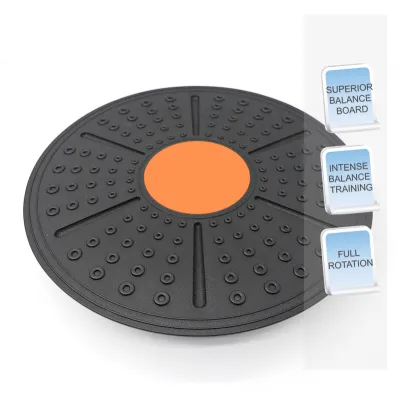
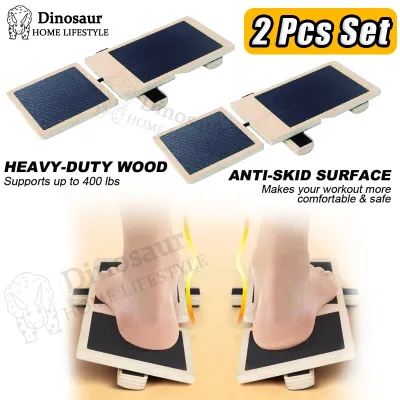
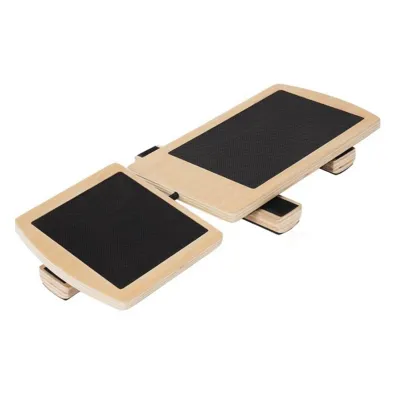
Balance boards consist of a rigid platform placed on top of a fulcrum, roller, or curved base. They create a highly dynamic, mechanical pivot point that requires rapid, large-scale muscular corrections. When you stand on a board, you must constantly shift your weight along specific axes—such as side-to-side or forward-and-back—or across a 360-degree pivot to prevent the board’s edge from touching the floor.
Balance discs, also known as wobble cushions, are typically round, air-filled PVC or rubber domes. Because they are filled with air, they compress and shift in every direction simultaneously under your weight, creating constant, multi-directional micro-instability. Instead of the dramatic tilting of a board, a disc forces your deep stabilizing muscles, particularly around the ankles and core, to make continuous, subtle adjustments to keep you upright.
Products mentioned in this guide
Prices are valid at publication and may change. Please refer to the product page for the latest price.
Balance pads are made of thick, specialized closed-cell foam that yields under your weight to create an uneven, soft surface. This compression reduces your base of support and challenges your sensory receptors without the sudden, hard pivot of a board or the shifting air of a disc. The instability is gentle and predictable, making it highly controllable and easy on the joints.
Choosing Based on Your Training Goals
If your primary goal is to prepare for sports that require rapid directional changes, high-speed coordination, or board-riding skills like surfing, skateboarding, or wakeboarding, a balance board is the most direct match. The tilting motion mimics the carving and weight-shifting patterns of these activities. It forces your hips, knees, and ankles to work in unison to manage sudden shifts in your center of gravity.

For those seeking to integrate stability training into daily routines or low-impact workouts, balance discs are highly versatile. Placing a disc on an office chair creates an active sitting surface that engages the deep core and lower back muscles, helping to prevent static slouching during long working hours. When used underfoot during standing desk sessions or incorporated into bodyweight exercises like squats and planks, the disc introduces a moderate challenge that keeps your core constantly engaged.
When recovering from joint injuries, such as an ankle sprain or knee strain, the primary focus is rebuilding proprioception—the body’s ability to sense its position in space—without overloading vulnerable tissues. Balance pads excel in this scenario. The predictable, cushioned compression allows you to perform basic single-leg stands and gentle mobility drills with minimal risk of sudden joint rolling, providing a safe foundation for early-stage rehabilitation.
Factoring in Skill Level and Available Space
A successful balance routine relies on progressive overload and safety. Beginners should generally start with a balance pad, which offers the lowest risk of falls and allows the nervous system to adapt to basic instability. Once you can comfortably perform single-leg balances on a pad, transitioning to an inflatable balance disc introduces a more dynamic, multi-directional challenge. Advanced users who have developed strong joint stability and rapid reflexes can then safely progress to balance boards, which demand high-level coordination and quick recovery responses.
In space-conscious living environments, such as typical apartment homes, the physical footprint of fitness gear is a major consideration. Balance pads and discs are highly compact and can easily be slid under a bed, stacked in a wardrobe, or tucked away in a utility closet. Balance boards, especially those with separate rollers or large wooden decks, require more dedicated floor space during use to avoid colliding with furniture, and they take up more storage room.
If you plan to take your balance trainer to the gym, an outdoor park, or use it while traveling, weight and packability are key. Inflatable discs can be deflated for flat packing or carried easily in a standard backpack. Foam pads are lightweight but bulky, making them less convenient for long commutes but easy to move around the home. Rigid boards are the heaviest and most awkward to transport, making them best suited for a permanent home setup or dedicated training facilities.
Equipment Comparison by Use Case
| Equipment Type | Instability Level | Best Training Focus | Space Requirement | Recommended Skill Level |
|---|---|---|---|---|
| Balance Board | High | Dynamic Sports & Agility | Moderate to Large | Advanced |
| Balance Disc | Moderate | Core Activation & Active Sitting | Compact | Intermediate |
| Balance Pad | Low | Rehabilitation & Basic Stability | Compact | Beginner |
Safety Checks and Usage Boundaries
Before stepping onto any balance trainer, ensure your surrounding environment is completely clear of sharp corners, hard furniture, or loose objects. Place the equipment on a flat, non-slip surface—such as a high-grip exercise mat—to prevent the trainer itself from sliding during use. For beginners or those trying a new movement, position the trainer close to a sturdy wall, a heavy countertop, or a stable chair that you can easily reach out and grab for emergency balance recovery.
Balance training heavily taxes the nervous system and small stabilizing muscles, which fatigue much faster than larger muscle groups. Pay close attention to signs of physical fatigue, such as rapid muscle tremors, uncontrolled ankle rolling, or a collapsing posture. When you can no longer maintain a neutral spine or stable joints, stop the set immediately; continuing past this point increases the risk of joint strain or falls.
It is crucial to distinguish between the healthy, warm burn of working muscles and sharp, localized joint pain. Muscular fatigue is a normal response to stability training as your body adapts to the challenge. However, if you experience sudden, sharp, or pinching sensations in your ankles, knees, hips, or lower back, stop the exercise immediately. Do not attempt to push through joint pain, and consult a qualified healthcare professional or physical therapist to assess your movement patterns.
Frequently Asked Questions (FAQ)
Can I use a balance trainer every day?
You can integrate balance training into your daily routine, provided you manage the intensity and duration to prevent cumulative fatigue. Short, low-intensity sessions—such as standing on a balance pad for a few minutes while brushing your teeth or using a balance disc on your chair—are excellent for daily neuromuscular activation. However, intense, high-instability workouts on a balance board should be treated like strength training, allowing at least 24 to 48 hours of recovery between sessions to let your nervous system and stabilizing muscles fully recover.
Do I need to wear shoes when using balance equipment?
The choice between training barefoot or with shoes depends on your goals and the specific manufacturer guidelines for your equipment. Training barefoot or in minimalist socks maximizes sensory feedback from the soles of your feet, strengthening the intrinsic muscles of the foot and improving natural proprioception. However, if you require extra arch support, have specific foot conditions, or are using a rigid wooden balance board with a high-grip surface that could irritate bare skin, wearing supportive athletic shoes is recommended. Always check your product’s manual, as some materials may be damaged by certain shoe soles.
How do I clean and maintain my balance trainer?
Proper maintenance helps preserve the grip and structural integrity of your equipment, especially in warm, humid climates where sweat and moisture can accumulate. For most foam pads and rubber discs, a simple wipe-down with a damp cloth and a mild, diluted soap is sufficient to remove sweat and dust; avoid harsh chemical solvents or abrasive scrubs that can degrade the material. Allow the equipment to air dry completely in a shaded, well-ventilated indoor area away from direct sunlight, which can cause foam to break down or rubber to warp. Always refer to the manufacturer’s care label for material-specific instructions.
Community discussion
Share your experience or ask a question. Comments are reviewed before publication.