
Foam rollers and balance pads serve fundamentally different recovery purposes, and choosing between them depends entirely on what your body needs after a run. A foam roller is your go-to tool for myofascial release, stimulating blood flow, and relieving tightness in large muscle groups. In contrast, a balance pad provides an unstable surface designed to engage stabilizing muscles, improve proprioception, and support joint resilience. Rather than viewing them as direct competitors, this guide will help you identify which tool addresses your specific post-run symptoms, or whether your routine actually benefits from incorporating both.
Running is a repetitive, high-impact activity that places significant stress on both your musculoskeletal system and your joints. Over time, this repetitive motion can lead to localized muscle tightness, micro-tears in muscle fibers, and fatigue in the stabilizing joints of your lower body. Addressing these issues requires a targeted approach, but the right tool depends on whether your primary bottleneck is muscle tension or joint instability.
By understanding the distinct physiological mechanisms of foam rollers and balance pads, you can make an informed decision that aligns with your training volume, injury history, and recovery goals. Whether you are preparing for a local marathon or enjoying casual evening runs along park connectors, integrating the correct recovery tool can help you maintain consistency and run comfortably.
Products mentioned in this guide

![[BEST SELLER]Balance Foam Pad Yoga Mat Exercise Non-slip Waterproof Soft for Fitness Training](https://img.lazcdn.com/g/p/ecdbe1ded9c6362a36a977bc38118d05.jpg_400x400q80.jpg_.webp)
![[OKLIFE. SG]aron Anti-Slip Balance Pad Inflatable Wobble Balance Pad PVC Inflatable Yoga Mat for Core Strength & Balance Training](https://img.lazcdn.com/g/p/6c290bce7f4f951da067b79ca7ea0e12.jpg_400x400q80.jpg_.webp)
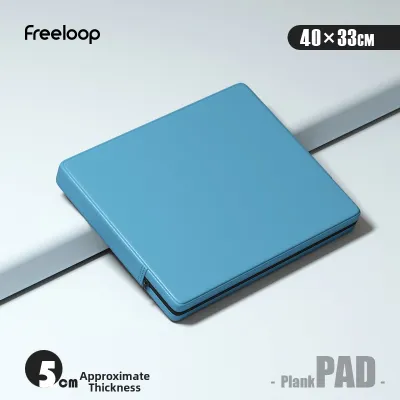
Prices are valid at publication and may change. Please refer to the product page for the latest price.
Understanding How Each Tool Targets Recovery
To choose the right tool, you must first understand how they interact with your body. Foam rollers and balance pads operate on entirely different physiological systems. One focuses on the mechanical manipulation of soft tissue, while the other challenges your nervous system and joint mechanics to build stability from the ground up.
Foam rolling relies on the principles of self-myofascial release. When you run, your muscles and the surrounding connective tissue, known as fascia, can develop tight spots or adhesions. By using your body weight to apply targeted pressure against a dense foam cylinder, you help break up these adhesions and encourage blood flow to the area. This localized circulation delivers oxygen and nutrients to fatigued muscles, which can assist in flushing out metabolic waste products and restoring normal tissue elasticity.
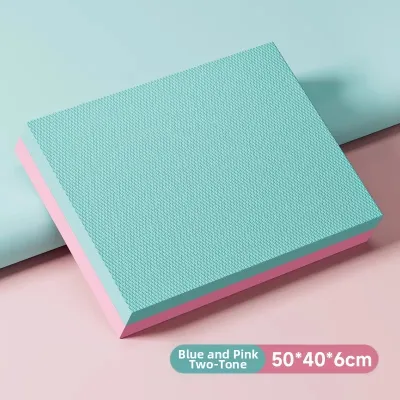
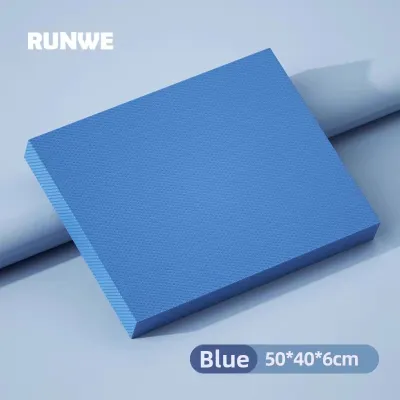
A balance pad, on the other hand, is a thick, unstable foam block designed to disrupt your equilibrium. When you stand, balance, or perform exercises on this yielding surface, your brain must constantly communicate with your muscles to keep you upright. This process engages the micro-stabilizing muscles around your ankles, feet, and knees that are often bypassed during standard strength training. It also sharpens your proprioception, which is your body’s subconscious awareness of its position and movement in space.
Because these tools target different physical systems—muscle tissue versus neuromuscular joint stability—they are not interchangeable. A foam roller cannot train your nervous system to stabilize an ankle on uneven terrain, and a balance pad cannot physically roll out a tight calf muscle. Recognizing this distinction allows you to use each tool for its intended purpose rather than forcing one to do the job of the other.
When to Reach for a Foam Roller After a Run
A foam roller is highly effective when your primary post-run symptoms are muscular. After completing a long run or a challenging interval session, your large muscle groups often feel heavy, tight, or tender. This is where myofascial release becomes a valuable asset in your recovery routine.

The ideal scenarios for foam rolling involve targeting the major muscle groups of the lower body. Runners frequently experience tightness in the calves, quadriceps, hamstrings, and gluteal muscles. Rolling these areas helps alleviate the tension that accumulates from thousands of repetitive strides. It is also commonly used along the outer thigh to address tightness associated with the iliotibial (IT) band, though you should focus on rolling the surrounding muscles like the tensor fasciae latae and gluteus medius rather than applying direct, heavy pressure to the tendon itself.
When selecting a foam roller, you need to evaluate several key physical characteristics to match your experience level and physical needs. Beginners should generally start with a softer foam roller, as high-density models can feel uncomfortably intense on tender muscles. As your tissues adapt, you might transition to a firmer, high-density foam roller for deeper pressure. Surface texture is another consideration; smooth rollers provide even pressure distribution, while grid or textured rollers feature ridges designed to mimic the fingers of a massage therapist. Additionally, consider the length of the roller; a standard 36-inch roller is excellent for home use, while a compact 12-inch or 18-inch version is much easier to pack in a gym bag or travel luggage.
Safety is paramount when performing self-myofascial release. You should always avoid rolling directly over bony prominences, joints, or the lower back, as this can place excessive stress on skeletal structures and nerves. Keep the roller on the fleshy, muscular portions of your limbs. If you encounter a particularly tender spot, pause and apply gentle, static pressure for a few seconds rather than rolling rapidly back and forth. Most importantly, stop immediately if you experience sharp, shooting, or nerve-like pain, as these are clear indicators that you are pressing on a nerve or aggravating an acute injury.
When to Use a Balance Pad for Joint Stability
While a foam roller addresses the muscular consequences of running, a balance pad is an active tool designed to prevent injuries and build structural resilience. It is particularly beneficial for runners who navigate uneven surfaces, such as trail runners, or those who want to protect their joints from the repetitive impact of road running.
The primary scenario for using a balance pad is to improve ankle and knee stabilization. Every time your foot strikes the ground, your joints must absorb impact and maintain alignment. A balance pad forces the small muscles in your feet and ankles to work harder to maintain balance, which strengthens the entire kinetic chain. This tool is also highly useful for correcting muscle imbalances between your left and right legs, as you can perform single-leg stands to identify and address unilateral weaknesses. If you are recovering from a minor ankle sprain, a balance pad can help rebuild the proprioceptive pathways that are often damaged during joint injuries, though you should always verify your readiness with a healthcare professional before starting.
When shopping for a balance pad, pay close attention to the manufacturer’s specifications regarding thickness, material density, and surface texture. A standard balance pad is typically around two to two and a half inches thick. Thicker pads offer more instability, which increases the difficulty of the exercises. The material should be a high-quality, closed-cell foam that resists collapsing under your weight while remaining resilient over time. Look for a non-slip surface texture on both sides of the pad to ensure it remains securely in place on your floor during use.
To ensure safe and effective use, always place the balance pad on a flat, clear, and non-slippery floor surface away from furniture or sharp objects. It is designed for use barefoot. Exercising without shoes allows the soles of your feet to interact directly with the foam, providing optimal sensory feedback to your brain and allowing your toes to grip the surface naturally. Start with simple exercises, such as standing on one leg for short intervals, before progressing to more dynamic movements like lunges or single-leg squats.
Comparing Everyday Usability and Maintenance
Integrating a new recovery tool into your daily routine requires looking at practical factors like storage, portability, and upkeep. While both tools are relatively low-maintenance, their physical designs dictate how and where you can use them.
The following table provides a direct comparison of the practical aspects of foam rollers and balance pads to help you understand how they fit into your lifestyle:
| Feature | Foam Roller | Balance Pad |
|---|---|---|
| Primary Function | Myofascial release and muscle relaxation | Neuromuscular training and joint stability |
| Target Areas | Large muscle groups (calves, quads, hamstrings) | Feet, ankles, knees, and core stabilizers |
| Portability | High (especially travel-sized or hollow models) | Moderate (lightweight but bulky to pack) |
| Learning Curve | Low to moderate (requires learning proper body positioning) | Low (simple standing exercises to start) |
| Cleaning Requirements | Wipe down with a damp cloth and mild soap | Wipe down with a damp cloth; avoid soaking |
Portability is a key differentiator that depends heavily on the specific dimensions of the model you purchase. A short, hollow foam roller is incredibly lightweight and can easily slide into a backpack or suitcase, making it an excellent companion for destination races or track workouts. A balance pad, while also very lightweight, is flat and rectangular, which can make it awkward to pack in a standard bag. It is typically well suited for home gyms, living rooms, or dedicated clinic spaces.
Upkeep for both tools is straightforward but essential for longevity. Because these tools frequently come into contact with sweat and floor dust, they require regular cleaning to prevent the buildup of bacteria and odors. Always follow the manufacturer’s specific cleaning instructions to avoid degrading the materials. Generally, wiping the surfaces down with a damp cloth and a mild, non-abrasive soap is sufficient. Avoid using harsh chemical solvents or soaking the tools in water, especially if they are made from porous foam or textured rubber surfaces that can trap moisture and deteriorate over time.
Making Your Final Decision: Which Tool Do You Need?
Choosing between a foam roller and a balance pad comes down to analyzing your current physical state, your training goals, and any recurring issues you experience during or after your runs. By assessing your body’s feedback, you can select the tool that provides the most immediate and long-term value.
You should prioritize a foam roller if your primary complaints are muscular. If you frequently finish runs feeling tight, stiff, or sore in your thighs and calves, a foam roller offers the direct physical manipulation needed to relax those tissues. It is an excellent choice for runners with high training volumes who need a reliable way to manage daily muscle tension and maintain flexibility between workouts.
Conversely, you should choose a balance pad if your focus is on joint stability, balance, and injury prevention. If you have a history of ankle sprains, feel unstable when running on uneven paths, or notice that one leg is significantly weaker than the other, the balance pad is a highly effective tool for addressing these neuromuscular gaps. It is a proactive investment in your joint health that helps build a more resilient foundation.
For many runners, the ideal approach is to combine both tools into a comprehensive recovery strategy. You do not have to choose one to the exclusion of the other. For example, you might use the foam roller for ten minutes immediately after your runs to soothe tired muscles, and set aside two separate sessions a week to perform balance pad exercises to strengthen your ankles and feet. This dual approach ensures that both your muscular and skeletal systems receive the targeted support they need to perform optimally.
Keep in mind that while these tools are excellent for general recovery and conditioning, they cannot solve structural injuries. If you experience persistent pain, localized swelling, sharp joint pain, or any discomfort that does not improve with rest, you should consult a qualified physiotherapist or healthcare professional. A professional can provide an accurate diagnosis and design a customized rehabilitation plan that safely incorporates these tools.
Frequently Asked Questions (FAQ)
Can I use a balance pad to massage sore muscles?
No, a balance pad is not designed to massage or apply targeted pressure to sore muscles. These pads are engineered specifically to create an unstable surface that distributes your weight evenly, which prevents them from penetrating deep into muscle tissue. If you attempt to use a balance pad for myofascial release, you will find that the soft, yielding foam does not provide the firm resistance necessary to break up muscle knots or adhesions. For effective muscle relief, you should stick to dedicated massage tools, foam rollers, or massage balls that are designed to withstand and concentrate localized pressure.
Should I foam roll before or after my run?
You can actually do both, but your technique should change depending on the timing. Pre-run foam rolling should be dynamic, light, and fast, focusing on quick passes over your major muscle groups for just a few minutes to increase blood flow, raise tissue temperature, and prepare your nervous system for activity. Post-run foam rolling should be slower, deeper, and focused on recovery, allowing you to target specific areas of tightness and encourage muscle relaxation. Always check your specific product’s guidelines, start with gentle pressure, and adjust your intensity based on your body’s feedback to avoid bruising or aggravating fatigued tissues.

Community discussion
Share your experience or ask a question. Comments are reviewed before publication.