
Carrying basketballs to and from the court requires a practical storage solution that balances capacity with portability. A standard ball net bag can hold anywhere from a single basketball up to 15 or more, depending on the specific design tier you choose. Selecting the ideal capacity is not just about counting the number of basketballs you own; it requires matching the bag’s physical limits to your daily training routine, transport methods, and the specific sizes of the balls you use.
For individual players, a compact single-ball or dual-ball net is often the most efficient choice for quick trips to the local court. Coaches, trainers, and equipment managers, on the other hand, require high-capacity mesh sacks that can consolidate an entire team’s gear into a single, manageable load. Understanding how these bags perform under weight and how different ball sizes affect overall volume will help you avoid premature wear and ensure your equipment remains secure.
Understanding Ball Net Bag Capacity Tiers and Limits
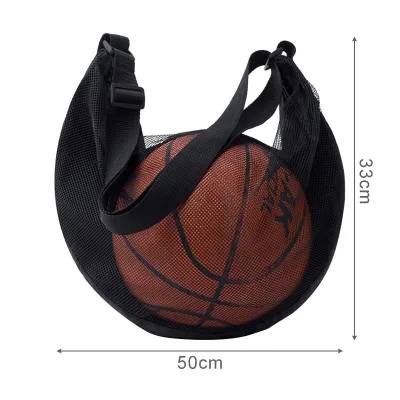
To choose the right ball net bag, you must first understand how manufacturers categorize these storage systems. The market generally divides net bags into three distinct capacity tiers: individual carriers, small-group bags, and heavy-duty team sacks. Individual carriers are designed specifically for one or two basketballs, offering a lightweight profile that fits easily into a standard backpack or hangs from a bicycle handlebar. Small-group bags typically accommodate three to six balls, making them ideal for trainers running private sessions or players who practice multi-ball dribbling drills. Team-capacity bags are the largest, engineered to hold between 10 and 15 or more full-sized basketballs for school teams or club leagues.
Products mentioned in this guide

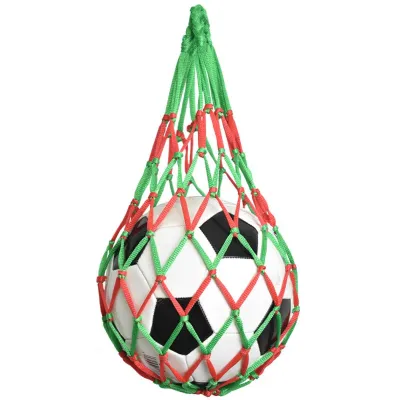
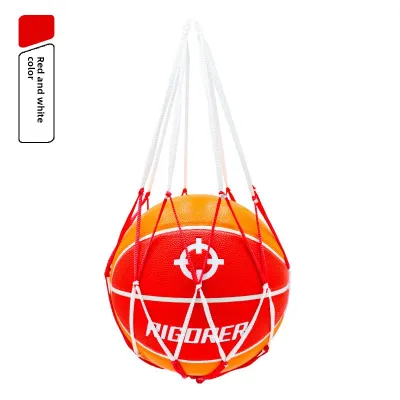
Prices are valid at publication and may change. Please refer to the product page for the latest price.
The actual volume a mesh bag can accommodate is heavily influenced by the size of the basketballs you intend to carry. A standard men’s basketball is a Size 7, which has a circumference of approximately 29.5 inches and requires significantly more physical space than a Size 6 women’s or youth ball (28.5 inches) or a Size 5 junior ball (27.5 inches). If a manufacturer rates a net bag for ten Size 7 basketballs, you may find it can comfortably hold twelve or thirteen Size 5 balls. Conversely, attempting to pack a bag rated for ten youth balls with standard Size 7 balls will result in severe overstuffing, placing immense pressure on the mesh and drawstring closure.
Inflation status also plays a subtle but important role in how many balls will fit inside the net. Fully inflated basketballs maintain a rigid, unyielding shape, leaving small gaps of empty space between them when packed together. While slightly deflated balls can compress slightly to fit tighter within the mesh, you should avoid deflating your equipment solely to squeeze extra items into the bag. Forcing compressed balls together can warp the synthetic leather panels or damage the internal bladders over time.
Before purchasing, always verify the manufacturer’s physical specifications rather than relying solely on a generic ball count. Check the flat dimensions of the bag when empty, the diameter of the mesh openings, and the maximum weight rating of the carrying straps. A high-quality net bag will clearly state its maximum load capacity in kilograms or pounds, providing a much more reliable indicator of durability than a simple estimate of ball capacity.
Matching Bag Capacity to Your Basketball Training Routine
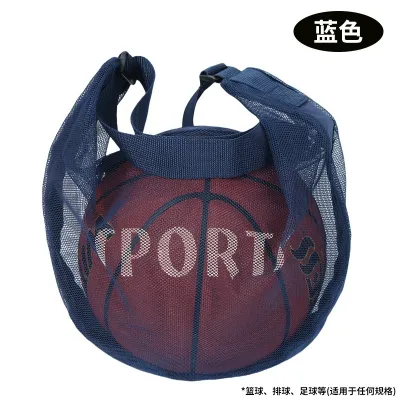
Your daily training routine is the most critical factor in determining which ball net bag capacity will serve you best. Individual players who focus on personal skill development, shooting practice, or pickup games rarely need to carry more than one or two basketballs. For these scenarios, a single-ball net bag or a dual-ball shoulder sling is highly recommended. These compact designs are incredibly easy to transport on public transport, such as buses or trains, and they take up minimal storage space at home. They allow you to keep your hands free while traveling to outdoor community courts or indoor sports halls.

If you run small-group training sessions, private coaching clinics, or regular half-court 3v3 games, your equipment needs will naturally expand. A medium-capacity ball net bag that holds three to six basketballs strikes a practical balance between utility and portability. This capacity allows you to bring enough balls to keep multiple players active in passing, shooting, or rebounding drills without experiencing long wait times. It also remains light enough for a single trainer to carry comfortably from the car park to the court without straining their back or shoulders.
For school coaches, club managers, and team organizers, high-capacity team bags are indispensable. Managing a full squad of twelve or more players during warm-ups requires a constant supply of basketballs to ensure high-intensity, continuous drills. A team-capacity bag holding 10 to 15 basketballs ensures that every player has access to a ball during individual warm-up lines. However, carrying this volume of equipment presents unique transport challenges. A bag loaded with fifteen fully inflated Size 7 basketballs can easily weigh upwards of nine kilograms, requiring a robust carrying system and careful physical handling to prevent fatigue.
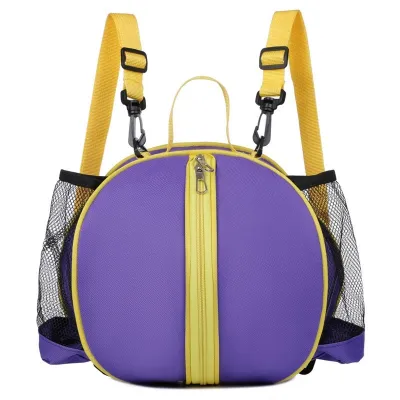
When selecting a bag for team use, consider how the gear will be transported to away games or external training facilities. If you frequently travel by team bus or van, a large, flexible mesh sack can be easily wedged into tight luggage compartments. For coaches who must walk longer distances between courts, choosing a bag with backpack-style straps or a heavy-duty shoulder sling will make transporting a dozen basketballs significantly more manageable.
Evaluating Durability and Carrying Comfort for Heavy Loads
The structural integrity of a ball net bag becomes increasingly important as the weight of your equipment rises. When evaluating different models, pay close attention to the material composition and the construction of the mesh. Look for bags made from heavy-duty synthetic fibers, such as high-density nylon or polyester, which offer excellent tensile strength and resistance to abrasion. The mesh junctions should be securely bonded or woven, and the bottom panel of the bag should feature reinforced stitching or a solid fabric base to prevent the lowest basketballs from dragging on rough asphalt or concrete court surfaces.
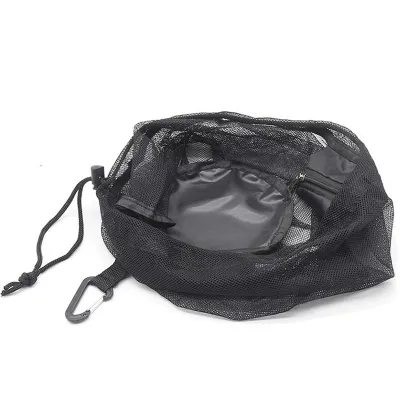
Carrying comfort is directly tied to the design of the straps and closure systems. A simple single-drawstring design is perfectly adequate for lightweight, single-ball nets, but it can quickly become painful when carrying heavier loads, as the thin cord cuts directly into your shoulder. For medium and large bags, look for wide, padded shoulder straps or dual-strap configurations that distribute the weight evenly across both shoulders like a backpack. Some advanced team bags feature adjustable chest straps or padded grab handles, allowing you to lift and carry the loaded bag using multiple grip points.
Proper ventilation is another essential feature of high-quality ball net bags, particularly in warm, humid climates. Mesh construction allows air to circulate freely around the basketballs, which is crucial after intense training sessions where balls accumulate sweat, dirt, and moisture. Storing damp basketballs in a sealed, non-breathable bag can cause the synthetic leather or rubber covers to degrade, lose their grip, or develop unpleasant odors. An open mesh design ensures that moisture evaporates quickly, keeping your equipment dry and hygienic between practices.
Common Sizing and Packing Mistakes to Avoid
To maximize the lifespan of your ball net bag and protect your basketballs from unnecessary wear, it is important to avoid several common packing mistakes. The most frequent error is overstuffing the bag beyond its designated capacity. Forcing an extra basketball into a fully loaded net puts immense tension on the drawstring closure, the top seams, and the individual mesh strands. Over time, this constant stretching weakens the fibers, leading to sudden tears or broken drawstrings mid-transit, which can send your basketballs rolling across a busy street or parking lot.
Ignoring the physical weight limits of the bag is another mistake that can lead to equipment failure. While a large mesh bag might physically have enough volume to hold fifteen basketballs, the carrying straps or plastic adjustment buckles may not be rated to support that much dead weight. Always check the manufacturer’s guidelines regarding weight limits, and avoid adding heavy training accessories—such as weighted training balls, cones, or water bottles—into a net bag that is already filled to its volumetric capacity.
Finally, avoid the temptation to mix wet and dry equipment within the same mesh compartment. It can be tempting to toss damp team bibs, sweaty towels, or wet warm-up shirts into the ball bag at the end of a session. However, keeping wet fabrics in direct contact with basketballs can ruin the outer casing of premium leather or composite leather balls, causing the panels to peel or bubble. Keep a separate, waterproof compartment or dry bag for soiled apparel, and reserve your mesh ball net exclusively for dry sports equipment.
Frequently Asked Questions (FAQ)
Can I use a basketball net bag for other sports equipment?
Yes, mesh ball net bags are highly versatile and can easily accommodate other types of sports balls, such as soccer balls, volleyballs, netballs, or playground balls. Because these balls share similar dimensions to basketballs, they will fit comfortably within the same capacity tiers. However, if you plan to carry smaller items like tennis balls, baseballs, or training cones, you must check the size of the mesh openings first. Standard basketball nets often feature wide mesh holes that smaller gear can easily slip through during transport, so look for a fine-mesh design if you intend to carry mixed equipment.
How should I clean and maintain a mesh ball bag?
To keep your mesh ball bag clean and free of odor, regular maintenance is highly recommended. Most synthetic nylon or polyester net bags can be gently hand-washed in warm water with a mild detergent to remove dirt, sweat, and court dust. If you prefer using a washing machine, place the empty bag inside a mesh laundry delicate bag first to prevent the long drawstrings or straps from tangling around the agitator, and select a gentle cycle with cold water. Always air-dry the bag completely in a well-ventilated, shaded area; avoid using a tumble dryer, as high heat can shrink the synthetic fibers and damage plastic toggles or strap adjusters.
Community discussion
Share your experience or ask a question. Comments are reviewed before publication.