
Comparing ball pump brands in Singapore requires looking past marketing claims and focusing on verifiable specifications like cylinder material, gauge placement, and valve compatibility. Since specific brand performance varies by model and production batch, this guide provides a structured framework to evaluate durability, ease of use, and overall value. By understanding these core dimensions, you can identify the best fit for your sports equipment maintenance needs without relying on unverified rankings. In a tropical environment where high humidity can degrade rubber seals and corrode low-grade metal components, understanding the construction of a pump is essential for long-term utility. Whether you are maintaining basketballs, footballs, or netballs, evaluating key metrics will help you find a tool that performs consistently.
Core Criteria for Comparing Ball Pump Brands
To make an objective comparison between different ball pump brands, you must first establish a clear set of baseline metrics. The right pump for a casual weekend player at a local community court will differ significantly from the equipment needed by a school coach managing dozens of sports balls weekly. Defining your primary use case helps prevent overspending on unnecessary features or, conversely, purchasing an underpowered tool that fails under frequent use.
Cylinder Volume and Stroke Efficiency
The physical dimensions of the pump cylinder directly dictate how much air is displaced with each stroke. Larger cylinders move more air per compression, which reduces the time and physical effort required to inflate a flat ball. However, larger pumps are less portable and may not fit easily into a standard gym bag. For portable hand pumps, look for dual-action designs that compress air on both the push and pull strokes, effectively doubling inflation efficiency without increasing the physical footprint of the tool.
Products mentioned in this guide
![[SG STOCK] Ball Air Pump with Needle](https://img.lazcdn.com/g/p/68529c3a4e15f53d0ddf08e7dc2c6925.png_400x400q80.png_.webp)
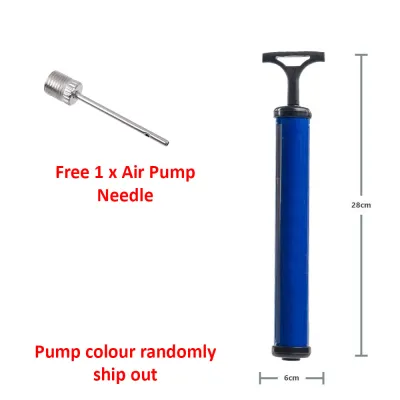
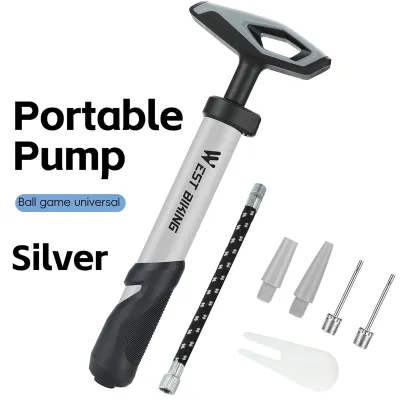
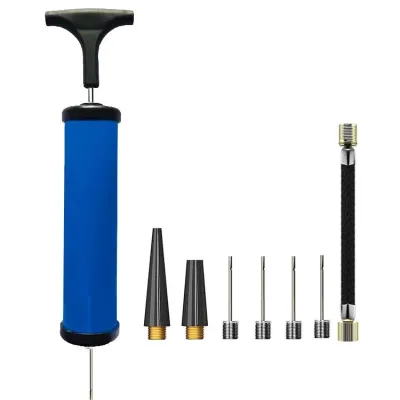
![[LOCAL SELLER] ROCKBROS A320 120PSI Bicycle Air Pump Aluminum Alloy Bike Mini Pump for Balloon Football Basketball Bicycle](https://img.lazcdn.com/g/p/4cdf88dce9570556e1ae5796568391e5.png_400x400q80.png_.webp)
![[SPOT] Multi-purpose Inflator with Barometer Bicycle Pump Portable Air Pump For Motorcycle Mountain Bike Road Bike E-bike Basketball inflator With General Air Nozzle With Barometer CNY Gift Present](https://img.lazcdn.com/g/p/2c789efd61abbfc853d5eebef1221b94.jpg_400x400q80.jpg_.webp)
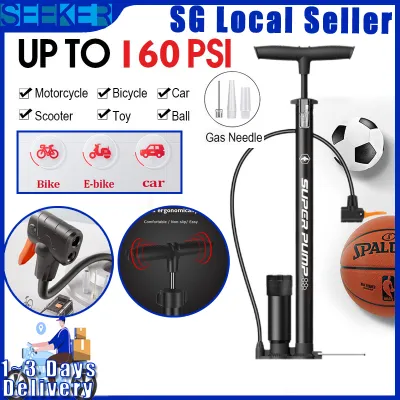
Prices are valid at publication and may change. Please refer to the product page for the latest price.
Maximum Pressure Output and Verification
Most sports balls require relatively low pressure, typically between 4 and 13 pounds per square inch (PSI). However, verifying the maximum pressure rating on the manufacturer’s specification sheet is a reliable way to gauge the structural integrity of the pump’s internal seals. A pump rated for higher maximum pressures generally utilizes tighter tolerances and more robust gaskets, which translates to a longer lifespan even when used exclusively for low-pressure sports balls. Always check the official product packaging or the manufacturer’s technical documentation to verify these ratings before purchasing.
Evaluating Build Quality and Durability
The materials used in a ball pump’s construction determine how well it withstands regular use, transport, and environmental exposure. In Singapore’s warm, humid climate, material selection is particularly critical to prevent premature degradation of both the exterior housing and the internal mechanisms.

Cylinder Materials and Environmental Resistance
Entry-level pumps often feature lightweight plastic cylinders. While highly portable and resistant to rust, basic plastics are susceptible to cracking if stepped on or dropped on hard concrete courts. Premium models typically utilize aluminum or steel alloys. Aluminum offers an excellent balance of lightweight portability and structural strength, and it naturally resists corrosion. If you opt for a steel cylinder, ensure it features a powder-coated or painted finish to protect the metal from moisture-induced rust during storage in home utility closets or outdoor equipment sheds.
Handle Ergonomics and Base Stability
The design of the handle and base affects both comfort and safety during operation. Hand pumps should feature textured grips or contoured handles to prevent slipping when your hands are sweaty from play. For floor-standing pumps, a wide, stable base made of cast iron or reinforced composite material is essential. A stable base allows you to step firmly on the footpads, keeping the pump upright and preventing lateral strain on the piston rod, which can bend the internal shaft and ruin the pump’s alignment.
Hose Quality and Connection Points
A flexible hose between the pump cylinder and the needle is highly preferable to a rigid, direct-connection design. Rigid connections transfer every movement of your hand directly to the inflation needle, which increases the risk of bending the needle or damaging the ball’s rubber valve inlet. Look for hoses made of reinforced rubber or braided nylon, which resist kinking and cracking. The connection points where the hose meets the cylinder and the valve head should feature threaded metal collars or heavy-duty plastic sleeves to prevent air leaks under pressure.
Assessing Features: Gauges, Valves, and Accessories
Beyond basic construction, the functional features of a ball pump determine its ease of use and precision. Accurate inflation is critical; under-inflated balls alter play dynamics, while over-inflated balls can warp, lose their shape, or suffer seam failures.
Pressure Gauge Placement and Readability
An integrated pressure gauge removes the guesswork from inflation, but its placement affects how easily you can monitor the pressure. Base-mounted gauges are common on floor pumps, but they can be difficult to read from a standing position if the dial is small. Top-mounted or inline gauges are positioned closer to your line of sight, making them much easier to read during operation. Ensure the gauge dial features clear markings in both PSI and Bar, with a scale appropriate for sports balls, ideally showing detailed increments in the 0 to 15 PSI range rather than a compressed 0 to 160 PSI bicycle scale.
Valve Head Designs and Compatibility
A versatile pump should accommodate various valve types without requiring complex adapters. Standard sports balls use a narrow inflation needle, but you may also need to inflate bicycle tires or recreational inflatables. Look for valve heads that support both Schrader and Presta connections. Smart heads that automatically adjust to the valve type or dual-head designs with separate ports simplify the transition between different equipment types.
Accessory Completeness and Storage
The inclusion of high-quality accessories adds significant value to your purchase. Look for packages that include multiple spare stainless steel needles, as these are easily lost or bent during fast-paced team preparations. Some brands include flexible extension hoses, plastic nozzles for inflatable toys, and dedicated storage compartments built directly into the pump handle or base. Having a secure place to store spare needles ensures you are never left stranded with a flat ball and no way to connect the pump.
Price vs. Value: What to Expect at Different Budgets
Understanding the typical price tiers in the Singapore market helps you set realistic expectations for durability and features. While prices fluctuate based on retail promotions and specific merchant policies, ball pumps generally fall into three distinct categories.
Entry-Level Pumps (Under S$15)
In this budget tier, expect basic plastic hand pumps with direct-needle connections or short, unreinforced hoses. These models rarely include a pressure gauge and are designed primarily for occasional home use or emergency travel kits. While highly affordable, they require more physical effort to operate and are more prone to air leaks and physical damage over time. They are best suited for casual players who only need to top up a single ball every few months.
Mid-Range Pumps (S$15 to S$35)
Mid-range pumps offer a significant step up in usability and material quality. In this bracket, you will find durable aluminum hand pumps and compact floor pumps, many of which feature integrated pressure gauges and flexible hoses. Dual-action pumping mechanisms are common here, offering improved stroke efficiency. These pumps are ideal for regular players, amateur sports clubs, and families with multiple active sports enthusiasts who require reliable performance without a premium price tag.
Premium Pumps (Over S$35)
Premium models are designed for heavy-duty, high-frequency use by coaches, schools, and professional sports facilities. These pumps feature robust steel or high-grade aluminum cylinders, large, highly accurate top-mounted gauges, and ergonomic wooden or composite handles. They often come with comprehensive accessory kits, including heavy-duty carrying bags, spare brass needles, and replacement internal O-rings. While the initial investment is higher, their exceptional durability and repairability offer the best long-term value for high-volume environments. To ensure you get the best value, cross-reference prices across authorized local sports retailers and reputable online marketplaces, and verify the warranty terms provided by the manufacturer.
Decision Framework: Choosing the Right Pump for Your Needs
To select the ideal ball pump, match your specific usage patterns against the structural characteristics of the available options. This systematic approach ensures you do not overpay for professional-grade features you will not use, nor end up frustrated by a basic pump that cannot handle your weekly training sessions.
Matching Usage to Pump Type
If your primary goal is portability for occasional recreational play, a compact, dual-action aluminum hand pump with a flexible hose is the most practical choice. It fits easily into a backpack and provides sufficient efficiency for single-ball maintenance. For those managing multiple balls for a local league or school team, a mid-sized floor pump with an integrated, easy-to-read gauge is highly recommended to save time and prevent physical fatigue. If you run a professional training facility or sports equipment rental service, invest in a premium floor pump with replaceable internal seals to guarantee years of continuous service.
Pre-Purchase Verification Checklist
Before finalizing your purchase, run through this practical checklist to verify the suitability of the specific model:
- Needle Thread Compatibility: Ensure the pump's valve head or hose connection uses standard thread sizes so you can easily source replacement needles from any local sports shop.
- Seal Inspection: If purchasing in-store, pull the handle to check for smooth piston movement and listen for any immediate air bypass, which indicates a dry or poorly fitted internal O-ring.
- Return and Warranty Policies: Confirm the retailer's return policy and check if the manufacturer offers a warranty against structural defects, especially for mid-range and premium models.
- User Feedback: Read recent user reviews on local ecommerce platforms, focusing specifically on reports of hose cracking, gauge inaccuracy, or thread stripping under normal operating conditions.
Community discussion
Share your experience or ask a question. Comments are reviewed before publication.