
When selecting a basketball hoop for kids, the most critical decision you will make is setting the rim to the correct height. While standard professional hoops stand at a fixed 10 feet (3.05 meters), starting a young player at this height can severely hinder their development. A rim that is too high forces children to compromise their shooting form, leading to bad habits that are difficult to break later. By matching the hoop’s height to your child’s age, physical size, and developmental stage, you ensure they build the proper muscle memory, strength, and confidence needed to enjoy the sport.
In Singapore, where outdoor recreational space can vary from spacious landed driveways to compact private condominium patios, finding the right equipment setup requires balancing age-appropriate specifications with your specific home environment. Adjusting the hoop height incrementally as your child grows keeps the game challenging yet achievable, turning backyard play into a constructive training ground.
General Basketball Hoop Height Guidelines by Age
To help youth players develop proper shooting mechanics, major international and local sports development frameworks recommend lower rim heights for younger age groups. Elevating the hoop too quickly leads to joint strain and physical frustration, while keeping it too low for too long prevents the development of necessary shooting power. The following guidelines provide a flexible baseline for setting up your home court, though you should always adjust these based on your child’s individual height, arm span, and physical strength.
Products mentioned in this guide
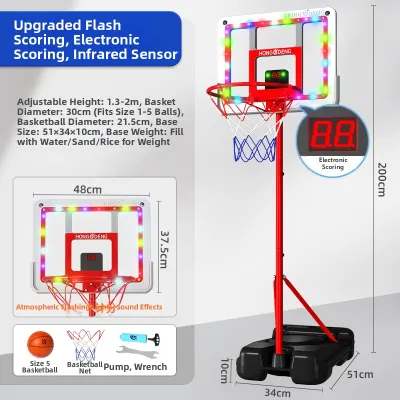
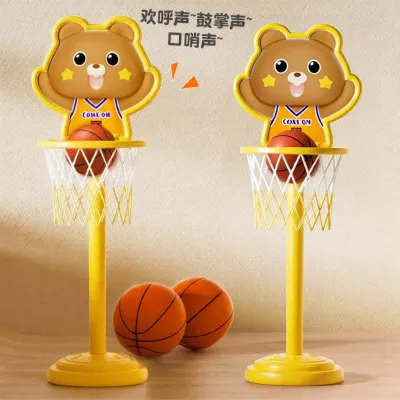
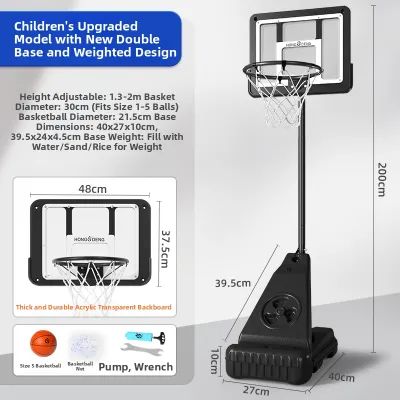
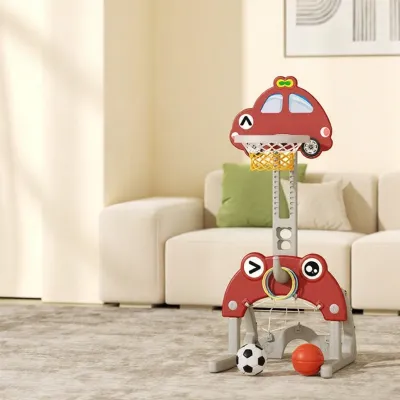
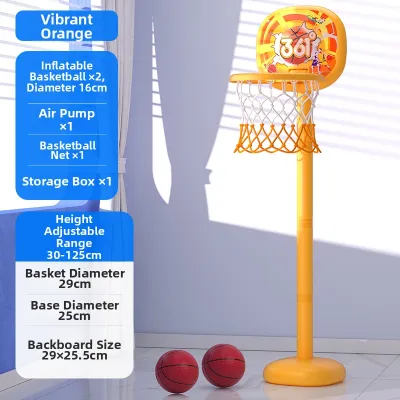
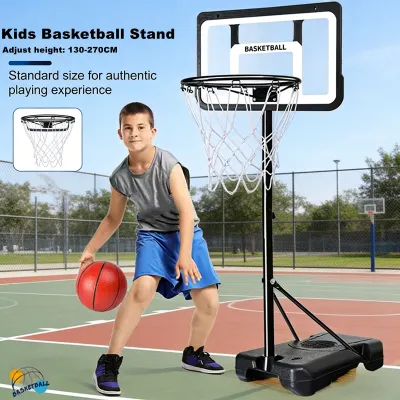
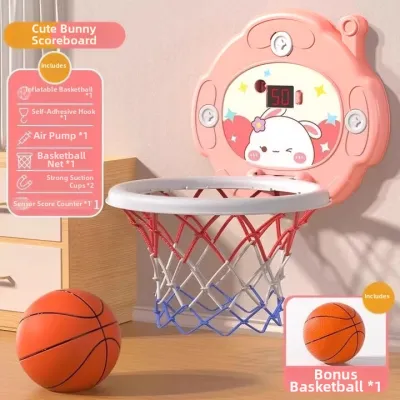
Prices are valid at publication and may change. Please refer to the product page for the latest price.
For children aged 5 to 7 who are just beginning to explore the sport, the recommended rim height is 6 to 8 feet (1.83 to 2.44 meters). At this stage, the primary goal is to build hand-eye coordination and basic motor skills. A lower rim allows them to use lighter, smaller balls and successfully make baskets without needing to heave the ball with their entire body weight. This immediate feedback is crucial for keeping young children engaged and excited about practicing.
As children transition into the 8 to 10 age bracket, their upper body strength and coordination improve significantly. For this group, the hoop height should be raised to 8 to 9 feet (2.44 to 2.74 meters). This height introduces a realistic shooting arc, requiring players to start utilizing their legs for upward momentum rather than relying solely on their arms. It serves as an excellent middle ground before they transition to competitive youth leagues.
By the time players reach ages 11 and 12, they are ready to transition to 9 feet (2.74 meters) or the official regulation height of 10 feet (3.05 meters). Many youth leagues for this age group play on standard 10-foot rims, so practicing at this height prepares them for school or club competitions. However, if a child is still struggling to reach the net without breaking their form, keeping the rim at 9 or 9.5 feet for a little longer is highly beneficial.
When managing the transition phase, avoid making sudden, drastic height increases. Instead, raise the hoop incrementally by about 6 inches (approximately 15 centimeters) at a time. This gradual progression allows your child’s muscle memory to adapt smoothly. If you notice their shooting percentage drops dramatically or their form degrades after an adjustment, do not hesitate to lower the rim back down for a few weeks to rebuild their confidence and strength.
Signs the Hoop Height Is Wrong for Your Child
As a parent, you do not need to be a professional coach to determine if your home hoop is set to an inappropriate height. By observing your child during casual play, you can spot clear physical cues that indicate the rim is either too high or too low. Addressing these signs early prevents long-term shooting mechanics issues and reduces the risk of joint strain.

If the basketball hoop is set too high, your child will display several distinct compensation patterns. The most common sign is the “chest push” or “heave,” where the child holds the ball with both hands at chest or chin level and flings it upward using their entire upper body. You may also notice them leaning backward significantly to gain extra leverage, or throwing the ball with a completely flat, line-drive trajectory because they cannot generate enough upward force. If your child shows visible frustration, complains of sore shoulders, or loses interest in playing after just a few minutes, the rim is likely too high.
Conversely, a hoop that is set too low presents its own set of developmental drawbacks. When the rim is too low, children do not have to work to generate an arc on their shot. They may shoot with completely flat trajectories or casually drop the ball into the net without bending their knees or engaging their legs. If your child is constantly dunking, hanging on the rim, or scoring with ease without ever practicing a proper jump shot, the setup is no longer challenging them. A lack of physical challenge can cause older children to lose interest in the sport as the game becomes too easy.
To find the ideal “sweet spot,” observe your child’s ability to execute basic shooting mechanics, often referred to as the B.E.E.F. method. This stands for:
- Balance: Feet shoulder-width apart, knees slightly bent.
- Eyes: Focused on the target (the rim or backboard).
- Elbow: Aligned under the ball in an "L" shape.
- Follow-through: Wrist flicked forward, resembling reaching into a high jar.
The perfect hoop height is one that challenges your child to use their legs for power while allowing them to maintain all four elements of the B.E.E.F. method consistently.
Choosing the Right Basketball Hoop for Kids: Rim and Backboard Dimensions
Finding the right height is only one part of the equation; you must also ensure the physical components of the hoop match your child’s physical size. An oversized backboard or an adult-sized heavy rim can make a portable system top-heavy and difficult to adjust, while an undersized rim can make scoring frustratingly difficult for beginners.
While standard competitive rims have an inner diameter of 18 inches (45.7 centimeters), younger children benefit greatly from modified sizes. For toddlers up to age 7, look for specialized youth hoops featuring wider, oversized rims ranging from 12 to 15 inches, designed to be used with lightweight plastic or foam balls. Once your child reaches age 8, they should transition to a standard 18-inch steel rim to ensure they get used to the exact target size used in organized school and community leagues.
Backboard size and material also play a significant role in both playability and safety. For younger children and tight residential spaces—such as compact car porches or private condominium patios in Singapore—a backboard width of 30 to 40 inches (76 to 102 centimeters) is highly practical. It provides a sufficient surface for basic bank shots without dominating the driveway. For older children aged 9 and above who are practicing advanced layups and angled bank shots, a larger backboard of 44 to 54 inches (112 to 137 centimeters) is recommended.
When choosing materials for home use, polycarbonate and acrylic are the most common options. Polycarbonate is virtually indestructible and highly impact-resistant, making it excellent for active families and outdoor setups exposed to Singapore’s intense tropical sun. Acrylic offers a cleaner, more professional rebound and look, though it is more prone to scratching over time. Regardless of the material, always check the manufacturer’s product specifications for weight limits, age recommendations, and wind-resistance ratings before making a final purchase.
Safety Checks and Setup Tips for Home Courts
Setting up a safe playing area is paramount to preventing accidents, especially when kids are playing dynamically. Because basketball involves running, jumping, and occasional collisions, the physical stability of the hoop and the layout of the playing area must be checked regularly.
For portable basketball systems, base stability is the single most critical safety factor. Most portable hoops feature a hollow plastic base that must be filled with either water or sand to act as a counterweight. In Singapore’s hot, humid climate, filling the base with water is convenient, but it carries risks; intense UV exposure can cause the plastic base to crack over time, leading to slow leaks that compromise stability. Sand is significantly heavier and provides superior stability, ensuring the hoop will not tip over during high winds or heavy tropical downpours. Always fill the base strictly according to the manufacturer’s instructions, and never allow children to hang, climb, or swing on the rim.
The placement of the hoop also requires careful planning. Ensure the system is set up on a completely flat, level, and non-slip surface, away from high-traffic pedestrian paths or vehicle parking spaces. Maintain a clear safety zone of at least 1.5 to 2 meters around the base and beneath the backboard. This space should be entirely free of obstacles like low-hanging tree branches, awning edges, garden pots, or concrete steps, reducing the risk of injury if a player runs out of bounds or falls after a layup.
Finally, establish a routine maintenance schedule to combat the effects of Singapore’s humid weather, which can accelerate the degradation of outdoor sports equipment. Periodically inspect all metal poles, brackets, and bolts for signs of rust, and tighten any hardware that has vibrated loose during play. Check the nylon net for fraying and inspect plastic components for UV-related brittleness. If you discover deep structural rust, cracked plastic joints, or a leaking base, stop using the equipment immediately and consult the manufacturer’s manual or a professional technician to replace the compromised parts.
Frequently Asked Questions (FAQ)
Is an adjustable basketball hoop worth the investment?
An adjustable basketball hoop is highly recommended for families with growing children, as it eliminates the need to purchase new equipment every few years. While fixed-height hoops are suitable for toddlers, children quickly outgrow them. Adjustable systems typically scale from 7.5 feet to the standard 10 feet, allowing the hoop to grow alongside your child’s physical height and skill level over a span of five to ten years. Entry-level adjustable models generally range from S$200 to S$400, while premium, heavy-duty systems featuring easy-to-use crank or pneumatic lift mechanisms can range from S$600 to over S$1,200.
What size basketball should my child use?
To prevent wrist strain and promote proper shooting mechanics, your child’s basketball must be scaled to their hand size and physical strength. Using a ball that is too heavy forces children to throw rather than shoot. Use the following standard youth sizing guidelines:
- Size 3 (22 inches / 56 cm): Best for children aged 4 to 8.
- Size 5 (27.5 inches / 70 cm): Standard youth size, ideal for ages 9 to 11.
- Size 6 (28.5 inches / 72 cm): Suitable for players aged 12 to 14, and the official size for women's competitive play.
- Size 7 (29.5 inches / 75 cm): Standard official size for males aged 15 and older.
Community discussion
Share your experience or ask a question. Comments are reviewed before publication.