
When working out in a typical Singapore HDB flat, maximizing floor space is always the primary concern. The best type of ab roller for a small HDB flat is a standard single-wheel or dual-wheel ab roller equipped with detachable handles. These models offer the smallest physical storage footprint, allowing you to easily disassemble and tuck them away in shallow drawers, under-bed storage bins, or shoe cabinets. While larger options like rebound rollers or elbow-support boards offer mechanical assistance, their bulky frames and fixed handles present significant storage challenges in compact bedrooms or living areas.
Choosing the right fitness equipment for high-rise living requires balancing your training goals with your home’s physical layout. In a multi-purpose room where space is shared with coffee tables, sofas, and TV consoles, a compact and quiet model ensures you can maintain your fitness routine without turning your living area into a permanent, cluttered gym. Always check the manufacturer’s instructions for weight limits and safety guidelines before beginning any new exercise routine.
Assessing Your HDB Space: Rolling Distance vs. Storage Footprint
Before purchasing any home gym equipment, it is essential to understand the difference between where a product is stored and where it is operated. For an ab roller, this means distinguishing between its static storage footprint and its dynamic operational footprint. While the device itself might only be the size of a small shoe box when resting, using it safely requires a clear, linear path that accommodates your entire body length at full extension.
Products mentioned in this guide
![⭐[Sg Seller]Fitness Giant AB Wheel ABS Roller - Abdominal Wheel Workout ABS Trainer - Core Trainers - With Free Knee Pad](https://img.lazcdn.com/g/p/143f1a9324fd3148ad91fa07052c902e.png_400x400q80.png_.webp)
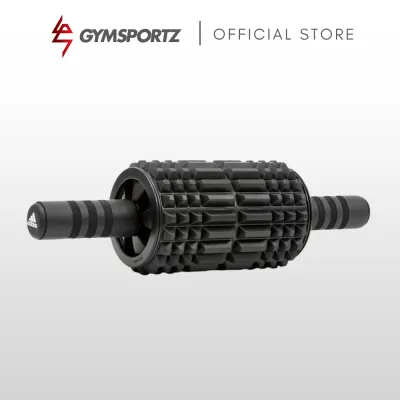
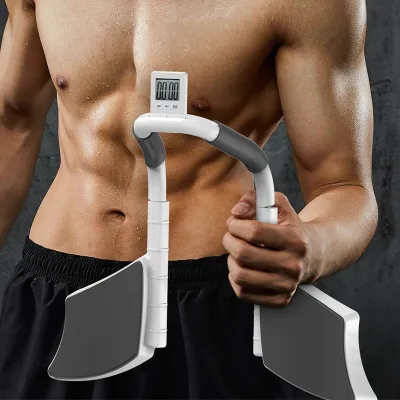
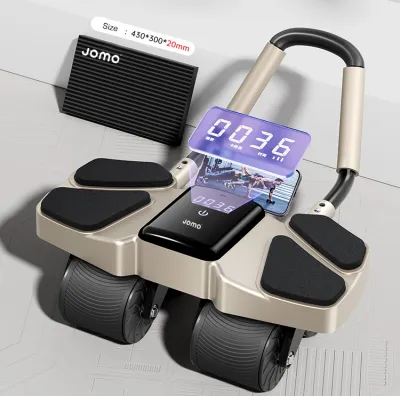
Prices are valid at publication and may change. Please refer to the product page for the latest price.
A standard rollout exercise requires a straight, unobstructed path of approximately 1.5 to 2 meters. This distance starts from your knees and extends to where your hands reach when your body is fully parallel to the floor. In a typical HDB flat, finding a continuous two-meter strip of clear floor space can be surprisingly challenging. You must navigate around fixed or heavy furniture, such as L-shaped sofas, low-slung coffee tables, dining sets, and bed frames.
Failing to measure this operational path beforehand can lead to interrupted workouts or painful accidents. If your rolling path is too short, you risk bumping your head or the wheel into walls, TV consoles, or cabinets. Conversely, if you try to squeeze the workout into an angled or cramped corner, you may compromise your form, leading to lower back strain.
To avoid these issues, always measure your available straight-line floor space before looking at product listings. Identify a dedicated zone in your living room or master bedroom that can be temporarily cleared of lightweight furniture. Knowing your exact spatial boundaries helps you choose a roller type that fits your real-world environment rather than an idealized gym setting.
Which Ab Roller Types Fit Best in Small Spaces?
Ab rollers come in several distinct designs, each offering a different balance of stability, assistance, and physical size. Understanding how these designs impact both your storage options and your rolling path is key to making a practical choice for your flat.

Standard and Dual-Wheel Rollers (Most Compact)
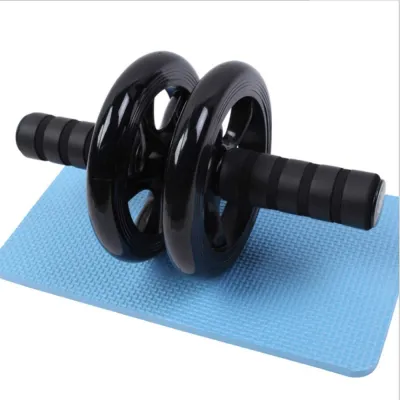
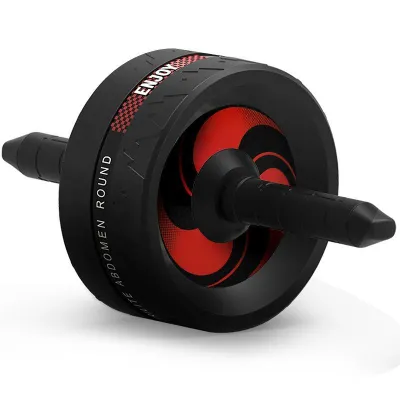
Traditional single-wheel and dual-wheel ab rollers represent the most space-efficient design available. These devices consist of a central wheel (or two closely spaced wheels) mounted on a simple steel or plastic axle that serves as the handles. Because they lack internal springs, gears, or wide armrests, their static footprint is incredibly small, often measuring less than 30 centimeters in width and 20 centimeters in diameter.
One of the greatest advantages of standard rollers is their modularity. Many high-quality models feature quick-release buttons or screw-in handles that allow you to disassemble the unit in seconds. Once the handles are removed, the flat wheel and the slim axle can be slid into a drawer, placed on a closet shelf, or packed into a small storage box. This makes them the ultimate choice for residents of cozy studio apartments or highly furnished HDB bedrooms.
However, this compact design comes with a functional trade-off. Standard rollers offer no mechanical assistance or return support, meaning your core muscles must do 100% of the work to pull your body back to the starting position. Because they require a high level of core stability, beginners may find it difficult to complete a full rollout. If you choose this type, you will need to rely on physical boundaries, like rolling toward a wall, to safely control your distance while building strength.
Rebound and Spring-Loaded Rollers (Moderate Footprint)
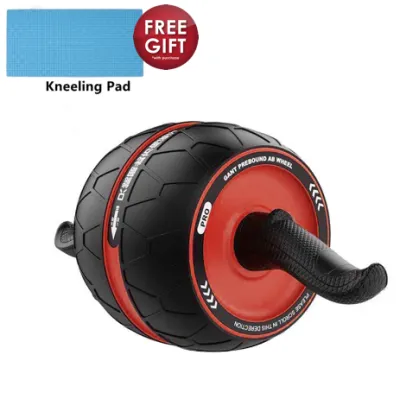
Rebound ab rollers feature an internal carbon steel spring mechanism designed to provide resistance as you roll out and assistance as you return. This mechanical assist helps users maintain proper form and reduces the risk of lower back injury, making it a popular choice for beginners or those recovering from minor injuries.
The presence of this internal spring mechanism significantly increases the physical bulk of the device. The central wheel unit is much wider and heavier than a standard roller, often resembling a small barrel. Additionally, because the internal spring is anchored to the axle, these models rarely feature detachable handles. You must store the device as a single, wide, and heavy unit that cannot be easily broken down.
In terms of operational space, rebound rollers require a consistent, uninterrupted rolling distance to function correctly. The internal spring needs to be fully wound during the forward phase to provide the necessary return assistance. If your HDB room is so tight that you can only perform partial rollouts, the spring may not engage properly, rendering the rebound feature useless. This makes them better suited for slightly larger living rooms where you have a guaranteed, clear two-meter path.
Elbow-Support Rollers and Ab Boards (Largest Footprint)
Elbow-support ab rollers and specialized ab boards represent the largest and most cumbersome category of core training equipment. Elbow-support models feature wide, padded armrests and ergonomic handles designed to shift the load away from your wrists and shoulders directly onto your core. While this design offers excellent comfort and stability, it requires a very wide lateral footprint.
These devices often feature dual or triple wide wheels, large integrated knee pads, and fixed, non-collapsible frames. They cannot be easily disassembled or tucked away in standard household storage. Unless you have a dedicated home gym room or a large, unused closet space, storing an elbow-support roller in a typical HDB flat can quickly lead to unwanted clutter.
Furthermore, these models demand significant lateral clearance during use. The wide armrests and stabilizing bars mean you cannot squeeze your workout into narrow corridors or tight spaces between your bed and wardrobe. For multi-purpose living spaces where furniture is tightly arranged, these bulky boards are highly impractical and are generally best avoided in favor of more streamlined alternatives.
Crucial Features for HDB Apartment Workouts
When shopping for an ab roller in Singapore, you need to look beyond basic fitness specifications. High-density living requires equipment that respects your home’s interior finishes and your neighbors’ right to peace and quiet.
Detachable Handles: Prioritize models that feature tool-free disassembly. Look for handles that secure with a spring-loaded snap button or a robust screw thread. Being able to remove the handles in under ten seconds transforms a wide, awkward piece of equipment into a flat, easily stackable disk that fits into any standard drawer or cabinet.
Wheel Width and Tread: The material and design of the roller’s outer wheel are critical for preserving your flooring and maintaining neighborly harmony. Avoid cheap, hard plastic wheels, which can easily scratch vinyl planks, scuff polished ceramic tiles, or dent delicate parquet flooring. Instead, select rollers wrapped in thick, non-marking thermoplastic rubber (TPR) or polyurethane (PU). These rubberized treads roll smoothly, absorb vibrations, and prevent high-frequency rumbling noises from transmitting through the concrete slab to the flat downstairs.
Knee Pad Inclusion and Design: Most ab rollers come packaged with a small foam knee pad to protect your joints from hard floors. However, these pads vary wildly in quality and storage convenience. Look for a high-density NBR (nitrile butadiene rubber) foam pad that is at least 10 to 15 millimeters thick. Ensure the pad is flexible enough to be rolled up or folded flat so it can be stored alongside the roller without taking up extra cabinet space.
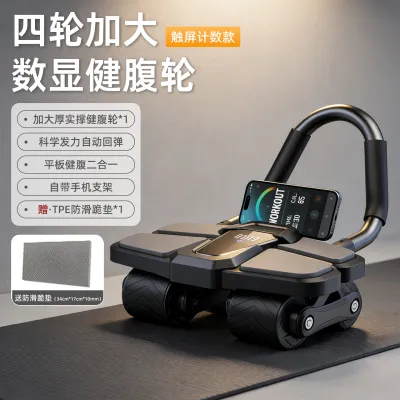
Built-in Timers and Displays: Many modern fitness devices feature digital screens, phone mounts, or built-in timers. While these features can be convenient, they often add unnecessary bulk, weight, and complexity to the roller’s frame. For small-space living, prioritize structural simplicity and high-quality materials over digital add-ons that require battery replacements and make the device harder to store.
How to Measure and Set Up Your Rolling Zone
Setting up a safe and effective workout zone in a compact room requires careful preparation. Taking a few minutes to organize your space before you begin training prevents damage to both your home and your body.
Measuring the Path: To determine your personal rolling path, kneel on your exercise mat and perform a slow, controlled rollout to your maximum comfortable extension. Mark the point where the wheel stops, and add a safety buffer of at least 20 to 30 centimeters. This buffer zone ensures that if you lose your grip or over-extend, your head, hands, or the roller itself will not crash into a wall, glass door, or sharp furniture corner.
Floor Protection and Noise Reduction: Never use an ab roller directly on bare HDB flooring, even if the wheel has a rubber tread. Always lay down a high-density yoga mat or interlocking foam tiles. This extra layer provides essential cushioning for your knees, prevents the roller from slipping on slick ceramic tiles, and acts as an acoustic barrier to dampen any rolling noise.
Common Spatial Mistakes: A frequent mistake in small rooms is starting the rollout too close to a wall, which artificially cuts your movement short and prevents you from achieving a full core contraction. Another hazard is ignoring the lateral swing of your elbows and shoulders; ensure you have at least 50 centimeters of clear space on either side of your body to maintain balance without brushing against curtains, bedsheets, or low shelves.
Using Physical Buffers: If you are a beginner or are training in an exceptionally tight space, use a physical stopper to control your movement. Place a heavy cushion, a rolled-up yoga mat, or even the base of a sturdy sofa at your target extension limit. This physical barrier acts as a brake, preventing you from over-extending your lower back and protecting you from face-planting if your core muscles fatigue.
Practical Storage Solutions for Compact Homes
Keeping your HDB flat tidy means finding smart, out-of-sight storage solutions for your fitness gear. Because ab rollers are relatively small, they can easily disappear into existing storage setups with a little planning.
Under-Furniture Storage: The space beneath your sofa or bed frame is an ideal storage zone for compact exercise equipment. If your ab roller has detachable handles, disassemble it and place the parts inside a shallow, dust-proof plastic bin. This bin can slide effortlessly under your living room couch or bed, keeping the equipment clean and completely out of sight when not in use.
Vertical and Door Storage: Take advantage of vertical wall space to keep your floors clear. You can hang a standard ab roller by its wheel or handle using a heavy-duty adhesive utility hook mounted inside a utility closet or on the side of a wardrobe. Alternatively, an over-the-door fabric organizer with deep pockets can easily hold a disassembled roller, its knee pad, and any complementary resistance bands.
Tucking Away Accessories: Do not let your knee pad float around the living room floor. Foldable or flexible knee pads can be tucked vertically into the narrow gaps between your wardrobe and the wall, behind a bedroom door, or alongside your washing machine in the service yard. Keeping these items organized together ensures you can set up your workout zone in under a minute.
Frequently Asked Questions (FAQ)
Will an ab roller damage HDB vinyl or tile flooring?
Yes, direct contact with hard plastic wheels can scratch, scuff, or dent vinyl planks and ceramic tiles over time, especially under the pressure of your body weight. To protect your flooring and minimize noise transmission to your downstairs neighbors, always use a thick, high-density exercise mat as a protective barrier. Additionally, look for ab rollers equipped with soft, non-marking rubberized treads designed to roll quietly and smoothly on indoor surfaces.
Do I need a rebound ab roller if I am a beginner with limited space?
While rebound rollers provide helpful mechanical assistance during the return phase, they are significantly bulkier and harder to store in tight spaces. If space is your primary constraint, a standard dual-wheel roller is a more practical option. Beginners can easily compensate for the lack of spring assistance by rolling toward a physical barrier, such as a wall or a heavy cushion, to safely limit their rollout distance while gradually building core strength.
Community discussion
Share your experience or ask a question. Comments are reviewed before publication.