
Selecting a balance board for rehabilitation is fundamentally different from buying one for general fitness, core training, or board sports. When recovering from an ankle sprain, knee surgery, or a balance-disrupting illness, your primary need is controlled, predictable movement rather than extreme instability. In Singapore’s warm, humid climate, specific material choices and safety features become critical to prevent slips and ensure long-term durability. This guide explains how to select the safest balance board for your recovery stage, what features to prioritize, and how to execute your exercises safely at home.
How to Choose the Right Balance Board for Rehabilitation
Choosing a balance board for physical recovery requires a careful evaluation of how the device moves and how it interacts with your body. Unlike fitness boards designed to challenge your core to its absolute limits, a rehabilitation board must restrict movement to a safe, predictable arc. This controlled range of motion (ROM) prevents sudden, uncontrolled movements that could re-injure healing ligaments, tendons, or joint capsules. For example, during early-stage ankle rehab, limiting lateral movement while allowing forward-and-backward tilting helps restore mobility without placing undue stress on healing lateral ligaments.
Material quality is another critical factor, particularly under Singapore’s local climate conditions. High indoor humidity levels can make smooth wooden surfaces exceptionally slick, especially when training barefoot or wearing grip socks. To mitigate this risk, look for boards featuring high-traction surfaces such as natural cork or heavily textured rubber. Cork is naturally antimicrobial, moisture-resistant, and maintains a reliable grip even when exposed to light perspiration. Textured rubber provides a firm, tactile surface that prevents foot slippage during slow, deliberate movements. Avoid cheap, untextured plastic or smooth varnished wood, as these materials significantly increase the risk of accidental slips.
Products mentioned in this guide
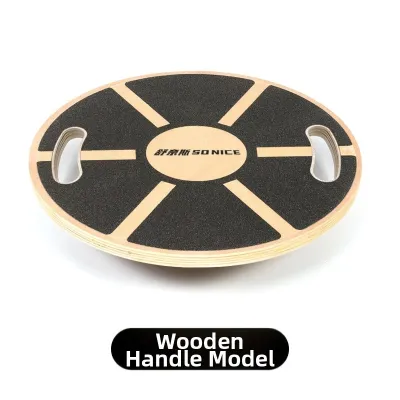
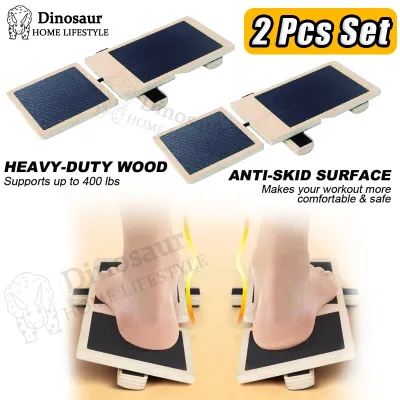
![🇸🇬 [READY STOCK] Wooden Wobble Balance BoardCore Strength Exercise Fitness Accessory Workout Stability Equipment Standing Desk Use](https://img.lazcdn.com/g/p/67819e1d16b1b0f8849b0c1cbd5480ca.jpg_400x400q80.jpg_.webp)
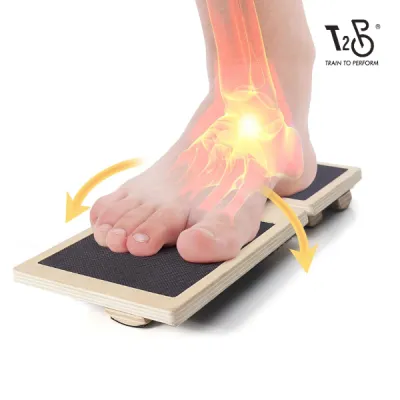
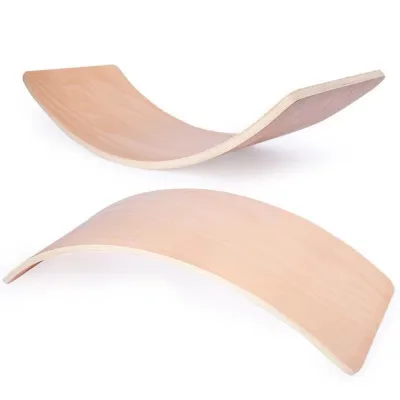
![[SG] Wooden Balance Board for Kids Wobble Balance Board Kids Yoga Board Body Training natural Wood Curvy Board Kids](https://img.lazcdn.com/g/p/214791cf0f8d878392f0ca315502429a.jpg_400x400q80.jpg_.webp)
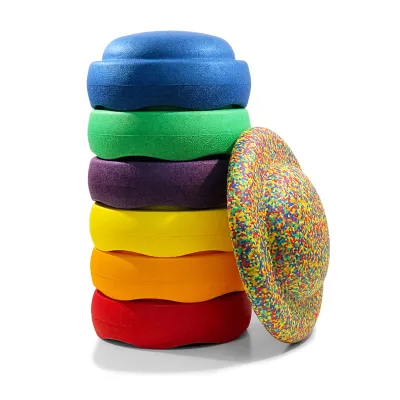
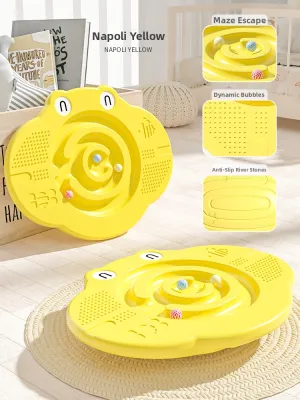
Prices are valid at publication and may change. Please refer to the product page for the latest price.
Weight capacity and board size are vital specifications that directly affect your safety. Always verify the manufacturer’s specified maximum load limit before purchasing. A board used for rehabilitation must feel completely stable and rigid under your full body weight; any flexing or warping of the deck can compromise your balance and alter joint alignment. The board’s surface area should be wide enough to allow a natural, hip-width stance without your feet hanging over the edges. A wider deck provides a more stable base of support, which is essential for rebuilding confidence during the initial phases of physical therapy.
Finally, prioritize boards that offer predictable, progressive instability. The ideal recovery tool allows you to start with minimal, single-axis movement and gradually increase the challenge as your joints regain strength and proprioception. Avoid boards that offer only one high-difficulty setting, as they may remain unusable during the early phases of your recovery. By choosing a board that adapts to your progress, you ensure a safer, more effective rehabilitation process.
Which Balance Board Type Matches Your Recovery Stage?
Rehabilitation is a progressive journey that moves from basic joint mobilization to advanced dynamic stability. The mechanical design of your balance board dictates the axis of movement and the level of difficulty you will face. Matching the board’s mechanics to your current stage of physical therapy is essential for preventing secondary injuries. Always consult your physiotherapist or sports physician before transitioning to a more challenging board type, as premature progression can overload healing tissues.

Rocker Boards for Early-Stage Rehab
Rocker boards are designed with a curved base that restricts movement to a single axis, allowing the board to tilt only forward-and-backward or side-to-side. This predictable, bi-directional motion makes them the safest choice for early-stage rehabilitation, such as recovering from acute ankle sprains, Achilles tendon repairs, or reconstructive knee surgeries.
By eliminating lateral instability, rocker boards allow you to rebuild basic joint mobility, flex your calf and shin muscles, and regain confidence without the risk of multi-directional falls. They provide a highly controlled environment to practice early weight-bearing exercises, helping to reduce swelling and improve localized circulation. You can easily adjust the difficulty by changing your stance—positioning your feet wider apart increases stability, while bringing them closer together increases the tilt challenge.
Wobble Boards for Intermediate Recovery
Wobble boards feature a hemispherical dome or a central fulcrum on the bottom, enabling a full 360-degree range of motion. This multi-directional instability is crucial for intermediate-stage recovery, where the focus shifts from basic mobility to restoring proprioception—your brain’s ability to sense joint position and movement.
Working on a wobble board forces the deep stabilizing muscles around your ankles, knees, and hips to fire continuously to maintain equilibrium. This stage of training helps rebuild the neurological pathways damaged during an injury, preparing your lower limbs for the unpredictable movements of daily life. Exercises on a wobble board can range from simple standing balance to controlled tilting patterns, such as tracing the edge of the board along the floor in a circular motion.
Roller Boards for Advanced Stability Training
Roller boards consist of a flat deck resting on top of a completely detached cylindrical roller. This design offers the highest level of instability and the least predictability, as the board can slide laterally while simultaneously tilting.
Because of the high risk of rapid, uncoordinated falls, roller boards are strictly reserved for advanced, late-stage rehabilitation. They are typically used by athletes preparing to return to dynamic, high-impact sports like football, basketball, or trail running. Do not attempt to use a roller board during early or intermediate joint recovery, as the uncontrolled lateral movement can easily overload healing ligaments and cause a severe setback.
Essential Features to Look for in a Rehab Balance Board
When selecting a balance board for home-based physical therapy, several physical design elements directly impact both safety and therapeutic efficacy. Investing in a board with the right features ensures you can progress safely without needing to purchase multiple devices.
Adjustable Tilt Angles and Interchangeable Bases Look for boards that feature adjustable inclination angles or come with interchangeable bottom pieces. Some wobble boards allow you to swap out the central dome or adjust its height using spacers. This feature lets you start with a gentle 10-degree tilt and progress to 15 or 20 degrees as your stability improves. This adaptability ensures a single purchase can support you throughout your entire recovery timeline, from early mobilization to advanced conditioning.
Built-In Safety Stops and Edge Bumpers For rocker and roller boards, built-in safety stops are non-negotiable. These physical barriers on the underside of the deck prevent the board from sliding completely off its roller or tilting past a safe angle. Edge bumpers made of shock-absorbing rubber are also highly beneficial; they prevent the board from bottoming out harshly against the floor, protecting both your joints from sudden jars and your flooring from scratches.
Wide, Textured Footbed A spacious deck is essential for maintaining a natural, comfortable stance. The surface should be covered in a high-friction material that supports barefoot use or specialized grip socks. Avoid cheap plastic surfaces with shallow, molded patterns, as these can easily become slippery under humid conditions. High-quality boards often feature a complete layer of grip tape, textured rubber, or natural cork across the entire standing surface.
Verified Specifications and Endorsements Always verify the maximum load capacity on the product label to ensure it can safely support your weight plus any additional resistance (like dumbbells) you might use later in your rehab. If a product claims to be “physiotherapist-approved” or “medical-grade,” check the manufacturer’s documentation for legitimate physical therapy endorsements or clinical certifications. When shopping on local online marketplaces, read user reviews to verify that the board does not flex or creak under load.
Safety Setup and Usage Rules for Rehab Exercises
Performing balance exercises at home requires strict adherence to safety protocols to avoid slips, falls, and secondary injuries that could set your recovery back by months. Rebuilding joint stability is a slow process that cannot be rushed.
Environmental Setup Always place your balance board on a completely flat, stable, and non-slip surface. In Singapore, many homes feature polished ceramic tiles, marble, or smooth vinyl flooring, which can allow the base of a balance board to slide out from under you. To prevent this, place a high-grip rubber exercise mat under your board. Clear a perimeter of at least 1.5 meters around your workout area, removing all furniture, sharp edges, and trip hazards. Position your board directly next to a sturdy, non-moving structure—such as a heavy dining table, a secure countertop, or a solid wall—so you can instantly grab hold of it if you lose your balance.
Footwear Requirements For rehabilitation exercises, it is generally recommended to train barefoot or wear specialized grip socks with silicone traction pads on the soles. Training barefoot allows the small muscles of your feet to engage fully and provides direct sensory feedback to your nervous system, which is crucial for rebuilding balance. Strictly avoid wearing standard, smooth cotton or synthetic socks, as they offer virtually no traction on wooden or plastic boards and significantly increase your risk of slipping.
The Progression Rule Always begin your balance training with both feet firmly on the board while holding onto a stable support with both hands. As your confidence and stability improve, gradually reduce your reliance on the support—moving from two hands to one hand, then to a single finger, and finally to unsupported standing. Only progress to single-leg exercises or dynamic movements (such as squats on the board) when explicitly cleared to do so by your physical therapist. Never attempt advanced exercises if you cannot maintain a stable, quiet stance on two feet for at least 30 seconds.
Clear Stop Conditions Stop exercising immediately if you experience sharp or sudden pain in the affected joint, localized swelling, or muscle fatigue that causes your form to deteriorate. Fatigue compromises your neuromuscular control, making a fall or a joint-twisting incident much more likely. Remember that a balance board is a supplementary tool designed to support your recovery; it is not a replacement for professional clinical guidance and personalized physical therapy.
Frequently Asked Questions (FAQ)
Can I use a regular fitness balance board for physical therapy?
While it is technically possible, using a standard fitness balance board for early-stage rehabilitation is generally not recommended. Fitness-focused boards are engineered to maximize instability and challenge core strength, often featuring highly unpredictable, multi-directional movement profiles. They typically lack safety features like adjustable tilt angles, built-in safety stops, or high-traction surfaces optimized for injured joints. Using a board with an excessive range of motion too early in your recovery can overload healing ligaments and lead to re-injury. For rehabilitation, it is safer to use a board specifically designed for physical therapy that offers a controlled, progressive range of motion.
How long should I use a balance board per day during recovery?
During rehabilitation, short and frequent training sessions are far more effective and safer than long, exhausting workouts. A typical recommendation is to perform balance exercises for 2 to 5 minutes per session, repeated 2 to 3 times throughout the day. This approach stimulates your nervous system and rebuilds proprioception without inducing deep muscle fatigue, which can compromise joint stability. The exact duration, frequency, and specific exercises must be prescribed by your physiotherapist, who will tailor the routine to your specific injury, pain levels, and recovery progress.
Are balance boards safe for elderly users recovering from falls?
Balance boards can be highly beneficial for older adults working to rebuild stability and prevent future falls, but they must be used with extreme caution. For elderly users, standard wobble or roller boards pose too high a fall risk. Instead, look for specialized rehabilitation boards that feature built-in handrails, extremely low tilt angles, or adjustable bases that limit movement to a very gentle sway. Elderly individuals should always perform these exercises under the direct supervision of a healthcare professional or caregiver, keeping a sturdy chair or wall nearby. In many cases, starting with seated balance exercises on a rocker board is the safest way to begin.
Community discussion
Share your experience or ask a question. Comments are reviewed before publication.