
To carry multiple basketballs to training efficiently, the best basketball net bag is one that matches your specific carrying capacity, transport method, and training environment. Whether you are a coach transporting a dozen balls for team practice or an individual player commuting via public transit with a few balls, the right bag prevents shoulder fatigue and protects your gear.
A standard mesh net bag offers excellent ventilation and lightweight convenience, but carrying multiple inflated basketballs introduces significant physical strain and mechanical wear. To make an informed choice, you must evaluate the bag’s structural design, material durability, and ergonomic features against your daily commute and training volume.
How to Choose a Basketball Net Bag for Carrying Multiple Balls
Selecting the right basketball net bag requires a clear understanding of your training logistics. Carrying several inflated basketballs is vastly different from carrying flat gear; basketballs are bulky, non-compressible spheres that shift weight as you move. To find a bag that remains comfortable and durable over time, you must evaluate three core pillars: capacity planning, material construction, and carrying mechanisms.
Products mentioned in this guide
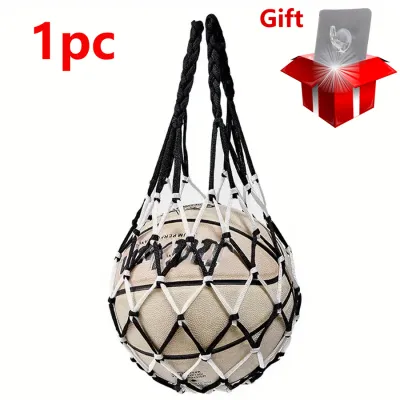
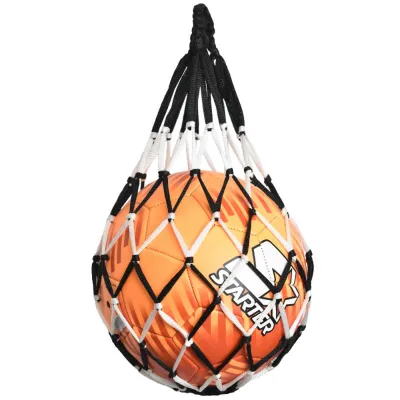
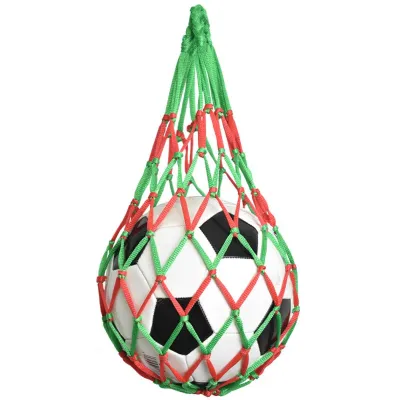
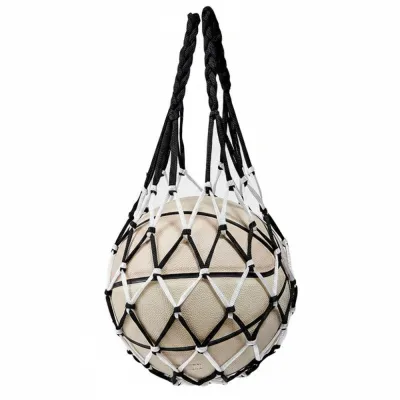
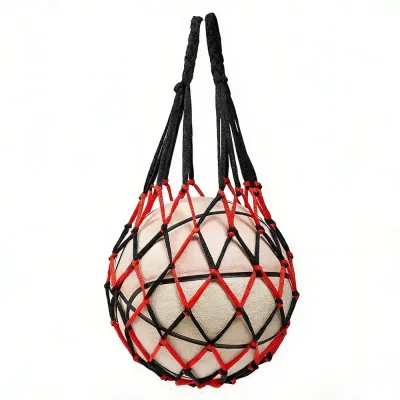
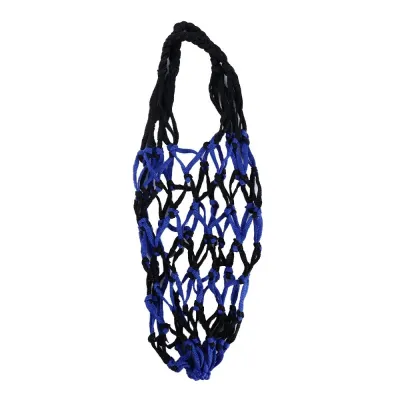
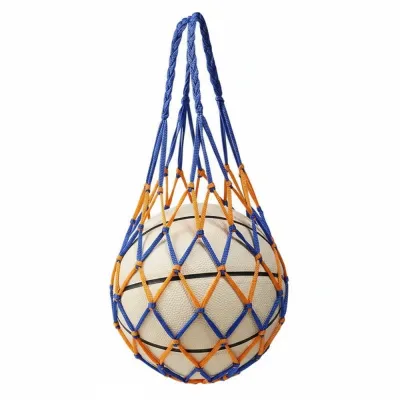
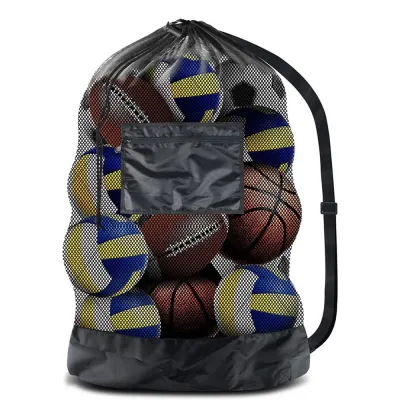
Prices are valid at publication and may change. Please refer to the product page for the latest price.
Capacity Planning and Physical Strain
Basketballs are physically demanding to transport in bulk. A standard size-7 basketball has a diameter of approximately 24 centimeters and weighs around 600 to 650 grams. When you pack multiple balls together, they create a wide, awkward load that shifts your center of gravity. For individual players or trainers running small-group drills, a 3-ball bag is typically sufficient and manageable for walking. If you are managing a school team or club training session, you will likely require a 6-ball or 12-ball capacity bag. Be aware that carrying 12 fully inflated basketballs adds over 7 kilograms of dead weight to your back or shoulder. Matching the bag’s capacity to your physical ability and travel distance is essential to prevent acute lower back or shoulder strain during your commute.
Material Durability and Weather Resistance
The longevity of your basketball net bag depends heavily on its fiber composition. Standard nylon mesh is highly flexible and lightweight, making it easy to fold and store when empty. However, basic nylon can stretch, sag, or snag when dragged across rough concrete courts. Polyester mesh offers superior resistance to ultraviolet (UV) degradation and moisture absorption, which is particularly beneficial in hot, humid climates. If you frequently play on outdoor courts, look for canvas-reinforced nets. These hybrid bags feature a heavy-duty woven fabric or tarpaulin base that protects the bottom from abrasion when placed on rough ground, while retaining lightweight mesh on the upper portion for ventilation.
Carrying Mechanisms and Commuting Comfort
How you transport your gear determines the best strap configuration. A single shoulder strap is highly convenient for quick transfers from a car trunk directly to the court, but it concentrates the entire load on one side of your body, which can cause muscle imbalances during longer walks. Dual backpack straps distribute weight evenly across both shoulders, keeping the load stable and centered. This dual-strap system is highly recommended if you regularly walk, cycle, or navigate public transit networks, such as Singapore’s MRT and bus systems, where keeping your hands free and your profile compact is essential. Additionally, reinforced grab handles provide a secondary lifting point, allowing you to load heavy bags into vehicles without putting sudden, damaging tension on the shoulder straps.
Best Basketball Net Bag Designs for Different Training Scenarios
Selecting the right basketball net bag requires matching the bag’s structural design to the specific environment and scale of your training sessions. Different scenarios demand distinct balances between storage volume, material weight, and carrying comfort.

Choosing an inappropriate design can lead to premature material failure, lost gear, or physical discomfort during your commute. By categorizing net bags by their structural architecture, you can identify the exact style that aligns with your role, whether you are managing a full team’s equipment or commuting alone to a local court.
Heavy-Duty Mesh Bags for Team and Group Transport
Heavy-duty mesh bags designed for team transport prioritize volume and structural reinforcement over individual comfort. These high-capacity carriers are engineered to handle the substantial weight of multiple balls without tearing.
These bags typically feature a wide, circular or rectangular base constructed from reinforced polyester or tarpaulin to prevent the bottom balls from stretching the mesh to its breaking point. They utilize thick, industrial-grade drawstrings threaded through heavy-duty metal or plastic eyelets, ensuring the opening remains securely closed under the outward pressure of up to a dozen inflated balls.
These carriers are best suited for school coaches, club trainers, and community sports organizers who need to transport 6 to 12 fully inflated balls to team practices or group drills. The open-mesh design allows coaches to quickly count the balls at the end of a session to ensure no equipment is left behind on the court.
The primary limitation of team-sized mesh bags is their ergonomics. When loaded with 10 to 12 size-7 basketballs, the total weight can easily exceed 7 kilograms. This concentrated, shifting weight makes these bags highly uncomfortable for long-distance walking or public transit commutes. If you choose this style, it is critical to verify that the shoulder straps feature thick padding and that the load-bearing seams are reinforced with heavy-duty stitching to prevent sudden structural failure.
Backpack-Style Net Bags for Individual Commutes
Backpack-style net bags are engineered for personal mobility, offering hands-free convenience and ergonomic comfort for individual players.
These bags feature dual, adjustable shoulder straps that are often padded and lined with breathable mesh to reduce sweat build-up. Unlike loose, sack-like nets, backpack designs hold the basketballs vertically along your spine, keeping the center of gravity close to your body. Many models also incorporate separate zippered compartments for personal items, such as basketball shoes, water bottles, and keys, keeping your dirty gear isolated from your clean belongings.
This style is ideal for individual players, students, and coaches who carry only 1 to 3 basketballs and commute daily using public transportation, bicycles, or footpaths. The secure, hands-free design makes navigating crowded urban spaces much easier and safer.
The main trade-off with backpack-style net bags is their limited capacity. They cannot accommodate the large volume of equipment required for full-team training sessions. Attempting to force extra balls into a backpack-style bag can stretch the zippers, tear the mesh panels, and cause significant discomfort by forcing the hard spheres against your back.
Reinforced Canvas and Net Combo Bags for Outdoor Durability
Engineered specifically to withstand the abrasive environments of outdoor courts, combo bags feature a hybrid material construction that balances ventilation with rugged protection.
The bottom half and base of the bag are made from heavy-duty canvas, Oxford cloth, or water-resistant tarpaulin, while the upper portion is constructed from breathable mesh. This hybrid design ensures that when the bag is dropped or dragged on rough concrete or asphalt surfaces, the high-friction contact points are protected by puncture-resistant fabric rather than delicate netting.
These bags are highly recommended for outdoor streetball players, park training sessions, and open-air concrete courts where pure mesh bags would quickly fray and tear. They are also excellent for players who train in unpredictable weather, as the solid base protects the balls from mud, puddles, and ground moisture when placed on the sideline.
Because of the dense canvas or tarpaulin materials used in their construction, combo bags are naturally heavier than their pure-mesh counterparts. Additionally, the solid fabric panels can retain heat and moisture if the bag is left sitting in direct sunlight, meaning you must be diligent about airing out the bag after wet training sessions to prevent mold.
Critical Features to Inspect Before Buying a Net Bag
Before purchasing a basketball net bag, performing a detailed physical inspection of its key components can save you from premature gear failure and unnecessary replacement costs. Paying attention to these manufacturing details ensures your bag can handle the daily rigors of training.
Stitching and Stress Points
Examine the areas where the shoulder straps and handles attach to the main body of the bag. Look for specialized bar-tack stitching—closely spaced, zig-zag sewing patterns designed to reinforce high-tension areas—or double-stitched nylon webbing. Standard single-line stitching at these critical intersection points is highly prone to unraveling under the dynamic weight of multiple bouncing basketballs.
Strap Width and Padding
The shoulder straps must be wide enough to distribute the weight of the balls across a larger surface area on your shoulders. Look for straps that are at least 5 to 7 centimeters wide. Avoid thin, unpadded cord straps, which can cut painfully into your skin and restrict circulation when carrying more than two balls over a distance.
Drawstring and Toggle Quality
The closure system is a common failure point on large net bags. Ensure the drawstring cord is thick (at least 5 millimeters in diameter) and made of tightly braided nylon or polyester. The spring-loaded plastic toggle should have a strong internal metal spring that clamps tightly onto the cord, preventing the heavy balls from forcing the bag open during transit.
Ventilation and Drainage
In high-humidity environments like Singapore, moisture management is critical. The mesh panels must feature open, unobstructed holes to allow maximum airflow. This ventilation is essential for drying out sweat-soaked or rain-dampened basketballs, preventing the growth of mold, mildew, and unpleasant odors on both your balls and the bag’s interior fabric.
How to Maintain and Clean Your Basketball Net Bag
Proper maintenance of your basketball net bag not only extends its lifespan but also ensures a hygienic environment for your training gear. Because these bags frequently sit on dusty courts, grassy sidelines, and public transit floors, they require regular care to prevent material degradation.
Cleaning Routines
Before initiating any cleaning process, always check the applied product’s label and the treated item’s manufacturer instructions. If instructions conflict, the item is unidentified, or the cleaning method is not covered, stop and consult the manufacturer or a qualified professional. For general cleaning of standard mesh and canvas bags, hand washing is the safest method to protect the mesh fibers and structural seams. Fill a basin with lukewarm water and a small amount of mild, pH-neutral detergent. Submerge the bag and gently agitate it by hand, paying close attention to the dirty bottom panels. Avoid using harsh bleach, fabric softeners, or abrasive brushes, as these can weaken synthetic fibers and strip away water-resistant coatings. If machine washing is explicitly permitted by the manufacturer, always place the net bag inside a protective mesh laundry bag and use a gentle, cold-water cycle.
Drying Protocols
Never place a synthetic mesh or canvas-reinforced net bag in a tumble dryer. The high heat can warp plastic toggles, shrink canvas panels, and weaken or melt nylon and polyester fibers. Instead, hang the bag to air-dry in a well-ventilated, shaded outdoor area. In highly humid climates like Singapore, ensure the bag is completely dry before storing it away. Hanging it indoors in an air-conditioned room or near a fan can help speed up the drying process, preventing the formation of mildew, mold, and musty odors.
Storage Tips
When your basketball net bag is not in use, store it in a cool, dry place away from direct sunlight. Prolonged exposure to ultraviolet (UV) rays can degrade synthetic mesh, making the fibers brittle and prone to tearing under load. Avoid storing the bag on the floor of a damp garage or in a tightly sealed plastic container where moisture can become trapped. Ensure the bag is kept away from sharp objects, such as keys, metal shoe spikes, or court fences, which can easily snag and tear the open mesh netting.
When to Replace
Regularly inspect your bag for signs of wear that could compromise its safety and structural integrity. Key warning signs include fraying or unraveling threads along the load-bearing shoulder straps, tearing or thinning of the bottom canvas panel, and a failing plastic toggle that no longer holds the drawstring secure. If you notice any structural compromises in the primary seams or straps, replace the bag immediately to prevent a sudden blowout that could spill your basketballs onto busy roads or crowded transit platforms.
Frequently Asked Questions (FAQ)
Can a standard mesh net bag hold heavy outdoor basketballs?
Standard mesh net bags can hold outdoor basketballs, but they will degrade much faster if they lack reinforcement. Outdoor basketballs often feature deeper channels and rougher composite rubber or leather covers designed for concrete grip, which increases friction against the mesh. Furthermore, outdoor balls frequently collect abrasive dirt and grit from the court. To carry outdoor basketballs safely, choose a bag with a reinforced canvas or tarpaulin bottom and thicker, high-denier polyester netting to withstand the increased friction and physical wear.
How do I prevent basketballs from falling out of a net bag?
To secure your basketballs during transit, always load them starting with the heaviest or most inflated balls at the bottom to establish a stable base. Once all the balls are inside, pull the drawstring completely taut until the bag’s opening is fully closed. Slide the spring-loaded plastic toggle flush against the fabric opening to lock it in place. For added security, especially when traveling on public transport, tie a simple slipknot with the excess drawstring cord directly above the toggle to prevent it from slipping under pressure.
Is it better to carry multiple basketballs in a net bag or a dedicated ball backpack?
The choice depends on your carrying volume and transport method. Net bags are highly cost-effective, exceptionally lightweight, and can easily hold 6 to 12 balls, making them the superior choice for coaches and team training. However, they lack structured back support and individual compartments. A dedicated ball backpack offers superior ergonomic comfort, padded back panels, and organized pockets for shoes and personal items, making it far better for individual players commuting with 1 to 2 balls, despite its higher cost and lower overall ball capacity.
Community discussion
Share your experience or ask a question. Comments are reviewed before publication.