
Selecting your first pair of diving fins in Singapore is a critical step that directly shapes your comfort, safety, and confidence in the water. For beginners, the ideal fins are not the ultra-stiff, heavy models favored by commercial or technical divers. Instead, novices require highly flexible, ergonomically designed fins that minimize leg strain while maximizing propulsion. In Singapore’s local market, brands like Mares, Cressi, Scubapro, and Tusa stand out as the top choices for beginners. These brands offer reliable, highly forgiving entry-level options that are widely stocked across local authorized dive shops, ensuring you can try them on for a perfect fit before heading out to local sites like Pulau Hantu or regional weekend destinations.
What Makes a Diving Fin Truly Beginner-Friendly?
Understanding the physical and mechanical design of a diving fin is essential before making a purchase. The primary goal for any beginner is to find a fin that translates leg movement into efficient forward motion without causing muscle fatigue, cramping, or joint strain.
Blade Stiffness and Safety
Blade stiffness is the most critical factor for novices. Stiff fins, often made of heavy rubber or rigid carbon composites, require immense leg strength and precise technique to bend. When an unconditioned diver uses stiff fins, the water resistance causes rapid lactic acid buildup in the calves and ankles. This often leads to severe muscle cramps, which can be dangerous underwater. Beginner-friendly fins utilize soft-to-medium stiffness blades made from flexible technopolymers or thermoplastic rubber. These materials bend easily during the kick cycle, providing gentle, progressive resistance that is easy on the joints.
Products mentioned in this guide
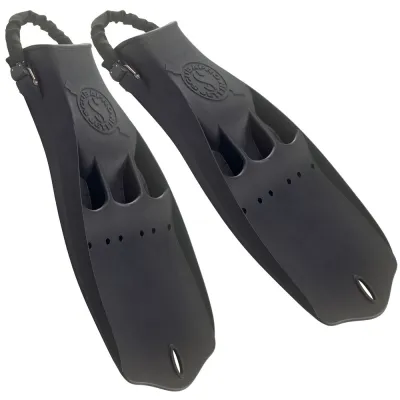
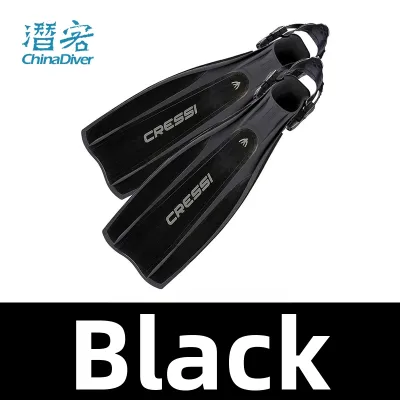
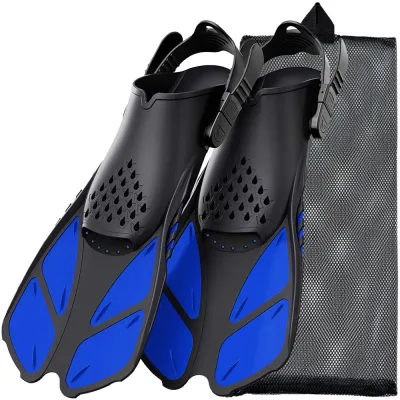
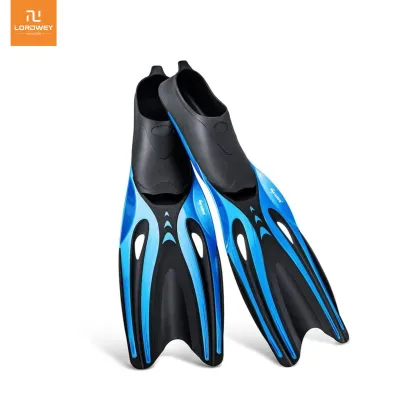
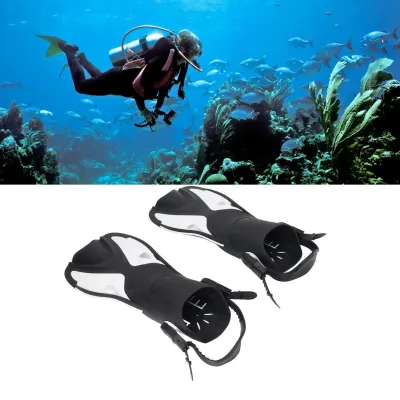
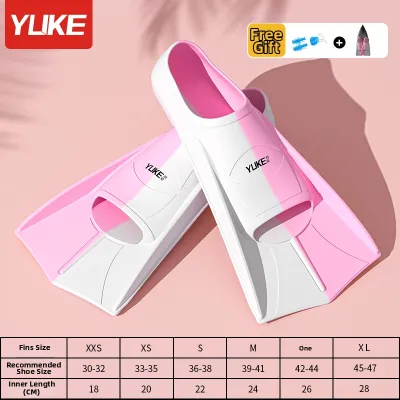
Prices are valid at publication and may change. Please refer to the product page for the latest price.
Blade Length and Surface Area
Blade length directly dictates how much water is displaced with each kick. Standard-length fins offer excellent glide and speed but demand wide, highly controlled kick cycles. Shorter travel fins have a smaller surface area, which significantly reduces the physical effort required for each stroke. While short blades yield less propulsion per kick, they allow for a faster, less strenuous kick cadence. This makes them highly manageable for beginners and incredibly easy to pack into carry-on luggage for quick ferry trips to Batam or Bintan.
Material Flexibility and Foot Pocket Ergonomics
To prevent painful friction blisters during initial training phases, the foot pocket must be constructed from soft, high-grade elastomers. Hard plastics in the foot pocket rub against the skin, particularly around the Achilles tendon and the toes. Ergonomically molded foot pockets distribute the pressure of each kick evenly across the instep, reducing hot spots and ensuring long-lasting comfort during extended pool or open-water sessions.
Recreational Snorkeling vs. Entry-Level Scuba Fins
It is important to distinguish between recreational snorkeling fins and entry-level scuba diving fins. Snorkeling fins are lightweight, highly flexible, and designed primarily for surface swimming where there is minimal drag. Scuba diving fins are structurally more robust. They are designed to push through the significant drag created by a diver wearing a heavy buoyancy compensator (BCD), scuba cylinder, and exposure suit. While some high-quality snorkeling fins can be used for shallow, calm-water scuba training, specialized entry-level scuba fins offer the structural integrity needed to handle mild currents and maintain control underwater.
Full-Foot vs. Open-Heel: Which Fin Style Fits Your Dive Plan?
Deciding between full-foot and open-heel fins depends entirely on where you plan to swim, how you will enter the water, and your long-term diving goals.

Full-Foot Fins
Full-foot fins feature a soft, enclosed rubber pocket that wraps entirely around your heel. They are designed to be worn barefoot or with thin neoprene socks.
- Advantages: These fins are highly streamlined, lightweight, and generally more affordable. They are exceptionally convenient for warm-water snorkeling, pool training, and boat-based dives where you can gear up and step directly into the water.
- Limitations: Full-foot fins offer zero protection for your feet outside the water. They are highly impractical and unsafe for rocky shore entries, where you must walk over sharp coral rubble, slippery concrete jetties, or hot sand to reach the entry point.
Open-Heel Fins
Open-heel fins feature a rigid sole plate and an open back secured by an adjustable strap, such as a rubber strap or a flexible bungee system. These fins must be worn with thick, neoprene dive boots.
- Advantages: The accompanying dive boots provide essential thermal insulation, ankle support, and thick rubber soles. This setup is mandatory for shore-based scuba diving, rocky beach entries, and navigating slippery boat decks safely.
- Limitations: Open-heel systems are heavier, bulkier, and require a larger upfront investment since you must purchase both the fins and the dive boots.
Fin Style Selection Matrix
| Activity | Entry Method | Primary Environment | Recommended Style | Key Reason |
|---|---|---|---|---|
| Snorkeling | Boat or Sandy Beach | Calm lagoons, Southern Islands | Full-Foot | Lightweight, streamlined, barefoot comfort |
| Recreational Scuba | Boat | Open water, mild currents | Open-Heel or Full-Foot | Versatility, ease of donning on a moving boat |
| Shore Scuba | Rocky Shore / Jetty | Pulau Hantu, rocky beaches | Open-Heel (with boots) | Essential sole protection and slip resistance |
| Travel Snorkeling | Mixed | Regional weekend trips | Compact Open-Heel | High packability, reduced baggage weight |
Recommended Diving Fin Brands for Beginners in Singapore
When shopping in Singapore, purchasing from reputable, globally recognized brands is crucial. These brands invest heavily in hydrodynamic research and use high-grade, UV-resistant materials that resist degradation in Singapore’s humid, tropical climate. Furthermore, choosing a well-distributed brand ensures that replacement straps, buckles, and accessories are readily available at local dive centers.
Brands Known for Comfort and Flexible Blades
These brands prioritize ergonomic foot pockets and advanced blade geometries that maximize thrust with minimal leg exertion.
Mares
Mares is an industry giant famous for its patented “Channel Thrust” technology. For beginners, the Mares Avanti Superchannel (available in both full-foot and open-heel versions) is highly recommended.
- Key Features: The blade features a flexible central channel flanked by two traditional side ribs. During the kick, the central channel flexes and cups the water, directing it backward in a focused jet rather than letting it spill over the sides of the blade. This maximizes thrust while reducing lateral ankle twisting.
- Ergonomics: Mares foot pockets are anatomically designed and widely celebrated for comfortably accommodating wider feet, which is a common fit requirement for many Asian divers.
- Limitations: The highly flexible materials can over-flex under heavy loads. If you are diving in strong currents, these fins may lack the raw power needed to swim efficiently against the flow.
- Price Range: Broadly positioned in the mid-range category (approximately S$100 to S$180 at authorized local retailers).
Cressi
Cressi is a historic Italian manufacturer renowned for its innovative “foot pocket under the blade” design. The Cressi Clio and Cressi Rondinella are standout full-foot models for novices.
- Key Features: By positioning the foot pocket underneath the blade, Cressi increases the usable surface area of the fin. This allows for a shorter, more manageable overall fin length while maintaining the propulsive power of a longer blade.
- Comfort: The foot pockets are molded from exceptionally soft elastomers, minimizing friction on the instep and toes.
- Limitations: These highly flexible full-foot models are designed primarily for snorkeling and calm-water pool sessions. They do not provide sufficient rigidity to handle the drag of heavy scuba equipment in open water.
- Price Range: Excellent entry-level value (typically S$50 to S$90).
Brands Offering High Value and Travel-Friendly Designs
These brands focus on lightweight, highly durable materials and compact profiles that are perfect for regional travel.
Scubapro
Scubapro is a premium brand that offers one of the most successful travel-friendly lines on the market: the Scubapro Go Sport and Scubapro Go Travel series.
- Key Features: Constructed from ultra-durable Monprene, these fins are virtually indestructible. They resist scuffing, cracking, and UV degradation. The Go Sport is an open-heel "boot-fit" design, while the Go Travel is designed to be worn barefoot or with thin socks.
- Travel Appeal: They feature an ultra-compact blade design that easily fits into standard carry-on luggage, making them a favorite for Singaporean divers taking short flights or ferry rides to neighboring regional destinations.
- Limitations: The shorter blade requires a slightly faster kicking cadence to cover the same distance as a standard-length fin.
- Price Range: Positioned in the premium mid-range category (approximately S$150 to S$240).
Tusa
Tusa is highly regarded for offering innovative designs and excellent price-to-performance ratios. The Tusa Sport series (such as the UF-21 or UF-120) provides highly affordable, short-blade open-heel fins.
- Key Features: These fins utilize multi-flex technology, allowing the short blade to bend progressively during the kick. They feature hybrid foot pockets that can be worn barefoot or with thin booties, secured by highly adjustable bungee straps.
- Value: They offer an exceptionally low-barrier entry point for casual, seasonal water sports enthusiasts who want reliable gear without a heavy financial commitment.
- Limitations: The basic strap mechanisms and lightweight plastics are less robust than premium Monprene models, making them less suitable for intense, long-term scuba training.
- Price Range: Highly budget-friendly (typically S$40 to S$80).
Sizing, Fitting, and Where to Buy Diving Fins in Singapore
Achieving a correct fit is paramount. An ill-fitting fin will either slip off in the water or cause painful cramping and blisters that can ruin your dive.
The Fitting Process
When trying on fins, follow these systematic checks to ensure a proper fit:
- For Full-Foot Fins: Slip your foot into the pocket barefoot or with the thin socks you plan to wear. Sit down, lift your leg, and shake your foot gently. If the heel slips out or the pocket wobbles, the fin is too large. Next, stand up and check your toes; if they are curled, cramped, or pressing hard against the front of the pocket, the fin is too small. You should feel a snug, secure wrap with zero painful pressure points.
- For Open-Heel Fins: You must try these on while wearing the exact neoprene dive boots you intend to use. Insert your booted foot into the pocket. The pocket should cover approximately two-thirds of your boot's foot. The heel strap should sit securely above your heel bone without pinching your Achilles tendon. Ensure there is no lateral movement or twisting inside the pocket when you flex your ankle.
Local Retail Navigation
Singapore boasts a vibrant water sports community with several highly professional, authorized dive shops located around areas like Beach Road, Kallang, and central commercial districts. Shopping at these physical stores allows you to try on multiple brands, benefit from expert fitting advice from certified dive professionals, and secure official manufacturer warranties.
In contrast, buying from unverified third-party sellers on general online marketplaces carries significant risks. Counterfeit gear made from cheap, brittle plastics can fail catastrophically underwater, posing a severe safety hazard. Furthermore, online sizing charts are notoriously inconsistent across European, American, and Asian sizing standards, often leading to costly return shipping fees.
Care and Maintenance Checklist
To protect your investment from Singapore’s high humidity and intense tropical sun, follow these essential maintenance steps:
- Freshwater Rinse: Thoroughly rinse your fins in clean, fresh water after every dive or snorkel session to remove salt crystals, sand, and chlorine.
- Avoid Direct Sunlight: Dry your fins in a shaded, well-ventilated area. Never leave them baking in the direct midday sun, as UV rays break down rubber and plastics, causing them to warp or crack.
- Flat Storage: Store your fins flat or hang them by their strap loops. Do not stand them vertically on their blade tips, as this will permanently warp the blades over time.
- Preserve the Shape: Keep the plastic inserts that came inside the foot pockets during storage to help them retain their ergonomic shape.
Frequently Asked Questions (FAQ)
Can I use snorkeling fins for beginner scuba diving?
Yes, but only under specific, highly controlled conditions. Short, flexible snorkeling fins are acceptable for shallow pool sessions or calm, current-free open water training. However, they lack the structural rigidity and surface area required to push through the heavy drag of a full scuba kit. If you encounter unexpected currents, snorkeling fins may fail to provide adequate propulsion, leading to physical exhaustion. For active scuba diving, it is highly recommended to transition to dedicated entry-level scuba fins.
Are short travel fins better for beginners than standard-length fins?
Short travel fins are highly advantageous for beginners who prioritize packability and want to avoid heavy leg fatigue. They require a shallower, faster flutter kick, which is easier on unconditioned leg muscles and joints. However, because they have less surface area, they require more frequent kicks to cover the same distance as standard-length fins, and they offer significantly less power when trying to swim against a current.
How do I prevent blisters when using new full-foot fins?
To prevent painful friction blisters, ensure your fins fit snugly without sliding. The most effective solution is to wear thin neoprene fin socks (1mm to 1.5mm) or spandex dive socks inside the foot pockets. Additionally, you can apply a specialized anti-chafe waterproof balm to high-friction zones like the heel, instep, and toes before entering the water. Always rinse out any sand or grit that enters the foot pocket immediately, as small debris acts like sandpaper against your skin.
Community discussion
Share your experience or ask a question. Comments are reviewed before publication.