
Quick Answer: Which Fender Type Suits Your Watercraft?
Selecting the right boat fender for a kayak or stand-up paddleboard (SUP) requires balancing hull protection against the physical limits of small, human-powered watercraft. Unlike large motorized vessels that can carry heavy, oversized bumpers, small watercraft demand lightweight, compact, and easily stowed gear. There is no single universal fender that excels in every scenario; the optimal choice depends entirely on your specific craft, your paddling environment, and whether you need protection on the water or during vehicle transport.
For most paddlers, closed-cell foam fenders offer the most reliable balance of weight, durability, and convenience, as they require no inflation and cannot deflate when scraped against sharp surfaces. If you frequently dock your hard-shell kayak or composite paddleboard against concrete marina pontoons or metal pilings, inflatable vinyl fenders provide the superior pneumatic cushioning needed to absorb heavy impacts. Meanwhile, flat or contoured foam pads are the ideal solution for protecting delicate hulls from strap pressure and friction during roof rack transit, as well as providing low-profile, drag-free protection while navigating tight waterways.
Understanding Fender Types for Small Watercraft
To make an informed decision, you must first understand the structural characteristics, material compositions, and physical limitations of the three primary fender categories designed for small watercraft.
Products mentioned in this guide
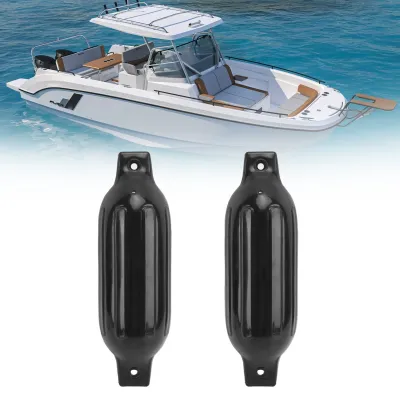
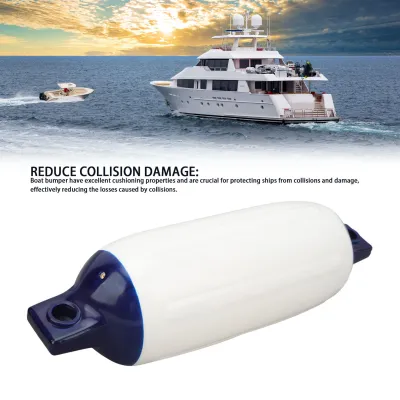
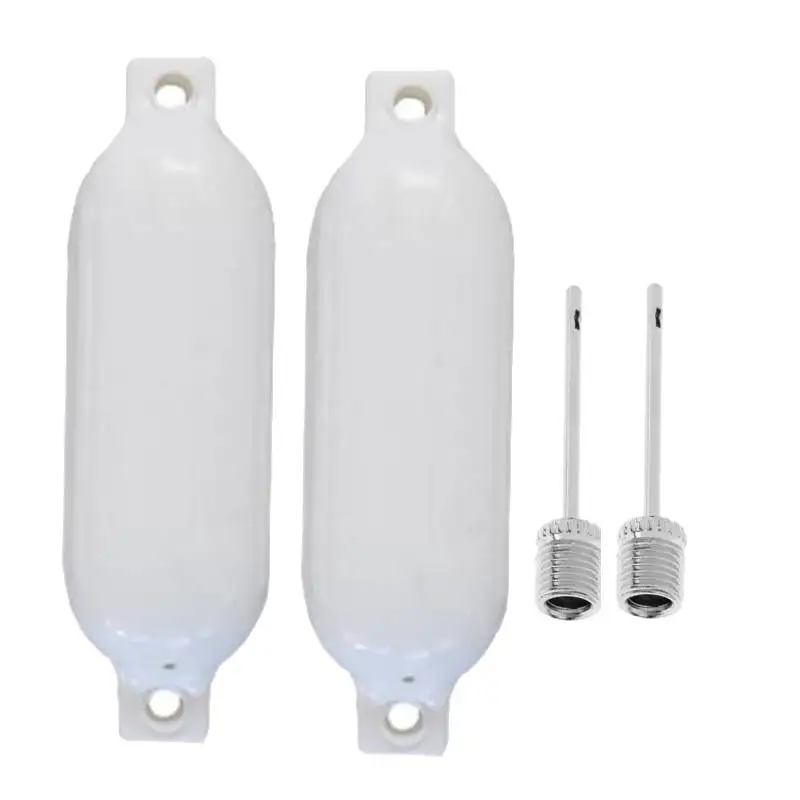
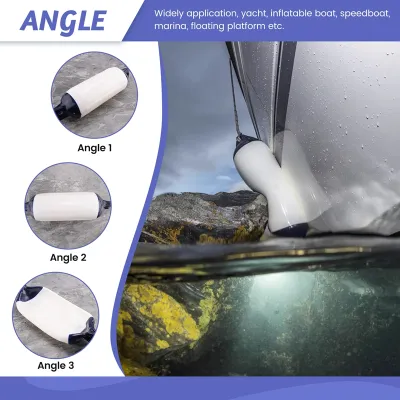
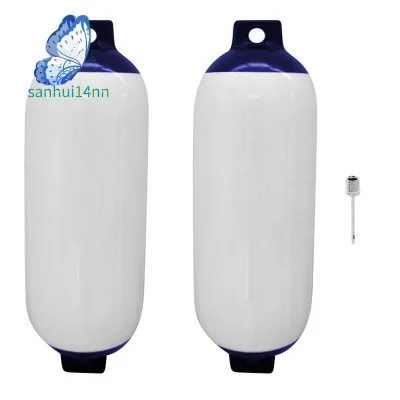
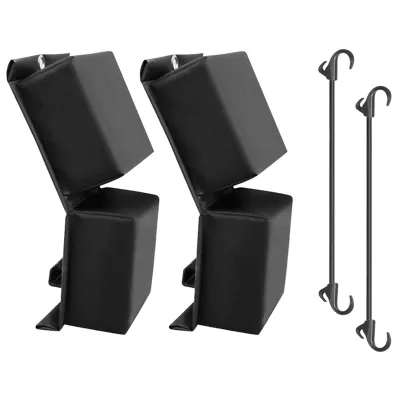
Prices are valid at publication and may change. Please refer to the product page for the latest price.

Foam Fenders
Foam fenders are constructed from dense, closed-cell foam, such as ethylene-vinyl acetate (EVA) or polyethylene (PE). Because the individual cells within the foam are sealed off from one another, these fenders do not absorb water, allowing them to maintain their buoyancy and cushioning properties even after prolonged submersion. They are solid throughout, meaning they require no manual inflation and are completely immune to punctures from sharp rocks, barnacles, or splintered wooden docks.
These fenders are typically available in two configurations: cylindrical rollers and flat rectangular blocks. Cylindrical foam bumpers function similarly to traditional marine fenders, rolling along the hull to deflect impact, while flat foam blocks remain fixed in place against the side of the craft. While foam fenders are exceptionally lightweight and reliable, they cannot be compressed or deflated for storage, meaning they will occupy a constant, fixed volume on your deck or inside your storage hatches.
Inflatable Fenders
Inflatable fenders are air-filled chambers made from heavy-duty marine-grade polyvinyl chloride (PVC) or synthetic rubber. These fenders rely on pressurized air to absorb and redistribute kinetic energy, offering the highest level of shock absorption among all fender types. When your craft bumps against a hard structure, the air inside the chamber compresses, cushioning the impact and preventing the force from transferring directly to your hull.
Most inflatable models feature a standard inflation valve, allowing you to adjust the internal pressure based on your protection needs or deflate them entirely when not in use. This compressibility makes them highly appealing for touring kayakers who need to maximize space inside tight dry hatches during long crossings. However, this air-filled design introduces a point of failure: they are susceptible to punctures from sharp marine growth, and they require you to carry a small hand pump or valve adapter to deploy them on the water.
Flat and Contoured Fenders
Flat and contoured fenders are low-profile, specialized pads designed to hug the specific curves of a kayak’s gunwales or a paddleboard’s rails. Typically constructed from thin, high-density foam wrapped in a durable nylon or canvas sleeve, these fenders prioritize aerodynamics and hydrodynamics over heavy impact cushioning. They lie flat against the watercraft, secured tightly by straps or integrated hook-and-loop fasteners.
Because they do not dangle loosely over the side of the craft, flat fenders minimize wind resistance and water drag, ensuring your paddling efficiency is not compromised. They are highly favored by paddleboarders and performance kayakers who need to protect their rails from paddle strikes or minor dock scrapes without introducing bulky obstacles that could interfere with their paddling stroke or catch on passing debris, such as mangrove roots or low-hanging branches.
Key Comparison Dimensions for Kayaks and Paddleboards
Evaluating fenders across practical, real-world dimensions ensures your selected gear aligns with the physical realities of self-supported paddling.
Weight and Portability
Every gram of gear you add to a kayak or paddleboard increases the effort required to paddle, portage, and transport your craft. Solid closed-cell foam fenders are exceptionally lightweight, often weighing only a fraction of a comparable inflatable model, making them easy to carry during long portages from a vehicle to the launch ramp. However, their fixed physical size means they cannot be compacted, which can create wind drag if they are lashed to your deck bungees during a breezy crossing.
Inflatable fenders, while highly packable when deflated, are inherently heavier due to the thickness of the marine-grade PVC or rubber required to prevent punctures. Additionally, carrying an inflatable system means accounting for the weight and bulk of a compatible pump or inflation nozzle. If your paddling routine involves launching from sandy beaches where weight is the primary concern, foam is highly advantageous; if you must travel light but have limited deck space, the packability of a deflated inflatable may justify the slight weight penalty.
Impact Protection
When evaluating impact protection, you must match the fender’s cushioning capability to the mass of your watercraft and the severity of the environment. Inflatable fenders excel at absorbing high-energy impacts because the air chamber compresses dynamically under load, dispersing the force across a wider surface area. This makes them the safest choice for protecting fragile composite, fiberglass, or epoxy hulls from structural cracking when docking against rigid concrete public boat ramps or metal pontoons.
Foam fenders offer reliable, medium-duty protection that is highly suited for lighter polyethylene (plastic) kayaks and inflatable SUPs. While they cushion minor bumps effectively, dense foam can fully compress under heavy loads, transmitting a portion of the impact energy directly to the hull. Flat pads provide the lowest level of impact cushioning, serving primarily as an abrasion barrier against minor scrapes, sand friction, and cosmetic blemishes rather than heavy structural impacts.
Attachment and Rigging
Small watercraft lack the heavy-duty metal cleats and robust rub rails found on motorized boats, making fender attachment a critical design consideration. Foam cylindrical fenders and flat pads are generally the easiest to rig, often featuring integrated straps, buckle systems, or pre-drilled holes that allow you to thread bungee cords directly through the foam. These systems can be quickly lashed to existing deck lines or kayak carry handles without requiring specialized hardware.
Inflatable fenders typically require secure, high-tension lines tied to dedicated anchoring points, such as pad eyes or D-rings, to keep them from shifting under pressure. Because inflatable fenders exert significant buoyant upward force when submerged, they can slide out of position if they are not rigged with a secondary positioning line. When selecting a fender, you must verify that your craft has compatible, factory-installed attachment points capable of securing the fender at the correct height relative to the water line.
Storage and Stowage
Storage space is at a premium on any paddleboard or kayak, directly influencing your safety and comfort on the water. Inflatable fenders offer unmatched stowage convenience when deflated, rolling up into compact cylinders that can be easily tucked into a dry bag, bow hatch, or under-seat storage area. This keeps your deck clean and free of snags during open-water crossings, allowing you to inflate them only when approaching a dock or marina.
Conversely, foam fenders must be stored at their full physical size. On a paddleboard, this usually means strapping them flat to the cargo bungees, which reduces the space available for dry bags, coolers, or safety gear. On a kayak, large foam cylinders may not fit through narrow hatch openings, forcing you to lash them to the exterior deck where they are exposed to wind, sun, and potential paddle interference. If you choose foam, you must carefully measure your craft’s available deck space and hatch diameters before purchasing.
Matching Fender Types to Your Paddling Scenarios
To narrow down your choices, consider how your primary paddling environments and activities dictate your protection requirements.
Casual Lake and Calm River Paddling
Paddling on calm, inland waterways—such as reservoirs, slow-moving rivers, or sheltered coastal bays—presents minimal risk of high-energy impacts. In these environments, you are rarely docking against commercial concrete infrastructure, and your primary concern is protecting your hull from minor scrapes during occasional launches from sandy banks or grassy shores. For these casual outings, heavy inflatable fenders are unnecessary and add redundant weight to your setup.
Choose flat or cylindrical foam if:
- Your paddling route involves minimal docking, with most stops occurring on natural, soft shorelines.
- You want a low-maintenance, set-and-forget protection system that requires no pumps or pressure checks.
- You need to quickly lash a lightweight bumper to your deck bungees for occasional use at a low-profile wooden kayak launch.
Docking at Marinas and Rocky Shorelines
If your paddling routes take you into busy commercial marinas, tidal canals, or rocky coastal areas, the risk of hull damage increases significantly. Concrete pontoons, metal-reinforced pilings, and wave-tossed rocky shores can easily gouge polyethylene or crack delicate composite epoxy boards. In these high-risk zones, tidal currents and boat wakes can repeatedly slam your stationary craft against rigid structures, demanding maximum shock absorption.
Choose inflatable fenders if:
- You regularly tie up alongside concrete public docks, floating marina pontoons, or metal structures.
- Your watercraft is constructed from delicate, expensive composite materials like fiberglass, carbon fiber, or Kevlar.
- You require maximum kinetic energy absorption to protect your hull from structural damage caused by boat wakes and heavy tidal surges.
Safety Note: Always inspect the docking surface for sharp barnacles, exposed bolts, or splintered wood before deploying inflatable fenders, as these hazards can puncture the vinyl chamber and render your protection useless.
Transporting on Roof Racks or Trailers
Significant hull damage often occurs on land during vehicle transit. When securing a kayak or paddleboard to a roof rack, tie-down straps must be tightened sufficiently to prevent shifting at highway speeds. However, this high tension can create concentrated pressure points, leading to deformation (oil-canning) in plastic hulls or structural cracking in composite boards. Furthermore, road vibrations can cause the rack’s metal or hard rubber cradles to chafe against the craft’s finish.
Choose flat pads if:
- You need to distribute the compressive force of tie-down straps evenly across the gunwales or rails during transport.
- You want to prevent friction burns, strap vibration noise, and UV-induced cosmetic wear while driving.
- Your roof rack cradles lack adequate padding and require a temporary, high-density barrier to cushion the watercraft.
Note: Cylindrical and inflatable fenders are entirely unsuitable for vehicle transport, as their round shapes cause them to roll under strap pressure, destabilizing the load and increasing the risk of the watercraft shifting at high speeds.
How to Attach and Secure Fenders Without Damaging Your Hull
Rigging fenders to a small watercraft requires careful execution to ensure the bumpers remain in the correct position without placing undue stress on your craft’s structural components.
For Kayaks
When rigging fenders to a kayak, utilize the existing perimeter safety lines, deck bungees, or factory-installed metal D-rings. Thread a marine-grade utility cord through the fender’s center hole or attachment eye, securing it to a perimeter line using a reliable, adjustable knot such as a clove hitch or a taut-line hitch. This allows you to quickly adjust the fender’s height to match the dock level.
Ensure the fender hangs low enough to cushion the widest part of the kayak’s beam (the gunwale) but high enough that it does not drag continuously in the water while paddling. Never tie fender lines to steering rudders, foot brace adjustment tracks, or fragile plastic accessory tracks that are not rated for lateral pulling forces.
For Paddleboards
Because standard paddleboards lack high-profile deck lines, securing fenders requires utilizing reinforced cargo D-rings or specialized strap-through rail-saver systems. If your board features bow cargo bungees, you can secure flat foam pads directly over the rails, using the tension of the bungees to hold them flush against the sides.
Critical Warning: Never tie heavy fender lines or secure docking ropes directly to your paddleboard’s leash plug or camera mount. These attachment points are designed solely for lightweight safety leashes and electronic accessories; they cannot withstand the severe lateral shear forces generated when a docking watercraft is pulled by wind or current, which can easily tear the plug out of the foam core.
Safety Boundaries and Best Practices
Before making any modifications to your watercraft to accommodate fenders, review these critical safety boundaries:
- Consult Manufacturer Guidelines: Always check your kayak or paddleboard manufacturer's care and instruction manual before installing aftermarket hardware, adhesive D-rings, or custom mounting tracks.
- No Drilling: Never drill holes or install screw-in fasteners directly into composite, rotomolded plastic, or inflatable hulls to mount fender brackets. Doing so can permanently compromise the structural integrity of the craft, void your manufacturer warranty, and introduce catastrophic water leaks.
- Clear the Paddle Path: Position your fenders so they do not interfere with your paddling stroke, foot braces, rudder lines, or fin boxes. A misplaced fender that restricts your arm movement can lead to rapid fatigue or loss of control in rough water.
- Knot Security: Always double-check your knots and strap buckles before launching. Loose lines can slip into the water, wrapping around your paddle shaft, rudder, or tracking fins, which can destabilize your craft and create a serious entanglement hazard.
Frequently Asked Questions (FAQ)
Can I use standard boat fenders on a kayak?
Standard marine fenders designed for motorboats and sailboats are generally unsuitable for kayaks and paddleboards due to a severe mismatch in size, weight, and buoyancy. Traditional boat fenders are too heavy and bulky, which can easily destabilize a narrow, low-displacement kayak, causing it to list or capsize. Additionally, their large diameters create significant wind resistance and water drag, making paddling exhausting. For small watercraft, you should always scale down to specialized kayak mini-fenders, compact flat foam blocks, or low-profile contoured pads designed specifically for human-powered boats.
Do inflatable paddleboards need fenders?
Inflatable stand-up paddleboards (iSUPs) are constructed from heavy-duty, military-grade drop-stitch PVC, which is inherently highly resilient, flexible, and resistant to minor bumps, dents, and abrasions. For casual paddling in open water or launching on sandy beaches, iSUPs do not require fenders. However, fenders are still highly recommended if you plan to tie up your iSUP in busy marinas or alongside concrete seawalls. In these environments, constant friction against rough concrete, metal cleats, or sharp, barnacle-encrusted pilings can scuff the outer PVC layer, wear down the seams, or cause catastrophic punctures that are difficult to repair on the water.
Community discussion
Share your experience or ask a question. Comments are reviewed before publication.