
Quick Answer: Navigating Chest Protector Brands
Choosing the right chest protector brand in Singapore depends entirely on your specific martial arts discipline, your competitive level, and the rules of your training hall or tournament. There is no single brand that serves as a universal solution for both taekwondo and karate sparring.
For taekwondo practitioners, especially those aiming for sanctioned tournaments, World Taekwondo (WT) recognized brands are essential. These brands focus on maximum impact absorption, rigid wrap-around coverage, and strict compliance with international safety standards.
Conversely, karate sparring—particularly point-sparring (Kumite)—demands high mobility and rapid movement. Karate-focused brands prioritize lightweight, flexible, and low-profile designs that protect the chest and ribs without restricting quick evasive maneuvers.
Products mentioned in this guide
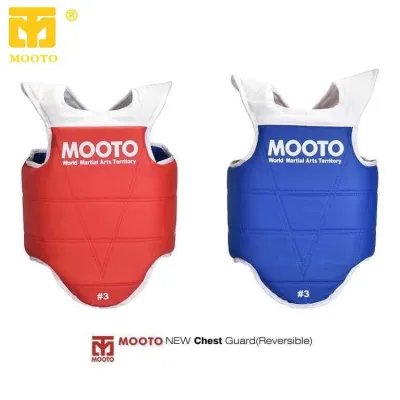
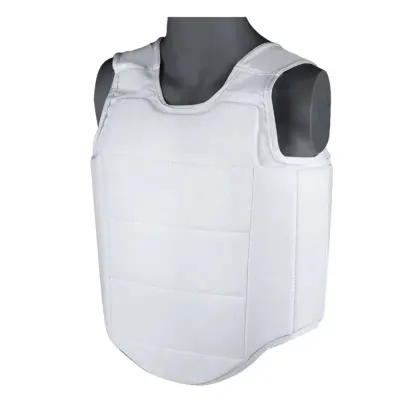
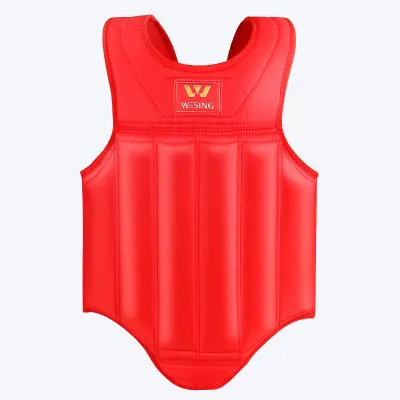
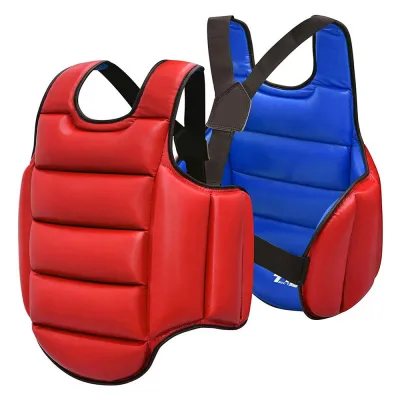
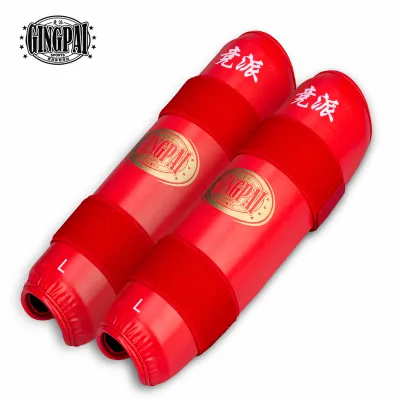
Prices are valid at publication and may change. Please refer to the product page for the latest price.
Before purchasing premium protective gear, always verify the specific rules of your local dojo, club, or tournament organizers. Many local competitions mandate specific certifications, colors, or approved brand lists, making pre-purchase verification the most critical step in your selection process.
Competition Standards: WT vs. Local Karate Requirements
Understanding the structural differences between taekwondo and karate chest protectors is vital for safety and compliance. World Taekwondo (WT) regulations require a high level of torso coverage. A standard WT-approved chest protector (often called a hogu) wraps completely around the torso, covering the chest, abdomen, ribs, and shoulders. The foam density in these protectors is high, designed to absorb heavy, full-contact kicks and punches.

In contrast, karate chest protectors are typically worn under the karate gi (uniform) or are designed to be much less bulky. They focus primarily on protecting the sternum and ribs from sudden, high-velocity impacts during point-sparring, where full-force strikes to the torso are generally restricted. The foam is thinner and more flexible, allowing the practitioner to maintain a low stance and execute rapid lunges.
When shopping for competitive taekwondo gear, look for the official WT-recognized logo printed directly on the chest protector, often accompanied by a holographic security tag. These tags indicate that the manufacturer has met the rigorous testing standards set by the international governing body. For karate, local associations in Singapore often align with World Karate Federation (WKF) standards or set their own guidelines regarding acceptable protective gear.
Adjustability is another key differentiator. Taekwondo hogus typically feature a criss-cross tie system or heavy-duty hook-and-loop straps at the back to ensure a completely rigid, immovable fit. Karate chest guards often utilize simple elasticated straps or lightweight velcro closures, prioritizing quick transitions and minimal weight over absolute rigidity.
Evaluating Chest Protector Brands by Category
To help you navigate the options available in Singapore’s martial arts shops and online marketplaces, we can organize chest protector brands into three distinct categories. Each category serves a different purpose, ranging from elite international competition to casual, everyday dojo practice.
Comparing these brands requires separate evaluation criteria because a high-end, rigid taekwondo guard is not necessarily “better” than a flexible karate guard; they are engineered for entirely different movement patterns and impact levels. We will evaluate these options based on their certification status, structural design, and suitability for local training environments.
WT-Recognized Global Taekwondo Brands
Global brands that hold official World Taekwondo recognition are the gold standard for competitive taekwondo sparring. These manufacturers utilize advanced multi-layer foam systems designed to distribute the force of heavy kicks across a wider surface area. The physical design of these protectors extends high up to cover the clavicle and wraps deeply around the sides to shield the lower ribs.
When considering a premium global brand, it is crucial to check the current WT-approved equipment list on the official federation website. Certifications are subject to periodic reviews and updates, meaning a brand or specific model approved a few years ago might not be permitted in upcoming sanctioned tournaments. Buying a certified model ensures you will not be disqualified at the gear-checking station before a match.
The primary trade-off with these globally recognized brands is the premium pricing. A certified chest protector can represent a significant financial investment compared to non-certified training gear. However, for athletes participating in national selection trials or sanctioned open tournaments in Singapore, this cost is a mandatory requirement for entry and provides the highest level of standardized impact protection.
Traditional and General Karate Brands
Brands specializing in karate protective gear focus heavily on speed, agility, and unobtrusive safety. These chest protectors are engineered to be worn comfortably beneath a gi, featuring low-profile designs that do not alter the silhouette of the uniform. The foam used is highly flexible, allowing the torso to twist and bend naturally during complex kata or rapid kumite exchanges.
Unlike the wrap-around hogus of taekwondo, many karate chest guards offer front-only coverage or minimal side panels. This design leaves the back completely open, maximizing ventilation in Singapore’s warm, humid climate. The reduction in coverage is a deliberate design choice to favor speed and heat dissipation, under the assumption that sparring rules strictly control the force and target areas of strikes.
Before purchasing a karate-specific brand, practitioners should verify the equipment guidelines set by their local karate association or dojo. Some local tournaments allow general-purpose martial arts chest guards, while others strictly enforce WKF-style rules requiring specific internal chest protectors for safety. Checking with your sensei or the tournament’s technical committee will prevent purchasing incompatible gear.
Local and Regional Martial Arts Suppliers
For beginners, recreational martial artists, or those who only engage in light dojo sparring, local and regional suppliers offer highly practical alternatives. These brands are widely available in physical martial arts specialty shops across Singapore and provide excellent cost-effectiveness for daily training. They allow students to practice safely without making a major financial commitment early in their martial arts journey.
However, these budget-friendly options come with clear limitations. They rarely carry official international certifications like WT or WKF approval, meaning they cannot be used in sanctioned national or international tournaments. Additionally, the materials used may wear out faster under heavy, daily use compared to premium competitive brands.
To ensure you are getting a safe and durable product from a local supplier, it is highly recommended to visit a physical store and inspect the gear in person. Pay close attention to the density of the foam by pressing it firmly; it should resist bottoming out under finger pressure. Examine the stitching along the borders and strap attachment points to ensure there are no loose threads, and test the elasticity and grip of the straps to confirm they can withstand repeated pulling and fastening.
Decision Framework: Which Brand Type Fits Your Sparring Needs?
To help you make an informed decision, use this structured framework to match your training goals with the appropriate brand category:
WT-Recognized Global Brands
- Best for: Competitive taekwondo athletes, advanced color belts, and black belts preparing for sanctioned national or international tournaments.
- Key benefit: Guaranteed compliance with tournament rules and maximum impact absorption for full-contact sparring.
- Consideration: Higher initial cost and a bulkier profile that may feel restrictive to karate practitioners.
Traditional Karate Brands
- Best for: Karate practitioners focusing on Kumite (sparring), point-sparring competitors, and those who prefer wearing protection under their uniform.
- Key benefit: Exceptional mobility, lightweight construction, and low-profile design that fits seamlessly under a gi.
- Consideration: Limited side and back coverage, making them unsuitable for full-contact taekwondo kicks.
Local and Regional Suppliers
- Best for: Beginners, recreational martial artists, children who are rapidly outgrowing their gear, and daily dojo training sessions.
- Key benefit: Highly affordable, easily accessible locally, and perfectly adequate for light to moderate contact.
- Consideration: Not permitted in sanctioned competitive events and may require more frequent replacement due to standard material wear.
Regardless of the category you choose, your first step must always be to consult your club instructor, dojo manager, or the specific tournament rulebook. Many martial arts schools in Singapore have exclusive partnerships with specific brands or require students to wear uniform colors (such as reversible red and blue hogus for taekwondo) that match their training curriculum.
Verifying Authenticity and Sizing Before Purchase
With the rise of online marketplaces, counterfeit protective gear has become increasingly common. Using fake protective equipment poses a serious safety risk, as unverified foam may fail to absorb impacts correctly. To ensure you are purchasing genuine gear, look for official holographic security stickers, clear brand embossing, and high-quality, consistent stitching. When buying online, cross-reference the seller’s listings with authorized distributor lists found on the official brand websites.
Sizing is another critical factor that varies significantly between manufacturers. A “Size 3” in one brand may fit completely differently than a “Size 3” in another. To find the correct fit, use a flexible measuring tape to measure your chest circumference at the widest point, just under the armpits. Always consult the manufacturer’s specific sizing chart rather than relying on general height or weight recommendations, as torso shapes differ.
Once your chest protector arrives, perform a physical fit test before removing any tags or using it in class. Put on the protector and secure the straps tightly. Perform a brief shadow-sparring simulation: execute a few high kicks, twist your torso, and take deep, rapid breaths. The guard should remain securely in place without riding up toward your chin, pinching your armpits, or restricting your ability to expand your lungs fully. If the gear shifts excessively or restricts your breathing, exchange it for a different size or model.
Frequently Asked Questions (FAQ)
Do I need a WT-certified chest protector for local karate tournaments?
No, WT (World Taekwondo) certification is specifically designed for taekwondo competitions and is generally not required—and often not permitted—for karate tournaments. Karate competitions have their own distinct safety standards, often aligned with the World Karate Federation (WKF). Because taekwondo chest protectors are much bulkier and designed for external wear, they do not fit the mobility requirements or the uniform rules of traditional karate sparring. Always check the specific tournament outline provided by the local karate organizing body to see which certifications are accepted.
How should a sparring chest protector fit around the ribs and collarbone?
A sparring chest protector should fit snugly against your torso without any significant gaps, yet allow you to breathe deeply and move your arms freely. The top of the protector should sit just below your collarbone (clavicle) to protect the upper chest without pressing against your throat when you tuck your chin. The side panels must wrap around to cover your lower ribs completely. If the protector rides up when you raise your arms or kick, the straps are either too loose, or the protector is too large for your torso length.
Community discussion
Share your experience or ask a question. Comments are reviewed before publication.