
Quick Answer: The Best Racket Holder Types for Compact Apartments
Finding the ideal racket holder for a compact living space is not a one-size-fits-all decision. The best option depends on your tenancy agreement, the construction of your walls, and the size of your racket collection. In compact apartments, maximizing every square meter is essential to prevent clutter and protect your sports gear from accidental damage.
For renters or those who want a completely damage-free setup, over-door racket holders and tension-pole systems offer excellent vertical storage with zero wall impact. If you have smooth, non-porous surfaces like polished tiles, glass, or laminate, adhesive wall-mounted holders are highly space-efficient and keep your floor entirely clear. Homeowners who want maximum stability for multiple rackets and heavy gear bags will find screw-mounted wall racks to be the most secure, permanent option. Alternatively, if you prefer to avoid walls and doors altogether, a compact, freestanding floor stand can be tucked neatly into an unused corner or wardrobe base.
Key Criteria for Comparing Apartment Racket Storage
When living in a compact condominium or a Housing & Development Board (HDB) flat, choosing home organization accessories requires careful planning. Evaluating a racket holder involves analyzing several critical dimensions to ensure it fits your lifestyle and home layout.
Products mentioned in this guide
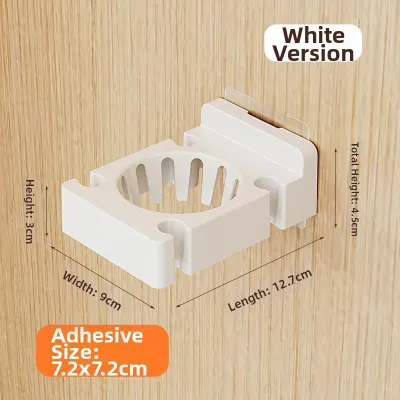
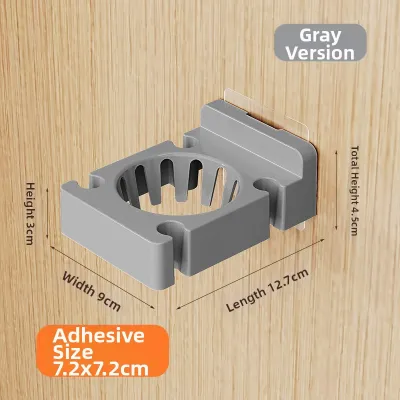
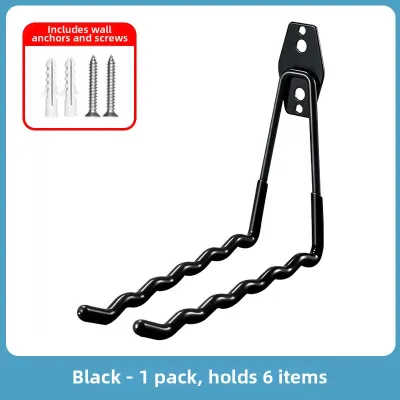
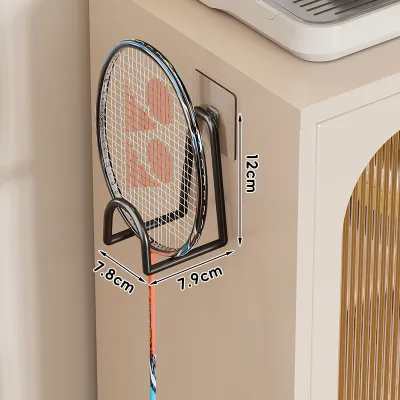
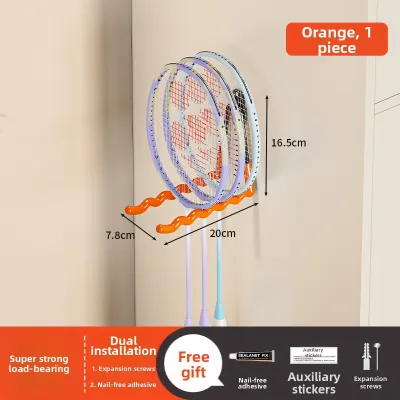
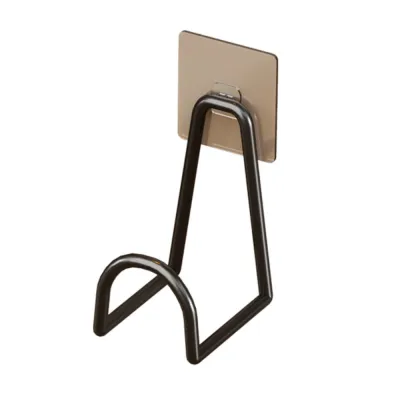
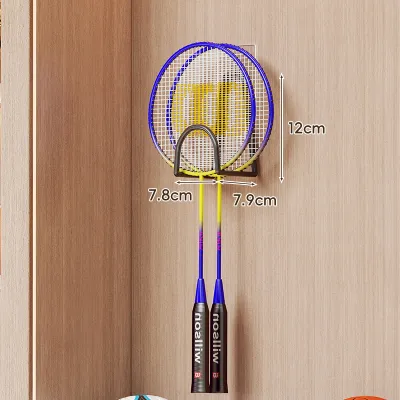
Prices are valid at publication and may change. Please refer to the product page for the latest price.

Space Efficiency
Space efficiency is the primary consideration in compact homes. Storage solutions must balance their physical footprint—the actual floor area they consume—against their vertical space utilization. Floor space in narrow hallways, small bedrooms, or entryways is highly valuable. A storage solution that lifts your equipment off the ground and utilizes empty wall or door space keeps walkways clear and makes small rooms feel more open.
Wall Protection and Installation
Wall protection is a major concern, particularly for tenants who must return their apartments in pristine condition to secure their rental deposits. Traditional drilling can leave permanent holes in concrete or drywall, requiring patching and painting later. No-drill alternatives, such as heavy-duty adhesives, tension mechanisms, or over-door hooks, offer damage-free installation. However, these alternatives require careful surface matching and correct application to prevent accidental falls.
Capacity and Accessibility
Your storage needs will vary depending on whether you are a casual weekend player with one or two rackets or a competitive club player managing a rotating set of four to six frames. The holder must accommodate your current collection while allowing easy, snag-free access. In tight spaces, a poorly designed rack can cause rackets to knock against one another, potentially scraping the frames or damaging the delicate strings.
Stability and Safety
Safety is paramount in high-traffic household areas. A racket holder must remain perfectly stable under load. Freestanding racks must have a low center of gravity to prevent tipping if bumped, while adhesive mounts must reliably support the weight of your gear without failing. Because high-quality badminton rackets are constructed from lightweight carbon fiber or graphite, they are highly sensitive to sharp impacts; a falling rack can cause micro-fractures that compromise the frame’s structural integrity under high string tension.
Wall-Mounted Holders: Maximizing Vertical Space
Wall-mounted storage is a classic method for keeping sports equipment organized and out of the way. By elevating your gear, you free up valuable floor space for other furniture or daily foot traffic.
Traditional Screw-Mounted Racks
Traditional screw-mounted racks are the most robust and stable storage option available. Constructed from materials like steel, aluminum, or solid hardwood, these racks are anchored directly into the wall structure. They are designed to support substantial weight, making them ideal for players who want to hang multiple rackets alongside heavy thermal gear bags, shuttlecock tubes, and other accessories.
However, installing these racks in modern apartments requires specific tools and preparation. Most internal walls in Singapore apartments are made of solid concrete or precast panels, which require a rotary hammer drill and plastic wall plugs to secure the screws. Drywall partitions, commonly found in newer residential layouts, require specialized hollow-wall toggle bolts to distribute the weight safely. Before drilling, always use a multi-scanner or stud finder with live-wire and pipe detection to avoid hitting concealed electrical conduits or water lines. While highly stable, the permanent holes left behind will require plastering and repainting if you decide to move the rack.
Adhesive and No-Drill Wall Mounts
Adhesive-backed wall mounts and silicone grip clips offer a modern, damage-free alternative for organizing lightweight gear. These holders typically utilize advanced double-sided acrylic foam tape or stretch-release adhesive strips. They allow you to mount individual rackets vertically on bedroom walls, inside wardrobe doors, or along the sides of tall bookshelves without using any power tools.
To ensure a reliable hold, you must verify wall surface compatibility before installation. Adhesives require smooth, non-porous surfaces—such as glass, ceramic tiles, metal, or highly polished laminates—to form a complete bond. They generally perform poorly on textured plaster, matte emulsion paint, or porous concrete, where air pockets can weaken the adhesive seal. Additionally, Singapore’s tropical climate brings high relative humidity, which can degrade standard adhesives over time, especially if applied to exterior-facing walls that experience temperature fluctuations. To prevent failure, strictly adhere to the manufacturer’s weight limits, use these mounts only for individual lightweight rackets (typically weighing 80 to 90 grams), and avoid hanging heavy sports bags. When it is time to remove the holder, use a hairdryer on a medium heat setting to gently warm and soften the adhesive backing before slowly peeling it away to protect the underlying paint.
Freestanding Holders: Utilizing Empty Floor Corners
If you prefer not to attach anything to your walls or doors, freestanding holders offer a highly portable, versatile storage solution that can be placed anywhere in your home.
Multi-Racket Floor Stands
Multi-racket floor stands are vertical storage units designed to hold several rackets upright in a compact footprint. Often built from wood, lightweight metal alloys, or molded plastics, these stands feature dedicated slots or padded dividers that keep each racket separate and secure. They require absolutely no installation, making them an excellent choice for immediate use.
Because these stands sit on the floor, they are best placed in underutilized areas, such as the corner of a bedroom, next to an entryway shoe cabinet, or inside a walk-in wardrobe. When selecting a vertical floor stand, carefully evaluate the base design. A narrow, top-heavy stand can easily tip over if brushed against in a tight hallway. Look for models that feature a weighted base, non-slip rubber feet, or a wider bottom profile to ensure stability. Always check the manufacturer’s maximum capacity guidelines to avoid overloading the stand beyond its designed balance point.
Low-Profile and Bench-Style Holders
Low-profile floor racks and bench-style storage solutions keep your sports equipment close to the ground. Some designs feature low-profile wire frames that hold rackets at a shallow angle, allowing them to slide easily under a bed, a desk, or the lower shelves of a utility rack. Other multi-functional designs integrate racket slots directly into entryway shoe benches, combining seating with sports organization.
While these low-profile options excel at keeping your gear tucked away and out of sight, they do consume a larger horizontal floor footprint than vertical stands. This horizontal layout may not be practical in very narrow rooms where floor space must remain completely clear for movement. They are best suited for players who prioritize protecting their equipment from dust and direct sunlight under furniture over quick, eye-level accessibility.
Over-Door and Hanging Holders: Zero-Impact Storage
Utilizing existing doors and wardrobe fixtures is a highly efficient way to organize your gear without occupying any floor space or altering your walls.
Over-Door Hooks and Racks
Over-door racket holders utilize the unused vertical surface on the back of a bedroom, closet, or utility room door. These systems typically consist of thin, sturdy metal brackets that slide over the top edge of a standard door, suspending a vertical strap, mesh organizer, or rigid rack. This design requires zero tools, zero adhesives, and zero permanent modifications, making it highly popular among renters.
Before purchasing an over-door system, you must verify your door’s clearance. Measure the gap between the top of the door panel and the upper frame; most over-door brackets require a clearance of at least 1.5mm to 2mm to allow the door to open and close smoothly without scraping or damaging the wood. Additionally, be mindful of the weight distributed across the door. While standard doors can easily support several rackets, hanging heavy, fully loaded sports bags can place excessive strain on the door hinges over time, leading to door sagging or misalignment. Keep the setup dedicated to lightweight rackets and accessories.
Tension Poles and Hanging Organizers
Tension-pole storage systems offer a highly customizable vertical storage column. These poles use an internal spring-loaded or screw-thread mechanism to wedge securely between the floor and the ceiling, creating a rigid vertical mount without any screws or adhesives. Once the pole is locked into place, you can attach specialized racket clips, utility hooks, or small baskets at any height.
For closet interiors, fabric hanging organizers that attach directly to an existing wardrobe clothing rail are a practical alternative. These organizers often feature vertical pockets or padded sleeves that protect rackets from dust and physical contact. While both tension poles and fabric organizers are highly portable and easy to relocate, fabric options lack the rigid structure of metal or wooden racks. This flexibility can make quick, one-handed racket retrieval and insertion slightly more difficult compared to solid wall or floor mounts.
Comparison Table: Space Efficiency vs. Installation Impact
The following table summarizes the key characteristics of each racket holder category to help you evaluate the trade-offs between space savings, installation requirements, and storage capacity.
| Holder Type | Floor Footprint | Wall Damage Risk | Best Capacity | Ideal User |
|---|---|---|---|---|
| Screw-Mounted Racks | Zero | High (Requires drilling) | High (Multiple rackets & heavy bags) | Homeowners seeking maximum stability |
| Adhesive Wall Mounts | Zero | Low to Medium (Paint peeling risk) | Low (1-3 individual rackets) | Renters with smooth, non-porous walls |
| Multi-Racket Floor Stands | Low | Zero | Medium to High (3-6+ rackets) | Players with empty room corners |
| Low-Profile Floor Racks | Medium to High | Zero | Medium (2-4 rackets) | Users wanting out-of-sight storage |
| Over-Door Hooks & Racks | Zero | Zero | Medium (Rackets and light gear) | Renters seeking zero-tool installation |
| Tension Poles & Hanging Organizers | Minimal | Zero | Medium (Rackets and small accessories) | Wardrobe users and temporary residents |
Decision Guide: Matching the Holder to Your Space
To select the most effective racket holder for your home, match your specific living situation and storage goals to the options below.
- Choose Over-Door Holders if: You are renting your apartment, want a completely tool-free installation, have standard-clearance doors, and want to keep your floor space completely clear.
- Choose Adhesive Wall-Mounts if: You want to display your rackets as wall art, have smooth, non-porous surfaces (like glass, tile, or polished laminate), and only need to store a few lightweight rackets without drilling.
- Choose Freestanding Stands if: You have an unused floor corner or space inside a wardrobe, want to avoid touching your walls and doors entirely, and need to store multiple rackets securely.
- Choose Screw-Mounted Racks if: You own your home, have permission to drill, and require maximum weight capacity and stability to hold heavy sports bags alongside your rackets.
Verify first if: Before making any purchase, always check the manufacturer’s weight limits, measure your door clearance gaps, inspect your wall surface type, and check for hidden utilities behind any wall you plan to drill into.
Frequently Asked Questions (FAQ)
Can adhesive racket holders damage HDB wall paint when removed?
Yes, heavy-duty adhesives can damage wall paint if they are removed incorrectly. Standard HDB interior walls are typically finished with emulsion paint, which can bond strongly to adhesives; attempting to pull a holder straight off the wall can tear the paint layers down to the bare plaster. To minimize this risk, always test the adhesive in a small, hidden area first. When removing the holder, use a hairdryer on a medium heat setting to warm the adhesive backing for a few minutes, which softens the bond and allows you to peel the strip away slowly and parallel to the wall.
How do I prevent rackets from warping in compact storage?
To prevent your rackets from warping, store them vertically or flat in a cool, dry area away from direct sunlight, air conditioning compressors, or windows. High temperatures and humidity fluctuations can cause graphite frames to soften and warp under string tension. Regardless of the racket holder type you choose, avoid leaning your rackets at sharp angles against walls or cramming them tightly into cramped spaces where physical pressure can bend the frame or strain the strings.
Community discussion
Share your experience or ask a question. Comments are reviewed before publication.