
Finding the right home exercise bike for a small HDB flat in Singapore requires balancing your fitness goals with the realities of compact urban living. With modern BTO flats and apartments featuring floor plans where every square meter counts, bringing in large fitness equipment can quickly make a room feel cramped. The ideal solution depends on whether you prioritize reclaiming your floor space after a workout or having a highly stable platform for high-intensity training. By understanding the spatial trade-offs and structural differences between various models, you can maintain an active lifestyle without sacrificing the comfort of your living space.
Assessing Your Available Space in an HDB Flat
Standard HDB bedrooms typically range from 9 to 13 square meters, leaving little room for bulky machinery once a queen-sized bed, bedside tables, and a wardrobe are factored in. When planning to integrate fitness equipment, you must distinguish between the active workout footprint and the storage footprint. The active footprint is the space the machine occupies while in use, which must accommodate your body’s natural sway and mounting movements, while the storage footprint is the space it takes up when folded or tucked away.
To ensure a seamless fit, guide your measurements by accounting for door clearances, walking paths, wardrobe access, and existing furniture placement. For example, a bike placed too close to a swinging wardrobe door or a bedroom entrance will quickly become a daily frustration. You must verify that the equipment does not obstruct daily movement or emergency exits in compact rooms, keeping pathways entirely clear when the bike is both in use and stored.
Products mentioned in this guide
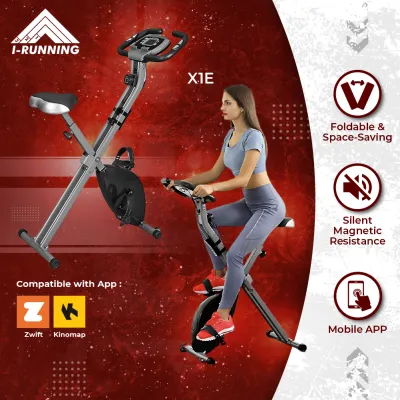
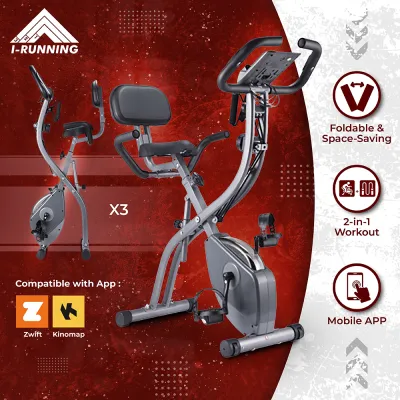
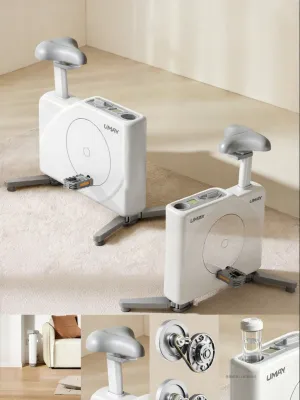
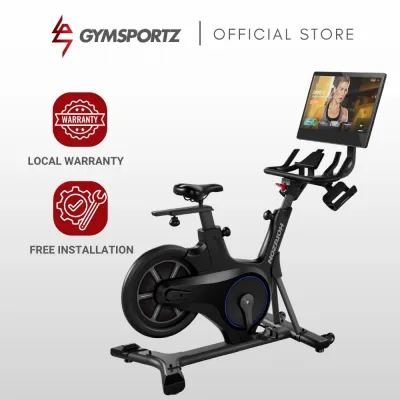
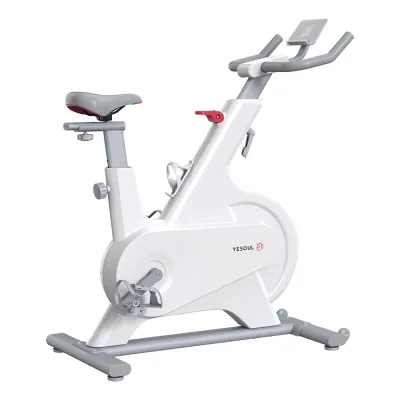
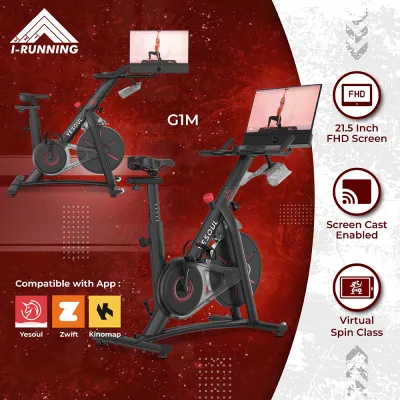
Prices are valid at publication and may change. Please refer to the product page for the latest price.
Comparing Types of Space-Saving Home Exercise Bike Models
Selecting the right form factor is a trade-off between your fitness intensity and the amount of permanent floor space you are willing to dedicate to equipment.

Foldable Upright Bikes
Foldable upright bikes, often designed with an X-frame structure, are engineered specifically for ultra-compact homes. Their primary advantage is the ability to fold flat, significantly reducing their depth so they can be easily wheeled into a utility closet, a household shelter, or a narrow gap next to a wardrobe. Because they are lightweight, they are highly maneuverable and excellent for moderate, steady-state cardio sessions like light pedaling while watching television.
However, these models have clear physical limitations. To remain lightweight and foldable, they utilize lighter frames and smaller flywheels, which means they lack the structural rigidity required for high-intensity interval training (HIIT) or out-of-saddle riding. If your fitness routine involves aggressive sprints or standing climbs, a folding frame may wobble, making it less suitable for high-intensity workouts.
Compact Spin Bikes
Compact spin bikes feature a fixed, non-folding frame but are designed with a much smaller overall base compared to commercial gym models. These bikes prioritize structural integrity, utilizing heavy flywheels and robust steel tubing to provide a highly stable platform. This stability makes them the best choice for users who prioritize intense workouts, standing climbs, and high-resistance training over the ability to hide the bike away completely.
Because these bikes do not fold, they will become a permanent fixture in your room. Before purchasing, you must check the exact length and width specifications of the bike’s base stabilizers to ensure you can spare that dedicated floor space indefinitely. While they cannot be tucked into a closet, many models feature sleek, minimalist designs that blend relatively well into modern home decor.
Under-Desk and Mini Peddlers
For those facing extreme space constraints or looking for a multi-use solution, under-desk and mini peddlers offer an ultra-compact alternative. These units consist solely of the pedal mechanism and a small housing for the resistance drive, completely eliminating the seat and handlebars. They are designed to be placed under a work desk or in front of a living room sofa, allowing you to pedal while sitting in your existing furniture.
While highly convenient and easy to store under a bed or inside a drawer, these devices are built for low-resistance, low-impact movement. They are excellent for improving circulation, burning passive calories during long work hours, or assisting in light rehabilitation, but they cannot replicate the cardiovascular intensity or full-body engagement of a dedicated upright or spin bike.
Key Specifications to Check for Compact Bikes
When shopping for a home exercise bike, relying on product photos can be misleading. You must analyze specific technical specifications to ensure the machine is compatible with your home environment.
- Footprint vs. Folded Dimensions: Always compare the active use dimensions against the folded storage thickness. Some bikes advertised as "foldable" only fold partially, leaving a bulky frame that still requires significant vertical or horizontal clearance. Measure the exact gap where you plan to store the bike to ensure it will fit.
- Weight and Mobility: Look for models with built-in transport wheels on the front stabilizers. Verify the total unit weight; a bike weighing between 15kg and 25kg is generally manageable for one person to tilt and roll across HDB flooring, whereas heavier units may require two people to move safely.
- Noise and Drive System: In high-density HDB blocks, noise travel through shared walls and floors is a major concern. Opt for a magnetic resistance drive system rather than friction resistance. Magnetic systems are virtually silent because they use magnets to adjust resistance without physically touching the flywheel. Friction systems use felt pads that wear down over time and emit a constant hissing sound during use.
- Adjustability and User Capacity: Ensure the seat and handlebars offer sufficient vertical and horizontal adjustability, especially if multiple household members of varying heights will use the bike. Additionally, check the manufacturer's maximum user weight capacity. Lightweight folding bikes often have lower weight limits (typically 90kg to 100kg) compared to heavier, fixed compact spin bikes.
Measuring and Preparing Your Workout Area
Before your new bike arrives, you must prepare the physical space to ensure safe, comfortable, and damage-free operation.
First, calculate a dynamic space buffer. The physical dimensions of the bike only represent its static state; when riding, your elbows, shoulders, and head will extend beyond the frame. Add a safety buffer of at least 30cm to 50cm of clear space on all sides of the bike to prevent your limbs from striking nearby walls, shelves, or furniture during quick movements or when mounting and dismounting.
Next, evaluate your ceiling height and step-over clearance. Taller riders using a spin bike for standing climbs must ensure their heads will not come dangerously close to ceiling lights or rotating ceiling fans. Additionally, if you have limited mobility, check the step-over height of the bike’s frame to ensure you can easily swing your leg over the center bar without losing your balance.
Finally, invest in floor protection and ventilation. HDB flooring, whether homogenous tiles, luxury vinyl tiles (LVT), or timber parquet, can be easily scratched or dented by the metal stabilizers of a heavy bike. Placed directly on the floor, the bike can also transmit low-frequency vibrations through the concrete slab to the neighbors downstairs. Placing a high-density PVC or rubber equipment mat under the bike dampens these vibrations and catches sweat, protecting your floors from moisture damage. Ensure the area is well-ventilated with a standing fan or positioned near a window to manage humidity in Singapore’s warm climate.
Common Sizing and Placement Mistakes to Avoid
Avoiding common pitfalls during the planning phase will save you from the hassle of returning heavy equipment or damaging your home.
One frequent mistake is assuming that a folding bike will easily slide under any standard bed frame. Many folding models, even when fully collapsed, still have a folded thickness of 40cm to 50cm due to the handlebars and pedal assembly. This is often taller than the clearance offered by modern platform beds or low-profile bed frames. Always measure your under-bed clearance before assuming this storage method will work.
Another overlooked factor is the delivery pathway. A bike might fit perfectly in your living room, but the shipping box must first navigate the HDB passenger lift, narrow common corridors, and your front door frame. Check the packaged dimensions provided by the manufacturer or retailer to confirm that the box can be safely transported to your unit without getting stuck.
Lastly, avoid placing your exercise bike too close to sensitive household items. Positioning the bike directly against a wall, next to fabric curtains, or right beneath an air-conditioning unit can lead to issues. Sweat droplets can damage wall paint over time, encourage mold growth on nearby fabrics, or cause the metal components of the bike to rust prematurely if exposed to condensation or rainwater from an open window.
Frequently Asked Questions (FAQ)
Can I keep an exercise bike in an HDB bedroom?
Yes, keeping an exercise bike in an HDB bedroom is highly common, provided you select a model that matches the room’s layout. Ensure the bike does not block access to your bed, wardrobe, or main doorway. To protect your bedroom furniture and mattress from moisture, use a high-density floor mat to catch sweat, and keep the room well-ventilated during and after your workouts.
Are folding exercise bikes stable enough for intense workouts?
Folding exercise bikes are designed primarily for low-to-moderate intensity, steady-state cardio. Because of their lightweight X-frame construction and smaller base stabilizers, they do not offer the rigidity required for intense standing climbs, heavy resistance work, or rapid sprints. For high-intensity training, a compact, non-folding spin bike is a much safer and more stable option.
Community discussion
Share your experience or ask a question. Comments are reviewed before publication.