
Crabbing along Singapore’s scenic coastlines is an engaging and rewarding outdoor activity that connects you directly with the local marine environment. Whether you are exploring the sandy shores of Changi Beach, walking along coastal park connectors, or casting from a high jetty, having the right gear is essential for a successful outing. For beginners, choosing an appropriate crabbing trap is the single most important decision to make before heading out.
The ideal beginner trap should balance simplicity, affordability, and effectiveness. Instead of complex commercial-grade setups, novices benefit most from user-friendly designs that are easy to transport, simple to deploy, and highly reliable in local waters. By understanding the unique coastal conditions of Singapore and matching your gear to your preferred location, you can ensure a fun, safe, and productive foraging experience.
What to Look for in a Beginner Crab Trap
When starting out, it is easy to get overwhelmed by the wide variety of crabbing equipment available in tackle shops and online marketplaces. However, evaluating your options based on a few practical criteria will help you select a trap that fits your needs and skill level perfectly. Singapore’s coastal environments—ranging from muddy mangrove edges and sandy beaches to concrete seawalls and high-clearance jetties—demand specific gear characteristics.
Products mentioned in this guide
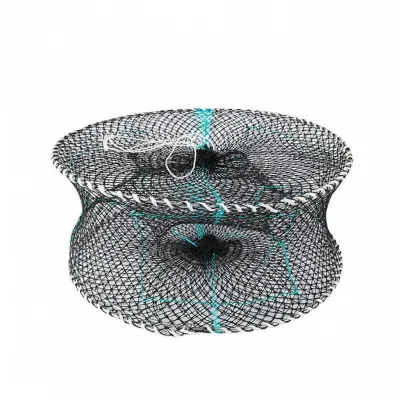
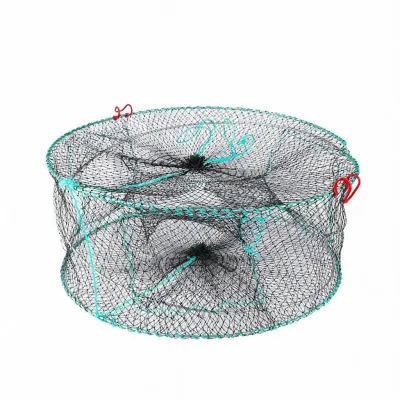
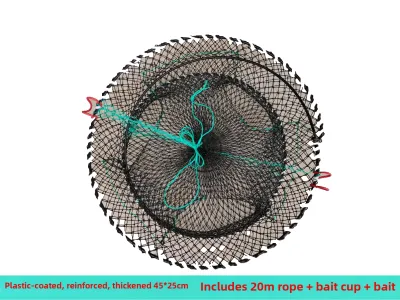
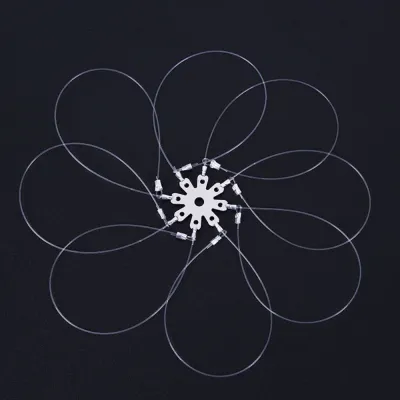
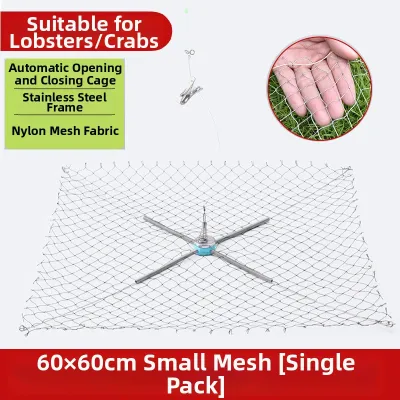
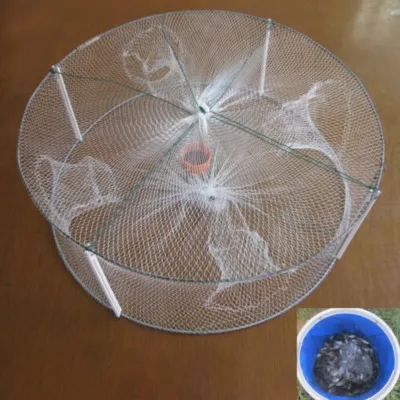
Prices are valid at publication and may change. Please refer to the product page for the latest price.
Ease of Use As a beginner, your primary focus should be on learning how crabs behave and how to handle them safely. A trap that requires complex assembly, intricate knot-tying, or difficult baiting mechanisms will only cause frustration. Look for designs that can be set up in seconds and feature straightforward bait-securing systems. The retrieval process should also be intuitive, allowing you to lift the trap smoothly without losing your catch.
Portability Many of the best crabbing spots in Singapore are located within coastal parks or along the extensive Park Connector Network (PCN). Because you will likely be walking, cycling, or taking public transit to reach these locations, heavy or bulky gear is highly impractical. A beginner trap must be lightweight and collapsible. It should fold flat so that it can easily slide into a backpack or be strapped to a bicycle rack alongside your other essentials.
Durability and Corrosion Resistance The tropical waters around Singapore are highly saline, warm, and often filled with abrasive sand and fine silt. This combination creates a highly corrosive environment that can rapidly degrade low-quality metal components. To ensure your gear lasts more than a few trips, prioritize traps constructed with vinyl-coated steel wire, heavy-duty polyethylene netting, or stainless steel frames. These materials resist rust and can withstand being dragged across rocky bottoms or muddy shores.
Cost-Effectiveness There is no need to spend a fortune on high-end commercial traps when you are just learning the ropes. Simple, entry-level designs are highly effective at catching local species like flower crabs and mud crabs. Choosing budget-friendly gear allows you to test different crabbing styles and locations without a significant financial commitment. It also minimizes the sting of losing a trap to an underwater snag or a strong current.
Mesh Size and Selectivity Ethical foraging is a crucial aspect of the local outdoor community. The mesh size of your trap plays a vital role in protecting marine ecosystems. If the mesh is too fine, you will end up catching tiny juvenile crabs, small fish, and other non-target marine life. A well-designed trap features a mesh size that is large enough to let small bycatch escape easily while securely retaining mature, legal-sized crabs. This reduces the time you spend sorting through your catch and helps preserve local crab populations.
Recommended Crab Trap Designs for Beginners
To help you navigate the options, let us look closely at the three most popular and effective trap designs for beginners in Singapore. Each design operates on a different mechanical principle and is best suited for specific coastal settings.

Collapsible Wire Mesh Box Traps
The collapsible wire mesh box trap is a classic, highly reliable design widely used by recreational crabbers. These traps typically feature a rectangular or square frame made of springy, vinyl-coated wire that can be folded completely flat for transport and popped open into a rigid box structure when ready for deployment.
Mechanism These traps utilize one-way funnel entrances, usually located on opposite sides of the box. The crab is drawn to the trap by the scent of the bait placed in the center. It crawls up the sloping mesh funnel and drops through a narrow opening into the main chamber. Because the inner opening of the funnel is suspended in the middle of the cage, the crab struggles to find its way back out, keeping it securely trapped.
Step-by-Step Setup To set up a collapsible wire mesh box trap, start by unclipping the side fasteners that keep it flat. Pull the top and bottom frames apart, allowing the spring-loaded wire structure to expand into its full three-dimensional shape. Secure the internal support bars or hooks to ensure the frame remains rigid under water pressure. Next, place your chosen bait in the central bait cage or secure it firmly with a heavy-duty clip. Tie your retrieval rope securely to the top bridle of the trap, ensuring the knot is tight. Gently lower the trap into the water, letting it sink to the bottom. Keep the rope slack enough to rest on the seabed but secure the other end to a fixed structure on shore.
Advantages for Beginners The greatest benefit of a box trap is its exceptional catch retention. Once a crab enters, it is highly unlikely to escape, allowing you to leave the trap unattended for hours while you fish or relax nearby. Additionally, the flat, heavy wire base provides excellent stability on the seabed, preventing the trap from rolling over or drifting away in moderate tidal currents.
Limitations to Consider While collapsible, these traps are still bulkier and heavier than net-based designs. Carrying multiple box traps can be challenging if you are traveling light. Furthermore, because of their rigid wire frames and corners, they are more prone to getting snagged on submerged rocks, debris, or mangrove roots. They are best deployed on clean, sandy, or muddy bottoms where snags are minimal.
Pyramid Drop Traps
Pyramid drop traps, also known as star traps, are ingenious collapsible structures designed specifically for vertical deployment. They feature a solid square metal base with four triangular mesh panels attached to the sides.
Mechanism When the trap is lowered to the water, the four side panels fall completely flat on the seabed, creating an open, flat platform with the bait secured in the center. This open layout allows crabs to walk freely onto the trap from any direction to feed on the bait. When you pull the main retrieval rope, the tension lifts the four side panels upward, closing them together at the top to form a sealed pyramid shape before the crabs realize they are being lifted.
Step-by-Step Setup Using a pyramid drop trap from a jetty like Woodlands Jetty requires a systematic approach. Lay the trap flat on the deck and secure your bait to the central pin or mesh base. Attach your main retrieval rope to the central ring where the four corner lines meet. When you lower the trap, feed the rope out smoothly. Once the trap hits the seabed, the rope will go slack, and the four mesh walls will fall flat. Wait about 15 to 20 minutes. When you are ready to retrieve, grab the rope firmly and pull upward in one swift, continuous motion. This immediate tension forces the side panels to snap shut, locking any feeding crabs inside as you haul it up to the jetty platform.
Advantages for Beginners Pyramid traps are incredibly portable because they fold completely flat into a single, thin sheet. They are the absolute best choice for crabbing from elevated structures such as jetties, piers, or steep concrete seawalls. Because they close instantly when pulled, they offer a highly dynamic and exciting crabbing experience, allowing you to feel the weight of the catch as you pull.
Limitations to Consider The primary drawback of a pyramid trap is that it requires active and careful retrieval. You must maintain a steady, continuous, and rapid upward pull on the rope to keep the side panels closed. If you hesitate, let the line go slack, or hit an obstruction on the way up, the panels will open, and the crabs will instantly escape. They are also unsuitable for long, unattended “soaks” because crabs can wander on and off the flat trap at will until you pull the line.
Ring Net Traps (Dip Nets)
For those seeking the simplest and most active form of crabbing, the ring net trap (often called a hoop net or dip net) is an excellent starting point. This design consists of a simple metal ring—or two concentric rings of different sizes—with a loose pocket of nylon netting suspended between them.
Mechanism The ring net lies flat on the sea floor with the bait secured in the center of the netting. Like the pyramid trap, it presents no physical barriers, allowing crabs to walk directly onto the mesh to reach the bait. When you pull the retrieval rope, the outer ring rises first, forming a shallow basket or pocket that scoops up the feeding crabs as you lift the assembly through the water column.
Step-by-Step Setup For a ring net trap, lay the metal rings flat on the ground and place the bait in the center of the mesh pocket. Tie your three-point harness rope to the main retrieval line. When casting into shallow coastal pools, toss the net gently so it lands flat. Because there are no walls, crabs can walk onto the net almost immediately. Keep a close eye on the water if it is clear, or set a timer for 10 minutes. When retrieving, pull the line as fast as possible. The rapid upward movement causes the outer ring to lift first, creating a deep basket that prevents the crabs from swimming or crawling out before the net breaks the surface.
Advantages for Beginners Ring nets are the most affordable, lightweight, and compact crabbing gear you can buy. You can easily pack half a dozen ring nets into a standard backpack without feeling weighed down. They are incredibly easy to wash, dry, and store. They are highly effective in shallow waters, sandy shorelines, and calm coastal pools where you can actively monitor the water.
Limitations to Consider Because the net remains completely open while sitting on the bottom, it offers zero passive retention. If you leave a ring net unattended for too long, crabs will simply eat your bait and walk away. Successful ring net crabbing requires you to check and pull the nets frequently—typically every 10 to 15 minutes. This active style of crabbing keeps you constantly engaged but requires more physical effort and continuous attention.
Quick Comparison of Beginner Crab Trap Types
To help you decide which design fits your planned crabbing style and location, the table below summarizes the key performance characteristics of each trap type.
| Trap Type | Portability | Ease of Retrieval | Catch Retention | Best Environment | Relative Price Point |
|---|---|---|---|---|---|
| Collapsible Box Trap | Moderate | Easy (Passive) | High (Can be left unattended) | Sandy bottoms, calm mudflats | Medium |
| Pyramid Drop Trap | High | Moderate (Requires steady pull) | Moderate (Active retrieval) | Jetties, piers, high seawalls | Medium to High |
| Ring Net Trap | Very High | Easy (Requires fast pull) | Low (Requires frequent checks) | Shallow shores, calm bays | Low |
When choosing your first crabbing trap, match the design to your target location in Singapore. If you plan to spend the day fishing from a high platform like Bedok Jetty, a pyramid drop trap is highly efficient. If you prefer setting up a base camp on the sandy shores of Pasir Ris Park or Changi Beach Park, collapsible box traps will allow you to set the gear and enjoy a picnic while the traps do the work. For active, hands-on fun in shallow coastal waters, ring nets are an unbeatable and budget-friendly choice.
Essential Bait and Accessories for Singapore Waters
Having a great trap is only half the equation; you also need the right bait and supporting accessories to ensure a successful crabbing trip. Crabs rely heavily on their sense of smell to locate food, making bait selection critical.
Effective Local Bait Options The most common target species in Singapore’s coastal waters are flower crabs (which prefer sandy areas) and mud crabs (which thrive near mangroves and muddy estuaries). Both species are highly attracted to strong, oily, and fresh scents.
- Chicken Necks and Wings: These are highly recommended for beginners. They are inexpensive, widely available at local wet markets and supermarkets, and their tough skin and bones make them highly durable against small bait-stealing fish.
- Fish Heads and Scraps: Oily fish like mackerel (kembung), sardines, or salmon heads release a strong scent trail in the water. You can often ask for fish scraps at wet market stalls for a very low cost.
Necessary Accessories To use your trap effectively, make sure you pack these essential items:
- Heavy-Duty Rope: You will need a strong, rot-resistant nylon or braided polyester rope. For jetty crabbing, ensure your rope is at least 10 to 15 meters long to account for high concrete structures and changing tide levels.
- Bait Bags or Clips: Crabs possess powerful claws and will quickly tear loose bait to pieces, leaving your trap empty. Secure your bait inside a wire bait cage, a heavy-duty mesh bait bag, or with sturdy metal bait clips fixed to the center of the trap.
- Sturdy Bucket with Lid: A deep, durable bucket is essential for transport. Ensure it has a secure, ventilated lid; crabs are surprisingly adept climbers and can easily escape from an open bucket.
- Measuring Gauge: Always carry a small ruler or a dedicated crab measuring gauge. This allows you to quickly and accurately measure the width of the crab's carapace (shell) to ensure it meets sustainable sizing standards before putting it in your bucket.
Safe Handling Tips Handling crabs safely is a critical skill for any beginner. Crabs, especially mud crabs, have incredibly powerful claws that can inflict painful injuries. Always use a pair of long-handled metal tongs to transfer crabs from your trap to your bucket. If you must handle them by hand, approach from the rear. Firmly grip the crab by its back swimming legs or the very back of its carapace, keeping your fingers well out of reach of its pincers. Never attempt to grab a crab from the front or top.
Local Regulations, Safety, and Ethical Foraging
Crabbing in Singapore is a privilege that relies on responsible behavior from every participant. To protect our rich marine biodiversity and ensure your own safety, always adhere to local guidelines and best practices.
Check Current Regulations Before planning your trip, always verify the latest guidelines on the official National Parks Board (NParks) portal or relevant government websites. Regulations regarding permitted crabbing zones, gear restrictions, and catch limits can change. Some areas, such as strict nature reserves, marine parks (like Sisters’ Islands Marine Park), and specific zones within Sungei Buloh Wetland Reserve, strictly prohibit any collection or foraging. Stick to designated recreational areas in coastal parks to avoid heavy fines.
Coastal Safety Precautions Singapore’s coastal environments can present physical hazards if you are unprepared.
- Tide Tables: Always consult local tide tables before heading out. Tidal heights in Singapore can shift rapidly, and an incoming tide can quickly submerge sandbars or cut off your path back to the shore.
- Protective Footwear: Never go crabbing barefoot or in simple flip-flops. Wear puncture-resistant water shoes or sturdy booties to protect your feet from sharp oyster shells, broken glass, hidden debris, or venomous marine life like stonefish.
- Hydration and Sun Protection: The tropical climate can quickly lead to dehydration and heat exhaustion. Bring plenty of drinking water, wear a wide-brimmed hat, and apply sunscreen.
Ethical and Sustainable Practices Practicing sustainable foraging ensures that our marine ecosystems remain healthy for years to come.
- Release Undersized Crabs: If a crab does not meet mature size standards, release it gently back into the water immediately.
- Protect Egg-Bearing Females: Carefully inspect every female crab you catch. If you see a spongy, orange-to-black mass of eggs attached to the underside of her abdomen (known as a "berried" crab), release her immediately. Protecting breeding females is the single most effective way to support local crab populations.
Frequently Asked Questions (FAQ)
Do I need a fishing license to use a crab trap in Singapore?
To ensure compliance with local laws, you should always check the latest guidelines on official government or National Parks Board (NParks) portals. Generally, recreational hook-and-line fishing and crabbing for personal consumption do not require a license in designated public recreational areas. However, rules can vary significantly depending on the specific location, the type of gear you deploy, and whether the activity is deemed commercial. Using large-scale commercial nets or foraging in protected marine sanctuaries is strictly prohibited.
What is the best time of day to go crabbing?
Crab foraging behavior is primarily driven by tidal movements rather than a specific time of day. Crabs are highly active during incoming tides, as the rising water allows them to move into newly flooded shallow areas to search for food. Consult local tide chart applications to plan your crabbing trip to coincide with the hours leading up to high tide. Additionally, crabbing during the cooler hours of early morning or late evening can be more productive, as crabs are less active in the intense midday heat.
Community discussion
Share your experience or ask a question. Comments are reviewed before publication.