
Finding the right balance between security, weight, and convenience is a critical decision for anyone navigating Singapore’s Park Connector Network (PCN) or commuting daily to work and transit hubs. The best cycle lock for your routine depends entirely on where you park, how long your bicycle remains unattended, and your carrying preferences. For high-risk, long-duration scenarios—such as leaving a bicycle overnight at a Housing & Development Board (HDB) void deck or all-day at an MRT station—a heavy-duty U-lock is the industry standard for resisting aggressive cutting attacks. Conversely, if your riding consists of active weekend fitness sessions along the scenic PCN loops punctuated by quick stops at local cafes, a compact folding lock offers the ideal combination of portability, flexible locking angles, and moderate physical security.
Understanding your specific commuting profile helps prevent the common mistakes of either carrying an unnecessarily heavy lock that drains your energy or relying on a flimsy cable lock that can be snipped in seconds. Singapore’s unique urban landscape features highly varied parking infrastructure, from specialized double-tier racks to wide public railings, alongside a tropical climate that tests the durability of any outdoor gear. By matching your security choices to these local conditions, you can protect your investment without compromising the freedom and efficiency of your daily ride.
Key Features to Look for in a Singapore Commuter Cycle Lock
Selecting a cycle lock for daily use in Singapore requires a practical understanding of the trade-off between security and portability. High-security locks are constructed from thick, hardened steel alloys designed to resist heavy hand tools, but this protection comes with a significant weight penalty. For multi-modal commuters who cycle to an MRT station before boarding a train, carrying a heavy lock can become a daily physical burden. If you carry your lock in a backpack, a heavy model can cause shoulder fatigue over longer distances; if you mount it to your frame, it can alter the handling dynamics of a lightweight folding bike or road bike. Therefore, you must evaluate whether your typical parking locations truly demand maximum security or if a lighter, more portable option is sufficient.
Products mentioned in this guide
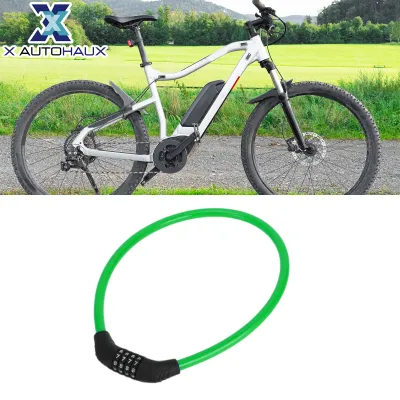
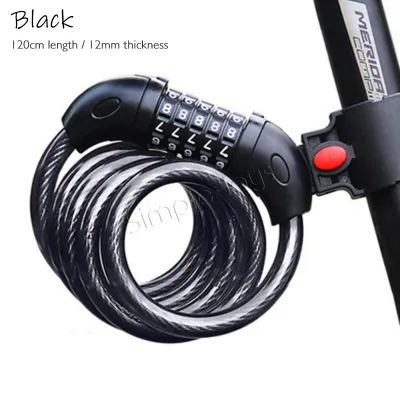
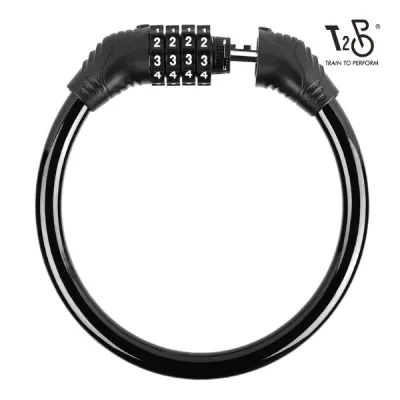
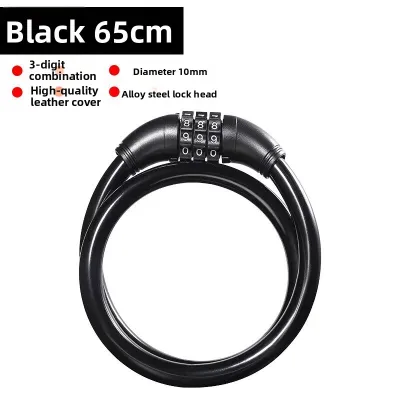
Prices are valid at publication and may change. Please refer to the product page for the latest price.
Compatibility with local bicycle parking infrastructure is another essential factor that many riders overlook until they attempt to lock their bikes for the first time. Singapore’s public spaces feature a diverse array of parking fixtures, including standard HDB bicycle racks, yellow MRT station parking hoops, and the thick, green metal railings found along the PCN. A lock with a small internal clearance might easily secure your frame to a thin metal rack, but it will fail completely when you try to loop it around a wide concrete pillar or a thick PCN barrier. Before purchasing a lock, observe the dimensions of the fixtures at your regular destinations to ensure the lock’s shackle or loop length can comfortably encircle both your bicycle frame and the mounting point.
The tropical climate of Singapore presents a severe environmental challenge to any mechanical locking system. With relative humidity levels frequently remaining high and sudden, heavy downpours occurring year-round, metal components are highly susceptible to rapid oxidation and rust. A rusted lock not only looks unsightly but can also seize internally, leaving you stranded with a key that refuses to turn or a locking mechanism that will not release. When evaluating locks, prioritize those featuring comprehensive weatherproofing, such as fully enclosed vinyl or rubber sleeves over the metal shackles, integrated keyway dust covers that slide shut to block rain, and internal locking cylinders made of rust-resistant materials like stainless steel or brass.
Top Cycle Lock Types for PCN and Daily Commuting
No single cycle lock can perfectly serve every commuting scenario, which is why understanding the distinct categories of locks is key to making an informed purchase. Different lock designs prioritize different aspects of the security-to-convenience spectrum, allowing you to choose a model that aligns with your daily routes and parking habits. Whether you require a high-security anchor for long-term unattended parking or a lightweight deterrent for active recreational riding, categorizing your options helps narrow down the choices.

Heavy-Duty U-Locks for MRT and HDB Parking
U-locks, also known as D-locks, are widely recognized as the most secure option for cyclists who must leave their bikes unattended for extended periods. If your daily commute involves parking your bicycle at a major transport node like an MRT station for the duration of your workday, or if you store your bike overnight in an HDB void deck, a heavy-duty U-lock is highly recommended. The rigid, hardened steel construction of a quality U-lock provides excellent resistance against manual cutting tools, such as hacksaws and standard bolt cutters, which are the most common tools used in opportunistic thefts.
However, the very feature that makes a U-lock secure—its rigid, unyielding shape—also presents practical challenges for the daily commuter. Because the lock cannot bend or stretch, you have very little flexibility when positioning your bicycle next to a parking fixture. If the rack is crowded or awkwardly designed, you may struggle to align your bike close enough to lock it securely through the frame. Additionally, top-tier U-locks are heavy, typically weighing between 1.0kg and 2.0kg, which can make them cumbersome to transport. Many commuters choose to mount the U-lock to their bicycle frame using a dedicated bracket, though you must ensure the bracket is tightened securely to prevent the lock from rattling or shifting while riding over uneven paths.
Buying Checklist for U-Locks:
- Shackle Thickness: Choose a shackle with a diameter of at least 13mm made of hardened steel, as this thickness is extremely difficult to cut with manual bolt cutters.
- Double-Locking Mechanism: Look for a design where the shackle locks into the crossbar on both ends, meaning a thief would have to cut both sides of the U-lock to remove it, doubling the time and effort required.
- Protective Sleeves: Ensure the entire metal shackle is covered in a durable vinyl, silicone, or rubber coating to prevent metal-on-metal contact that can scratch your bicycle's paint and invite rust.
- Keyway Cover: Verify that the lock cylinder features a sliding or rotating dust cover to keep out rainwater, road spray, and dirt during wet commutes.
Compact Folding Locks for PCN Rides and Cafe Stops
Folding locks have gained immense popularity among Singaporean cyclists, particularly those who frequent the PCN or commute on folding bicycles. Composed of a series of hardened steel plates connected by heavy-duty metal rivets, these locks can be folded down into a remarkably compact, rectangular shape. This design allows them to be carried easily in a small frame-mounted bracket, which often bolts directly into your bicycle’s water bottle cage mounts, keeping the weight low and centered on the frame.
The primary advantage of a folding lock is its versatility when deployed. When unfolded, the linked plates behave similarly to a chain, providing a flexible loop that can easily navigate around wide or irregularly shaped objects. This is incredibly useful along the PCN, where traditional bicycle racks may not always be available, forcing you to lock your bike to thick wooden posts, wide metal railings, or public benches during a rest stop. While folding locks generally offer slightly less raw cut resistance than premium, thick-shackle U-locks due to the potential vulnerability of their connecting rivets, they provide a very high level of security that is more than sufficient for active day rides and brief stops.
Buying Checklist for Folding Locks:
- Rivet Construction: Inspect the joints to ensure the rivets are robust, flush with the plates, and specifically designed to resist drilling or prying attacks.
- Link Length: Opt for a lock with an unfolded length of at least 80cm to 90cm, which provides enough reach to comfortably secure your frame and rear wheel to most public fixtures.
- Bracket Quality: Ensure the included mounting bracket holds the folded lock tightly with a secure strap or latch, preventing annoying rattles when riding over PCN expansion joints or tactile paving.
- Plate Coating: Look for plates coated in a soft-touch plastic or protective fabric sleeve to safeguard your bicycle frame from cosmetic damage during use.
Lightweight Cable Locks for Quick Visual Deterrence
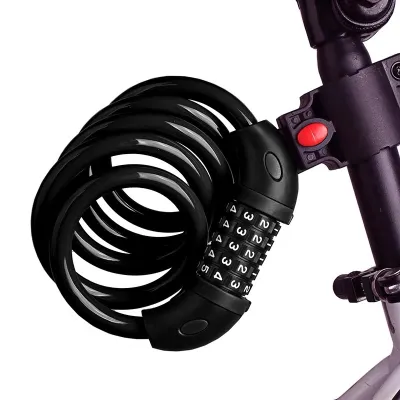
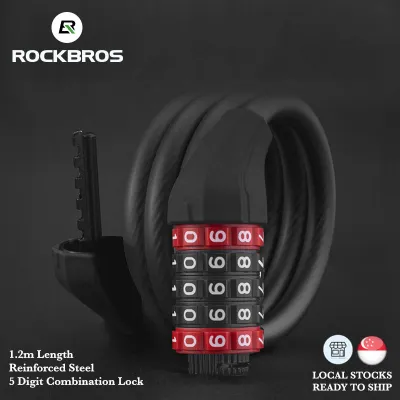
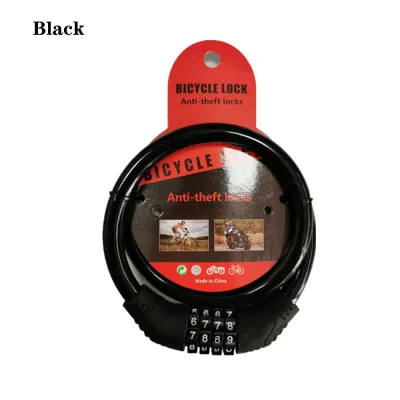
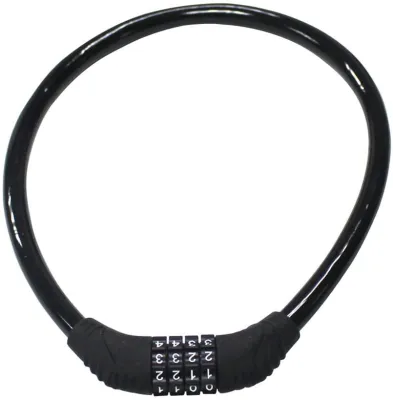
Cable locks consist of flexible, braided steel wires encased in a protective plastic sleeve, offering a lightweight and highly flexible locking solution. Because they can be easily coiled up and stuffed into a pocket or wrapped around a seatpost, they are highly convenient to carry. However, this convenience comes at the cost of security; the internal steel strands of most cable locks can be severed in seconds using simple, pocket-sized wire cutters or basic hand tools. Therefore, cable locks must never be relied upon as a primary security measure for high-risk or long-duration parking.
Instead, cable locks should be viewed strictly as a secondary lock or a tool for quick visual deterrence. They are appropriate only for brief, in-sight stops where you remain within a few meters of your bicycle and can react immediately if someone approaches it. For example, if you are stopping at a busy PCN pitstop to grab a quick drink from a vending machine, popping into a convenience store for a minute, or sitting at an outdoor table at a hawker centre with your bike in direct line of sight, a cable lock is useful. It prevents a passerby from simply hopping onto your unsecured bicycle and riding away in an instant, forcing them to spend time attempting to defeat a physical barrier.
Buying Checklist for Cable Locks:
- Core Thickness: If you choose to use a cable lock, select one with an overall thickness of at least 12mm to 15mm, as thicker cables require larger, more conspicuous tools to cut.
- Key vs. Combination: Select a high-quality key cylinder or a resettable four-digit combination lock that operates smoothly without sticking.
- Sleeve Durability: Ensure the vinyl outer sleeve is thick and free of cracks, which prevents water from seeping into the braided steel core and causing hidden corrosion that weakens the lock over time.
Quick Comparison: Which Lock Type Fits Your Ride?
To help you quickly determine which lock category best suits your daily cycling routine in Singapore, the table below summarizes the key trade-offs of each lock type. Consider where you park most frequently and how much weight you are willing to carry before making your final decision.
| Lock Type | Security Level | Portability | Relative Weight | Best Use Case in Singapore | Key Limitation |
|---|---|---|---|---|---|
| Heavy-Duty U-Lock | High | Low to Moderate | Heavy (1.0kg – 2.0kg) | All-day MRT parking, overnight HDB void deck parking | Rigid shape limits locking options on wide posts |
| Folding Lock | Moderate to High | High (folds compactly) | Medium (0.7kg – 1.5kg) | PCN commuting, cafe stops, multi-modal transit | Joint rivets can be vulnerable to specialized tools |
| Cable Lock | Low | Very High | Light (0.3kg – 0.6kg) | Quick convenience store runs, in-sight hawker centre stops | Easily cut with basic manual hand tools |
How to Lock Securely and Prevent Rust in Tropical Weather
Investing in a high-quality cycle lock is only half the battle; using correct locking techniques is essential to ensure your bicycle remains secure. When parking, always secure your lock through the main triangle of the bicycle frame and at least one wheel—ideally the rear wheel, which contains the expensive drivetrain components—to an immovable, grounded metal fixture. Avoid locking your bike to loose signposts, low railings where the lock can be easily lifted over the top, or thin chain-link fences that can be cut faster than the lock itself. Additionally, try to keep the lock positioned high off the ground with the keyway facing downward; a lock resting on the concrete pavement is highly vulnerable to hammer or anvil attacks, as the ground provides a solid surface for a thief to strike against.
Singapore’s intense tropical weather requires a proactive maintenance routine to prevent your lock from seizing up due to rust and corrosion. Rainwater, high humidity, and road grime can easily find their way into the locking cylinder and internal joints, leading to stiff operation or complete mechanical failure. Before applying any cleaning agents or lubricants, always check the lock manufacturer’s care instructions and your bicycle’s manual to ensure compatibility and prevent accidental damage to paint or components. After riding through a heavy tropical downpour, make it a habit to rinse any mud or grit off your lock with clean water and dry it thoroughly with a clean cloth. Once every few weeks, apply a small amount of dry PTFE (polytetrafluoroethylene) lubricant directly into the keyhole and onto any moving locking paws. Avoid using wet chain lubes or heavy household oils, as these attract dust and grit, creating an abrasive paste that can permanently damage the delicate pin tumbler mechanism inside your lock.
Finally, always remain mindful of local parking guidelines and public space etiquette to avoid having your bicycle removed by authorities. The Land Transport Authority (LTA) provides designated bicycle parking zones, including yellow boxes and metal racks, at MRT stations and bus interchanges. Avoid locking your bicycle to pedestrian handrails, covered linkway pillars, or in any location that obstructs the flow of foot traffic along the PCN or public footpaths. Parking your bicycle in a way that blocks emergency exits or public walkways can result in the bike being impounded and a fine being issued, regardless of how securely it is locked.
Frequently Asked Questions (FAQ)
Are cable locks safe enough for overnight parking at HDBs?
No, cable locks do not provide sufficient security for overnight or long-term unattended parking at HDB void decks. Because the braided steel core of a cable lock can be severed silently and almost instantly using basic manual bolt cutters, they offer very little resistance to a determined thief. For overnight parking, it is highly recommended to upgrade to a heavy-duty U-lock or a thick, hardened steel chain lock, and to park your bicycle in a well-lit area covered by HDB police cameras.
How do I prevent my cycle lock from rusting in Singapore's weather?
To prevent rust, choose a cycle lock that features a protective vinyl or rubber sleeve and a built-in sliding keyhole cover to block moisture. Establish a routine of wiping the lock dry after riding through rain, and apply a dry PTFE lubricant to the keyway and moving joints every few weeks to displace water and prevent internal corrosion. Whenever possible, store your bicycle and lock in covered, sheltered areas such as HDB void decks or indoor parking facilities to minimize direct exposure to rain and high humidity.
Can I bring my cycle lock on the MRT?
Yes, you are fully permitted to bring your cycle lock on Singapore’s MRT trains and public buses. However, if you are carrying a heavy U-lock or chain lock, it is best to store it securely inside your backpack or attach it firmly to your bicycle frame using a dedicated mounting bracket. This ensures the lock remains stable during your journey, preventing it from swinging loose and causing accidental injury to other passengers or damaging train interiors during crowded peak-hour commutes.
Community discussion
Share your experience or ask a question. Comments are reviewed before publication.