
Selecting a treadmill for home use in a Singapore Housing & Development Board (HDB) flat requires balancing compact design, physical safety, and neighborly consideration. While maintaining a regular cardio routine is highly beneficial, the spatial realities of high-rise living mean you cannot simply purchase a commercial-grade machine without planning. The ideal treadmill for home must fit your physical space, fold away securely when not in use, and operate quietly enough to prevent structural vibrations from disturbing your neighbors.
To make an informed purchase, you must evaluate how a machine’s folded and operational dimensions fit into your layout. By understanding the technical specifications of space-saving fitness equipment, you can maintain an active lifestyle without compromising your living comfort.
Understanding Space Constraints in HDB Bedrooms and Living Areas
Modern HDB flats, particularly newer Build-To-Order (BTO) units, are designed with highly optimized, compact layouts. A typical common bedroom measures roughly 9 to 11 square meters, while master bedrooms generally offer 12 to 15 square meters. In these multi-purpose spaces, floor area is at a premium, often needing to accommodate wardrobes, study desks, and beds simultaneously.
Products mentioned in this guide
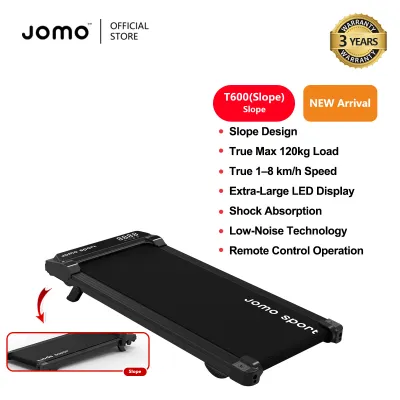
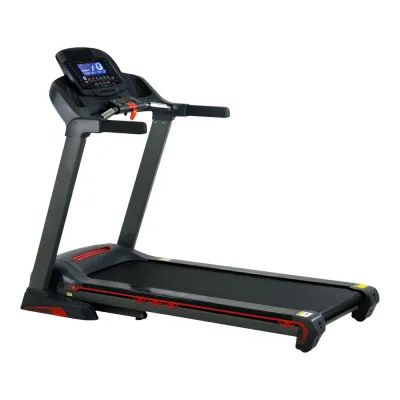
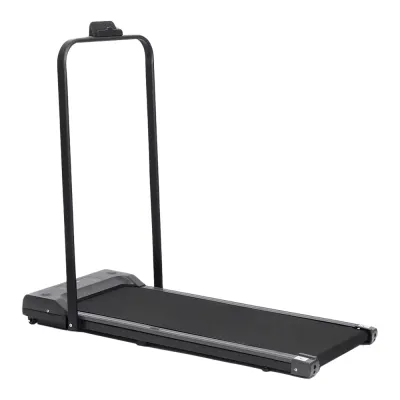
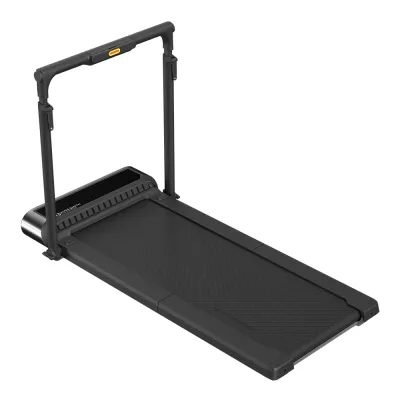
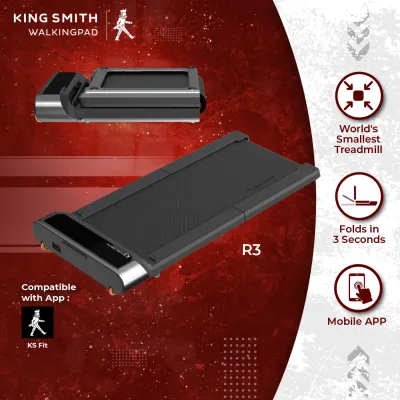
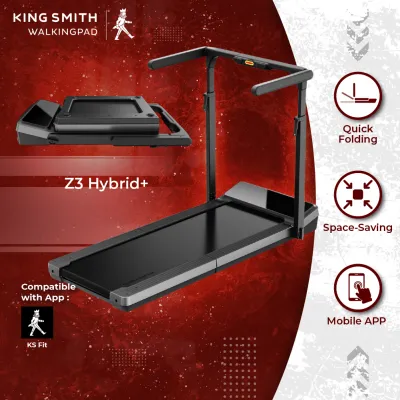
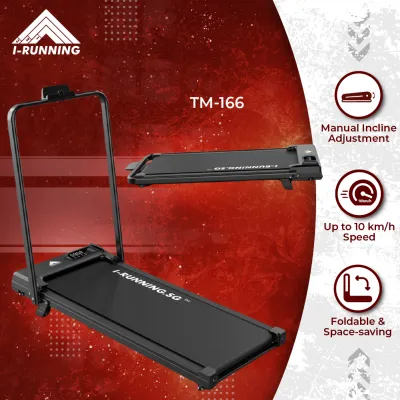
Prices are valid at publication and may change. Please refer to the product page for the latest price.
Permanently dedicating floor space to a bulky fitness machine is rarely practical in shared living areas or compact bedrooms. A non-folding treadmill quickly becomes a physical obstacle, blocking walkways, restricting wardrobe doors, and cluttering the room. This makes a foldable design essential for maintaining a flexible, functional home environment.
When planning your layout, you must distinguish between two critical dimensions: the stored footprint and the operational footprint. The stored footprint refers to the physical dimensions of the machine when fully folded and stowed away—whether standing vertically against a wall or lying flat under a bed. The operational footprint is the actual space the treadmill occupies when unfolded and in use, which must also include a safety clearance zone around the machine to prevent injury.
Key Features to Evaluate in a Treadmill for Home
Choosing a treadmill for home workouts involves looking past marketing labels to evaluate specific technical specifications that impact usability and safety.

Folding Mechanisms Foldable treadmills generally fall into three design categories. Hydraulic soft-drop systems utilize a pressurized cylinder to slowly lower the running deck to the floor without manual lifting, which prevents sudden drops and protects your flooring. Manual folding models require you to lift and lock the deck yourself, which can be physically demanding. Flat-fold designs allow the console and handrails to collapse entirely flat against the running deck, allowing the unit to be rolled under low furniture or stood upright against a wall.
Belt Dimensions vs. Overall Footprint There is a direct trade-off between the comfort of your running stride and the machine’s physical size. A wider and longer running belt (such as 45 cm x 130 cm) provides a safer, more comfortable running experience, especially for taller individuals. However, a larger belt naturally increases the machine’s overall footprint. For tight HDB spaces, you must verify that the belt is long enough for your stride length while keeping the frame compact enough to fit your room.
Motor and Weight Capacity Look closely at the Continuous Horsepower (CHP) rating rather than the Peak HP. For walking and light jogging, a motor with 1.5 to 2.0 CHP is generally sufficient. If you plan on regular, high-intensity running, look for a machine with at least 2.5 CHP to ensure the motor does not overheat or wear out prematurely. Additionally, always verify the manufacturer’s maximum weight capacity, ensuring it accommodates the heaviest user in your household with a safe buffer of at least 15 to 20 kilograms.
Noise and Vibration Dampening High-rise living means your floor is your neighbor’s ceiling. Treadmills generate two types of noise: airborne noise from the motor and belt, and structural vibration from your feet striking the deck. Look for models featuring multi-layered running belts and advanced shock-absorption systems (such as rubber elastomers or air cushions) to minimize impact transmission.
Foldable Treadmill Categories for Different Fitness Goals
Matching your specific fitness routine with the right equipment class ensures you do not overpay for features you do not need or purchase a machine that cannot handle your workouts.
Walking Pads and Under-Desk Treadmills
Walking pads represent the most compact class of treadmill for home use, designed specifically for low-impact cardio. These ultra-slim units can easily slide under a sofa, bed, or standing desk when not in use, making them highly popular for residents who want to stay active while working from home. Most walking pads feature a flat-fold design with small transport wheels, allowing you to move them around with minimal physical effort.
However, these compact dimensions come with notable limitations. Walking pads typically cap their maximum speeds between 6 km/h and 8 km/h, making them unsuitable for running or high-intensity interval training. They generally lack incline options and often do not feature sturdy handrails or emergency stop clip systems, which are vital safety features for fast paces. If your primary goal is to hit your daily step count while watching television or working, a walking pad is an excellent, space-efficient choice.
Lightweight Foldable Treadmills for Jogging
Lightweight foldable treadmills bridge the gap between walking pads and heavy-duty machines. These models usually feature a folding console and handrails, and many can fold completely flat or upright at a 90-degree angle. They typically offer top speeds of 10 km/h to 12 km/h, allowing for comfortable jogging and moderate cardio workouts within a small bedroom or living room corner.
While they offer greater speed and better stability than walking pads, they require a slightly larger operational footprint. The running belt on lightweight models is often narrower (around 40 cm to 42 cm) and shorter (around 120 cm). Taller users with longer running strides should carefully measure their stride length before purchasing, as a short belt can lead to unsafe running mechanics or accidental slips.
Heavy-Duty Foldable Treadmills for Serious Runners
For those training for marathons or engaging in high-intensity running, a heavy-duty foldable treadmill is necessary. These machines feature robust motors (2.5 to 3.5 CHP), motorized incline options, and spacious running belts (often 50 cm x 140 cm or larger) to accommodate high-speed strides safely. They are designed to withstand intense foot strikes without shaking or sliding across the floor.
The primary trade-off for this performance is physical size and weight. Although these machines feature folding decks—usually supported by hydraulic soft-drop mechanisms—their folded footprint remains substantial. They are heavy, often weighing over 70 kilograms, making them difficult to move frequently. If you choose this category, you should plan to dedicate a semi-permanent corner in a larger HDB living area where the machine can remain folded upright when not in use.
Step-by-Step Space Measurement and Setup Guide
Before purchasing any treadmill for home use, you must perform a thorough spatial assessment of your intended setup area.
Safe Zone Clearance Safety must be your primary consideration when positioning a treadmill. You must maintain a clear, unobstructed safety zone of at least 1.5 to 2 meters behind the rear of the treadmill belt. This space is critical in case you lose your footing and are thrown backward off the machine. Avoid placing the rear of the treadmill directly against a wall, glass sliding door, or sharp furniture.
Ceiling Height Checks Do not overlook vertical clearance, particularly if you are tall or choosing a model with an incline function. To calculate your required ceiling height, add your physical height to the deck height of the treadmill (usually 15 cm to 25 cm off the floor) and add another 10 cm to 15 cm for your vertical bounce while running. If your treadmill has an incline feature, add the maximum height of the incline to this total. Ensure this final figure is comfortably below your HDB ceiling height, which typically ranges from 2.6 to 2.8 meters.
Power and Ventilation Treadmills draw a significant amount of electrical current, especially during high-speed operation. Plug your treadmill directly into a grounded wall outlet; avoid using extension cords or multi-way adapters, which can overheat and pose a fire hazard. Additionally, ensure the room has adequate ventilation, such as an open window or ceiling fan, to help dissipate the heat generated by the treadmill motor and your body during intense workouts.
Floor Protection Always place a high-density, heavy-duty rubber or PVC treadmill mat underneath your machine. This mat serves multiple critical purposes: it protects your HDB flooring (whether parquet, vinyl, or ceramic tiles) from scratches and indentation marks, prevents dust and carpet fibers from entering the motor housing, and acts as a vital vibration-dampening layer to reduce noise transmission to the apartment below.
Common Sizing and Placement Mistakes to Avoid
One of the most frequent mistakes buyers make is relying solely on the manufacturer’s folded dimensions listed on online marketplaces. While a machine might fold down to a depth of just 20 cm, you must still account for the physical effort required to fold, lift, and maneuver a heavy piece of equipment every single day. If the folding process is too cumbersome, the treadmill will likely end up permanently unfolded, defeating its space-saving purpose.
Another critical error is ignoring structural floor vibration. While HDB buildings are constructed with robust reinforced concrete, the impact of a running adult can still transmit significant low-frequency thuds through the floor slab. Placing a heavy treadmill in the dead center of a room’s floor slab will amplify this vibration like a drum. Instead, position the machine closer to load-bearing walls or structural columns where the floor is stiffest.
Lastly, never compromise on running belt size to save space if you intend to run. Attempting to run on a belt that is too short or narrow forces you to constantly monitor your foot placement rather than focusing on your workout. This unnatural running posture can lead to joint strain, shortened strides, or dangerous missteps on the side rails or motor hood.
Frequently Asked Questions (FAQ)
Can I use a treadmill in an HDB flat without causing noise complaints?
Yes, you can minimize noise and vibration by taking several proactive steps. First, invest in a high-quality, high-density anti-vibration rubber mat (at least 6 mm to 10 mm thick) to absorb the impact of your feet. Second, place your treadmill adjacent to a load-bearing wall or structural column rather than in the middle of a room. Third, choose a treadmill with a high-quality motor and built-in shock absorption. Finally, be a considerate neighbor by scheduling your workouts during reasonable hours, strictly avoiding early mornings (before 7:00 AM) or late nights (after 10:30 PM) when the surrounding ambient noise in HDB estates is at its lowest.
Do foldable treadmills require professional installation?
The installation requirements depend heavily on the type of treadmill you purchase. Most compact walking pads and ultra-slim flat-fold treadmills arrive fully assembled and are virtually plug-and-play out of the box. However, mid-range and heavy-duty foldable treadmills are heavy and complex, often requiring the assembly of the console masts, handrails, and hydraulic lift cylinders. Because these components are heavy and critical to the machine’s safety and structural integrity, it is highly recommended to use professional assembly services offered by local fitness retailers, or at least have a second person assist you during the setup process.
Community discussion
Share your experience or ask a question. Comments are reviewed before publication.