
A beginner golfer in Singapore quickly learns that golf balls have an uncanny attraction to water hazards, dense tropical foliage, and deep concrete drainage canals. Instead of constantly replacing lost balls—which can quickly become an expensive habit—a reliable golf ball retriever is one of the most practical additions you can make to your golf bag. Selecting the right tool involves balancing reach, weight, and the specific types of hazards you encounter on local courses, ensuring you can recover your gear safely and efficiently.
By understanding the different styles of retrievers, their locking mechanisms, and how to maintain them in Singapore’s highly humid climate, you can save money while keeping your game moving smoothly. This guide breaks down the essential features of beginner-friendly retrievers, compares the most common designs, and outlines how to use and care for your tool to ensure it lasts for seasons to come.
Why Every Beginner Needs a Golf Ball Retriever
For those new to the game, the financial aspect of losing golf balls can be surprisingly high. Premium golf balls can cost anywhere from S$3 to S$8 each, and a beginner might easily lose three to five balls during an average 18-hole round. A durable golf ball retriever typically pays for itself after recovering just a dozen balls, making it an incredibly cost-effective investment that immediately reduces the ongoing cost of playing the sport.
Products mentioned in this guide
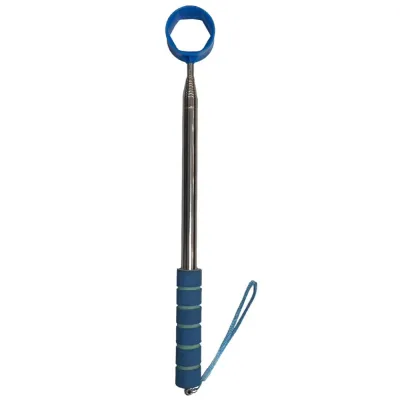
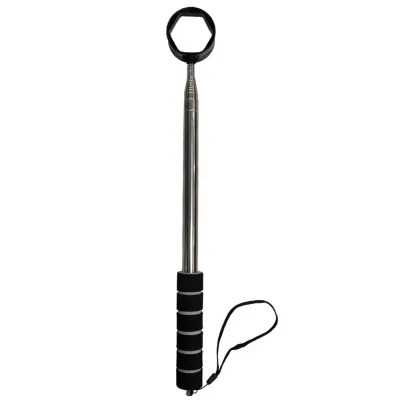
![[SG 🚚] Telescopic Golf Ball Retriever Stainless Extendable Telescopic Golf Ball Picker Claw Sucker Tool Non-Slip Handle Golf Ball Pick](https://img.lazcdn.com/g/p/398c9ac254a19a70a810e3430cfc27ff.jpg_400x400q80.jpg_.webp)
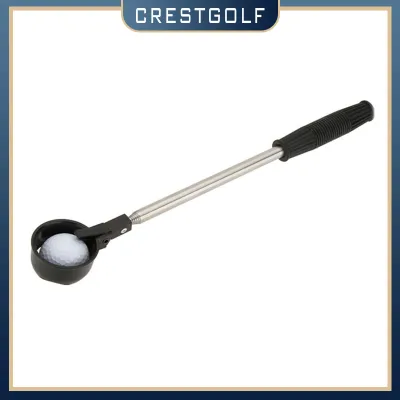
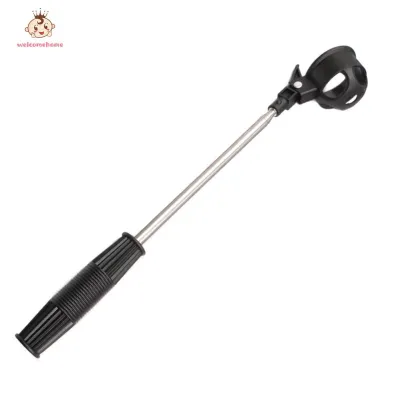
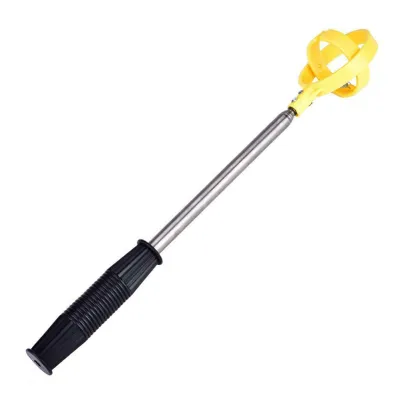
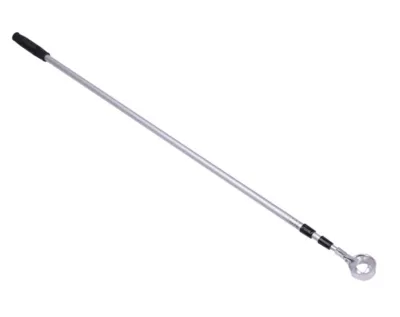
Prices are valid at publication and may change. Please refer to the product page for the latest price.
Beyond the financial savings, carrying a retriever is a matter of proper golf etiquette and maintaining the pace of play. Singapore’s public and private courses are often highly booked, meaning flights behind you will expect your group to keep moving without unnecessary delays. Spending ten minutes searching through thick brush or waiting for a ball to float closer to a pond bank disrupts the flow of the game; a quick, decisive reach with a telescopic pole allows you to recover your ball in seconds and keep up with the pace of play.
Safety and environmental preservation are also critical factors on local courses. Many hazards feature steep, slippery concrete slopes or muddy banks that pose a significant slipping hazard, especially after a sudden tropical downpour. Furthermore, venturing deep into tropical rough areas exposes players to stinging insects, thorny vegetation, and local wildlife such as monitor lizards. Using an extended retriever allows you to stand securely on flat ground while reaching into hazardous areas, keeping you safe and preventing damage to the course’s carefully landscaped turf and shoreline vegetation.
Key Features to Look for in a Beginner-Friendly Retriever
When shopping for a retriever, beginners often face a trade-off between maximum reach and overall weight. While a longer pole allows you to salvage balls from the center of wide water hazards, it also becomes significantly heavier and more difficult to control when fully extended. Portability is another key factor, as the tool must collapse down to a size that fits comfortably within your golf bag without obstructing your clubs or adding excessive bulk.

Additionally, the “best” retriever style depends heavily on the specific types of hazards you are most likely to encounter. A golfer playing on a course dominated by deep, muddy ponds will require a very different mechanism than one playing on a course characterized by dense, dry undergrowth or rocky outcroppings. Understanding these key engineering elements will help you select a tool that matches your typical playing environment.
Length and Reach
Telescopic retrievers generally come in standard extended lengths of 6 feet, 12 feet, and 15 feet. A 6-foot model is highly portable and lightweight, making it ideal for retrieving balls just off the edge of the fairway or in shallow bunkers. However, a 12-foot or 15-foot model offers the versatility needed to reach balls that have rolled deep into wide water hazards or down steep concrete monsoonal drains.
When choosing a length, always check the collapsed or retracted length of the pole. Ideally, a retriever should collapse down to between 1.5 and 3 feet so that it can slide completely into the side apparel pocket of a standard stand or cart bag. If the collapsed length is too long, the head of the retriever will stick out of the top of your bag, which can make transport awkward and increase the risk of the tool snagging on tree branches or car trunks.
Keep in mind that the physics of leverage apply when a telescopic pole is fully extended. A lightweight pole can feel incredibly heavy at 15 feet because the weight of the retrieval head is amplified by the distance from your hands. Beginners should look for a length that they can comfortably hold steady with two hands without experiencing significant wrist or back strain.
Retrieval Mechanism
The design of the retrieval head determines how effectively the tool grabs and holds onto the ball under different conditions. The three primary mechanisms are scooping cups, gripping claws or rings, and adhesive suction attachments. Each design has distinct mechanical advantages depending on whether the ball is resting in water, deep mud, thick grass, or on a hard surface.
For water hazards where visibility is low and the ball is submerged, a scooping cup is highly effective because it simply slides underneath the ball and lifts it out. Gripping claws and rings require more precise alignment, making them better suited for dry areas where the ball is clearly visible but physically out of reach. Suction mechanisms rely on direct, clean contact, which is highly efficient on flat, dry surfaces but fails when mud or wet grass interferes with the seal.
Material and Weight
Most modern retrievers are constructed from either anodized aluminum or stainless steel. Aluminum is exceptionally lightweight, which reduces arm fatigue when you are trying to maneuver a fully extended pole over a water hazard. However, aluminum is softer than steel and can bend or dent if subjected to sudden impacts or if used to pry heavy objects.
Stainless steel offers superior structural rigidity and durability, ensuring the telescopic joints remain straight and functional even after years of heavy use. The main drawback of stainless steel is its weight, which can make long-reach models difficult to control. Regardless of the metal chosen, verify that the tool features rust-resistant coatings or marine-grade materials, as it will regularly be exposed to water, mud, and high humidity.
The handle grip is another crucial component that is often overlooked. Look for a textured rubber or high-density EVA foam grip that provides a secure hold even when your hands are wet from perspiration or rain. A non-slip grip prevents the pole from twisting in your hands, allowing for precise control over the retrieval head at maximum extension.
Top Types of Golf Ball Retrievers for Beginners
To help you narrow down your choices, it is helpful to categorize retrievers into three primary design types. Each category excels in specific scenarios, and understanding these differences will allow you to select the style that aligns with the hazards on your most frequently played courses.
Telescopic Cup-Style Retrievers
- Best For: Deep water hazards, thick mud, sandy bunkers, and murky ponds where visibility is limited.
- Why It Works for Beginners: The cup-style retriever is the most forgiving option for novices because it does not require precise alignment or a firm grip on the ball. You simply lower the cup over the ball, or slide it along the bottom of a pond until you feel the ball settle into the cup, and then lift. Many models feature a dual-sided or hinged cup that traps the ball automatically once contact is made, preventing it from falling out as you pull the pole back.
- Limitations: These models tend to have a bulkier head design, which can make them difficult to push through dense, thorny bushes or tangled undergrowth without snagging. The wider profile also makes them less suitable for tight crevices between rocks.
- Buying Check: Always verify that the cup has built-in drainage holes. Without these holes, the cup will scoop up a significant amount of water alongside the ball, adding unnecessary weight and making the pole highly unstable as you lift it out of the hazard.
Compact Claw-Style and Ring Retrievers
- Best For: Tall roughs, dense tropical bushes, rocky terrain, and steep concrete drainage ditches.
- Why It Works for Beginners: Claw and ring retrievers feature a highly streamlined, narrow profile that can easily slip between branches, thick blades of grass, and narrow rock crevices. The mechanism typically uses a spring-loaded claw or a pressure-fit ring that snaps securely around the ball upon contact, locking it in place so it cannot shake loose during retrieval.
- Limitations: This style requires a higher degree of physical precision to align the head directly over the center of the ball. In deep, murky water where you cannot see the ball clearly, it can be incredibly frustrating to try and lock the claw onto the target by feel alone.
- Buying Check: Look for models that feature a robust, spring-loaded locking mechanism or a twist-to-lock ring. Avoid cheap plastic claws that can easily snap if they strike a rock or a thick tree branch.
Suction Cup and Sticky-Tab Retrievers
- Best For: Shallow puddles, flat cart paths, dry grass, and retrieving balls from the cup without bending down.
- Why It Works for Beginners: These are the most lightweight and compact options available, often designed as a small attachment that fits securely onto the end of your existing putter grip. They require virtually zero physical effort to operate; you simply press the suction cup directly onto the ball, and the vacuum seal holds it in place as you lift.
- Limitations: This mechanism is highly dependent on a clean, dry surface. It fails completely in muddy conditions, deep water, or when the ball is covered in wet grass, as the debris prevents the suction cup from forming a proper seal.
- Buying Check: Ensure that the suction cup is made of high-quality, UV-resistant rubber or silicone that will not dry out, crack, or lose its elasticity under the intense tropical sun. If choosing an adhesive tab style, verify that replacement tabs are readily available.
Quick Comparison: Which Retriever Style Fits Your Game?
To help you visualize the trade-offs between the different styles, the following matrix compares the three primary retriever designs across key performance dimensions:
| Retriever Type | Best Environment | Ease of Use for Beginners | Portability (Collapsed Size) | Primary Limitation |
|---|---|---|---|---|
| Telescopic Cup-Style | Murky water, deep mud, soft sand | High (requires minimal precision) | Moderate (bulkier head design) | Snags easily in dense bushes and branches |
| Compact Claw/Ring | Tall rough, thick bushes, rocks | Moderate (requires clear line of sight) | High (sleek, narrow profile) | Difficult to use in low-visibility water |
| Suction/Sticky-Tab | Shallow puddles, flat paths, greens | High (no bending required) | Excellent (attaches to putter grip) | Fails completely in mud or heavy wet debris |
For most beginners, starting with a single, versatile tool like a 12-foot telescopic cup-style retriever offers the best balance of reach and ease of use for the water hazards common on local courses. However, if you prefer to walk the course with a ultra-lightweight carry bag, combining a compact claw-style retriever for the rough with a simple suction cup attachment on your putter grip can provide comprehensive coverage without adding unnecessary weight.
How to Use and Maintain Your Golf Ball Retriever
Using a golf ball retriever safely and maintaining it properly will extend its lifespan and protect your other expensive golf equipment. When extending a telescopic pole, always use proper body mechanics to avoid back strain. Stand with your feet shoulder-width apart, bend slightly at the knees, and use both hands to support the pole, leveraging the shaft against your forearm for stability. Never attempt to use the retriever to pull heavy debris, logs, or thick branches out of the way, as this can easily bend the metal shaft or strip the telescopic locking joints.
Because retrievers are frequently submerged in muddy ponds, sandy bunkers, and stagnant water hazards, they require regular cleaning to prevent corrosion. After every round, make it a habit to rinse the entire tool with clean, fresh water. This is particularly important if the tool has been exposed to the fertilizers, pesticides, and brackish water commonly found in golf course hazards, which can accelerate the rusting process of even high-grade metals.
To dry the tool properly, fully extend the telescopic pole and wipe down each section with a clean, dry microfiber cloth. Leave the pole fully extended in a well-ventilated indoor area until it is completely dry before collapsing it. Collapsing a wet retriever traps moisture inside the joints, which leads to internal rust, mold, and sand buildup that can permanently jam the telescopic mechanisms.
Finally, store your retriever carefully within your golf bag to prevent it from damaging your clubs. The metal shaft of a retriever can easily scratch or dent the graphite or steel shafts of your drivers and irons as they rub together during transport. To prevent this, store the retriever in a dedicated protective PVC tube, slip a headcover over the retrieval head, or keep the tool in an isolated outer apparel pocket of your bag.
Where to Buy Golf Ball Retrievers in Singapore
When looking to purchase a golf ball retriever in Singapore, you have several reliable channels to choose from. Local golf pro shops located within country clubs or specialized golf retail hubs, such as those found in Far East Shopping Centre or Queensway Shopping Centre, offer the advantage of allowing you to physically handle the tools. This hands-on experience is invaluable for testing the weight, grip comfort, and rigidity of the telescopic pole at full extension before making a purchase.
If you prefer the convenience of online shopping, general online sports marketplaces and specialized golf e-commerce platforms offer a wide selection of brands and styles. When buying online, always check the product specifications for the exact collapsed length and weight. Compare these measurements against the dimensions of your golf bag’s side pockets to ensure a proper fit.
Additionally, pay close attention to the retailer’s return policy and warranty coverage. The telescopic locking mechanisms and spring-loaded joints are the most common points of mechanical failure on these tools. Purchasing from a reputable retailer that offers a clear warranty or return policy ensures that you can easily exchange the tool if a joint fails or if the locking mechanism slips during your first few rounds on the course.
Frequently Asked Questions (FAQ)
These common questions address the rules, sizing, and equipment safety considerations associated with using a golf ball retriever on the course.
Are golf ball retrievers allowed under the Rules of Golf?
Yes, carrying and using a golf ball retriever is perfectly legal under the Rules of Golf. You are allowed to use the tool to retrieve your ball from water hazards, deep rough, or out-of-bounds areas without penalty. However, you must adhere to strict limitations: you cannot use the retriever to gauge the distance to the hole, test the surface condition of a hazard before making a stroke, or actively assist you in making a stroke. Additionally, the retriever counts toward your maximum limit of 14 clubs if it is designed to be used as a club, though standard telescopic retrievers are classified as accessories and do not count against this limit.
How long should a golf ball retriever be for most courses?
For most golf courses in Singapore, a retriever with an extended length of 12 to 15 feet is highly recommended. This length provides the necessary reach to recover balls from deep concrete drainage canals and wide water hazards without requiring you to step onto unstable, muddy banks. If you primarily play smaller executive courses or par-3 courses with minimal water, a compact 6- to 9-foot retriever is often sufficient, lighter to carry, and much easier to store in a standard golf bag.
Can a golf ball retriever damage my golf clubs?
Yes, if stored improperly, the metal shaft of a telescopic retriever can rub against the delicate graphite or steel shafts of your golf clubs during transport, leading to scratches, wear spots, and structural weakness. To prevent this damage, always check that the retriever is stored in a separate, zippered apparel pocket on the outside of your bag. Alternatively, you can use a protective plastic sleeve, a dedicated club tube, or place a soft neoprene headcover over the retrieval head to isolate it from your clubs.
Community discussion
Share your experience or ask a question. Comments are reviewed before publication.