
Choosing your first pair of inline skates as an adult in Singapore can feel overwhelming given the wide variety of designs, specifications, and brands available. Unlike children, adult beginners require skates that can support more body weight, provide excellent lateral ankle stability, and handle the tropical humidity of local outdoor paths. Finding a pair that balances structural support, immediate comfort, and long-term durability is the key to a safe and enjoyable learning experience.
To help you make an informed decision, this guide highlights the leading inline skate brands available in Singapore—specifically Rollerblade, K2 Sports, Powerslide, and Flying Eagle. Each of these brands offers distinct design philosophies, ranging from ultra-comfortable soft boots to highly supportive hard-shell models. By understanding what to look for in boot construction, wheel setups, and safety features, you can confidently select the right pair for your skating goals.
What to Look for in Inline Skates for Adult Beginners
When shopping for inline skates, adult beginners must prioritize features that enhance stability, control, and safety. Because adults have a higher center of gravity than children, minor balance adjustments require more effort and muscle coordination. The right skate design acts as a supportive framework, allowing you to focus on learning basic techniques without fighting against your equipment.
Products mentioned in this guide
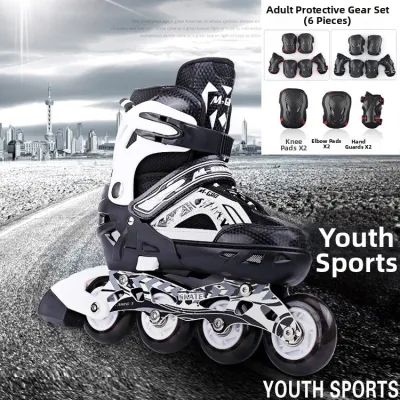
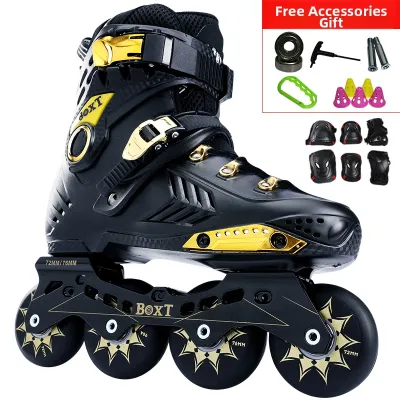
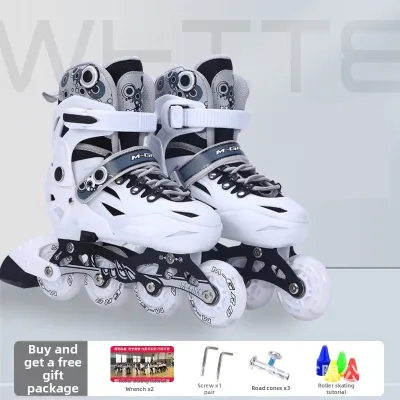
Prices are valid at publication and may change. Please refer to the product page for the latest price.
Ankle Support and Cuff Height
The cuff is the plastic or composite structure at the top of the skate boot that wraps around your lower leg. For adult beginners, a high, stiff cuff is non-negotiable. It provides the essential lateral support needed to keep your ankles upright and aligned over the wheels.
Without adequate cuff stiffness, beginners often experience ankle pronation, where the ankles roll inward or outward. This pronation not only causes rapid muscle fatigue but also makes it incredibly difficult to push off or glide in a straight line. Look for skates where the cuff secures tightly with a buckle system, ensuring a rigid support structure that mimics a ski boot.
Boot Construction (Hard vs. Soft)
Inline skate boots generally fall into two categories, each offering distinct advantages depending on your physical build and where you plan to skate:
- Hard-Shell Boots: These feature a molded plastic outer shell with a removable, padded fabric liner inside. They offer maximum lateral support, exceptional impact protection, and high durability. If you are a heavier adult, want maximum ankle stability, or plan to transition into urban or freestyle skating, a hard shell is highly recommended.
- Soft Boots: These utilize a lightweight, breathable fabric construction integrated directly into a plastic cuff and base. They feel very similar to a padded running shoe and require virtually no break-in period. Soft boots are excellent for casual fitness skating along flat paths, offering superior ventilation in Singapore's warm climate, though they provide less structural support than hard shells.
Wheel Size and Durometer
For adult beginners, the ideal wheel setup balances stability, speed control, and smooth rolling over minor ground imperfections. Wheel diameter is measured in millimeters (mm), while hardness is rated using the durometer scale (e.g., 80A, 82A).
- Wheel Size: Look for wheels between 80mm and 84mm in diameter. This size range keeps your feet relatively close to the ground, lowering your center of gravity for better balance, while still being large enough to roll smoothly over small pebbles, twigs, and expansion joints on paved paths.
- Durometer: A hardness rating of 80A to 84A is ideal for outdoor skating. These medium-soft wheels provide excellent grip on asphalt and concrete, helping you maintain control. They also absorb pavement vibrations, which reduces foot numbness during longer sessions.
Braking Systems
A reliable heel brake is the most critical safety component on a beginner’s skate. It is mechanically simple and allows you to stop quickly by sliding one foot forward and lifting the toe, forcing the rubber brake pad against the pavement.
Before purchasing, verify that the skates come with a pre-installed heel brake (typically on the right skate, though usually reversible) or have one included in the box. Learning to use the heel brake is your first essential safety step; do not attempt to learn advanced stopping techniques on busy paths without mastering this basic tool first.
Reliable Inline Skate Brands for Adult Beginners
Several reputable brands have spent decades refining their entry-level inline skates. The following four brands are widely available in Singapore and are highly regarded for their build quality, safety features, and overall value for adult beginners.

Rollerblade
As the brand that popularized the sport, Rollerblade is synonymous with quality and ergonomic design. Their entry-level fitness lines, such as the Macroblade series, are engineered specifically to help beginners develop proper form with minimal discomfort.
Rollerblade skates are highly praised for their secure fit systems, which typically combine a lower shell lace, a 45-degree instep strap, and a heavy-duty top cuff buckle. This three-part closure locks your heel firmly into the back of the boot, preventing friction that can cause blisters. The liners are anatomically shaped and use high-quality padding that conforms to your foot over time.
For adult beginners, Rollerblade’s fitness models offer a reliable, structured soft-boot design. They provide a stable aluminum or high-grade composite frame that dampens road vibrations while ensuring efficient power transfer. Because of their durable construction and premium components, a pair of Rollerblades serves as a solid, long-term investment that will easily support your progression from first rolls to long-distance fitness skating.
K2 Sports
K2 Sports is famous for pioneering soft-boot technology in inline skates. If your absolute priority is out-of-the-box comfort, K2 is a brand you should closely consider. Their skates are designed to eliminate the stiff pressure points often associated with traditional plastic boots.
K2’s fitness models, such as the Kinetic or Alexis/Fit series, feature highly breathable mesh uppers that are exceptionally well-suited for Singapore’s hot and humid weather. Many of their models also feature advanced speed-lacing systems or BOA dial closures. These systems allow you to tighten the entire boot evenly with a single pull or twist, making it incredibly easy to adjust your fit on the go.
While K2 soft boots offer unmatched comfort and ventilation, adult beginners must select a model with an appropriate level of support. Ensure the model you choose features K2’s “Stability Plus” cuff or a similar reinforced plastic upper. This ensures that despite the soft fabric construction of the lower boot, your ankles still receive the lateral rigidity required to prevent pronation and maintain balance.
Powerslide
Powerslide is a German brand renowned for innovation, versatility, and high-performance engineering. They offer an extensive range of recreational and urban skates that provide excellent value for money, making them a favorite among skaters who want advanced features without a premium price tag.
One of Powerslide’s standout innovations is the Trinity 3-point mounting system, featured on many of their Phuzion and Zoom models. Unlike traditional two-point frames, the Trinity system mounts the frame to the boot using two front points and one rear point. This creates a deep channel for the wheels, lowering your center of gravity significantly. For an adult beginner, this lower stance translates directly into improved balance, better control, and reduced ankle strain.
Powerslide models also offer excellent modularity. Many of their frames are adjustable, allowing you to slide the frame slightly inward or outward to compensate for natural pronation or supination. This level of customization ensures that as your skills develop, you can fine-tune your setup rather than having to purchase an entirely new pair of skates.
Flying Eagle
Flying Eagle has earned a strong reputation in the global skating community for producing high-quality, rugged hard-shell skates at highly competitive prices. If you are looking for maximum support, durability, and a skate that can transition into urban freeriding or slalom, this brand is an exceptional choice.
Flying Eagle’s entry-level hard-boot models, such as the F-series, feature thick, impact-resistant plastic shells that offer unparalleled lateral support. This rigid exterior completely eliminates ankle twisting, providing a highly stable platform for beginners who may feel unsteady. The inner liners are thick, removable, and washable—a major advantage for maintaining hygiene in Singapore’s humid climate.
Many Flying Eagle skates come equipped with CNC-machined aluminum frames, which are stiffer and more responsive than composite frames. While some of their freestyle models feature rockered frames (where the front and rear wheels are slightly raised to increase maneuverability), beginners should ensure their wheels are set up in a flat configuration. A flat setup ensures all wheels touch the ground simultaneously, providing the predictable stability you need when starting out.
How to Fit and Buy Inline Skates in Singapore
Finding the right brand is only half the battle; ensuring a perfect fit is what ultimately determines whether you will enjoy skating or abandon it due to pain. Buying inline skates requires a different approach than purchasing standard athletic footwear.
The Importance of Trying Before Buying
Sizing standards vary dramatically between inline skate brands, and even between different models within the same brand. A molded hard shell from one manufacturer may run narrow, while another brand’s soft boot may accommodate wider feet. For this reason, buying skates online without trying them on first is highly risky.
It is highly recommended to visit specialty inline skate shops or major sporting goods retailers in Singapore. Physical stores allow you to try on multiple sizes, compare hard-shell and soft-boot models side-by-side, and receive expert advice tailored to your foot shape. Local specialty shops also carry replacement parts, such as brake pads and wheels, which you will eventually need.
Proper Fitting Techniques
To ensure your skates fit correctly, use the following step-by-step checklist when trying them on in-store:
- Wear the Right Socks: Bring the exact pair of thick, athletic socks you plan to wear while skating. Avoid thin dress socks or extremely thick wool socks.
- Lock Your Heel: Put the skate on, kick your heel back firmly into the pocket of the boot, and fasten the laces, instep strap, and cuff buckle securely.
- Check Toe Clearance: Stand up straight. Your toes should lightly brush the front end of the liner. If your toes are curled or pressed hard against the front, the skate is too small.
- Assume the Skating Stance: Bend your knees forward so they cover your toes, pushing your shins against the tongue of the boot. In this active stance, your heel should remain locked in place without lifting, and your toes should pull back slightly from the front of the boot.
- Identify Pressure Points: Stand in the skates for at least 10 to 15 minutes. Pay close attention to any sharp pain or pinching, particularly around your ankle bones, the sides of your feet, or the arches. If you feel localized pressure points, try a different model or brand, as these hot spots will quickly turn into painful blisters on the pavement.
Navigating Local Skating Environments
Singapore offers an exceptional infrastructure for inline skaters through the Park Connector Network (PCN). These paved, well-maintained paths connect parks across the island, providing miles of continuous riding. Popular routes like East Coast Park, Bishan-Ang Mo Kio Park, and the Kallang Riverside Park offer smooth asphalt or concrete surfaces.
Because Singapore’s dedicated skating paths are generally flat and well-paved, beginners do not need specialized off-road setups, heavy-duty suspension systems, or oversized wheels. A standard recreational or fitness skate with 80mm to 84mm wheels is perfectly optimized for these smooth PCN surfaces, offering a clean roll and easy speed control.
Essential Safety Gear and Practice Tips
Inline skating is a physical activity that carries an inherent risk of falls, especially during the learning phase. High-quality equipment cannot replace proper training and physical judgment. To protect yourself and build confidence, you must commit to wearing protective gear and practicing in safe environments.
Mandatory Protective Gear
Never roll without a complete set of certified protective gear. Before stepping onto the pavement, verify that you are wearing:
- A Certified Helmet: Ensure it fits snugly on your head without tilting backward or sliding side-to-side.
- Knee and Elbow Pads: These should feature hard plastic caps to slide on concrete, absorbing the impact and preventing road rash.
- Wrist Guards: This is the most critical piece of safety gear for adult beginners. When falling, adults instinctively reach out with their hands to break their fall. High-quality wrist guards feature rigid plastic splints that support the wrist and allow your hands to slide forward, preventing severe fractures.
Learning to Fall
Falling is a natural part of learning to skate, but how you fall makes all the difference. Beginners often make the dangerous mistake of falling backward, which can lead to tailbone, back, or head injuries.
Instead, practice the “safety fall” technique on a soft surface like grass or a carpeted floor. When you feel yourself losing balance, bend your knees deeply to lower your center of gravity, lean your torso forward, and aim to fall forward. Let your knee pads take the initial impact, followed quickly by sliding forward on your wrist guards. This controlled slide dissipates the energy of the fall safely.
Initial Practice Environment
When you are ready to take your first strides, avoid busy park paths or crowded PCNs. A crowded environment creates unnecessary stress and hazards for both you and other path users.
Instead, look for a flat, dry, and empty space with smooth concrete. Empty basketball courts, sheltered HDB void decks during quiet hours, or quiet multi-purpose plazas are ideal. Before attempting to roll fast, practice the basic athletic stance: knees bent, shoulders aligned over your knees, and feet parallel about shoulder-width apart. Practice marching in place to get used to the weight of the skates, and master using your heel brake at slow speeds before progressing to open paths.
Always check your equipment before every session. Verify that all axle bolts are tight using the manufacturer’s tool, and inspect the wear on your brake pad. If you are ever unsure about hardware adjustments, consult the manufacturer’s instructions or visit a professional skate technician.
Frequently Asked Questions (FAQ)
Is it harder for adults to learn inline skating than children?
While children often benefit from a lower center of gravity and a natural lack of fear, adults possess several distinct advantages that make learning highly successful. Adults have superior cognitive comprehension, allowing them to understand the physics of balance, edge control, and safety mechanics much more quickly.
Furthermore, adults typically have better self-discipline, which translates to consistent practice habits and a more systematic approach to safety. By wearing a complete set of protective gear, choosing well-fitted skates from a reputable brand, and practicing on flat, smooth surfaces, adults can learn to inline skate safely, confidently, and at their own comfortable pace.
Should I remove the heel brake from my beginner inline skates?
You should not remove the heel brake when you are starting out. The heel brake is the most reliable, intuitive, and mechanically efficient way for a beginner to control their speed and come to a complete stop. It allows you to keep all wheels of your braking skate in contact with the ground, providing maximum stability during deceleration.
Only consider removing the heel brake once you have fully mastered alternative stopping methods, such as the T-stop, plow stop, or powerslide, under various speed conditions and on sloped surfaces. Until those techniques are second nature, keeping the heel brake installed is a vital safety measure.
Community discussion
Share your experience or ask a question. Comments are reviewed before publication.