
Selecting the right kids basketball ring is one of the most impactful decisions you can make for your child’s athletic development and safety. A hoop that is too high or a ball that is too heavy can quickly lead to frustration, joint strain, and the development of poor shooting mechanics that are difficult to correct later in life. Conversely, an appropriately sized system fosters confidence, encourages correct biomechanics, and provides a safe environment for active play.
To find the ideal match, parents must evaluate several factors beyond simple age recommendations, including their child’s current physical height, motor skill level, and the intended playing environment. Whether you are setting up an indoor play space in a high-rise apartment or installing a heavy-duty portable system on an outdoor patio, matching the equipment to your child’s developmental stage ensures that the game remains both fun and safe.
Quick Guide: Matching Hoop Heights and Sizes to Age Groups
Using an age-appropriate basketball ring is essential for preventing injury and supporting skill development. When children play on hoops that are too tall, they lack the physical strength to shoot with proper form, forcing them to “push” or “chuck” the ball from their chest using their entire body. This repetitive, strained motion can lead to shoulder and wrist discomfort while cementing bad habits.
Products mentioned in this guide
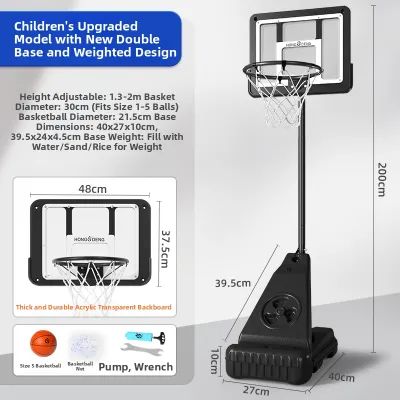
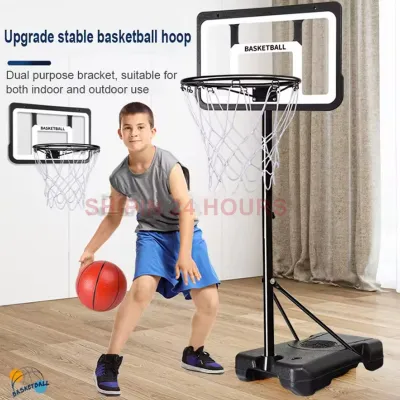
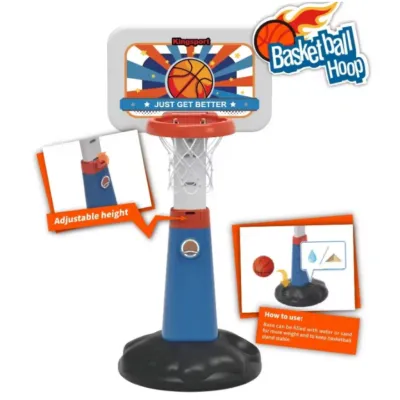
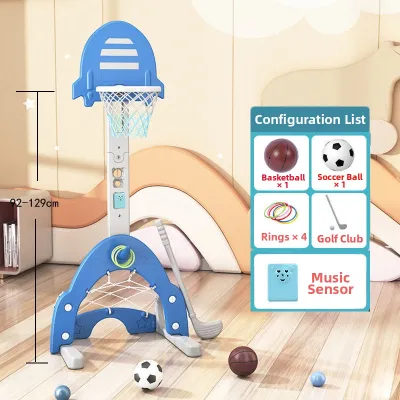
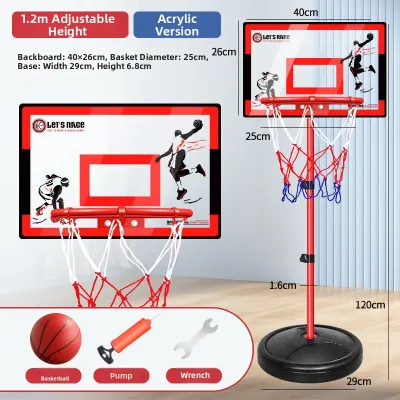
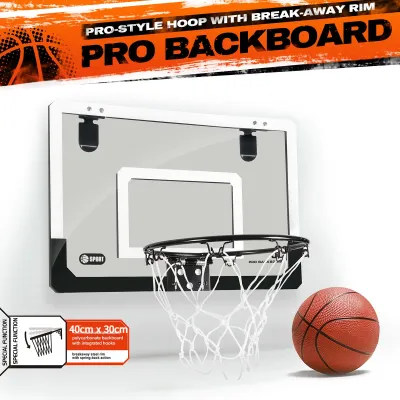
![[45cm x 29cm] Mini Basketball Board Hoop Slam Dunk Rim Spring Small Kids Children Ring Bola Keranjang](https://img.lazcdn.com/g/p/a9e774c532c92d64bf28ba8b02aa57c8.jpg_400x400q80.jpg_.webp)
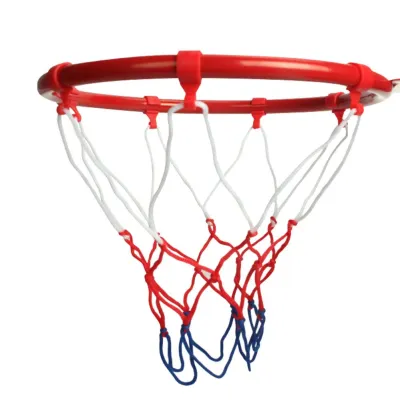
Prices are valid at publication and may change. Please refer to the product page for the latest price.
To help you identify the correct starting point, the following framework outlines the baseline configurations recommended for each general age bracket. Keep in mind that these are standard starting points that should be adjusted based on your child’s unique growth rate and physical strength.
| Age Group | Recommended Hoop Height | Recommended Basketball Size | Primary Playing Environment |
|---|---|---|---|
| Toddlers (Ages 2–4) | 2 to 4 feet (0.6 to 1.2 metres) | Size 1 or 3 (or soft foam balls) | Indoor playrooms, bedrooms, or sheltered balconies |
| Juniors (Ages 5–8) | 4 to 7 feet (1.2 to 2.1 metres) | Size 4 or 5 (standard youth size) | Driveways, outdoor patios, or car parks |
| Older Kids (Ages 9–12) | 7.5 to 10 feet (2.3 to 3.0 metres) | Size 6 (or Size 7 for older boys) | Outdoor courts, spacious driveways |
While these baseline heights serve as excellent starting points, children grow at highly variable rates. For this reason, system adjustability is the single most critical feature to look for when purchasing a basketball ring. An adjustable system allows you to raise the rim in small increments as your child’s strength and height increase, extending the usable lifespan of the product over several years.
Before making a final purchase, always verify the manufacturer’s specific product guidelines and weight limits against your child’s physical development. Do not rely solely on age labels, as a taller or more physically advanced child may require a sturdier junior system sooner than a peer of the same age.
Toddler Mini Hoops (Ages 2–4): Safety and Early Motor Skills
For toddlers, the primary focus of playing basketball is developing basic hand-eye coordination, gross motor skills, and spatial awareness. At this stage, play is highly exploratory and often chaotic, meaning the equipment must be scaled down to match a toddler’s limited reach, strength, and balance.

Height and Scale
Toddler hoops should feature low, highly accessible rim heights ranging from 2 to 4 feet. This keeps the target within the child’s natural line of sight and allows them to successfully deposit the ball into the net without overextending their small joints. The backboard should also be scaled down proportionally, providing a visual target without being so large that it becomes top-heavy and unstable.
Materials and Safety
Safety is the paramount consideration for this age group. Look for mini hoops constructed from high-quality, shatterproof plastics with rounded edges to prevent cuts or bruises during accidental collisions. Rims should feature flexible, spring-action designs or be made of soft, pliable materials that bend under pressure. This flexibility protects the child’s hands and face during close-up play and prevents damage to nearby walls, windows, and household furniture when used indoors.
Base and Mounting Stability
Parents generally choose between free-standing weighted floor bases and over-the-door mounting systems.
- Weighted Floor Bases: These models stand on the floor and typically feature a hollow base that must be filled with water or sand. Always check the manufacturer's specified tipping thresholds and weight limits before use. Ensure the base is wide enough to prevent the unit from toppling forward if a child pulls on the rim.
- Over-the-Door Mounts: These are excellent space-saving options for indoor play, but they require careful verification of door thickness compatibility. Ensure the mounting brackets are padded with high-density foam to protect the door finish and absorb the vibrations of impact. Never mount these systems on glass doors or thin hollow-core doors that cannot support sudden downward forces.
Ball Compatibility
Standard youth or adult basketballs are far too heavy for toddler systems and pose a significant safety risk. A heavy ball can easily damage a plastic rim, crack a lightweight backboard, or cause rebound injuries if it bounces back into a toddler’s face. Only use the lightweight plastic or soft foam mini balls supplied with the hoop, or purchase compatible foam replacements designed specifically for indoor mini rings.
Junior Adjustable Rings (Ages 5–8): Skill Building and Stability
As children enter the 5-to-8 age bracket, their playing style becomes more active, structured, and forceful. They begin to understand the basic rules of the game and attempt to emulate the shooting forms of older players. This transitional stage requires equipment that balances safety with realistic play features.
Adjustability Mechanisms
To accommodate rapid growth spurts, junior systems must feature reliable height adjustment mechanisms, typically ranging from 4 to 7 feet. When evaluating these systems, pay close attention to how the height is adjusted:
- Telescoping Poles: These systems use nested metal poles secured by locking knobs or pins. They are highly reliable but usually require an adult to manually lift the upper pole and insert the pin.
- Tool-Free Crank or Collar Systems: Premium junior hoops utilize counterbalanced handle or crank systems that allow for smooth, continuous adjustments. Ensure the locking mechanism is highly secure and cannot be easily released by a child during play.
Rim and Backboard Dimensions
Junior hoops transition away from toy-like designs toward realistic, scaled-down versions of adult systems. The backboard should be wide enough (typically 32 to 40 inches) to allow for basic bank shots, helping children learn how to use the angles of the board to score. The rim should be constructed of solid steel, measuring around 14 to 17 inches in diameter, which is slightly smaller than the standard 18-inch adult rim but perfectly proportioned for youth-sized basketballs.
Base Capacity and Weather Resistance
Because junior hoops are frequently used outdoors, they must be built to withstand both aggressive play and environmental exposure. In tropical and humid climates like Singapore, constant moisture and intense sunlight can rapidly degrade low-quality materials.
- Rust-Resistant Pole Coatings: Verify that the steel support poles are finished with a weather-resistant powder coating to prevent rust from forming inside the joints.
- UV-Protected Backboards: Look for backboards treated with UV inhibitors to prevent the plastic or acrylic from yellowing, cracking, and becoming brittle under intense sunlight.
- Base Weight: The base must have a larger capacity (typically 50 to 80 litres) to counteract the leverage of a taller pole and heavier ball.
Skill Progression
Playing on a correctly adjusted junior hoop is essential for mastering proper shooting mechanics. At this age, children should be taught to bend their knees, align their shooting elbow, and release the ball at the peak of their jump. If the hoop is set too high, they will instinctively revert to two-handed chest pushes, which ruins their form and limits their shooting range as they grow older. Keep the hoop at a height where they can comfortably make shots using correct form, raising it only when their technique becomes consistent.
Older Kids (Ages 9–12): Transitioning to Standard Heights
By the time children reach ages 9 to 12, they are preparing for competitive play and require equipment that closely mimics regulation standards. At this stage, the force of play increases dramatically, requiring commercial-grade durability and maximum structural stability.
Height Requirements
Older kids should play on systems that can adjust from approximately 7.5 feet up to the standard regulation height of 10 feet. This range allows pre-teens to practice at official heights while still offering the flexibility to lower the rim for dunking drills or specialized training sessions.
Backboard Size and Rebound
To support realistic play, backboards for this age group should measure between 44 and 54 inches in width. At this size, the material composition plays a massive role in the quality of the game:
- Polycarbonate: This material is highly impact-resistant and virtually indestructible, making it ideal for active driveways. However, it tends to absorb energy, resulting in a slightly "dead" rebound.
- Acrylic: Acrylic backboards offer a much stiffer surface, yielding a livelier, more professional rebound that closely resembles the tempered glass boards used in competitive gyms.
Rim Technology
As pre-teens grow in height and confidence, they will inevitably attempt to dunk. Standard rigid rims can bend or tear away from the backboard under these forces, posing a severe safety hazard. Look for systems equipped with breakaway or spring-loaded rims. These rims feature covered compression springs that flex downward under sudden impact, absorbing the energy of a dunk and protecting both the backboard and the player’s wrists.
Safety Warning: Always check the manufacturer’s stated weight and force limits before allowing your child to play. Even high-quality breakaway rims on portable systems are not designed to support a player’s full body weight. Instruct your child never to hang, swing, or pull on the rim, as this can cause the entire system to tip forward or suffer structural failure.
Maximum Stability
With taller poles and heavier backboards, the risk of tipping increases significantly. Portable systems for older kids require massive bases (often exceeding 100 to 130 litres in capacity) that must be completely filled. For permanent installations where space permits, consider in-ground systems. In-ground poles are secured directly into a concrete footing, providing the ultimate level of stability, eliminating the footprint of a large plastic base, and completely removing the risk of tipping during high-intensity play or severe weather.
Key Features to Compare Before You Buy
When evaluating different kids basketball rings, comparing specific structural components will help you avoid common purchasing mistakes and ensure you get the best value for your budget.
Base Filling Options
Choosing between filling your portable base with water or sand is a critical decision that impacts stability and maintenance:
- Water: Water is highly convenient, easy to fill, and simple to drain if you need to relocate the hoop. However, in tropical climates, water bases are susceptible to internal algae growth if not treated. They also run the risk of leaking through hairline cracks or poorly sealed caps, which can cause the hoop to tip over unexpectedly.
- Sand: Dry play sand is approximately 1.6 times denser than water, providing a significantly heavier and more stable foundation. Sand does not evaporate, freeze, or leak through minor cracks, making it the safest long-term option for outdoor hoops. The primary drawback is that sand is difficult to pack into the base and makes the system highly challenging to move once filled.
Pole Construction
The design of the support pole directly affects the amount of vibration and sway you experience after the ball hits the rim:
- One-Piece Poles: Found on premium and in-ground systems, these offer the highest level of rigidity and minimal wobble. They are, however, difficult to transport and cannot be disassembled easily.
- Multi-Piece Telescoping Poles: Most portable systems use a two- or three-piece pole system. While convenient for shipping and assembly, ensure the joints feature tight tolerances and secure locking collars to minimize shaking during play. Look for steel poles treated with hot-dip galvanization or multi-layer powder coatings to prevent internal and external rust.
Net Quality and Hardware
Outdoor basketball nets are subjected to intense weather conditions, including heavy rain, high humidity, and constant UV exposure. Standard polyester nets can quickly fray, rot, and tear under these conditions. Look for heavy-duty, weather-resistant nylon nets or zinc-plated steel chain nets (if compatible with the rim). Additionally, verify that all assembly hardware is made of stainless steel or zinc-plated steel to prevent rust from seizing the bolts over time. Before buying, check if replacement nets and hardware are readily available from the manufacturer.
Portability Features
If you need to move your basketball hoop frequently—such as shifting it from a driveway to a garage, or moving it to a sheltered area during heavy monsoon downpours—evaluate the base wheel design. Look for large, wide-diameter wheels integrated into the front or rear of the base. Systems with built-in handle placements or leverage bars allow you to tilt the weighted system back onto its wheels with minimal physical strain.
Setup, Maintenance and Safety Boundaries
Proper installation and ongoing maintenance are vital to ensuring your kids’ basketball ring remains safe and functional for years. Equipment failure can lead to severe injuries, so safety protocols must never be bypassed.
Assembly Sequence
When assembling a portable basketball system, always follow the manufacturer’s instruction manual step-by-step.
The Golden Rule of Assembly: Never, under any circumstances, raise the support pole or attach the backboard and rim until the base has been completely filled with sand or water. Attempting to erect an empty or partially filled system creates a severe tipping hazard that can result in serious injury or property damage.
Weather and Environmental Safety
Extreme weather poses a major threat to outdoor basketball systems. During periods of high winds, severe storms, or monsoon warnings, take proactive measures to protect your equipment and home:
- Lower adjustable hoops to their lowest possible height setting to reduce wind resistance and lower the center of gravity.
- If a severe storm is forecasted, wheel the system into a garage, carport, or secure storage area.
- After heavy rain, inspect the ground beneath the base. Ensure the surface remains level and that water has not pooled or washed away the soil beneath the base, which can cause the system to lean and become unstable.
Routine Inspection Checklist
Perform a thorough inspection of your basketball system at least once every three months. Use the following checklist to identify potential hazards before they cause an accident:
- Locking Pins and Mechanisms: Verify that all height-adjustment pins, bolts, and cranks are securely locked in place and show no signs of slipping.
- Structural Bolts: Check all connection points, especially where the rim attaches to the backboard and where the pole connects to the base. Tighten any loose nuts with a wrench.
- Rust and Corrosion: Inspect metal components for bubbling paint or orange rust spots. Sand down any surface rust and apply a rust-inhibiting touch-up paint immediately.
- Plastic Degradation: Examine the plastic base and backboard for hairline cracks, chalking, or brittle spots caused by UV exposure.
- Net Integrity: Replace any nets that are frayed, torn, or missing loops to prevent the ball from getting caught or rebounding unpredictably.
Stop-Use Conditions
If you identify any of the following structural issues during your routine inspection, halt play immediately, lower the system to its minimum height, and contact the manufacturer for replacement parts or professional repair:
- The support pole is bent, visibly warped, or cracked at the weld joints.
- The plastic base has developed a visible crack or is actively leaking water or sand.
- The rim has become loose, bent downward, or the breakaway spring mechanism fails to snap back into its original horizontal position.
- The height-adjustment locking mechanism slips, fails to hold weight, or cannot be locked securely.
Frequently Asked Questions (FAQ)
Can I use a kids basketball ring indoors on a tiled floor?
Using a kids’ basketball ring indoors on tiled flooring requires careful preparation to prevent damage and injury. Hard plastic bases can easily scratch, chip, or crack ceramic and porcelain tiles when shifted during play. Additionally, smooth tiled floors offer very little traction, which can cause the base to slide or tip when a ball strikes the backboard.
Always check the manufacturer’s indoor suitability guidelines before setting up a hoop inside. To protect your floors and improve stability, place a thick, heavy-duty non-slip rubber mat or gym flooring tiles directly underneath the base. Finally, ensure there is adequate vertical clearance; the rim and backboard must be positioned well away from ceiling fans, light fixtures, and low-hanging drywall to prevent dangerous collisions.
What size basketball should I buy to match the ring?
To ensure a fun and safe playing experience, the basketball size must match both the child’s physical hand size and the inner diameter of the rim. If the ball is too large, it will get stuck in the net or rim; if it is too heavy, it can injure young wrists. Use this general guide to match ball sizes to your child and hoop:
- Size 3 (Mini, ~18 cm diameter): Best for toddlers aged 2 to 4 playing on mini hoops with rims under 12 inches.
- Size 4 or 5 (Youth, ~22 cm diameter): Ideal for junior players aged 5 to 8. Size 5 is the standard youth size and works perfectly with junior rims.
- Size 6 (Intermediate, ~23 cm diameter): Designed for older kids and pre-teens aged 9 to 12, as well as official women's play.
- Size 7 (Official, ~24 cm diameter): For older boys aged 12 and up playing on standard 10-foot rims.
Always measure the inner diameter of your basketball ring before purchasing a new ball. The ball’s diameter should be significantly smaller than the rim’s inner diameter to allow it to pass through cleanly during clean shots.
How do I prevent the water base from smelling or leaking?
Water-filled bases kept outdoors in warm, humid climates are highly susceptible to internal algae growth, which can cause unpleasant odors and degrade the plastic over time. To prevent this, add a small cup of household bleach or liquid pool clarifier to the water when first filling the base, and repeat this treatment once a year. Ensure the fill cap’s rubber gasket is intact and screw the plug on tightly to prevent evaporation and leaks.
If you want to eliminate the risk of leaks and odors permanently, switching to a dry sand fill is the most effective solution. Sand cannot rot, evaporate, or leak through small punctures, providing a completely maintenance-free, heavy foundation for outdoor play.
Community discussion
Share your experience or ask a question. Comments are reviewed before publication.