
Starting your Pilates journey in Singapore is an excellent way to build core strength, improve flexibility, and correct your posture. However, if you spend long hours at a desk in the Central Business District (CBD) or commuting, your body might not be ready for the dynamic, deep-core movements Pilates demands. A stiff spine and tight hips can make basic mat exercises feel uncomfortable or even painful. This is where a lower back stretcher comes in. By introducing a targeted lumbar support tool to your pre-Pilates or recovery routine, you can gently decompress your spine and prepare your muscles for the active engagement required in class. For beginners, choosing the right device is crucial to ensure you support your body safely without risking hyperextension or injury.
Why Pilates Beginners Need Targeted Lower Back Support
A sedentary lifestyle often leads to a pattern of muscle imbalances known as lower cross syndrome, characterized by tight hip flexors and a stiff lumbar spine. When you attempt foundational Pilates movements like the hundred, the roll-up, or single-leg stretches, a rigid lower back can force your body to compensate. Instead of engaging your deep transverse abdominis, your body may strain the superficial back muscles, leading to discomfort and poor form. Using a dedicated lower back stretcher helps address these physical limitations before you even step onto the reformer or mat.
These ergonomic devices work by utilizing gravity and your own body weight to create passive spinal decompression. This gentle traction helps open up the intervertebral spaces, relieving pressure on compressed discs and encouraging blood flow to the surrounding tissues. Improved lumbar mobility directly translates to better pelvic alignment. When your pelvis can transition smoothly between a neutral position and a posterior tilt, you can execute Pilates exercises with greater control and safety.
Products mentioned in this guide
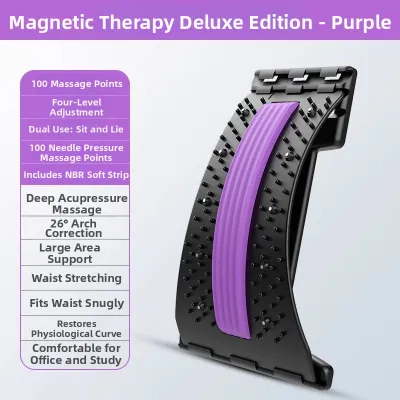
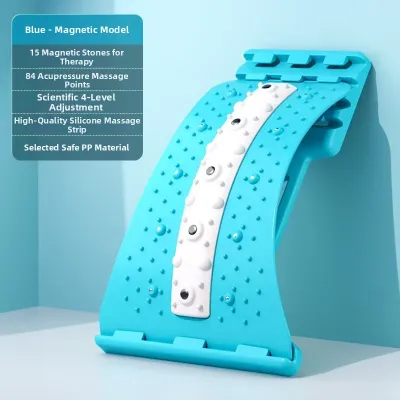
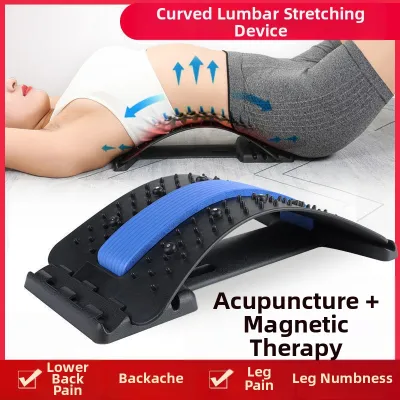
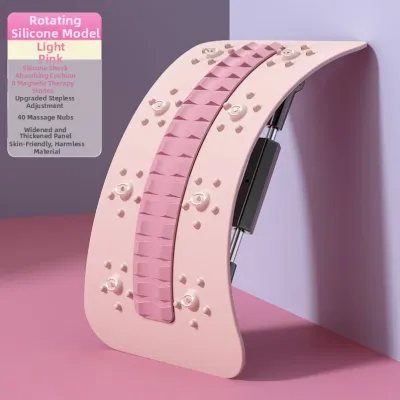
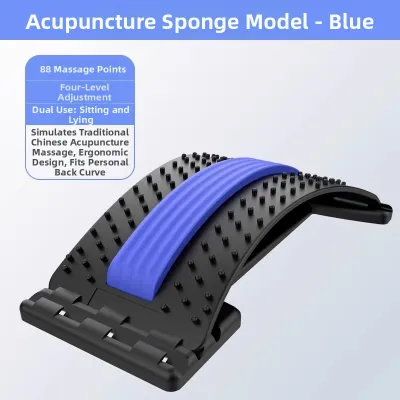
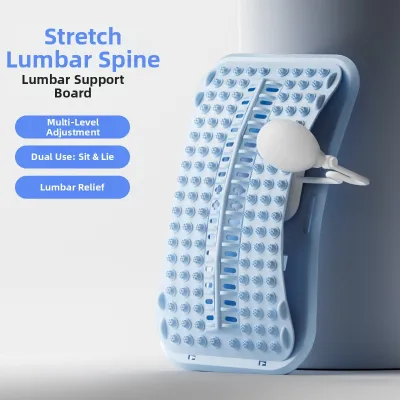
![🇸🇬[In Stock]Magnetic Therapy Acupuncture Massage Lumbar Magic Back Support Stretcher Back Therapy Points Spinal Orthosis](https://img.lazcdn.com/g/p/4167e68038ec5ee1dc95ce2ca2fcb677.jpg_400x400q80.jpg_.webp)
Prices are valid at publication and may change. Please refer to the product page for the latest price.
It is important to distinguish between general stretching and using a specialized lumbar device. While standard floor stretches like the child’s pose are beneficial, they do not offer targeted, structural support to the natural lordotic curve of your lower back. An ergonomic stretcher is specifically contoured to maintain this natural curve, preventing your spine from flattening or rounding excessively. This targeted support is particularly helpful for beginners who have not yet developed the deep core strength and body awareness required to self-correct their posture during active exercises.
Core Criteria for Choosing a Beginner-Friendly Lower Back Stretcher
When shopping for a lower back stretcher in Singapore, it is easy to get overwhelmed by the variety of products available online and in local wellness shops. To make an informed decision that protects your spine and enhances your Pilates practice, you should evaluate devices based on four essential criteria.

Adjustability and Progression As a beginner, your lumbar flexibility will change over time. A device with fixed dimensions can be either too intense at first or too shallow as your mobility improves. Look for stretchers that offer multi-level height settings, typically ranging from a gentle arch of around 5 to 7 centimeters to a deeper stretch of 11 centimeters or more. Starting at the lowest, flattest level allows your body to adapt to the sensation of passive traction without overextending your joints. As your muscles relax and your spinal mobility increases, you can gradually progress to higher arches.
Material Density and Support The materials used in a stretcher dictate both its comfort and its effectiveness. Many entry-level models feature a rigid plastic frame paired with a central strip of high-density ethylene-vinyl acetate (EVA) foam. The plastic base provides the structural integrity needed to support your body weight, while the EVA foam cushions your spinous processes. For beginners, a balance of firm support and cushioning is essential. Avoid ultra-rigid, unpadded plastic devices, as they can cause bruising or localized pain along the spine. Conversely, overly soft foam-only arches may bottom out under your weight, failing to provide the necessary decompression.
Ergonomic Contouring A well-designed stretcher must respect the anatomy of the human spine. Look for models that feature a distinct central spinal channel or groove. This design ensures that your vertebrae rest in a protected recess, while the supportive lateral pads apply gentle pressure to the paraspinal muscles on either side. Some stretchers also incorporate raised acupressure nodes or small massage points along the arch. While some users find these nodes helpful for releasing muscular tension, beginners with sensitive skin or acute stiffness may find them uncomfortable. If you choose a model with nodes, ensure it comes with a thick, removable comfort pad to soften the contact.
Weight Capacity and Stability Safety should always be your top priority when performing passive back bends. Always verify the manufacturer’s stated weight capacity, which typically ranges from 100 to 150 kilograms. A sturdy, wide base is critical to prevent the device from tipping sideways or sliding out from under you while you are lying down. Look for stretchers equipped with non-slip rubber grips or a textured bottom surface, especially if you plan to use the device on smooth flooring like polished wood, vinyl, or ceramic tiles common in Singaporean homes.
Types of Lower Back Stretchers to Consider for Your Routine
Not all stretching devices are created equal, and understanding the different form factors will help you choose the one that best matches your comfort level and Pilates goals.
Adjustable Arc Stretch Boards
Adjustable arc stretch boards are the most common and accessible entry-level devices on the market. These C-shaped boards rely on your body weight to create a passive, static stretch along the lumbar region. You simply position the arch at the base of your spine and slowly lower your torso over it. The primary benefit of these models is their simplicity and affordability, with prices in Singapore generally ranging from S$15 to S$40.
Because they feature adjustable slots, you can easily customize the arch height to suit your daily flexibility levels. However, these boards have limitations. They offer entirely passive stretching, meaning they do not actively engage or strengthen your core muscles. While they are excellent for winding down after a long day or warming up before a Pilates class, they should be viewed as a supplementary tool rather than a replacement for active movement.
Lumbar Traction and Decompression Devices
For those seeking a more intense, targeted release, lumbar traction and decompression devices offer a firmer, more structural approach. Unlike simple plastic arches, these devices often feature distinct, rigid ridges, mechanical decompression levers, or air-inflation bladders that allow you to manually adjust the level of traction. They work by gently separating the vertebrae to alleviate pressure on compressed nerves.
These devices have a steeper learning curve and a significantly firmer feel than standard foam-padded boards. Beginners should approach them with caution, as the localized pressure can feel intense. They are generally better suited for individuals who have already developed a baseline of flexibility, have outgrown basic foam arcs, and require deeper, targeted relief under the guidance of a physiotherapist.
Pilates-Specific Props and Foam Rollers
If you prefer tools that integrate seamlessly into both active and passive routines, traditional Pilates props are an outstanding alternative. The Spine Corrector, a classic wooden or high-density foam arc designed by Joseph Pilates, is widely used in local studios. Additionally, high-density foam rollers (typically 90 centimeters in length and 15 centimeters in diameter) offer incredible versatility for both thoracic and lumbar mobilization.
The primary advantage of these props is that they facilitate active, controlled movements. Instead of just lying statically, you can perform pelvic tilts, chest openers, and gentle spinal extension exercises over a foam roller or Spine Corrector. This active engagement helps build the deep core strength necessary to support your lower back long-term. When selecting a foam roller, beginners should opt for a medium-density model to avoid excessive pressure on the ribs and spine, and ensure they have sufficient floor space in their HDB flat or condo to use it comfortably.
Safety Boundaries and Proper Usage Techniques
Using a lower back stretcher can feel incredibly therapeutic, but improper use can lead to muscle strain or joint irritation. To protect your body, you must establish clear safety protocols.
Pre-Use Screening Before incorporating any spinal traction or stretching device into your routine, it is vital to assess your physical health. If you have a history of pre-existing spinal conditions—such as herniated or bulging discs, sciatica, spinal stenosis, spondylolisthesis, or osteoporosis—you must consult a qualified physiotherapist or medical doctor before use. These devices alter the alignment of your vertebrae, and what provides relief for one person could severely exacerbate nerve compression or joint instability in another.
Execution and Time Limits When using a stretcher, less is often more. Beginners should limit their initial sessions to just 3 to 5 minutes, once or twice a day. Lay the device on a flat, stable, non-slip surface, such as a high-quality Pilates mat. To get onto the stretcher, sit with your lower back touching the base of the arch, then slowly lower your torso down using your forearms for support. When exiting, do not sit straight up, as this places sudden, intense strain on your core and lumbar spine. Instead, gently roll onto your side, slide off the device, and rest on your side for a few moments before pushing yourself up to a seated position.
Pain vs. Stretch Differentiation It is crucial to learn how to read your body’s signals. A productive stretch should feel like a mild, deep tension or a pleasant release in the muscles of your lower back, hips, and abdomen. You should be able to breathe deeply and relax into the position. If you experience any sharp, shooting, burning, or radiating pain down your legs, or if you feel numbness or tingling in your feet, stop using the device immediately. These are symptoms of nerve irritation and indicate that the stretch is compressing rather than decompressing your spinal structures.
Integration with Pilates Always remember that a passive stretcher is a preparatory or recovery tool, not a cure-all. It cannot replace the active core stabilization, pelvic control, and muscular endurance that you develop through a dedicated Pilates practice. Use the stretcher for a few minutes before your workout to release tight muscles and improve your range of motion, or after your session to encourage muscle recovery. Relying solely on passive stretching without building the strength to support your joints can lead to ligament laxity and long-term instability.
Navigating Purchases and Material Care in Singapore
Singapore’s tropical climate presents unique challenges for maintaining fitness equipment. High humidity and ambient heat can accelerate the degradation of synthetic materials, particularly low-density foams and cheap plastics.
Climate Considerations In Singapore, humidity levels often exceed 80 percent, creating an environment where low-quality open-cell foams can absorb sweat and atmospheric moisture. Over time, this moisture trapped inside the foam can lead to material breakdown, causing it to crumble, flake, or develop unpleasant odors and mold. When choosing a stretcher, prioritize closed-cell EVA foam or medical-grade polyurethane, which are highly resistant to moisture absorption and much easier to sanitize.
Maintenance Routine To maximize the lifespan of your stretcher, establish a simple cleaning routine. After every session, wipe down the foam and plastic surfaces with a soft cloth dampened with water and a mild, non-abrasive soap. Avoid using harsh chemical disinfectants, alcohol-based wipes, or bleach, as these can dry out and crack both plastic frames and foam pads. Once cleaned, allow the device to air-dry completely in a well-ventilated indoor area. Never store your stretcher in direct sunlight, such as on a balcony or near a bright window, as ultraviolet (UV) rays will degrade the plastic, making it brittle and prone to snapping under weight.
Purchasing Channels While it is tempting to purchase cheap, unbranded stretchers from general online marketplaces, doing so carries significant risks. Many of these low-cost items lack verified weight-capacity ratings and may use brittle plastics that can crack unexpectedly during use, presenting a serious safety hazard. Instead, purchase your equipment from official brand websites, authorized local wellness and sports retailers, or specialized Pilates studios in Singapore. Buying from reputable sources ensures you receive a product made from durable, non-toxic materials, backed by a valid warranty and accurate safety specifications.
Frequently Asked Questions (FAQ)
Can I use a lower back stretcher every day?
Yes, daily use is generally safe for passive foam-padded stretchers, provided you limit each session to under 5 to 10 minutes. Consistent, short sessions are far more effective and safer than infrequent, prolonged sessions. Always listen to your body; if your muscles feel sore or fatigued, take a break for a day or two. Overusing a passive stretcher can lead to ligament laxity, which reduces the natural stability of your spine.
Are lower back stretchers safe if I have a herniated disc?
No, you should not use a passive lower back stretcher or traction device if you have an active herniated disc, spinal stenosis, or acute nerve pain, unless you have received explicit clearance and guidance from a qualified medical professional. Passive arching can increase intradiscal pressure or compress the affected nerve roots further, potentially worsening your symptoms and delaying your recovery.
How do I prevent my foam back stretcher from degrading in a humid climate?
To protect your stretcher from Singapore’s humidity, always wipe it down with a dry or slightly damp cloth immediately after use to remove sweat and oils. Ensure the device is completely air-dried before storing it. Keep it in a cool, dry room with good air circulation—such as an air-conditioned bedroom or a well-ventilated living space—and avoid damp storage areas like closed cabinets near bathrooms or laundry areas.
Community discussion
Share your experience or ask a question. Comments are reviewed before publication.