
Manual massagers (手动按摩器) offer targeted, pressure-adjustable recovery without relying on batteries, charging cords, or complex motor mechanisms. In Singapore, where long desk hours in the Central Business District, high humidity, and active lifestyles—such as running along East Coast Park or training in local gyms—place unique physical demands on the body, choosing the right manual tool is essential. The ideal manual massager is one that matches the anatomy of the target area, provides sufficient leverage to reach it without straining other muscles, and utilizes a material density appropriate for your pressure tolerance.
Unlike electric percussion devices, manual tools rely entirely on your body weight or manual leverage. This creates a closed-loop sensory feedback system where your nervous system instantly communicates the exact pressure threshold, reducing the risk of muscle guarding or bruising. By understanding how different materials, shapes, and ergonomic designs target specific muscle groups, you can establish a highly effective self-care routine at home.
How to Choose the Right Manual Massager: Core Selection Criteria
Selecting a manual massager requires evaluating how the tool’s physical properties translate to pressure delivery on your muscle tissue. A tool that is too soft will fail to release deep knots, while one that is too hard or poorly designed can cause tissue bruising or strain your hands during use.
Products mentioned in this guide
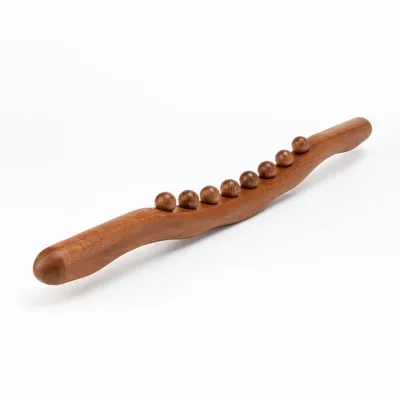
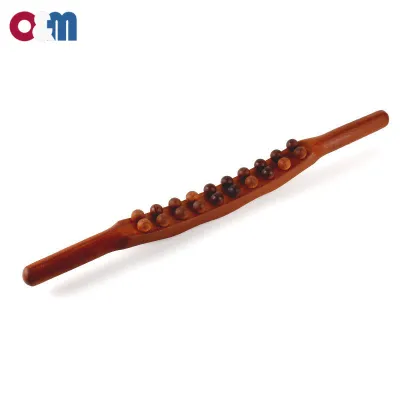
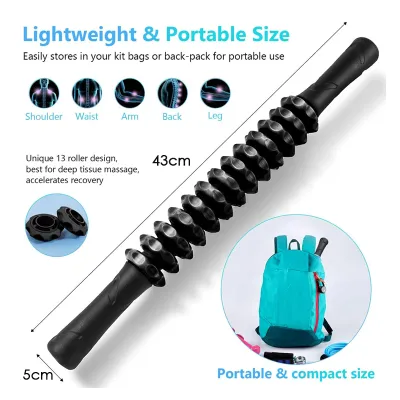

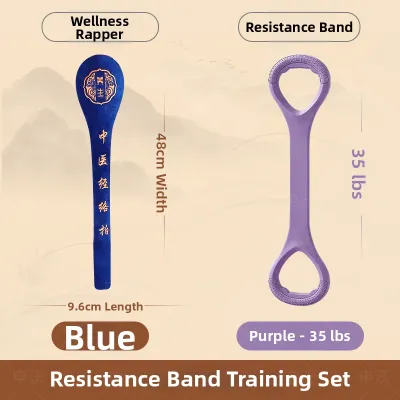
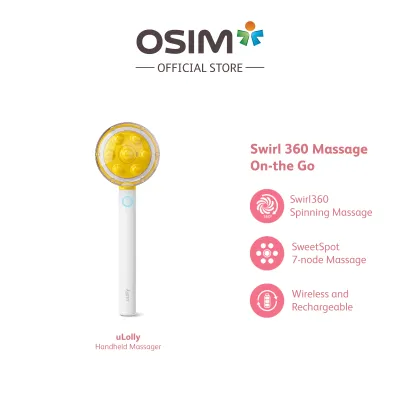
Prices are valid at publication and may change. Please refer to the product page for the latest price.
Material Density and Durability
The material of a manual massager dictates how much force is absorbed by the tool versus how much is transferred directly to your muscles. Common materials include:
- EVA Foam: Medium density, lightweight, and slightly forgiving. It is ideal for broad myofascial release across large muscle groups like the upper back and thighs, as it cushions bony areas.
- Solid Rubber and Polyurethane: High density with minimal compression. These materials provide deep, targeted penetration into dense muscle tissues, making them excellent for trigger points in the glutes or shoulders.
- Stainless Steel: Completely non-porous, rigid, and highly hygienic. Stainless steel tools can be cooled in the refrigerator before use to provide cryo-massage, which helps reduce localized swelling.
- Natural Wood: Traditional and aesthetically warm, but prone to moisture absorption. In Singapore's humid climate, wooden tools require careful maintenance to prevent warping or mold growth.
Ergonomic Grip and Leverage
Self-massage should not require so much physical effort that you tense up other parts of your body. When choosing a tool for hard-to-reach areas like the upper back or neck, look for designs that utilize mechanical leverage, such as S-shaped canes or dual-handle rollers. The grip should feature non-slip textures or ergonomic contours so that your hands and wrists remain relaxed, even when applying firm pressure.
Pressure Adjustability
Because manual massagers do not have speed settings, you control the intensity through body weight positioning or manual force. Tools with smaller contact points (such as a single small knob or a lacrosse ball) concentrate force over a tiny surface area, resulting in high-intensity pressure. Conversely, tools with wider, flatter surfaces distribute force, offering a gentler, more relaxing sensation.
Local Purchasing Considerations
When browsing local sports retailers, pharmacies (such as Guardian or Watsons), or local ecommerce platforms in Singapore, prioritize products that feature intact hygiene seals. Because manual massage tools come into direct contact with skin, sweat, and body oils, unsealed products pose hygiene risks. Additionally, verify the retailer’s return policy, as many wellness and personal care items cannot be returned once the packaging has been opened.
Best Manual Massagers for Neck and Shoulder Relief
The cervical spine and upper trapezius muscles are highly susceptible to tension, often exacerbated by prolonged screen use and poor sitting posture. Manual tools for this region must provide precise pressure without putting undue stress on the delicate cervical vertebrae.

Cervical Traction Blocks and Contoured Neck Cradles
These are rigid or semi-rigid polyurethane foam blocks shaped to match the natural curvature of the neck. To use them, you lie flat on your back on a yoga mat and position the cradle directly under the base of your skull (the occipital ridge). The weight of your head provides passive traction, gently decompressing the upper cervical joints and releasing the suboccipital muscles without requiring any active movement.
S-Hook and Cane Massagers
S-shaped massage canes, such as the TriggerPoint AcuCurve or generic ergonomic massage hooks (typically priced between S$25 and S$55 in Singapore), are designed to target trigger points in the upper trapezius and levator scapulae. By holding the cane in front of your body, you can position a small, firm knob directly over a muscle knot on your back and pull forward. This lever action allows you to apply deep pressure using the strength of your arms rather than straining your fingers.
Gua Sha and Scraping Tools
Made from jade, bian stone, or medical-grade stainless steel, flat scraping tools (ranging from S$15 to S$65) are used to target superficial fascia. By applying a light layer of massage oil or lotion and scraping the tool along the neck and shoulder muscles at a 15-to-30-degree angle, you can stimulate local blood flow and break up fascial adhesions. However, scraping has a learning curve; applying excessive pressure can cause superficial bruising (petechiae), which may take several days to fade.
Best Manual Massagers for Back and Spine Targeting
The back consists of broad muscle groups, such as the latissimus dorsi and rhomboids, alongside the long erector spinae muscles that run parallel to the spine. Effective back tools must allow you to work these tissues safely without putting direct pressure on the spinal column.
High-Density Foam Rollers
Foam rollers, such as the classic TriggerPoint GRID roller (priced around S$55 to S$75 at local specialty sports shops), are the standard tool for broad myofascial release. By placing the roller horizontally under your mid-back, crossing your arms over your chest to open up the shoulder blades, and using your legs to roll back and forth, you can release tension across the thoracic spine. This broad compression helps restore mobility to the upper and mid-back.
Lacrosse Balls and Peanut Rollers
While a single lacrosse ball is excellent for pinpointing deep knots in the glutes, rolling it directly along the spine is unsafe. A peanut roller—which consists of two firm rubber spheres joined together with a central groove—is specifically designed for spine safety. The central groove arches over the bony spinous processes of your vertebrae, allowing the rubber spheres to roll safely along the erector spinae muscles on either side of the spine.
Back Stretchers and Acupressure Mats
Multi-level lumbar stretchers are arched plastic frames that you lie on to passively decompress the lower back. Acupressure mats, which are covered in thousands of small, sharp plastic spikes, work by stimulating broad surface circulation and triggering endorphin release. Lying on an acupressure mat for 15 to 20 minutes can help soothe a dull, aching back after a long day of sitting.
Safety Warning: Never use a high-density foam roller directly on your lower lumbar spine. The lower back lacks the protective structure of the rib cage, and hyperextending it over a hard roller under full body weight can pinch spinal joints or strain lumbar ligaments. Use passive stretchers or targeted peanut rollers instead.
Best Manual Massagers for Hands, Wrists, and Forearms
Office workers, gamers, and athletes who perform repetitive gripping movements often experience tight forearms, stiff finger joints, and wrist fatigue. Compact, specialized manual tools can help maintain flexibility and relieve localized tension in these fine motor areas.
Textured Hand Rollers and Massage Balls
Small, high-density rollers (roughly the size of a soda can) or small silicone massage balls can be placed on a desk or table. By pressing your forearm or palm onto the roller and gliding it back and forth, you can compress the forearm flexors and the palmar fascia. This helps alleviate the tightness that accumulates from hours of typing or holding a mouse.
Acupressure Rings
These are small, springy metal rings made of coiled wire. You slide the ring up and down each finger, creating a firm, stimulating massage. This action rapidly increases local circulation, warms up cold hands, and helps maintain joint mobility in the fingers. They are highly portable and quiet, making them ideal for use at an office desk.
Precision Scraping Tools and Thumb-Press Sticks
Small, hand-held wooden or resin massage sticks feature tapered ends that allow you to apply precise pressure to the wrist extensors near the elbow or the meaty portion of the thumb (thenar eminence). These tools protect your own thumb joints from strain when trying to massage tight hand muscles.
Contraindications: If you experience numbness, tingling, or sharp, shooting pain radiating down your wrist into your fingers—common indicators of carpal tunnel syndrome—avoid applying deep manual pressure to the wrist area. Compressing an already inflamed median nerve can worsen the condition. Consult a medical professional for a proper diagnosis.
Best Manual Massagers for Feet, Calves, and Legs
The lower limbs bear the weight of the entire body, and tightness in the calves or feet can affect your walking gait and overall posture. Runners and individuals who stand for long hours in retail or hospitality roles can benefit greatly from targeted lower limb tools.
Spiked Foot Rollers and Solid Massage Balls
Running on hard concrete pavements can lead to tight arches and plantar fasciitis. A wooden or dense plastic spiked foot roller, or a firm lacrosse ball, can be rolled under the sole of the foot while seated or standing. This stretches the plantar fascia and stimulates sensory receptors. However, avoid using hard, spiky rollers directly over acute plantar fascia tears or highly inflamed heel spurs, as aggressive rolling can worsen micro-tears in the tissue.
Handheld Massage Sticks
Often called roller sticks (ranging from S$20 to S$45), these consist of independent rolling segments on a central shaft with handles at both ends. They are highly effective for massaging the calves, shins, and quadriceps because you can sit comfortably and pull the roller across the muscle, controlling the depth of pressure without having to support your body weight on the floor as you would with a foam roller.
Slant Boards and Calf Stretchers
These tools provide a stable, angled platform to perform passive stretches for the calves and Achilles tendon, helping to restore ankle dorsiflexion.
Quick Comparison: Matching the Tool to Your Primary Pain Point
To help you identify the most suitable manual massager for your specific needs, the table below matches common pain areas with the appropriate tool type, benefits, and limitations.
| Target Body Area | Best Manual Tool Type | Primary Benefit | Ideal User Profile | Key Limitation |
|---|---|---|---|---|
| Neck & Shoulders | S-Hook / Cane Massager | Precise trigger point release using leverage | Office workers, individuals with "tech neck" | Requires physical arm effort to position and pull |
| Upper & Mid-Back | High-Density Foam Roller | Broad myofascial release and thoracic mobility | Gym-goers, runners, general back stiffness | Cannot target deep, isolated muscle knots effectively |
| Lower Back | Peanut Roller (Double Ball) | Deep tissue work parallel to spine without bone pressure | Individuals with lumbar stiffness, active athletes | Requires floor space and basic core stability to use |
| Hands & Wrists | Textured Hand Roller | Compresses forearm flexors and releases palm tension | Office workers, gamers, climbers | Not suitable for individuals with active carpal tunnel |
| Feet & Calves | Handheld Massage Stick | Controlled compression on legs without floor rolling | Runners, retail workers, long-standing professionals | Requires manual arm strength to apply deep pressure |
Safety Guidelines, Contraindications, and Tool Care
Using manual massagers safely requires listening to your body’s signals and maintaining your tools properly, especially given the environmental conditions in Singapore.
Contraindications
Do not use manual massagers over acute sprains, bone fractures, open wounds, skin infections, deep vein thrombosis (DVT), or severe varicose veins. Applying heavy pressure directly to varicose veins can damage delicate vein valves and lead to localized bruising or inflammation.
Distinguishing "Good Pain" from "Bad Pain"
- Good Pain (Therapeutic Release): A dull, aching, or "hurt-so-good" sensation that gradually diminishes as you hold pressure on the area. Your breathing should remain slow and relaxed.
- Bad Pain (Tissue Damage): A sharp, stabbing, burning, or shooting sensation, or any pain that causes you to hold your breath, wince, or tense your muscles. If you experience this, stop immediately.
Tool Maintenance in Singapore's Humid Climate
With Singapore’s average relative humidity often exceeding 80%, fitness and wellness equipment can easily accumulate mold and bacteria if left damp. Follow these material-specific care steps:
- EVA Foam Rollers: Wipe down with a damp cloth and a mild soap solution after use. Do not submerge them in water. Allow them to air-dry completely in a well-ventilated indoor space away from direct sunlight, which can degrade the foam.
- Stainless Steel Tools: Wash with warm water and dish soap, or sanitize with a 70% isopropyl alcohol wipe. Dry immediately with a clean towel to prevent water spots.
- Wooden Tools: Never submerge wooden tools in water or use harsh chemical cleaners, which can strip the protective finish and cause the wood to warp or splinter. Wipe with a slightly damp cloth, dry immediately, and occasionally apply a thin layer of food-grade mineral oil to preserve the wood's integrity.
Disclaimer: Manual massagers are designed for temporary muscle relief and general wellness. They do not replace professional medical diagnosis, chiropractic care, or physical therapy for chronic pain or structural injuries.
Frequently Asked Questions (FAQ)
Are manual massagers better than electric massage guns?
Neither tool is universally superior; they serve different recovery needs. Manual massagers offer exceptional tactile feedback, allowing you to feel muscle knots and adjust pressure dynamically. They are also silent, highly portable, and require no batteries. Electric massage guns use rapid percussive therapy to desensitize muscle tissue and increase blood flow quickly without causing user fatigue, making them ideal for rapid warm-ups or large muscle groups.
How often should I use a deep tissue manual massager?
For targeted deep tissue work, limit sessions to 1 to 2 minutes per specific muscle group, up to two times per day. Over-massaging a single spot can bruise the muscle tissue, irritate local nerves, and lead to increased inflammation. Always allow at least 24 hours of recovery time if a muscle group feels tender after a deep tissue session.
Can I use manual massage tools on inflamed or swollen joints?
No, you should never apply direct pressure, friction, or deep tissue massage to joints that are actively inflamed, swollen, hot to the touch, or red. Joint swelling can indicate an acute sprain, arthritis flare-up, or underlying infection. Applying pressure to an inflamed joint can worsen tissue damage and increase inflammation. Rest the joint, apply cold therapy if appropriate, and consult a healthcare professional for a proper diagnosis.
Community discussion
Share your experience or ask a question. Comments are reviewed before publication.