
For beginners starting their angling journey in Singapore, a mini fishing rod offers a highly practical, accessible, and space-saving entry point into the sport. Unlike traditional long rods, these compact alternatives are designed to collapse or disassemble into a fraction of their full size, making them easy to carry on public transport or store in a small apartment. While there is no single brand that fits every individual, selecting a reliable option involves understanding the trade-offs between established international manufacturers and budget-friendly starter kits. By focusing on build quality, component materials, and local fishing conditions, you can find a setup that fits your budget and helps you master the basics of casting and fish handling.
Why Mini Fishing Rods Suit Beginners in Singapore
Singapore’s Land Transport Authority has clear regulations regarding oversized items on MRT trains and buses. Carrying a fully assembled two-meter fishing rod during peak hours is highly impractical and can pose a safety hazard to other commuters. A mini fishing rod, which typically collapses down to less than 40 centimeters, slides easily into a standard work or school backpack. This portability allows you to transition seamlessly from your daily commute to a quick fishing session at a nearby spot without carrying bulky gear.
For someone who has never cast a line, handling a heavy, long rod can be physically exhausting and mechanically challenging. Shorter rods, usually measuring between 1.2 to 1.8 meters when fully extended, offer a much lower swing weight. This design reduces wrist and arm fatigue, allowing you to practice your casting motion repeatedly with greater accuracy and control. The shorter length also makes it much easier to manage your line when fishing in tight spaces or under overhanging trees.
Products mentioned in this guide
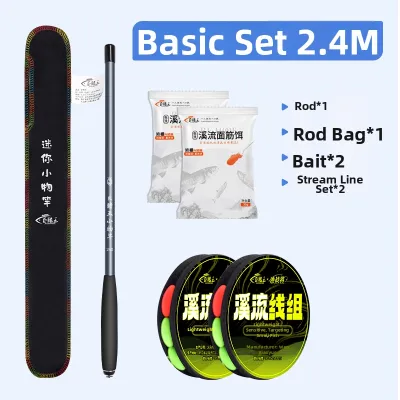
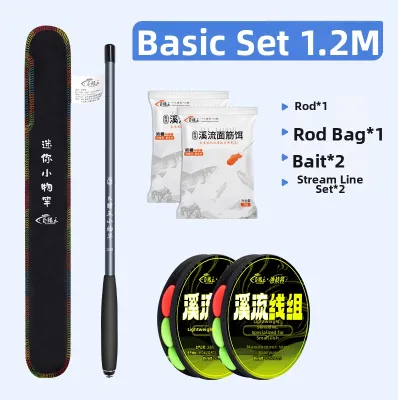
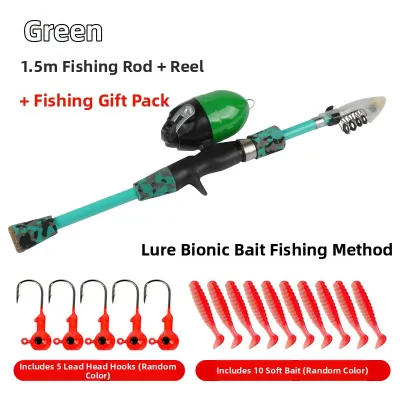
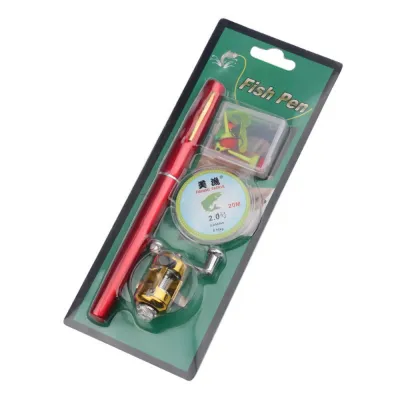
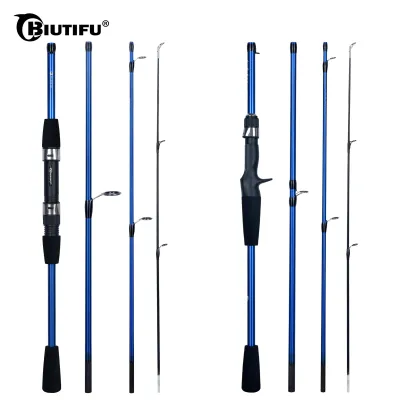
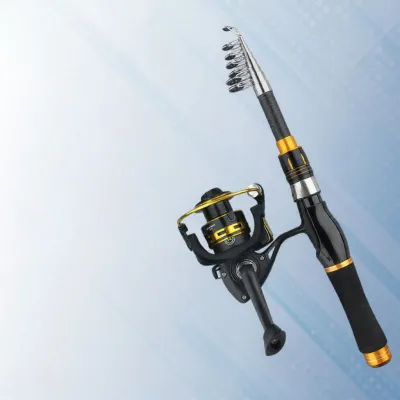
Prices are valid at publication and may change. Please refer to the product page for the latest price.
Most beginner-friendly fishing locations in Singapore consist of designated freshwater reservoirs managed by PUB (such as MacRitchie, Bedok, or Jurong Lake) and coastal jetties (such as Bedok Jetty or Woodlands Jetty). The target species in these areas are generally small to medium-sized, such as peacock bass, tilapia, or small snappers. A mini rod is perfectly scaled for these low-resistance environments, providing plenty of excitement and feedback without the need for heavy, expensive gear.
However, you must recognize the operational limits of ultra-compact tackle. Mini rods are not designed to pull heavy fish out of thick aquatic weeds, nor can they handle the immense pressure of large saltwater predators. Attempting to use them beyond their design limits can result in a snapped rod. Additionally, because Singapore experiences frequent afternoon thunderstorms, you must check local weather forecasts before heading out. If you hear thunder or see lightning, immediately stop fishing, collapse your rod, and seek shelter, as carbon fiber rods can conduct electricity.
Key Specifications to Evaluate in a Beginner Mini Rod
When choosing a mini rod, the first decision is the structural design. Telescopic rods feature hollow sections that slide inside one another, offering the ultimate in portability by collapsing down to a very short length in seconds. Multi-piece travel rods usually consist of three to five separate pieces that push together using ferrule joints. While they take slightly longer to assemble and have a longer transport length than telescopic models, they generally offer a smoother bending curve and greater structural durability.

Rod power represents the rod’s resistance to bending under a load, while action defines where the rod bends when pressure is applied. For general beginner use in Singapore, look for a rod rated as Moderate or Medium-Light power. This power level is versatile enough to handle light lures and bait rigs while providing enough backbone to land common local species. Pair this with a Moderate-Fast or Moderate action, which bends from the tip down through the middle section. This slower bend is highly forgiving for beginners, as it absorbs the shock of sudden movements and helps prevent the hook from tearing out of the fish’s mouth.
The materials used in the rod blank directly affect its performance and lifespan:
- Fiberglass: Extremely durable, highly flexible, and very forgiving of accidental knocks against concrete jetty walls. The trade-off is that fiberglass is relatively heavy and lacks the sensitivity needed to feel subtle bites from smaller fish.
- Graphite/Carbon Fiber: Exceptionally lightweight and highly sensitive, allowing you to feel every vibration in the water. However, carbon fiber is brittle and can easily fracture if it is bent past its limits (known as "high-sticking") or if it suffers a sharp impact.
- Composite Blends: These combine fiberglass and graphite fibers to deliver the durability of fiberglass alongside the lightweight sensitivity of carbon. For a novice, a composite rod offers the most balanced performance and minimizes the risk of accidental breakage.
Hardware quality is another critical factor. Ensure the line guides feature smooth ceramic inserts, such as aluminum oxide or silicon carbide. Rough or cracked guides will quickly abrade your fishing line, causing it to snap under light tension. Additionally, look for a reel seat with sturdy, threaded locking rings made of reinforced nylon or aluminum. Avoid models with thin plastic hoods, as they can crack or slip, causing your reel to wobble during use.
Evaluating Mini Fishing Rod Brands: Categories and Reliability Checks
When exploring the market, you will encounter recognized global brands such as Shimano, Daiwa, or Okuma. These manufacturers produce entry-level travel and telescopic rods that adhere to strict quality control standards. The primary benefit of choosing an established brand is reliability; the specifications printed on the rod (such as line weight and lure weight limits) are accurate and tested. Furthermore, local distributors in Singapore often stock replacement parts, making it easier to resolve issues if a section is damaged.
On various online marketplaces, you will find numerous budget-oriented brands (such as Sougayilang, KastKing, or Goture) that offer complete starter kits. These kits typically bundle a mini rod with a reel, line, and basic lures for a very low price. While these packages are highly attractive for absolute beginners testing the waters, you must expect trade-offs. The materials used are often heavier, the quality control is less consistent, and finding replacement parts for a broken section can be difficult.
To verify the reliability of any brand before buying, carefully analyze user reviews and feedback patterns. Look for recurring complaints regarding joint slippage or sticking, where telescopic sections slide down during a cast or become permanently jammed after exposure to water. Other warning signs include guide insert failure, where ceramic rings detach from their metal frames, and reel seat instability, where threaded rings strip easily or fail to hold the reel tightly.
| Brand Category | Typical Build Quality | Portability Design | Beginner Forgiveness | Warranty Accessibility |
|---|---|---|---|---|
| Global Entry-Level | High (consistent quality control, durable hardware) | Excellent (well-engineered multi-piece or telescopic joints) | Moderate (requires proper handling to avoid carbon damage) | High (supported by local distributors and tackle shops) |
| Budget Bundles | Variable (prone to minor cosmetic or structural defects) | High (often includes dedicated carrying cases) | High (fiberglass-heavy builds are highly durable) | Low (usually relies on online platform return windows) |
Where to Buy and Pre-Purchase Inspection Checks in Singapore
Visiting physical tackle shops in areas like Beach Road, Geylang, or regional hubs allows you to handle the rod before making a purchase. The staff can offer valuable advice on which mini rod suits your specific target location, and you can physically test the rod’s feel and weight. Alternatively, purchasing online provides access to a vast array of international brands and highly competitive pricing. However, because you cannot handle the item before it arrives, you must rely heavily on detailed specifications and user reviews.
Whether buying in-store or unboxing an online delivery, perform these essential quality checks before heading to the water:
- Extend and Lock: Fully extend every section of a telescopic rod (or assemble a multi-piece rod). Ensure each joint fits snugly without twisting or rattling. There should be no visible gaps or structural cracks at the connection points.
- The Cotton Swab Test: Run a dry cotton swab or a piece of soft cloth through the inside of every line guide. If the cotton fibers catch on the ring, it indicates a microscopic crack or chip in the ceramic insert that will damage your fishing line.
- Reel Seat Security: Mount your spinning reel onto the reel seat and tighten the locking mechanism completely. The reel must align perfectly with the line guides and remain completely stationary when you shake the handle.
Before finalizing your purchase, clarify the return policy and warranty terms. For local purchases, ask if the shop handles manufacturer defects directly. For online orders, document the unboxing process with a video to provide clear evidence if the rod arrived damaged during shipping.
Pairing the Right Reel and Line with Your Mini Rod
A mini fishing rod requires a properly matched reel to maintain a balanced center of gravity. If the reel is too heavy, the rod will feel unbalanced, making casting awkward and tiring. For most mini rods under 1.8 meters, pair them with a spinning reel in the 1000 to 2500 size range. A 1000-size reel is perfect for ultra-light setups targeting small reservoir fish, while a 2000 or 2500-size reel offers slightly more line capacity and drag strength for light coastal jetty fishing.
Always check the recommended line weight printed on the rod blank. Using a line that exceeds this rating can cause you to overload and break the rod. Monofilament line is the best choice for beginners because it is highly affordable, easy to knot, and has built-in stretch that cushions the rod against sudden pulls from a fish. A 4-pound to 8-pound test monofilament is ideal for most local mini rod applications. If you choose braided line for its superior sensitivity, always tie a monofilament or fluorocarbon leader to the end to provide shock absorption and prevent the line from slipping on the reel spool.
Mastering a few fundamental knots is essential. The Palomar Knot and the Improved Clinch Knot are highly reliable for securing hooks and lures. Because mini rods often feature very small guide rings, ensure any line-to-line leader knots (such as the Double Uni Knot) are trimmed extremely close to prevent them from catching on the guides during casting.
Frequently Asked Questions (FAQ)
Can I use a mini fishing rod for saltwater fishing in Singapore?
Yes, you can use a mini fishing rod for light saltwater fishing at spots like Bedok Jetty or coastal parks, but you must verify that the hardware is rated for saltwater use. Saltwater is highly corrosive and will quickly rust cheap metal guides and seize telescopic joints. To protect your gear, always rinse the entire rod and reel thoroughly with fresh tap water after every saltwater session. Wipe it down with a clean cloth and leave the telescopic sections fully extended in a shaded, well-ventilated area until completely dry.
Are telescopic mini rods less durable than multi-piece travel rods?
Generally, yes. Telescopic rods have multiple overlapping joints, which introduce more potential points of failure. Sand, grit, and salt can easily get trapped inside these joints, scratching the blank or causing the sections to jam. Multi-piece travel rods (typically 3 to 5 pieces) do not suffer from this issue to the same extent. They offer a more consistent bend, better casting distance, and superior durability, though they are slightly less convenient to assemble and pack away.
How should I set my budget for a beginner mini rod in Singapore?
When starting out, it is best to allocate your budget across the entire fishing system rather than spending all your funds on the rod alone. A balanced approach is to spend approximately 40% of your budget on a reliable mini rod, 40% on a matching spinning reel, and 20% on quality line, hooks, weights, and basic lures. Starting with a modest, functional setup allows you to learn the fundamentals without a heavy financial commitment, leaving room to upgrade individual components as you gain experience.
Community discussion
Share your experience or ask a question. Comments are reviewed before publication.