
Finding the right basketball pump in Singapore requires looking beyond basic inflation. A reliable pump must handle the distinct pressure requirements of various sports balls while enduring the challenges of a highly humid tropical environment. Whether you are prepping a single basketball for a weekend run at a local community court or inflating dozens of footballs for a school training session, choosing the correct tool ensures your equipment performs optimally and lasts longer.
Different sports balls require specific pressure ranges and valve configurations to maintain their structural integrity and bounce characteristics. A basketball typically requires a pressure range of 7 to 9 PSI, whereas a volleyball operates at a much lower pressure of 4.26 to 4.61 PSI, and a football demands a higher range of 8.5 to 15.6 PSI. Attempting to inflate these varied bladders with a single, uncalibrated pump without proper adapters can lead to poor playability, warped shapes, or permanent structural damage.
To make an informed purchase, you must evaluate three primary criteria: pressure measurement accuracy, airflow efficiency, and material durability. High-pressure pumps designed for bicycle tires often lack the sensitivity required to measure low PSI levels accurately, making a dedicated sports pump with a low-pressure gauge highly desirable. Additionally, the construction materials must withstand Singapore’s high relative humidity, which frequently exceeds 80 percent. Cheap steel components and low-grade rubber seals degrade rapidly under these conditions, leading to rust, air leaks, and mechanical failure. Investing in pumps with aluminum alloy barrels, stainless steel needles, and synthetic rubber hoses ensures long-term reliability when stored in local households.
Products mentioned in this guide
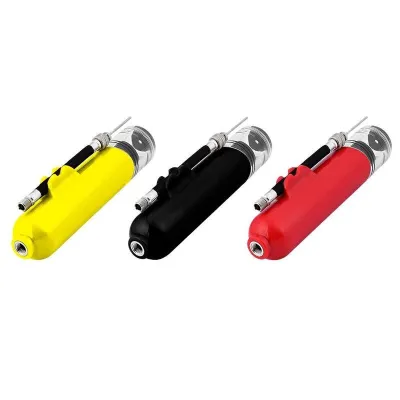
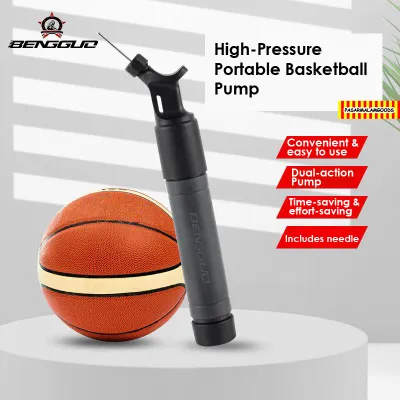
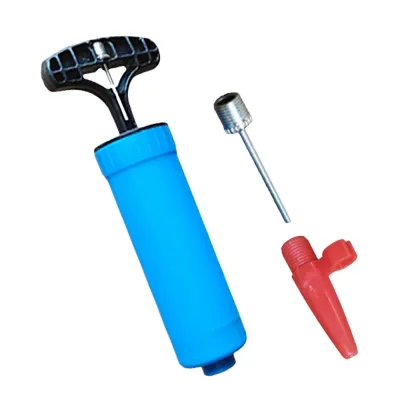
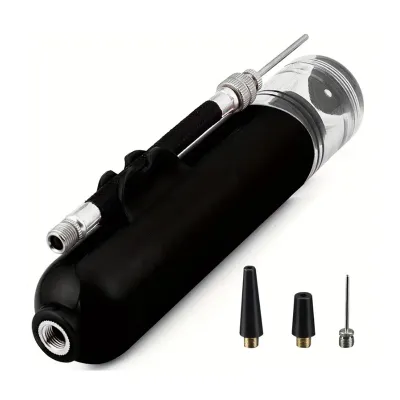
![[SPOT] Multi-purpose Inflator with Barometer Bicycle Pump Portable Air Pump For Motorcycle Mountain Bike Road Bike E-bike Basketball inflator With General Air Nozzle With Barometer CNY Gift Present](https://img.lazcdn.com/g/p/2c789efd61abbfc853d5eebef1221b94.jpg_400x400q80.jpg_.webp)
![[LOCAL SELLER] ROCKBROS A320 120PSI Bicycle Air Pump Aluminum Alloy Bike Mini Pump for Balloon Football Basketball Bicycle](https://img.lazcdn.com/g/p/4cdf88dce9570556e1ae5796568391e5.png_400x400q80.png_.webp)
![[SG SELLER] ROCKBROS Foot Pump Bicycle Pump High Pressure Portable Basketball Bicycle Electric Bicycle Motorcycle Car Air Pump Road Bike Folding Bike](https://img.lazcdn.com/g/p/031056b8547fb93e4a8b03ba21866574.png_400x400q80.png_.webp)
![[SG Stock] Air Pump Car Inflator Compressor Portable Ball Bike Bicycle Rechargeable Basketball Soccer Volleyball Tyre Wheel Tire 12V LED Fast Auto Shut-off Emergency](https://img.lazcdn.com/g/p/cc7d92c566c3860fbbfa1d535cc6f3bb.jpg_400x400q80.jpg_.webp)
Prices are valid at publication and may change. Please refer to the product page for the latest price.
Recommended Air Pump Types for Different Sports Needs
Selecting the ideal pump mechanism depends heavily on your specific usage scenario, portability requirements, and the volume of balls you need to maintain. Matching the pump type to your lifestyle ensures you do not end up carrying unnecessary weight or spending excessive physical effort on the court side.
Dual-Action Hand Pumps
Dual-action hand pumps are the most popular choice for individual players who prioritize portability and speed. Unlike traditional single-action pumps that only expel air when you push the handle inward, a dual-action mechanism compresses and delivers air on both the push and pull strokes. This effectively halves the time and physical effort required to top up a ball’s pressure before a game.
These pumps are incredibly compact and lightweight, making them easy to slide into a standard sports duffel bag or backpack alongside your shoes and water bottle. They are ideal for quick, court-side adjustments at outdoor ActiveSG courts or neighborhood street facilities. Because they do not rely on batteries or external power sources, they are always ready for immediate use.
However, manual hand pumps have distinct limitations. They require manual physical effort, which can become tiring if you need to inflate multiple flat balls from scratch. Furthermore, due to their compact size, many dual-action pumps lack integrated pressure gauges, or they feature small, low-resolution inline gauges that can be difficult to read accurately. For precise pressure management, you may need to carry a separate low-pressure dial gauge.
Rechargeable Electric Pumps
For physical education teachers, sports coaches, and club organizers who manage large inventories of equipment, rechargeable electric pumps offer unmatched convenience. These handheld devices utilize small, battery-powered micro-compressors to automate the inflation process entirely, eliminating manual labor.
Most modern electric ball pumps feature digital screens that allow you to preset your target pressure in PSI or Bar. Once you insert the needle and start the pump, the device monitors the internal pressure in real time and shuts off automatically when the target limit is reached. This precise control prevents over-inflation and ensures every ball in your training rack is identical in bounce and feel. Many models charge via standard USB-C ports, making them easy to power up using a mobile power bank, a laptop, or a car charger while traveling to a sports complex.
Despite their convenience, electric pumps carry certain trade-offs. They represent a higher initial financial investment compared to manual options. They also require diligent battery maintenance; lithium-ion batteries can degrade if left completely discharged for long periods or if stored in high-temperature environments, such as a hot car trunk or a non-air-conditioned metal locker. Additionally, the small internal motors generate heat during operation, meaning they often require a brief cool-down period after inflating five to ten balls consecutively to prevent thermal damage.
Heavy-Duty Foot Pumps
Heavy-Duty foot pumps serve as an excellent “home base” inflation station. Designed to sit firmly on the ground, these pumps utilize a wide metal frame and a foot-operated pedal, allowing you to use your body weight and larger leg muscles to pump air rather than relying on your upper body.
These pumps typically feature large-capacity cylinders that move a high volume of air with each stroke, making quick work of completely flat basketballs, footballs, or large inflatable training gear. They are almost always equipped with large, floor-mounted analog pressure gauges that are highly legible from a standing position. The hoses on foot pumps are generally longer and reinforced with braided nylon sleeves to withstand high-pressure use without kinking or bursting.
Because of their steel and cast-iron components, foot pumps are heavy and bulky, making them impractical for carrying to daily training sessions. Instead, they are best stored in HDB household bomb shelters, storerooms, or the trunk of a vehicle. They provide a stable, highly durable solution for families who want to keep their sports gear, bicycle tires, and recreational inflatables properly pressurized at home.
Key Features to Verify Before Buying
Before purchasing any multi-purpose air pump, you must verify several critical features to ensure compatibility with your sports gear and long-term durability in Singapore’s climate.

- Interchangeable Needles and Adapters: Ensure the pump package includes multiple standard inflation needles made of high-quality stainless steel or brass. It is also beneficial to have plastic cone adapters for recreational items like yoga balls or pool inflatables. If you also ride a bicycle, look for a pump head that supports both Schrader (standard car/ball valve) and Presta (skinny bike valve) connections.
- Pressure Gauge Accuracy: A gauge is useless if it cannot read low pressures accurately. Look for a pump with a dedicated low-pressure scale (0 to 15 or 30 PSI) rather than a high-pressure bicycle pump gauge that goes up to 160 PSI. On a high-pressure gauge, the difference between 4 PSI (volleyball) and 8 PSI (basketball) is represented by a tiny fraction of a millimeter, making precise inflation nearly impossible.
- Hose and Connector Quality: Avoid pumps where the needle screws directly into the rigid plastic body of the pump. This rigid setup creates a lever effect when you pump, which can easily bend or snap the needle inside the ball's valve. Instead, opt for a pump with a flexible, braided rubber hose. The hose isolates the movement of the pump body from the needle, protecting both the needle and the ball's internal rubber bladder.
- Valve Compatibility and Seal Integrity: Inspect the pump head mechanism. A threaded screw-on connector provides the most secure, airtight seal, but a high-quality thumb-lock lever clamp is faster for quick transitions. Ensure the internal rubber washers inside the connector head are thick and well-seated to prevent air from escaping around the base of the needle during pumping.
Safe Inflation Practices and Ball Maintenance
Properly inflating a sports ball is essential for maintaining its shape, bounce, and lifespan. Following systematic safety checks prevents costly damage to your premium sports equipment.
First, always locate the manufacturer’s recommended pressure range before you begin. This specification is almost always embossed or printed directly onto the synthetic leather or rubber surface immediately surrounding the inflation valve. It is typically marked in PSI, Bar, or kPa. Never exceed the maximum recommended pressure, as over-inflation stretches the outer panels, weakens the seams, and can cause the internal bladder to rupture.
Second, never insert a dry needle into a ball’s valve. Inserting a dry, friction-heavy metal needle can dislodge, tear, or push the self-sealing rubber valve core directly into the interior of the ball, causing an immediate and unrepairable leak. Always moisten the needle before insertion. While water or saliva works in a pinch, using a drop of specialized silicone lubricant or glycerin is the safest professional method to preserve the elasticity of the rubber valve seal.
Third, account for environmental temperature variations. Air expands when heated and contracts when cooled. If you inflate a basketball to its maximum limit inside an air-conditioned room (typically around 20 to 22 degrees Celsius) and then take it out to play on a sun-baked outdoor concrete court in Singapore where temperatures can soar, the air inside the ball will expand. This thermal expansion can push the ball past its safe structural limits. To prevent this, inflate the ball to the lower end of its recommended range if you plan to play in hot outdoor conditions.
Finally, store your inflation equipment and sports balls in a cool, dry place. Singapore’s high humidity can cause condensation to build up inside pump cylinders, leading to internal corrosion and dry rot of the rubber seals. Store your pump with the hose unkinked and place needles in a small, airtight container or a dedicated compartment on the pump body to prevent them from getting lost or bent under heavy gear.
Frequently Asked Questions (FAQ)
Can I use a standard bicycle pump for a basketball?
Yes, you can use a standard bicycle pump to inflate a basketball, provided you have a compatible needle adapter that fits securely into the pump’s connector head. However, you must exercise extreme caution. Bicycle pumps are designed to deliver high pressures and can quickly over-inflate a sports ball. Additionally, because bike pumps often lack a flexible hose or have gauges calibrated for high pressures (up to 120+ PSI), it is very easy to bend the needle inside the ball’s valve or misread the low PSI levels required for sports balls.
How do I know the correct PSI for different sports balls?
The correct pressure range is almost always embossed or printed directly onto the ball’s surface, usually right next to the inflation valve hole. If the markings have worn away over time, you can refer to standard manufacturer guidelines as a general reference: basketballs typically require 7 to 9 PSI, soccer balls require 8.5 to 15.6 PSI, rugby balls require 9.5 to 10 PSI, and volleyballs require 4.26 to 4.61 PSI. Always use a dedicated low-pressure gauge to verify these measurements, as guessing by squeezing the ball is highly inaccurate.
Why does my basketball keep losing air immediately after pumping?
If your basketball loses air rapidly after inflation, the most common culprit is a damaged or dry inflation valve. This damage typically occurs when a dry, unlubricated needle is forced into the valve, tearing the self-sealing rubber core. Dirt, sand, or debris trapped inside the valve can also prevent it from closing completely. To diagnose this, apply a few drops of soapy water over the valve opening; if bubbles begin to form, air is escaping through the valve. If the valve is dirty, you can sometimes clear the debris by inserting a lubricated needle clean of dirt, but a torn valve core usually requires professional valve replacement or a new ball.
Community discussion
Share your experience or ask a question. Comments are reviewed before publication.