
Finding a single tool that can inflate both a high-pressure road bike tire and a low-pressure sports ball is a common challenge for active households in Singapore. Whether you are preparing for a weekend ride along the East Coast Park Park Connector Network (PCN) or inflating basketballs for a community court session, a versatile air pump is an essential piece of gear. The primary challenge lies in the vastly different pressure and volume requirements of sports and cycling equipment. A road bicycle tire requires high pressure—often up to 120 PSI—but holds a very small volume of air, whereas a basketball requires low pressure, usually between 8 and 12 PSI, but demands a much larger volume of air to fill its bladder.
To bridge this gap, a multi-purpose air pump must feature a highly accurate pressure gauge, a robust valve connection system, and a design that balances physical effort with inflation speed. Selecting the wrong pump can lead to damaged equipment, such as ruptured ball bladders from over-inflation or under-inflated bicycle tires that increase the risk of pinch flats. By understanding the mechanical differences between manual and electric pumps, and knowing which valve adapters are required for each piece of gear, you can make an informed decision that keeps all your equipment ready for action.
Quick Picks: Top Multi-Purpose Air Pumps at a Glance
For quick reference, the table below outlines the primary categories of multi-purpose air pumps available in the local market, highlighting their valve compatibility and ideal use cases.
Products mentioned in this guide
![[SG Seller]Portable Car Electric Inflator air pump car electric pump Bicycle inflator pump/air pump/Electric pump/汽车充气泵](https://img.lazcdn.com/g/p/11d7062f8a657612c19945cd3cdafcdb.jpg_400x400q80.jpg_.webp)
Prices are valid at publication and may change. Please refer to the product page for the latest price.
| Pump Type | Valve Compatibility | Best Use Case | Key Advantage |
|---|---|---|---|
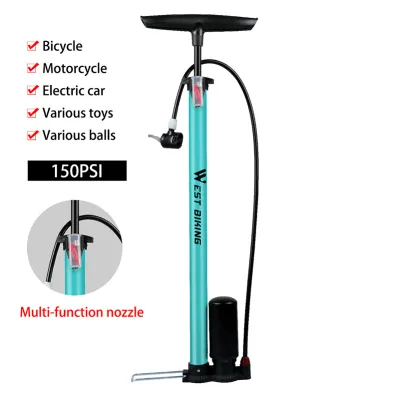
| High-Volume Floor Pump | Presta, Schrader, Ball Needle | Home garage, pre-ride checks, multi-ball inflation | High air volume per stroke, stable base, large analog gauge |
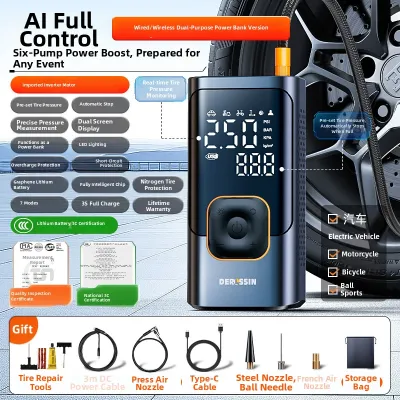
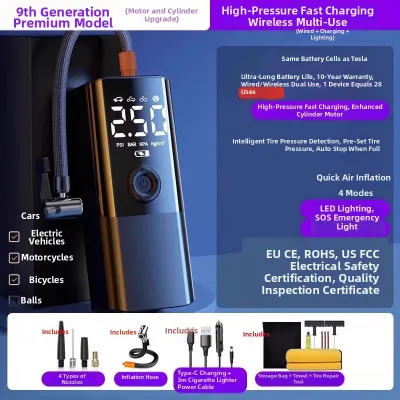
| Portable Electric Compressor | Presta, Schrader, Ball Needle | Commuting, emergency roadside, court-side convenience | Effortless inflation, digital auto-shutoff, compact size |
| Compact Manual Hand Pump | Presta, Schrader, Ball Needle | Long-distance cycling, trail riding, portable backup | Lightweight, frame-mountable, high-pressure capability |
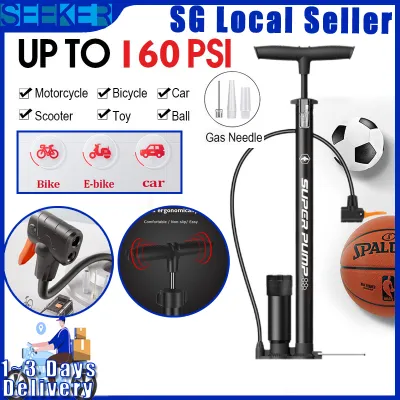
| Heavy-Duty Dual-Action Pump | Schrader, Ball Needle | Sports team kit bags, rapid ball inflation | Pumps air on both push and pull strokes, no battery needed |
Note: Before purchasing, check the manufacturer’s product specifications to verify that the included adapter kit contains the exact connections required for your specific gear.
Key Features to Look for in a Multi-Purpose Air Pump
To select a single air pump that can handle both sports balls and bicycle tires, you must understand how pressure and volume interact. Bicycle tires and sports balls represent two opposite ends of the inflation spectrum. Road bicycle tires have very small air chambers but require high pressures to support the rider’s weight and minimize rolling resistance. In contrast, sports balls like basketballs, soccer balls, and volleyballs have large, flexible bladders that require a high volume of air but must be kept at a very low pressure to maintain their shape and bounce characteristics without bursting.

A high-quality multi-purpose pump must be engineered to handle both tasks safely. If you use a high-pressure pump designed solely for cycling on a sports ball without a precise gauge, you risk over-inflating and warping the ball’s bladder. Conversely, using a low-pressure, high-volume pump on a bicycle tire will result in an exhausting, inefficient process that may never reach the required pressure. Therefore, look for a pump that offers a broad operational range and clear, low-end readability on its pressure gauge.
Valve Compatibility and Adapters
The connection between the pump and the inflatable is the most common failure point during inflation. Bicycle tires primarily use two types of valves: Schrader and Presta. Schrader valves are wide, threaded valves with a spring-loaded center pin, identical to those found on car tires, and are common on mountain bikes, city bikes, and children’s bicycles. Presta valves are narrower, feature a top threaded lock nut, and are standard on road, gravel, and high-performance bicycles. Sports balls, on the other hand, utilize a small, self-sealing rubber inlet that requires a thin, hollow metal ball inflation needle to bypass the seal and deliver air directly into the bladder.
A truly versatile multi-purpose pump must accommodate all three connections. Look for pumps equipped with a dual-valve head or a smart valve system that automatically adjusts to fit both Schrader and Presta valves without requiring you to disassemble the internal nozzle components. Additionally, ensure the pump has a dedicated storage compartment or clip on the main body to hold the ball needle and other plastic adapters. Losing these small adapters is incredibly easy, especially when moving between outdoor courts and cycling paths, so secure on-board storage is a vital practical feature.
Pressure vs. Volume Requirements
The physical dimensions of a pump’s internal barrel dictate its performance characteristics. Floor pumps feature long, wide barrels that move a large volume of air with every single stroke. This makes them highly efficient for inflating large items like basketballs or wide mountain bike tires, as they require fewer strokes to reach the desired volume. Mini-pumps, while highly portable, have very small barrels. Even if a mini-pump is rated to reach 120 PSI, the volume of air delivered per stroke is minuscule, meaning inflating a flat sports ball can take several minutes of rapid, exhausting physical effort.
When evaluating a multi-purpose pump, look for an ideal operational range of 0 to 160 PSI. However, the high-pressure capacity must be paired with precise low-end readability. A gauge that only marks every 10 PSI makes it incredibly difficult to accurately inflate a soccer ball to exactly 8.5 PSI. Look for analog gauges with a large, high-contrast face and distinct markings at the lower end of the scale, or opt for a digital gauge that displays pressure in precise 0.5 PSI or 0.05 bar increments.
Manual vs. Electric Operation
Choosing between a manual pump and a portable electric compressor involves weighing physical effort against operational reliability. Manual pumps, whether stationary floor models or compact hand pumps, offer unlimited capacity and are always ready for use. They do not require batteries, charging cables, or electrical outlets, making them exceptionally reliable for long-term storage in a home closet or utility room. The primary trade-off is physical fatigue, particularly when inflating multiple high-volume sports balls or high-pressure road tires in Singapore’s warm, humid climate.
Portable electric air compressors have become increasingly popular due to their effortless operation. These battery-powered devices allow you to set a target pressure, attach the hose, and let the motor do the work, automatically shutting off once the target is reached. This completely eliminates the risk of over-inflation. However, electric pumps are bound by lithium-ion battery life, which degrades over time and can leave you stranded if you forget to charge the device before a trip. They are also heavier than manual hand pumps, operate with a noticeable mechanical noise, and take longer to inflate completely flat, high-volume tires compared to a robust manual floor pump.
Top Multi-Purpose Air Pumps for Cyclists and Athletes
To help you find the right tool for your specific setup, we have categorized the most reliable multi-purpose air pump designs available in the market. Each category serves a distinct user profile, balancing portability, speed, and ease of use.
Best Overall Floor Pump for Home Use
A stationary floor pump is the gold standard for home maintenance, offering the fastest inflation speeds and the most stable operating platform. These pumps feature a wide, heavy base—ideally made of steel or cast iron—that allows you to stand on the footplates to keep the pump steady while using both hands on the T-handle. The long barrel allows for maximum air displacement per stroke, meaning you can bring a flat basketball or a road bike tire to the correct pressure in just a few strokes.
The Topeak JoeBlow series is a representative example of this category, widely recognized for its durable steel barrel construction, comfortable oversized handle, and highly visible, top-mounted analog pressure gauge. The top-mounted position of the gauge makes it much easier to read without straining your eyes, which is particularly helpful when fine-tuning low-pressure sports balls. The primary limitation of a floor pump is its lack of portability. Weighing between 1.5 and 2 kilograms and standing over 60 centimeters tall, it is not a tool you can easily carry in a sports backpack or mount to a bicycle frame, making it strictly suited for home garages, HDB corridors, or communal sports facilities.
Best Portable Electric Pump for On-the-Go
For athletes and cyclists who prioritize convenience and portability, a battery-powered electric pump is an excellent solution. These compact, pocket-sized devices are slightly larger than a smartphone and can easily slip into a sports bag, backpack, or bicycle pannier. The defining benefit of these pumps is their digital interface, which allows you to select preset modes for bicycles, motorbikes, cars, or sports balls, or manually input an exact target pressure.
The Xiaomi Portable Electric Air Compressor series represents this category well. It features a built-in digital pressure sensor that automatically stops the inflation process the moment the target pressure is met, preventing accidental over-inflation that could damage delicate sports ball bladders. When selecting an electric pump, always verify that the package includes a screw-on Presta adapter and a standard metal ball needle, as some basic kits may only include the native Schrader nozzle. The trade-offs of this design include its reliance on battery charge, a relatively slow inflation speed for large tires, and a loud buzzing sound during operation that may be disruptive in quiet residential areas.
Best Compact Hand Pump for Trail and Court
If you need a manual pump that is small enough to carry during long rides or outdoor court sessions but still offers decent inflation efficiency, a hybrid compact hand pump is the ideal choice. These pumps, often referred to as micro floor drives, bridge the gap between tiny frame pumps and full-sized floor pumps. They feature a fold-out stainless steel foot peg and a flexible, retracting hose, allowing you to place the pump on the ground and use your body weight to push down on the handle, rather than relying entirely on your arm and shoulder strength.
The Lezyne Micro Floor Drive series is a classic example of this hybrid design. Its lightweight aluminum construction and compact profile allow it to be mounted directly to a bicycle frame using an under-bottle-cage bracket, or tucked neatly into a standard sports bag. The flexible hose prevents you from putting mechanical stress on the tire valve or ball needle while pumping, reducing the risk of bending or snapping the valve stem. However, keep in mind that most ultra-compact hand pumps do not feature an integrated pressure gauge. To ensure your sports balls are inflated to the correct pressure and to avoid damaging them, you will need to carry a separate pocket-sized pressure checker.
Best Heavy-Duty Dual-Action Hand Pump
For sports coaches, physical education teachers, or athletes who manage multiple sports balls and mountain bikes, a heavy-duty dual-action hand pump is a highly efficient, non-electric tool. These pumps are larger than standard mini-pumps but smaller than floor pumps, designed to fit comfortably in a team kit bag. The defining feature of a dual-action pump is its internal valve system, which compresses and discharges air on both the downward push and the upward pull of the handle, effectively doubling the volume of air delivered with every complete stroke cycle.
This dual-action mechanism significantly cuts down the time and physical effort required to inflate large, low-pressure items like basketballs, soccer balls, or wide mountain bike tires. These pumps are typically constructed with robust plastic or composite barrels, ergonomic T-handles for a secure grip, and reinforced rubber hoses that can withstand the rapid, repetitive motions of fast pumping. The main limitation is their bulk; they are too large to fit into a standard cycling jersey pocket or a small under-seat saddle bag, making them less suitable for minimalist road cyclists who prefer to carry as little weight as possible.
Maintenance Tips for Longevity in Humid Climates
Singapore’s tropical climate, characterized by high relative humidity that frequently exceeds 80% and high ambient temperatures, can accelerate the degradation of mechanical tools. To ensure your multi-purpose air pump remains reliable and airtight for years, you must take active steps to protect its internal seals, hoses, and metal components from environmental wear.
First, proper storage is critical. Avoid storing your air pump on exposed HDB balconies, outdoor corridors, or unconditioned garden sheds where indirect rain, condensation, and direct sunlight can cause rapid damage. High humidity accelerates rust on steel piston shafts, while UV exposure degrades rubber hoses, causing them to crack and leak. Always store your pump indoors in a cool, dry, and shaded closet or utility room.
Second, maintain the internal lubrication of the pump barrel. Over time, the factory-applied grease inside the barrel dries out or becomes contaminated with dust, leading to increased friction, air bypass, and wear on the internal seals. Once a year, unscrew the top collar of the pump barrel, carefully slide out the piston assembly, and apply a thin, even layer of high-quality silicone grease to the rubber O-rings and piston cup. Do not use petroleum-based lubricants like WD-40 or standard motor oil, as these compounds will chemically degrade and swell the rubber seals, permanently ruining the pump’s airtightness.
Third, perform regular visual and physical checks before and after use. Inspect the flexible hose for micro-tears, dry rot, or cracking, especially at the high-stress connection points near the pump base and the valve head. Before inserting a metal ball needle into a sports ball, inspect the needle’s threads and tip to ensure they are clean and free of dirt, sand, or grit. Debris carried on the needle can enter the pump’s internal check valves, causing them to stick open and fail, or it can damage the self-sealing rubber valve of the sports ball itself.
Frequently Asked Questions (FAQ)
Can I use a bicycle pump for sports balls without a needle?
No, you cannot safely inflate a sports ball without a dedicated metal inflation needle. Bicycle pump heads are designed to clamp onto the external threads of Presta or Schrader valves to create an airtight seal. They cannot form a seal against the tiny, recessed rubber inlet of a sports ball. Attempting to force a bicycle pump nozzle directly against a sports ball’s valve will fail to deliver air and can permanently damage or push the ball’s valve core into the bladder, rendering the ball unusable. Always use a standard metal inflation needle to safely bypass the self-sealing valve.
Why does my electric pump stop before reaching the target pressure?
A portable electric compressor may shut off prematurely due to thermal protection, low battery voltage, or a loose connection. Most electric pumps feature an integrated thermal sensor that automatically shuts down the motor if it overheats during continuous operation to prevent permanent damage. Additionally, if the battery charge is low, the voltage may drop under the heavy load of pushing higher pressures, causing the system to shut off. Finally, ensure the valve connection is completely tight; a loose connection allows air to leak, which can cause the internal sensor to read ambient air pressure instead of the true pressure inside the tire or ball, triggering an early shutdown.
How does Singapore's humidity affect air pump maintenance?
Singapore’s persistent high humidity accelerates the oxidation of exposed, non-chromed steel parts, such as the main plunger shaft on manual pumps, leading to rust that can scratch internal seals. It also speeds up the chemical degradation of rubber hoses and internal polyurethane gaskets, making them brittle and prone to cracking over time. To mitigate these effects, wipe down the metal shaft with a dry microfiber cloth after use to remove sweat and environmental moisture, and always store the pump inside a climate-controlled room rather than an outdoor balcony or damp storage locker.
Community discussion
Share your experience or ask a question. Comments are reviewed before publication.