
What Makes a Ball Pump Needle Truly Multi-Purpose?
A ball pump needle is a small but critical piece of sports equipment. While it seems like a simple, universal tool, selecting the right one requires understanding the mechanics of inflatable valves. In team sports, standard balls—such as basketballs, footballs, soccer balls, and volleyballs—rely on a self-sealing rubber or silicone valve. This valve is designed to accept a specific gauge of hollow metal needle. However, when we step outside standard team sports into fitness gear like yoga balls, pool inflatables, or bicycle tires, the inflation mechanisms change completely.
The valve of a standard sports ball is typically a narrow channel made of synthetic rubber (often butyl) or silicone, backed by a flexible bladder. When a needle is inserted, it temporarily forces the self-sealing channel open. Once the needle is withdrawn, the internal air pressure of the ball presses the rubber walls of the valve back together, sealing the air inside. A standard sports needle is engineered with a specific outer diameter (usually around 2 millimeters) and a length of about 38 millimeters (1.5 inches) to safely penetrate this channel without tearing the surrounding rubber.
Many people assume that a single needle can inflate everything in their garage or storage closet. Attempting to force a standard metal needle into a plastic pool float valve will likely puncture the delicate plastic seam, rendering the float useless. Conversely, trying to inflate a high-pressure bicycle tire with a ball needle is impossible because bicycle tires use Schrader or Presta valves, which require threaded clamp-on pump heads rather than a hollow probe. Understanding these boundaries helps you select a versatile kit that covers standard valves while providing adapters for other household inflatables.
Products mentioned in this guide
![[baoyinr]3PCS Ball Pump Inflation Needle Stainless Steel Air Pump Needle for Inflating Football Basketball Volleyball](https://img.lazcdn.com/g/p/63d66b2443815cdc4e305b6811b52e0d.jpg_400x400q80.jpg_.webp)
Prices are valid at publication and may change. Please refer to the product page for the latest price.
The primary goal of this guide is to help you identify versatile needle kits or designs that cover 90% of your sports equipment needs. By choosing the right materials, thread sizes, and adapter types, you can maintain all your sports balls without buying separate, specialized tools for every single item in your gear bag.
Key Features to Evaluate Before Buying a Pump Needle
Material and Durability
Most cheap needles are made of low-grade zinc alloys or thin brass plating, which can easily bend or snap under lateral pressure. For long-term reliability, look for high-grade 304 stainless steel. Stainless steel offers excellent structural rigidity and high resistance to corrosion. This rust-resistant property is particularly vital in humid climates like Singapore, where moisture in the air or within storage rooms can quickly oxidize inferior metals, leaving rough, rusty surfaces that can damage delicate rubber valves during insertion.

Thread Compatibility
The base of a ball pump needle features a threaded connection that screws into the pump nozzle or a flexible hose. The standard thread size for most sports pumps is 5/16-inch (often referred to as standard toy or ball pump threads). However, some specialty pumps or electric air compressors use different thread dimensions or quick-release clamp mechanisms. Before purchasing, verify whether the needle has a standard screw thread that matches your existing hand pump, foot pump, or electric inflator. Opting for kits that include thread adapters ensures you can connect the needle to various pumping systems without air leaks.
Base Seal and Airflow
A high-quality needle should feature a secure seal at its base to prevent air from escaping while pumping. Look for needles that incorporate a rubber O-ring or a tapered, heavy-duty plastic base. Without a proper seal, a significant portion of the air compressed by the pump will leak out of the connection point rather than entering the ball, making the inflation process slow and physically exhausting. Good airflow design also means the side port near the tip of the needle is cleanly cut and free of metal burrs, allowing air to exit smoothly.
Needle Thickness and Structural Integrity
Visually inspect the wall thickness of the needle shaft. Cheap needles have incredibly thin walls that offer no resistance to bending. A high-quality needle maintains a consistent, robust wall thickness while keeping the outer diameter thin enough to slide easily into standard valves. If the needle is too thick, it will stretch and damage the valve channel; if it is too thin or poorly constructed, it will bend at the base under the slightest lateral force.
Common Types of Versatile Pump Needles on the Market
Standard Stainless Steel Needles
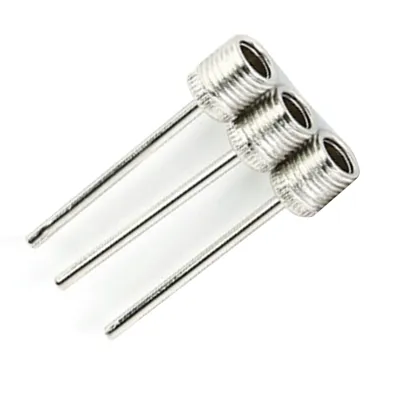
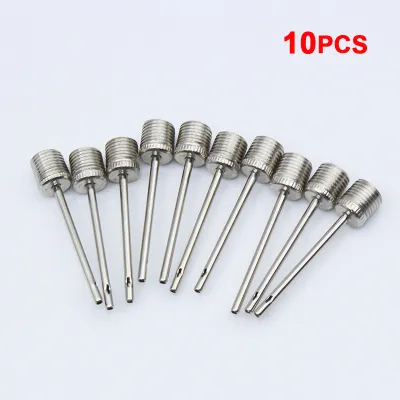
These are the classic, rigid metal needles found in almost every sports store. They feature a threaded base and a hollow shaft with a rounded, closed tip and a small air exit port on the side. They are highly affordable and work exceptionally well for standard sports balls when used with a stable pumping technique. Their main drawback is their lack of flexibility; any sudden movement of the pump can bend or snap the needle.
Extended or Long-Reach Needles
Some specialized sports equipment and larger fitness items require a longer shaft to reach the inner bladder. Extended needles typically measure between 2 to 3 inches in length. They are useful for thick-walled exercise balls or deep-set valves found on certain heavy-duty training balls. However, because of their increased length, they are much more susceptible to lateral bending stress and must be handled with extreme care.
Flexible Hose Adapter Needles
This design features a short, flexible rubber or silicone hose that connects the metal needle to the pump. This is one of the most effective ways to prevent needle breakage. The flexible hose absorbs the natural shaking and rocking motions of your hand while pumping, isolating the needle from lateral forces. If you frequently use a rigid hand pump, upgrading to a flexible hose adapter is highly recommended to protect both the needle and the ball’s valve.
Multi-Piece Adapter Kits
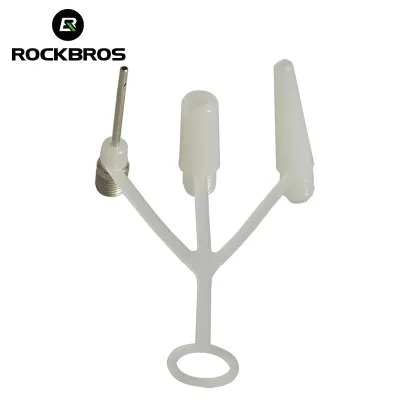
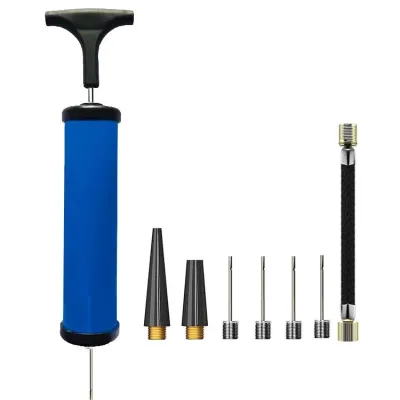
For households with a wide variety of recreational gear, a multi-piece kit is the most versatile option. These kits typically include several standard stainless steel needles, a flexible extension hose, and tapered plastic nozzles of various sizes. The plastic nozzles are designed for inflating beach balls, balloons, yoga mats, and pool floats, while the metal needles handle sports balls. Some comprehensive kits also include brass Presta-to-Schrader valve adapters, allowing you to use your sports pump on bicycle tires.
Matching the Right Needle Length to Your Sports Balls
Basketballs and Footballs (Soccer)
Basketballs and soccer balls feature thick, multi-layered outer casings made of synthetic leather, rubber, or composite materials, backed by a nylon-wound carcass. To reach the inner butyl or latex bladder, you need a needle of standard length (around 1.5 inches). A needle that is too short may fail to penetrate the self-sealing valve fully, resulting in air escaping back out of the valve opening during pumping rather than filling the bladder.
Volleyballs and Handballs
Volleyballs and handballs are designed to be much lighter and softer than basketballs. Consequently, their outer panels are thinner, and their internal bladders are delicate. When inflating these balls, using an excessively long needle poses a serious risk. If the needle is pushed too far into a partially deflated ball, the sharp tip can easily puncture the opposite side of the inner bladder, permanently ruining the ball. A standard or slightly shorter needle is ideal, and care must be taken not to insert it past the valve housing.
Rugby Balls and American Footballs
These balls have unique, elongated shapes with valves often located near the seams or laces. Because of the curved structure, the valve may sit at an angle relative to the outer casing. Standard needles are perfectly suitable, but the key is the angle of insertion. The needle must be aligned precisely with the direction of the valve channel, which may not be perpendicular to the outer surface of the ball.
Verification Step
Before inflating any premium, match-grade, or specialized sports ball, always check the manufacturer’s care instructions. Many high-end balls print the recommended inflation pressure (measured in PSI or bar) directly next to the valve. If the valve type is non-standard or requires a specific needle gauge, this information can usually be found on the manufacturer’s official website or product packaging.
How to Inflate Safely and Prevent Needle Breakage
The Importance of Lubrication
Inserting a dry metal needle into a dry rubber valve is the primary cause of valve damage and needle breakage. The friction can tear the delicate inner rubber flaps of the self-sealing valve, leading to slow, irreversible air leaks. Before every insertion, always moisten the needle. While water or saliva can work in a pinch for quick, low-risk adjustments, the safest and most effective choice is a drop of silicone-based valve oil or glycerin. Never use petroleum-based lubricants like petroleum jelly or motor oil; these chemicals break down natural and synthetic rubber over time, destroying the valve’s ability to seal.
Proper Insertion Technique
Hold the ball firmly near the valve area. Align the lubricated needle straight with the valve opening. Push the needle in with a smooth, continuous motion, ensuring you do not twist, wiggle, or apply lateral force. The needle should slide in easily; if you encounter significant resistance, stop and check if the needle is aligned correctly or if the valve is obstructed.
Managing Pump Leverage
When using a rigid hand pump without a hose, the pumping action naturally causes the pump body to rock back and forth. This movement transfers immense lateral leverage to the needle, which is locked inside the valve. To prevent snapping, use one hand to brace the pump head firmly against the ball, keeping it perfectly steady, while using your other hand to operate the pump handle. Alternatively, using a flexible hose adapter completely eliminates this leverage risk by decoupling the pump’s motion from the needle.
Handling a Broken Needle
If a needle snaps inside the valve, do not panic or attempt to force another object into the valve, as this can push the broken fragment into the bladder or tear the valve walls. If a portion of the broken needle is still protruding from the valve, you can carefully extract it using a pair of fine-nosed tweezers or needle-nose pliers. If the needle has snapped flush with or below the valve opening, extraction is extremely difficult. In some cases, a professional repair shop can replace the valve core, but for most standard recreational balls, a flush-snapped needle that cannot be reached with tweezers usually means the ball’s bladder is permanently compromised.
Storage and Maintenance
After use, unscrew the needle from the pump and store it in a dry, protective container, such as a small plastic capsule or a dedicated compartment in your sports bag. Leaving the needle attached to the pump while it is tossed into a gear bag exposes it to heavy impacts from other equipment, which will easily bend or break it. Keep the needles clean and dry to prevent any dust or grit from entering the hollow shaft, which could be transferred into the ball’s valve during the next inflation.
Frequently Asked Questions (FAQ)
Can I use a standard basketball needle for an exercise ball?
Standard basketball needles are typically too short and narrow to work effectively with large, thick-walled exercise or yoga balls. Exercise balls are constructed from thick PVC or anti-burst rubber materials that require a high volume of air at low pressure. Standard sports needles cannot pass through the thick outer wall to reach the inner chamber properly, and their narrow diameter restricts airflow, making the inflation process incredibly slow. Instead, use the tapered plastic inflation cones or specialized high-volume adapters that are usually supplied with fitness balls.
Why does my pump needle keep bending during inflation?
Needle bending is almost always caused by lateral physical stress or poor material quality. When using a rigid hand pump, the natural up-and-down pumping motion causes your hand to sway, putting severe bending pressure on the metal shaft. This risk is amplified if you insert the needle dry, as the high friction binds the needle to the rubber valve, making it even more susceptible to bending under movement. To resolve this, switch to a high-quality stainless steel needle, always lubricate the needle before insertion, and use a flexible extension hose to isolate the needle from the pump’s motion.
Do I need to lubricate the needle every time I pump a ball?
Yes, lubricating the needle before every single inflation is highly recommended. The rubber or silicone self-sealing valves on sports balls rely on a tight, friction-based fit to keep air inside. Inserting a dry metal shaft creates intense friction that can scuff, tear, or dislodge the internal valve flaps, leading to permanent air leaks. A single drop of water, saliva, or specialized silicone valve oil reduces this friction dramatically, allowing the needle to glide in smoothly and protecting the integrity of the valve for years of reliable use.
Community discussion
Share your experience or ask a question. Comments are reviewed before publication.