
Finding the best multi-purpose soccer ball pump in Singapore requires looking beyond basic inflation. Whether you are prepping for a weekend futsal match at a local cage, a basketball session at an ActiveSG community court, or a beach volleyball game at East Coast Park, maintaining correct air pressure is vital for playability, safety, and gear longevity. A single, versatile pump that handles multiple sports equipment types eliminates gear clutter and ensures you are always ready to play. The tropical climate of Singapore, characterized by high humidity and sudden downpours, also demands specific attention to pump materials and maintenance to prevent rust and seal degradation.
Why You Need a Versatile Ball Pump for Multiple Sports
Managing a diverse sports kit often leads to a frustrating collection of single-use accessories. You might find yourself with a cheap plastic pump that only works on a specific soccer ball, a bicycle pump that does not fit sports needles, and a scattering of bent metal pins lost at the bottom of your gym bag. This clutter is not just an organizational headache; it often results in players using whatever tool is closest at hand, regardless of whether it is safe for the equipment.
Using improper inflation tools poses a significant risk to your sports balls. High-pressure bicycle floor pumps, for example, are engineered to deliver high volumes of air at pressures often exceeding 100 PSI to inflate rigid tires. Sports balls, conversely, are low-pressure items that typically require between 4 and 15 PSI. When you connect a high-pressure pump without a regulator to a soccer ball or volleyball, a single aggressive stroke can push far too much air into the chamber. This sudden pressure spike can easily over-stretch the outer synthetic leather panels, tear the delicate internal latex or butyl bladder, or blow out the rubber valve seat entirely, rendering an expensive match ball useless.
Products mentioned in this guide
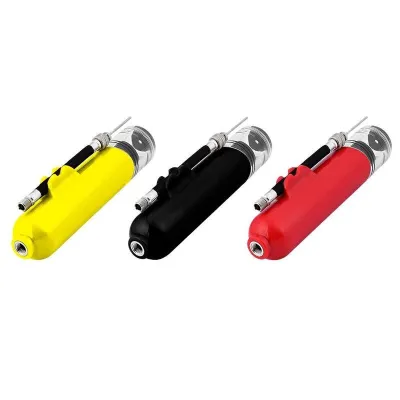
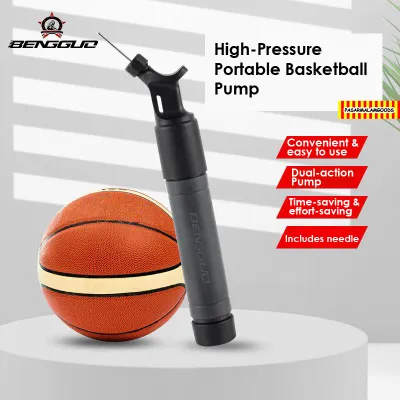
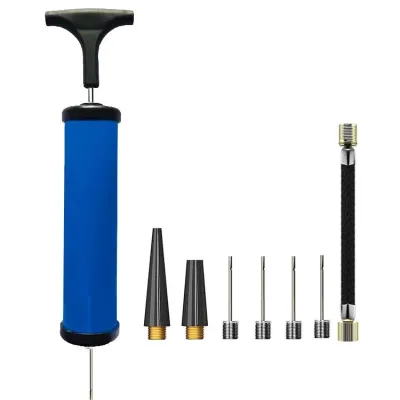
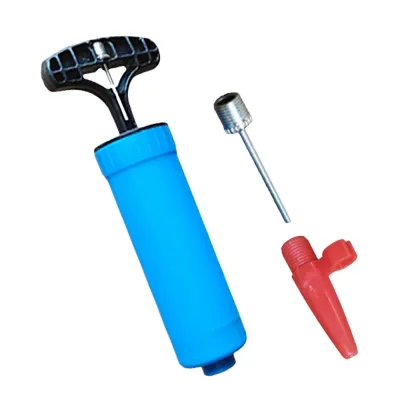
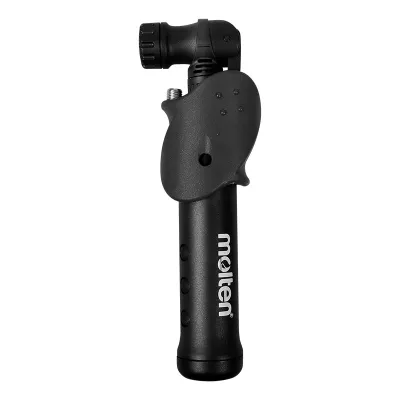
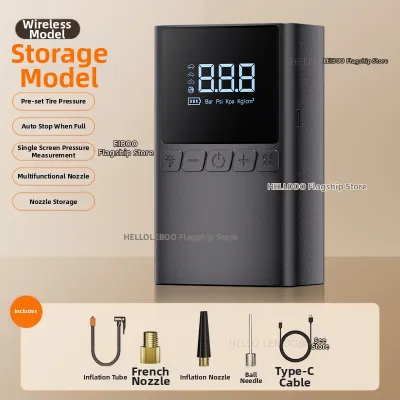
![[SG Stock] Air Pump Car Inflator Compressor Portable Ball Bike Bicycle Rechargeable Basketball Soccer Volleyball Tyre Wheel Tire 12V LED Fast Auto Shut-off Emergency](https://img.lazcdn.com/g/p/cc7d92c566c3860fbbfa1d535cc6f3bb.jpg_400x400q80.jpg_.webp)
Prices are valid at publication and may change. Please refer to the product page for the latest price.
The primary goal is to find a single, reliable soccer ball pump that acts as a universal inflator for your entire sports kit. A high-quality multi-purpose pump provides the precise pressure control, correct adapter needles, and mechanical reliability needed to service everything from a heavy basketball to a lightweight volleyball. By investing in a versatile tool, you protect your athletic investments, ensure consistent playability, and keep your gear bag organized and lightweight.
Essential Features to Look for in a Multi-Purpose Soccer Ball Pump
Needle Compatibility and Valve Adapters
A truly versatile pump must accommodate a wide variety of inflation valves. While standard soccer balls, basketballs, and rugby balls utilize a standard hollow metal inflation needle, other inflatables require different attachments. For example, yoga balls, fitness balance discs, and inflatable water recreation gear often require tapered plastic nozzles or brass adapters. When selecting a pump, verify that it includes a comprehensive adapter kit with multiple spare needles.

The connection method between the pump and the needle is also critical. Rigid, direct-connection pumps force you to hold the entire pump body against the ball while pumping. This design transfers every shake and stroke of your hand directly to the needle, which frequently leads to bent or snapped pins and damaged ball valves. Look for pumps that utilize a flexible hose extension. A flexible hose isolates the movement of the pump handle from the needle, allowing you to pump comfortably at any angle without putting lateral stress on the ball’s valve. Additionally, prioritize needles made from heavy-duty stainless steel or corrosion-resistant brass, which are far more durable than cheap aluminum alloys.
Built-in Pressure Gauge for Precision
Precision is non-negotiable when inflating sports balls, as each sport has strict pressure specifications. A soccer ball inflated to the wrong pressure will either feel like a heavy rock—increasing the risk of foot and ankle injuries—or feel sluggish and flat, ruining passing accuracy and flight trajectory. Basketballs require higher pressure to ensure a predictable, crisp bounce off the hardwood, while volleyballs must remain relatively soft to protect players’ wrists during high-velocity spikes.
A built-in pressure gauge allows you to monitor inflation in real time, preventing dangerous over-inflation. Analog dial gauges are highly reliable and do not require batteries, making them excellent for outdoor use. However, you must ensure the dial scale is detailed enough in the lower range (0 to 15 PSI) to read small increments accurately. Digital pressure gauges offer outstanding precision, often displaying measurements down to one-tenth of a PSI. This level of detail is highly beneficial for competitive players who need to match exact tournament regulations. Whichever style you choose, make sure the gauge displays both PSI (pounds per square inch) and bar to match various manufacturer markings.
Pumping Mechanism and Effort
The internal mechanism of a manual pump determines how quickly and easily you can inflate your gear. Standard manual pumps are typically single-action, meaning they only compress and deliver air when you push the handle inward. While mechanically simple and highly durable, single-action pumps require significant time and arm effort to inflate a completely flat ball.
Dual-action pumps solve this efficiency problem by utilizing a dual-valve system that compresses air on both the push and the pull strokes. This means the ball receives a continuous stream of air regardless of which direction you move the handle, effectively cutting your inflation time in half. This is incredibly useful when you need to prepare multiple balls before a training session. The trade-off is that dual-action pumps require slightly more physical effort per stroke, as you are fighting resistance in both directions. For most users, the massive time savings make dual-action the superior choice for a manual pump.
Build Quality and Seal Durability
A ball pump is an outdoor tool that must withstand being tossed into gear bags, dropped on hard concrete courts, and exposed to the elements. Pumps constructed with thin, brittle plastics are prone to cracking and air leaks after minimal use. Instead, look for pumps featuring barrels made from lightweight, anodized aluminum or high-impact ABS plastic. Aluminum barrels provide excellent structural rigidity and heat dissipation, which is important because rapid pumping generates friction heat that can degrade internal components.
The longevity of the pump’s compression power relies entirely on its internal seals and O-rings. High-quality pumps utilize thick, synthetic rubber O-rings that are heavily lubricated with silicone grease to maintain an airtight seal inside the chamber. If these seals dry out or tear, air will leak backward past the plunger, drastically reducing pumping efficiency. When choosing a pump, verify if the handle or nozzle assembly can be unscrewed, which allows you to access, clean, and re-lubricate the internal seals over time.
Comparing the Main Types of Multi-Purpose Ball Pumps
Compact Dual-Action Hand Pumps
Compact hand pumps are the most popular choice for individual athletes and recreational players. Measuring just a few inches in length, these lightweight cylinders easily fit into a backpack side pocket or a small gym bag. Their primary advantage is complete portability and independence; they require no batteries or electrical outlets, making them incredibly reliable for quick sideline top-ups during a match.
However, their small chamber volume means they require the most physical effort and time to inflate a ball from scratch. Additionally, most basic compact hand pumps do not feature a built-in pressure gauge, meaning you will need to carry a separate pocket gauge or rely on the “thumb-test” method, which is highly inaccurate. They are best suited for players who only need to top up one or two balls occasionally and prioritize portability above all else. In Singapore, these typically range in price from S$5 to S$15.
Heavy-Duty Floor Pumps with Gauges
Floor pumps, often resembling bicycle track pumps but optimized for sports balls, are operated by standing on a stable base plate and using both hands to push a large T-handle downward. Because you use your body weight rather than just arm strength, floor pumps require very little physical effort per stroke. Their large-diameter barrels deliver a massive volume of air, allowing you to inflate a completely flat soccer ball in just a few seconds.
Almost all high-quality floor pumps feature a large, highly visible analog pressure gauge mounted at the base or top of the barrel, ensuring excellent precision. The obvious disadvantage is their size and weight; they are bulky, difficult to carry without a vehicle, and take up significant storage space. They are the ideal choice for school sports departments, community clubs, and team coaches who manage large gear bags and need to inflate dozens of balls before practice. These pumps generally range from S$20 to S$40 in the local market.
Portable Electric Air Pumps
Portable electric pumps represent the modern standard for convenience and technological precision. These compact, battery-powered devices are roughly the size of a large power bank and utilize an internal electric motor to do all the work. You simply select the sport mode or manually set your desired target PSI on a digital LED screen, connect the hose, and press start. The pump inflates the ball automatically and shuts off the instant it reaches the preset pressure, completely eliminating the risk of over-inflation.
The main draw is the zero physical effort required, which is highly appreciated by coaches, tournament organizers, and anyone who struggles with manual pumping. They also feature built-in rechargeable lithium-ion batteries, often charging via standard USB-C ports. The downsides include a higher price point (typically ranging from S$35 to S$80), increased weight compared to manual hand pumps, and dependency on battery charge. You must also protect these devices from water, as a sudden tropical downpour can ruin the internal electronics.
| Pump Type | Best Use Case | Portability | Precision (Gauge Included?) | Physical Effort Required | Price Range (SGD) |
|---|---|---|---|---|---|
| Compact Hand Pump | Sideline top-ups, individual travel, gym bags | Excellent (Lightweight & compact) | Rare (Usually requires separate gauge) | High (Manual strokes) | S$5 – S$15 |
| Heavy-Duty Floor Pump | Home storage, school sports rooms, team coaches | Poor (Bulky and heavy) | Excellent (Large analog dial) | Low (Uses body weight) | S$20 – S$40 |
| Portable Electric Pump | Frequent use, multi-ball setups, tech-savvy players | Good (Compact but heavier) | Outstanding (Digital auto-shutoff) | None (Fully automated) | S$35 – S$80 |
How to Safely Inflate Different Sports Balls Without Damaging Valves
Matching the PSI to the Specific Ball
Every high-quality sports ball has its recommended inflation pressure printed directly on its casing, usually right around the inflation valve. This pressure is chosen by the manufacturer to optimize the ball’s shape, bounce, aerodynamics, and structural integrity. Before you insert your needle, locate this rating. It is typically marked in PSI (pounds per square inch) or bar (1 bar is approximately 14.5 PSI).
Understanding the type of bladder inside your ball also helps manage expectations. Match-grade soccer balls often use natural latex bladders because they offer superior responsiveness and a softer touch. However, latex is naturally porous and slowly leaks air over 24 to 48 hours, meaning these premium balls must be pumped before every single session. Recreational balls typically use synthetic butyl rubber bladders, which retain air for weeks but feel slightly stiffer. Never exceed the maximum recommended PSI, as over-inflation stretches the outer casing panels, permanently weakening the stitching or thermal bonding and causing the ball to lose its perfect spherical shape.
Lubricating the Needle Before Insertion
Inserting a dry, unlubricated metal needle into a ball’s valve is the number one cause of slow, irreversible air leaks. The valve core is made of a soft, self-sealing rubber compound. When a dry needle is forced inside, the high friction can easily slice, score, or completely dislodge the rubber flap. Once this seal is damaged, the ball will slowly leak air, requiring constant re-inflation.
To prevent this, always apply a drop of silicone oil, glycerin, or specialized valve lubricant to the needle before inserting it. The lubricant allows the needle to slide smoothly past the rubber flaps without causing any micro-tears. If you do not have specialized oil on hand, a small drop of soapy water is a safe, temporary alternative. Never use petroleum-based lubricants such as WD-40, motor oil, or petroleum jelly. Petroleum compounds chemically attack and break down natural and synthetic rubber, which will permanently destroy the valve core within a few weeks.
Reading the Gauge and Releasing Excess Air
When you are ready to inflate, insert the lubricated needle straight into the valve. Avoid inserting it at an angle or twisting it aggressively, as this can bend the needle or stretch the valve opening. If you are using a pump with a flexible hose, hold the base of the needle securely with one hand while operating the pump handle with the other to minimize movement.
As you pump, monitor the pressure gauge closely. If you are using a manual pump without a gauge, stop frequently to check the firmness, but remember that the squeeze test is highly unreliable. If you discover that you have over-inflated the ball, do not leave it at high pressure. Over-pressurization puts immense stress on the seams and bladder. If your pump has a pressure-release button, press it to bleed off the excess air. If not, carefully insert a lubricated, disconnected needle alone into the valve. You will hear a steady hiss of escaping air; use your pressure gauge to check the progress periodically until the ball drops back down to its optimal, safe PSI range.
Maintenance Tips for Your Ball Pump in Humid Climates
Wiping Down Needle and Barrel
Playing sports in Singapore means dealing with unique environmental factors. Outdoor pitches and courts are frequently damp from tropical humidity, morning dew, or sudden afternoon downpours. When you pump a ball on a wet field, mud, grit, and sweat can easily transfer to the pump needle and barrel.
After every sporting session, make it a habit to wipe down the inflation needle and the exterior of the pump with a clean, dry microfiber cloth. If grit is left on the needle, it will act like sandpaper the next time you insert it into a ball, scratching the internal valve and causing leaks. Cleaning the pump barrel also prevents dirt from being drawn into the internal chamber during the intake stroke, which can scratch the piston and ruin the airtight seal.
Storage Guidelines
Singapore’s high relative humidity, which regularly exceeds 80%, presents a severe challenge for mechanical gear storage. Storing your pump in a damp outdoor locker, a humid balcony, or a closed shoe cabinet can lead to rapid oxidation and rust on metal needles and internal spring mechanisms. Additionally, prolonged exposure to high humidity and heat can cause rubber components, such as hoses and internal O-rings, to dry out, crack, or become sticky and useless.
Store your ball pump in a dry, well-ventilated indoor space. An air-conditioned room or a dedicated storage box with silica gel packets is ideal. If you are storing a portable electric pump, keep it away from direct sunlight and areas of extreme heat, such as the trunk of a car parked in the open sun. High temperatures degrade the lithium-ion batteries inside electric pumps, reducing their overall capacity and posing a safety hazard.
Inspecting and Replacing Components
Even with careful storage, the wearable parts of a ball pump will eventually degrade. Periodically inspect your metal needles for any signs of bending, corrosion, or hairline fractures. A bent needle is highly unstable and can easily snap off inside a ball’s valve, which is extremely difficult to extract and usually ruins the ball. Replace any compromised needles immediately.
You should also check the pump’s internal seals at least once a year. If you notice a loss of pumping resistance or hear air escaping from the handle, the internal O-ring likely needs attention. Unscrew the pump cap, slide out the piston, and inspect the rubber ring. If it is dry or flattened but undamaged, apply a thin coat of silicone grease to restore its seal. If it is cracked or torn, replace it with a matching O-ring. Keeping a small ziplock bag with spare needles, O-rings, and a small tube of silicone lubricant in your sports bag ensures you are always prepared for any sideline maintenance issues.
Frequently Asked Questions (FAQ)
Can I use a standard bicycle pump for a soccer ball?
Yes, you can use a bicycle pump to inflate a soccer ball, but only if you use a compatible ball needle adapter and exercise extreme caution. Bicycle pumps are designed for high-pressure Presta or Schrader valves, whereas sports balls require a thin needle valve. Most modern bicycle floor pumps include a needle adapter that clips into the pump head. However, because bicycle pumps are engineered to deliver high air volume and high pressure (often up to 120 PSI or more), they can easily over-inflate and damage a sports ball with just one or two aggressive strokes. Always pump slowly and monitor the pressure gauge carefully to avoid exceeding the ball’s low PSI limit.
Why does my ball deflate quickly even after proper pumping?
The most common reason a sports ball deflates quickly is a damaged or dirty valve core. If the inflation needle was inserted dry, dirty, or at an angle, it likely tore or dislodged the internal rubber flap, preventing the valve from sealing completely once the needle was removed. You can easily test for this by applying a drop of soapy water over the valve opening; if bubbles begin to form, the valve is leaking air. Other common causes include microscopic punctures in the internal bladder—often caused by thorns, sharp gravel, or wire fences on the field—or a faulty, bent pump needle that failed to allow the valve to close properly upon extraction.
Is an electric pump better than a manual one for sports balls?
An electric pump is superior in terms of precision, convenience, and ease of use. It allows you to set an exact target PSI, completely automates the inflation process, and automatically shuts off to prevent over-inflation, making it the ideal tool for coaches, schools, or players who manage multiple balls. However, manual pumps have distinct advantages: they are highly reliable, require no battery charging, are completely waterproof, and are significantly more affordable. For occasional use, individual travel, or emergency sideline top-ups where battery dependence is a liability, a high-quality manual dual-action pump remains a highly practical and cost-effective choice.
Community discussion
Share your experience or ask a question. Comments are reviewed before publication.