
Finding the best multi-purpose ball pump in Singapore depends entirely on your specific balance of inflation volume, portability, and precision. A single pump that can seamlessly transition from inflating a high-pressure road bicycle tire to a delicate competitive volleyball or a high-volume yoga ball eliminates the need for cluttered storage in compact Singaporean homes. To achieve true multi-purpose utility, a pump must feature interchangeable nozzle attachments—specifically metal ball needles, plastic inflatable cones, and dual-valve heads compatible with both Schrader and Presta valves—alongside a highly legible pressure gauge to protect your sports equipment from structural damage.
For active individuals, school physical education departments, and community sports clubs across Singapore, selecting the right pump design ensures your gear remains in optimal playing condition. If you primarily inflate large quantities of sports balls or bicycle tires at home, a heavy-duty floor pump offers the best physical leverage and speed. For sideline emergencies during a football match at an ActiveSG stadium, a compact hand pump or a dual-action foot pump is highly practical. Meanwhile, those who prioritize effortless precision and automated pressure limits will find portable electric air pumps to be an invaluable modern convenience.
What Defines a True Multi-Purpose Ball Pump?
A dedicated, single-purpose ball pump is often a basic plastic syringe-style tool that only accepts a standard metal needle. In contrast, a true multi-purpose pump is engineered to handle a wide spectrum of inflation tasks by offering adaptable connection interfaces, precise pressure monitoring, and optimized air-delivery mechanisms. Understanding these core components allows you to identify a versatile tool that can service everything from professional basketballs to commuter bicycles and recreational pool floats.
Products mentioned in this guide
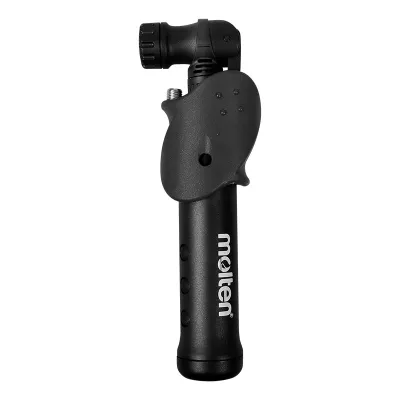
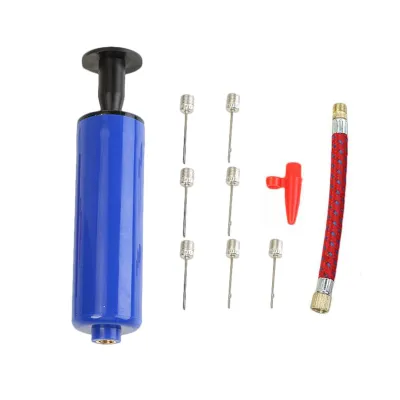
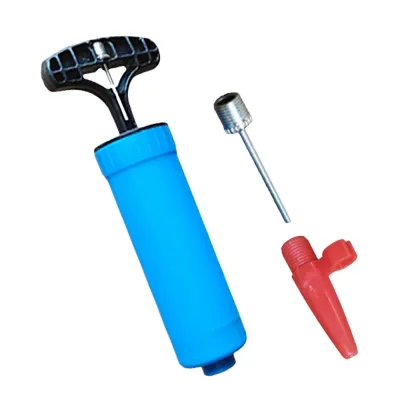
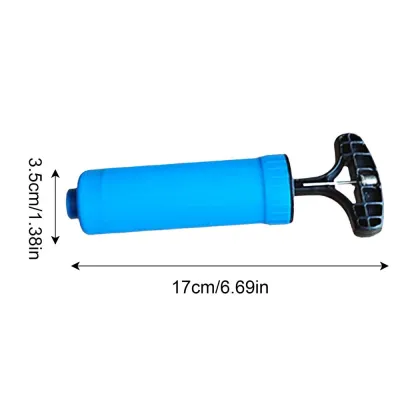
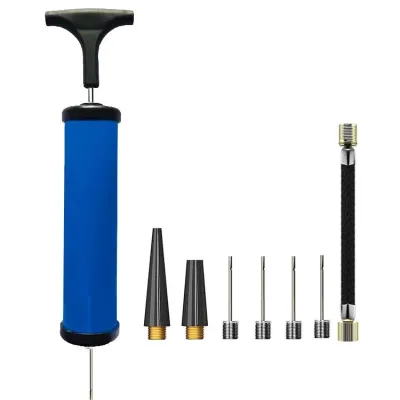
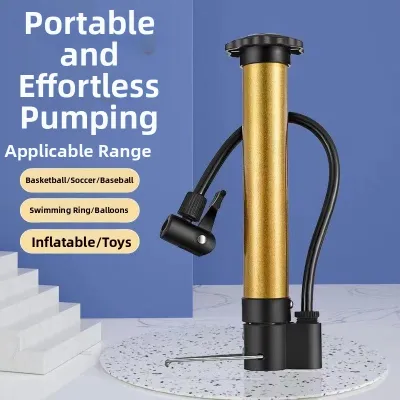
Prices are valid at publication and may change. Please refer to the product page for the latest price.
Nozzle Versatility and Valve Compatibility
The primary indicator of a multi-purpose pump is its connection head. Standard sports balls use a narrow, recessed rubber bladder valve that requires a slim metal inflation needle. Bicycles, e-scooters, and some vehicle tires utilize either a wide Schrader valve (common on mountain bikes and utility vehicles) or a slender Presta valve (standard on high-pressure road bikes). A versatile pump features a smart-head design or a twin-valve nozzle that accommodates both tire valve standards without requiring separate screw-on adapters. Furthermore, the inclusion of tapered plastic cones allows the pump to interface with the wider, low-pressure valves found on yoga balls, inflatable kayaks, and aquatic leisure toys.
Integrated Pressure Gauges for Bladder Protection
Sports balls are highly sensitive to internal pressure variations. Over-inflation stretches the outer casing, warps the spherical shape, and can permanently rupture the internal rubber bladder. Under-inflation compromises the ball’s bounce, flight trajectory, and overall responsiveness. A reliable multi-purpose pump must feature an integrated pressure gauge calibrated in both PSI (pounds per square inch) and Bar. This gauge allows you to monitor real-time pressure increments, ensuring you stop exactly at the manufacturer’s recommended specification, which is typically printed directly around the ball’s inflation valve.
Balancing Air Volume and Pressure
Different inflatable items require different air delivery profiles. High-volume items, such as large gym balls or pool loungers, require a pump that moves a significant amount of air per stroke to avoid exhausting physical labor. Conversely, high-pressure items, like road bike tires or professional-grade footballs, require a pump designed to compress air efficiently against high resistance, even if the volume per stroke is relatively small. Multi-purpose pumps are engineered to strike a functional middle ground, utilizing optimized cylinder diameters that allow a single user to comfortably reach pressures up to 100 PSI while still delivering sufficient air volume for larger recreational items.
Best Types of Multi-Purpose Pumps for Different Scenarios
To narrow down your search among local sports retailers and online marketplaces in Singapore, it is helpful to categorize pumps by their structural design. Each category serves a distinct user profile, offering unique advantages in stability, speed, physical effort, and portability.

Heavy-Duty Floor Pumps (Best for Home & Team Use)
Floor pumps, often referred to as track pumps, are the gold standard for high-volume, frequent inflation tasks. These devices are designed to stand vertically on the ground, allowing you to use your entire body weight and both arms to push a large piston down, maximizing air delivery with minimal physical strain. This mechanical advantage makes them highly efficient for families with multiple sports-active children, school athletic departments, or local sports clubs.
When shopping for a floor pump in Singapore, prioritize models featuring wide, weighted steel or cast-iron bases that prevent the unit from tipping over on outdoor court surfaces. Look for dual-action cylinder mechanisms that compress and deliver air on both the downward push and the upward pull, effectively cutting your inflation time in half. A long, flexible rubber hose is also crucial, as it allows you to reach valves on bikes mounted on repair stands or balls resting on equipment racks. The primary trade-off with floor pumps is their physical bulk; they are difficult to carry in a standard gym bag and are best kept in a home garage, storeroom, or team vehicle.
Compact Hand and Foot Pumps (Best for Travel & Sidelines)
For on-the-go adjustments during weekend matches or cycling excursions along the East Coast Park PCN (Park Connector Network), portability is paramount. Compact hand pumps and mechanical foot pumps offer a lightweight, space-saving solution that fits easily into a backpack or attaches directly to a bicycle frame.
Hand pumps are incredibly lightweight and simple, utilizing a manual push-pull telescopic barrel. To maximize efficiency on the sidelines, look for dual-action hand pumps that continuously pump air during both strokes. It is highly recommended to choose a hand pump that connects to the ball needle via a short, flexible hose rather than a rigid, direct-mount connection. A flexible hose absorbs the natural shaking motion of your hands during pumping, preventing the metal needle from bending or snapping off inside the ball’s valve. Foot pumps, on the other hand, utilize a heavy-duty spring and a foot pedal. This design allows you to use your leg muscles, which is much less tiring for higher-volume items like yoga balls, though they are slightly heavier and bulkier than pocket-sized hand pumps.
Portable Electric Air Pumps (Best for Convenience & Precision)
Portable electric air pumps represent a major technological shift in sports gear maintenance. These compact, battery-powered devices use micro-compressors to automate the inflation process, requiring zero physical exertion from the user. They are roughly the size of a large power bank, making them highly portable and easy to store in a gym locker or travel bag.
These digital pumps allow you to preset your target pressure (for example, 8.5 PSI for a standard football). Once you connect the nozzle and start the device, it inflates the ball and automatically shuts off the moment the target pressure is reached, entirely eliminating the risk of over-inflation. Most modern electric pumps feature USB-C rechargeability, making them highly convenient to charge via standard wall adapters, laptops, or portable power banks. However, users must manage certain trade-offs: electric pumps generate a noticeable buzzing noise during operation, have finite battery runtimes that require regular monitoring, and must be kept dry, especially during sudden tropical downpours in Singapore’s outdoor sports venues.
Key Comparison Dimensions Before You Buy
When evaluating different multi-purpose pump models, looking beyond brand names to analyze specific construction details will help you make a durable, cost-effective purchase.
Gauge Accuracy and Placement
An inaccurate pressure gauge defeats the purpose of having one. When comparing pumps, look at the gauge’s physical placement and readability. On floor pumps, gauges can be mounted at the base or at the top of the barrel. Top-mounted gauges are positioned much closer to your eyes, making them significantly easier to read without squinting, whereas base-mounted gauges require larger, high-contrast text.
Analog gauges should feature clear, distinct markings with a dual scale (PSI and Bar). If you choose a digital gauge, ensure it has a back-lit screen for visibility during evening games under court floodlights. Digital gauges generally offer higher precision, displaying measurements down to decimal points, which is highly beneficial for sports like volleyball where minor pressure differences alter ball control.
Build Materials and Heat Dissipation
The materials used in a pump’s construction directly dictate its lifespan and performance under pressure. High-pressure inflation generates heat due to rapid air compression. Barrels constructed from seamless aluminum or steel dissipate this heat far more effectively than plastic alternatives, preventing internal rubber seals from degrading or melting over time.
While engineered plastics are lighter, rust-proof, and highly cost-effective, they are prone to flexing, cracking, or stripping at the threaded connection joints when subjected to vigorous, rapid pumping. For a long-term investment, look for a pump with a metal barrel, metal valve thumb-locks, and a reinforced composite base.
Hose Quality and Structural Integrity
A pump’s hose is its most vulnerable point of failure. Cheap hoses stiffen, crack, and develop micro-tears, especially when exposed to Singapore’s high ambient humidity and heat. Opt for pumps equipped with thick, high-density rubber hoses or premium braided nylon sleeves. Braided hoses offer superior resistance to kinking, twisting, and high-pressure expansion. Ensure the hose has integrated storage clips on the pump body to prevent it from dangling, dragging on the ground, or getting pinched during transport.
Ergonomics and Stability
Using a manual pump can be physically demanding, making ergonomic design a key comfort factor. For floor pumps, look for contoured, wide handles covered in non-slip rubber or textured thermoplastic elastomer (TPE) to prevent blisters and hand fatigue. The base should feature textured grip pads to keep your athletic shoes from slipping off while you pump. For hand pumps, a textured grip or a folding T-handle design provides significantly better leverage, allowing you to maintain a firm hold even when your hands are sweaty from play.
Safe Inflation and Maintenance Practices
Investing in a high-quality multi-purpose pump is only half the equation. To protect your expensive sports balls, prevent damage to your pump, and ensure personal safety, you must follow correct inflation and maintenance protocols.
Lubricating the Ball Needle
One of the most common causes of ruined sports balls is a damaged inflation valve. Inserting a dry, friction-heavy metal needle can grip the soft rubber of the ball’s internal valve, tearing it or pushing it entirely out of alignment into the bladder, causing an unrepairable leak.
Before inserting any needle, check the ball manufacturer’s instructions. It is highly recommended to apply a drop of silicone oil or dedicated valve lubricant to the needle tip. In a sideline pinch when lubricant is unavailable, moistening the needle with water or saliva is a necessary temporary alternative. Always insert the needle slowly, straight, and perpendicular to the valve opening; never force it in at an angle.
Checking Manufacturer PSI Recommendations
Never inflate a ball purely by feel or by squeezing it with your hands. Always locate the manufacturer’s recommended pressure specification, which is typically embossed or printed directly next to the inflation valve on the ball’s casing.
This practice is especially critical in Singapore’s tropical climate. If you inflate a basketball to its maximum limit in a cool, air-conditioned indoor sports hall and then take it outside to an exposed concrete court under the hot afternoon sun, the air inside the ball will expand rapidly. This thermal expansion can push the internal pressure past safe structural limits, leading to warping or a sudden blowout. When playing outdoors in high temperatures, it is wise to inflate the ball to the lower end of its recommended PSI range to allow a safety margin for thermal expansion.
Pump Maintenance and Storage
To ensure your pump remains reliable for years, perform basic preventative maintenance. Store manual and electric pumps in a cool, dry indoor location away from direct sunlight, which degrades rubber hoses and plastic components. Never wrap the hose tightly around the pump body in a way that creates sharp, permanent kinks; instead, utilize the manufacturer’s designated hose clips.
Keep the nozzle head clean and free of dirt, sand, or grass clippings from outdoor fields, as debris can clog the valve seals and cause air leaks. For electric pumps, maintain the lithium-ion battery by avoiding storing the device completely depleted for long periods. Charge the battery to approximately 50% to 80% before long-term storage, and perform a brief function check every few months to ensure the internal seals and battery remain in good working order.
Frequently Asked Questions (FAQ)
Can I use a bicycle pump to inflate a basketball or football?
Yes, you can easily use a bicycle pump to inflate sports balls, provided you use the correct metal ball needle attachment. The internal air compression mechanisms of bicycle pumps and ball pumps are identical. However, you must never attempt to force a standard bicycle tire chuck (the clamp head) directly onto a sports ball valve without a needle, as this will crush and permanently destroy the ball’s recessed rubber valve mechanism. Simply thread or clamp the standard metal ball needle into the bicycle pump’s nozzle head, secure the locking lever, and pump normally while carefully monitoring the pressure gauge.
How do I know if my ball pump's pressure gauge is accurate?
To verify the accuracy of your pump’s gauge, you can cross-reference its reading with a standalone, high-quality digital pressure gauge designed specifically for sports balls or low-pressure tires. Inflate a ball to a specific reading on your pump (for example, 8 PSI), disconnect the pump, and immediately measure the pressure using the independent digital gauge. Standard analog gauges on budget-friendly pumps typically have an acceptable operational margin of error of +/- 1 to 2 PSI. While this variance is perfectly fine for casual play, competitive tournament matches require a highly accurate digital gauge to ensure exact compliance with official sport regulations.
Why does my ball deflate quickly even after pumping it to the correct PSI?
If a ball deflates rapidly after inflation, the issue is usually with the ball itself rather than your pump. The most common culprit is a dirty, dry, or damaged rubber inflation valve that is failing to seal properly, allowing air to slowly hiss out. You can check for this by applying a drop of soapy water over the valve opening; if bubbles form, the valve is leaking. Additionally, minor punctures in the ball’s inner bladder or structural casing will cause slow deflation. Finally, keep in mind that air naturally contracts when exposed to temperature drops, such as moving a ball from a hot outdoor court into a cold, air-conditioned room, which can make the ball feel slightly under-inflated without an actual leak being present.
Community discussion
Share your experience or ask a question. Comments are reviewed before publication.