
Finding a kids pull up bar that fits your home without drilling holes is a common challenge for parents living in Housing & Development Board (HDB) flats in Singapore. While encouraging active play and physical development is excellent for growing children, standard HDB door frames present unique structural and spatial constraints. Not all no-drill fitness bars are safe or compatible with every door frame style. To make an informed choice, you must evaluate the design of the bar against the specific material and dimensions of your home’s door frames. Telescopic friction bars and freestanding structures are often the most reliable options, whereas traditional leverage-based doorway bars frequently fail to fit securely on typical HDB architraves.
How to Measure and Assess Your HDB Door Frame
To find a kids pull up bar that fits securely, you must begin with precise measurements of your door frame. Standard HDB bedroom door frames typically feature inner widths ranging from 75 to 90 centimeters, while bathroom frames are often narrower, sometimes measuring between 60 and 70 centimeters. Do not rely on general estimates; use a metal tape measure to record the exact inner width at the top, middle, and bottom of the frame, as minor warping or uneven construction can affect how a tension-based bar sits.
Next, examine the depth and thickness of the door frame. A secure installation requires a flat surface that is wide enough to accommodate the mounting pads of the pull-up bar, which typically need at least 5 to 8 centimeters of flat contact area. Pay close attention to any protruding architraves, decorative trims, or skirting boards. If the trim projects too far from the wall or has a curved profile, a leverage-based bar will not sit flush, and a friction bar might press directly against fragile wood molding rather than the structural frame itself.
Products mentioned in this guide
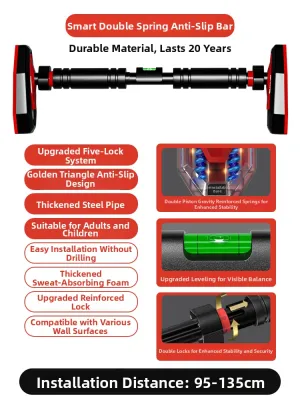
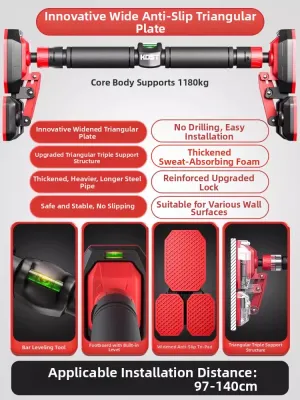
![[SG Ready Stock] Pull Up Bar Portable home Chin Up Fitness Equipment Pull-Up Bar for Children No Drilling Load Bearing 400KG](https://img.lazcdn.com/g/p/2ee2852587e8c2747318dfb0c8f3f895.png_400x400q80.png_.webp)
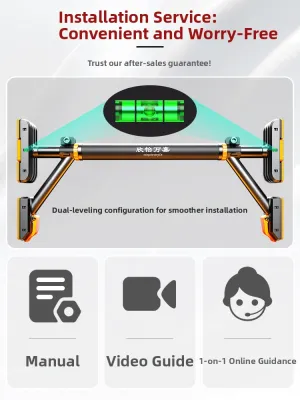
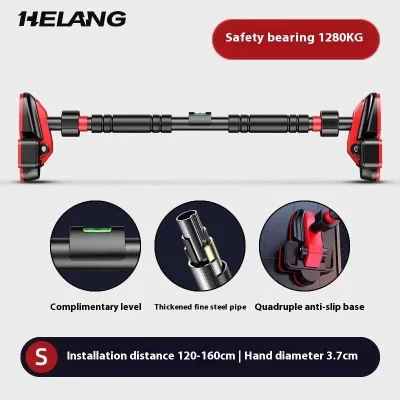
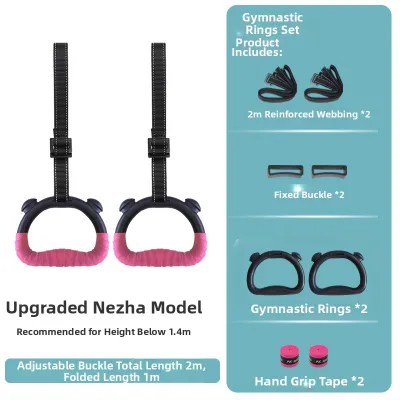
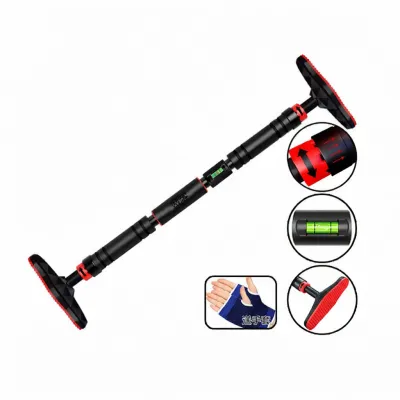
Prices are valid at publication and may change. Please refer to the product page for the latest price.
The structural material of your HDB door frame is the most critical safety factor. Older resale flats often feature solid timber frames that can withstand significant compressive force. In contrast, many newer BTO (Build-To-Order) flats utilize engineered wood, hollow-core frames, or thin metal-clad casings over light plaster or concrete. High-pressure telescopic bars exert immense outward horizontal force; if installed on a hollow-core frame, this pressure can easily crack the wood, warp the frame, or prevent the door from closing. Always verify your door frame’s material and consult the developer’s guidelines before mounting high-pressure equipment.
Finally, inspect the frame for pre-existing wear and tear. Look closely for hairline cracks in the wood or plaster, loose hinges, or gaps between the frame and the wall. Any structural compromise can lead to sudden failure when the frame is subjected to the dynamic load of a child hanging or swinging. If you detect any structural weakness, do not proceed with a doorway installation.
Which No-Drill Pull-Up Bar Designs Actually Fit?
Telescopic Friction Bars
Telescopic friction bars are the most common no-drill option for HDB flats because of their adjustable length and straightforward installation. These bars operate using an internal threaded mechanism that expands outward when rotated, pressing heavy-duty rubber or silicone pads tightly against the opposite sides of the door frame. Because they rely entirely on friction and horizontal pressure, they do not require permanent brackets or screws, making them highly appealing for renters or parents who want to avoid damaging their walls.

When selecting a telescopic bar, you must cross-reference your door frame’s measured width with the manufacturer’s specified range. A bar is most stable when it is not extended to its absolute maximum limit; for instance, if your door frame is 85 centimeters wide, choose a bar with an operating range of 70 to 95 centimeters rather than one that tops out at 85 centimeters. This ensures that a sufficient portion of the inner steel tubing remains overlapped inside the bar, preserving its structural rigidity.
Singapore’s warm, humid climate can affect the performance of friction pads over time. High humidity can cause moisture to condense on painted door frames, reducing the coefficient of friction and increasing the risk of the bar slipping. To mitigate this risk, look for telescopic bars equipped with textured, multi-layered silicone pads that offer superior grip on painted timber or metal. Additionally, prioritize models with mechanical safety locks—such as 360-degree gear locks or spring-loaded pins—that physically prevent the bar from rotating and loosening during use.
Leverage Doorway Bars
Leverage doorway bars use a cantilever design that hooks over the top of the door frame’s architrave, distributing the user’s weight vertically against the wall and horizontally against the side trims. While highly popular for adult home gyms, these bars are generally poorly suited for standard HDB door frames. Most HDB bedroom frames feature very narrow, flush, or decorative top trims that do not offer a sufficient ledge for the bar’s rear plastic hook to rest upon safely.
If the top trim is too thin or is made of lightweight MDF (medium-density fibreboard), it cannot bear the concentrated downward force of a leverage bar. The trim can easily snap off or pull away from the wall, resulting in an immediate fall. Furthermore, because leverage bars require a specific wall thickness (often between 10 and 15 centimeters) to lock into place, they frequently fail to fit the thicker structural concrete walls surrounding many HDB doorways. Unless your home features deep, solid timber door frames with a robust, load-bearing top architrave, leverage bars should be avoided for children’s safety.
Freestanding and Hallway Alternatives
If your door frames are unsuitable due to hollow construction or narrow trims, freestanding kids’ gymnastics bars or pull-up stations offer an excellent zero-pressure alternative. These frames sit directly on the floor and require no wall contact, completely eliminating the risk of frame damage. They are highly stable and often feature adjustable height settings that can grow alongside your child.
The primary trade-off with freestanding stations is their physical footprint. A typical kids’ gymnastics bar requires a flat floor area of approximately 1.2 by 1.5 meters, which can severely crowd a standard HDB bedroom or living room. If space is limited, look for foldable models that can be collapsed and stored against a wall when not in use. Alternatively, you can consider installing a heavy-duty tension bar in a hallway corridor. Hallways bounded by solid concrete structural walls—such as those adjacent to the household shelter—provide a far safer foundation for high-pressure friction bars than standard bedroom door frames, provided the wall surface is free of powdery paint or brittle wallpaper.
Safe Installation and Height Setup for a Kids Pull Up Bar
Proper installation is paramount when setting up a kids pull up bar, as children’s natural movements are often unpredictable and dynamic. Before mounting any equipment, thoroughly clean both the contact pads of the bar and the surfaces of the door frame. Use a mild degreasing cleaner to remove dust, body oils, or condensation, as even a thin layer of grime can significantly reduce friction. Allow the surfaces to dry completely before proceeding.
When positioning the bar, use a spirit level to ensure it is perfectly horizontal. An uneven bar distributes weight unequally, causing one side to experience higher shear force, which increases the likelihood of a sudden slip. Once leveled, rotate the bar to extend it according to the manufacturer’s exact instructions. Tighten the bar firmly, and then engage all mechanical safety locks. If your model features a torque indicator, ensure it registers within the recommended safe zone.
Before allowing your child to use the equipment, you must perform a rigorous manual load test. An adult weighing significantly more than the child should hang from the bar and perform several gentle vertical bounces. This test verifies that the friction pads are fully seated and that the door frame can support the compressive force without bowing or cracking. If you hear creaking sounds, notice the frame flexing, or detect even a millimeter of downward slippage, uninstall the bar immediately and inspect the setup.
Setting the correct height is crucial for preventing injuries. The bar should be positioned so that your child can grasp it comfortably with their arms fully extended while standing on their tiptoes or with a very slight jump. This height allows them to perform a full dead hang without their feet dragging on the floor, while ensuring they are close enough to the ground to drop down safely. Never install the bar so high that a fall could result in a severe impact. To further enhance safety, always place a thick, high-density foam exercise mat directly beneath the bar to cushion any accidental landings or drops.
Finally, establish a strict routine of regular maintenance checks. Because Singapore’s ambient temperature and humidity fluctuate, materials expand and contract, which can gradually reduce the tension of friction-based bars. Before every single play session, physically grasp the bar and attempt to twist it to verify that the safety locks are engaged and the tension remains rock-solid. Inspect the rubber pads for signs of wear, hardening, or cracking, and replace them immediately if they show signs of degradation.
Common Sizing and Safety Mistakes to Avoid
One of the most frequent mistakes parents make is purchasing a kids pull up bar without checking its minimum retracted length. If a bar’s shortest configuration is wider than your door frame, it simply will not fit. Conversely, using a bar near its maximum extension reduces the overlap of the internal steel tubes, making the center point of the bar highly susceptible to bending under load. Always select a size where your door frame’s width falls comfortably in the middle of the product’s adjustable range.
Another critical error is failing to account for dynamic forces. A child weighing 30 kilograms does not exert only 30 kilograms of force when playing. When a child swings, kips, or drops onto the bar, the dynamic forces can easily double or triple the static load, creating peak forces exceeding 90 kilograms. Always check the manufacturer’s specifications for both static and dynamic weight limits, and ensure the equipment is certified to handle these sudden spikes in force.
Never install a friction-based bar on hollow-core doors, thin plywood panels, or lightweight drywall partitions. These materials lack the internal structural reinforcement required to resist the intense outward pressure of a tension bar. Under load, the drywall or thin wood will compress or puncture, causing the bar to collapse instantly. Only mount friction bars against solid timber frames or reinforced concrete walls.
Lastly, remember that no-drill pull-up bars are home fitness equipment, not playground fixtures. They require active adult supervision at all times, especially for younger children who may lack the grip strength or coordination to release the bar safely. Teach your children proper usage rules: no wild swinging, no upside-down hanging, and no climbing up the door frame. If the manufacturer’s instructions conflict with your door frame’s specifications, or if you are unsure of the frame’s structural integrity, stop immediately and consult a professional contractor.
Frequently Asked Questions (FAQ)
Can a tension rod hold a child's dynamic swinging movement?
Most standard tension rods are designed strictly for vertical, static loads like dead hangs or controlled pull-ups. Dynamic swinging or kipping generates high lateral forces that can easily break the friction seal, causing the bar to slip. Unless the manufacturer explicitly certifies the bar for dynamic gymnastics use, you should restrict your child to controlled, static movements and avoid active swinging.
What is the safe weight limit for kids' pull-up bars?
While many high-quality kids’ pull-up bars claim static weight limits of 100 to 150 kilograms, you should always apply a conservative safety margin. For active children, choose a bar with a rated capacity that is at least three times your child’s weight. This safety buffer safely accommodates the peak dynamic forces generated during jumps, hangs, and sudden drops.
How high should the bar be installed for a child?
The bar should be installed at a height where the child can easily reach it by standing on their tiptoes. This ensures they can hang with fully extended arms without their knees touching the floor, while remaining close enough to the ground to step down or drop safely onto a protective floor mat without losing their balance.
Community discussion
Share your experience or ask a question. Comments are reviewed before publication.